Prefer Jewish News on Google

OPINION: The Islamic Republic’s terror has reached a city near you
Expulsion of Iran’s ambassador follows ASIO findings tying Revolutionary Guard to antisemitic arson attacks in Sydney and Melbourne
Since the horrors of 7 October, Australia has been engulfed by a wave of antisemitism unlike anything in its modern history. Synagogues have been firebombed, Jewish businesses attacked, swastikas plastered on Jewish community centres, and mobs have chanted openly for the extermination of Jews in the streets of Sydney and Melbourne. At first glance, this hatred seemed to be homegrown, a virulent eruption from within.
But not all of it was. Some of it, disturbingly, can be traced more than 8,000 miles away — to Tehran.
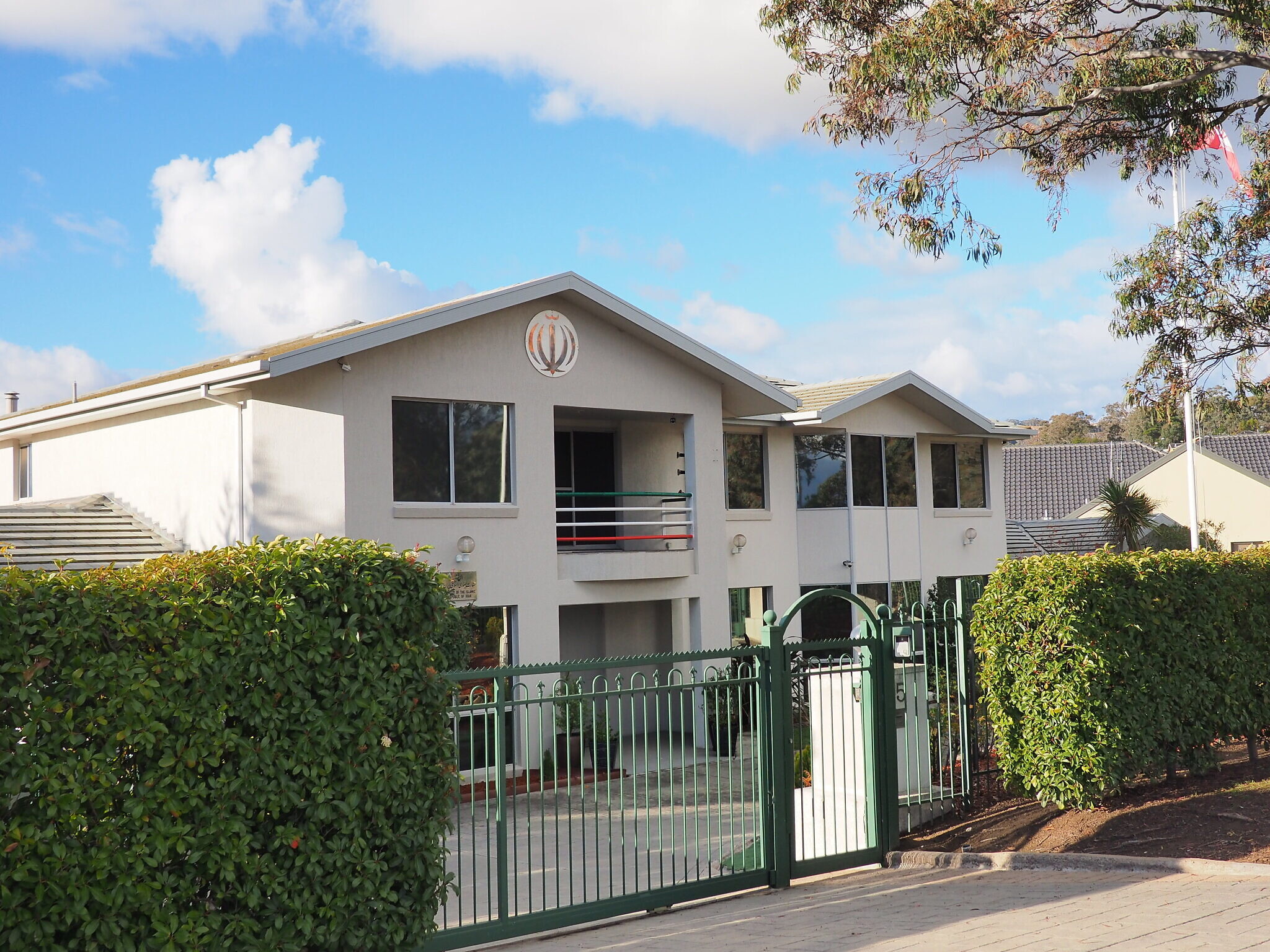
Days ago, Australia took a dramatic step it had not taken since World War II: expelling a foreign ambassador. The envoy in question was none other than Ambassador Ahmad Sadeghi, the representative of the Islamic Republic of Iran. The decision followed findings by the Australian Security Intelligence Organisation (ASIO) that the regime’s Islamic Revolutionary Guard Corps (IRGC) was linked to two antisemitic arson attacks last year — one targeting Lewis’ Continental Kitchen, a Jewish-owned restaurant near Sydney’s Bondi Beach, the other the Adass Israel Synagogue in Ripponlea, Melbourne.
This was not the work of random extremists or online agitators. It was foreign-directed terrorism on Australian soil.
For 46 years, the Islamic Republic has terrorised its own citizens, especially women and minority groups, while also destabilising the Middle East through a dangerous foreign policy and a sprawling proxy network including Hamas, Palestinian Islamic Jihad, Hezbollah and the Houthis. That story is well documented. Less understood is the regime’s infiltration of its terror cells into the beating heart of Western democracies.




The plots uncovered in Australia are part of a larger pattern stretching across the West. In London, Paris, Berlin, Washington, and now Sydney, the Islamic Republic’s security services have been caught red-handed running covert operations — often targeting Jews, dissidents, journalists, and Western officials.
In Britain, MI5’s director general, Ken McCallum, recently disclosed that since 2022, Tehran was behind at least 20 major plots on UK soil, which presented “potentially lethal threats to British citizens and UK residents.” These weren’t idle threats. In 2022, the IRGC tried to assassinate two anchors at Iran International, Sima Sabet and Fardad Farahzad, for their coverage of the protests sweeping Iran. Two years later, their colleague Pouria Zeraati was stabbed in the leg outside his London home — a chilling reminder of how far Tehran is willing to go to silence dissent.
The United States has also been in the crosshairs. In March 2025, two men with ties to the Islamic Republic were convicted in a plot to murder Iranian-American journalist and activist Masih Alinejad in her Brooklyn home.
Several attempts on President Donald Trump’s life were also foiled. Tehran-linked agents also plotted to assassinate former U.S. officials Mike Pompeo and John Bolton, both outspoken critics of the regime. And in Canada, Foreign Affairs Minister Anita Anand voiced grave concern about Tehran activating sleeper cells on Canadian soil.
Australia’s expulsion of the Iranian ambassador is not only justified but long overdue. Tehran’s agents have already crossed the line from intimidation to violence here, as they have elsewhere. But expulsions alone are not enough. Democracies cannot afford to treat this as business as usual.
The IRGC is not a distant menace confined to Iran’s borders or the Middle East. It is a global terror organisation, machinating in London, striking in Melbourne, and threatening in Washington. The regime does not distinguish between Israelis abroad, Jewish communities in the diaspora, or Western officials. Its targets are anyone who challenges its authority, ideology, or survival.
The West has too often responded piecemeal, as if these plots were isolated outrages rather than elements of a single coordinated strategy. That hesitation has emboldened Tehran.
What is required now is a coordinated Western pushback. It means prosecuting agents of the regime when they are discovered. It means tightening sanctions not only on the IRGC but also on the financial networks that enable its vast reach. And it means designating the IRGC, formally and unambiguously, as the terrorist organisation it is.
Australia has now joined the United States, Britain, France, and Canada in acknowledging the reality of Iran’s foreign-directed terror operations. But acknowledgement is not enough. As the 7 October aftermath has shown, antisemitism provides fertile ground for foreign regimes to exploit. When Tehran fans those flames, it turns hate speech into arson, propaganda into assassinations, and street-level intimidation into organised terror.
For too long, the Islamic Republic has exported fear from Tehran’s streets to ours. The message of the past two years should be unmistakable: Iran’s terror is not “over there”. It is here, in our cities, on our streets, in our synagogues and businesses. The question is no longer whether the West can afford to respond, but whether it can afford not to.
Australia’s decision this month must be the beginning of a new clarity: that the IRGC is waging war on democracies everywhere, and that it will take more than isolated expulsions to stop it. If the past year has shown us anything, it is that Tehran’s reach is long, but its grip is only as strong as the West allows it to be.
- Jonathan Harounoff is Israel’s international spokesperson to the United Nations and the forthcoming author of “Unveiled: Inside Iran’s #WomanLifeFreedom Revolt, available for pre-order now.

Keep community journalism free.
Jewish News is free for everyone. No paywall. No barriers. Just trusted journalism for anyone who wants to stay connected to Jewish life in Britain.
If you value that, please support us.
From as little as £5 a month, you can help keep our journalism free and accessible to all.
Every day, we report on the issues that matter to our community. We celebrate achievements, support charities, challenge antisemitism and ensure Jewish voices are heard more widely.
From as little as £5 a month, you can help us continue to:
- Report on the stories shaping Jewish life in the UK and beyond
- Bring our community together through shared stories, events and campaigns
- Celebrate the people, culture and moments that define our community
- Support organisations doing vital work across Jewish Britain
You can make a one-off donation or become a regular supporter. Every contribution helps keep our journalism free, independent and accessible to all.
If everyone who values Jewish News gave a small amount, it would make a real difference to our future.