Prefer Jewish News on Google
OPINION: The lab is the new startup launch pad
Head of the Google Accelerator Noa Havazelet explains how AI is fuelling the rise of the ‘Renaissance Entrepreneur’
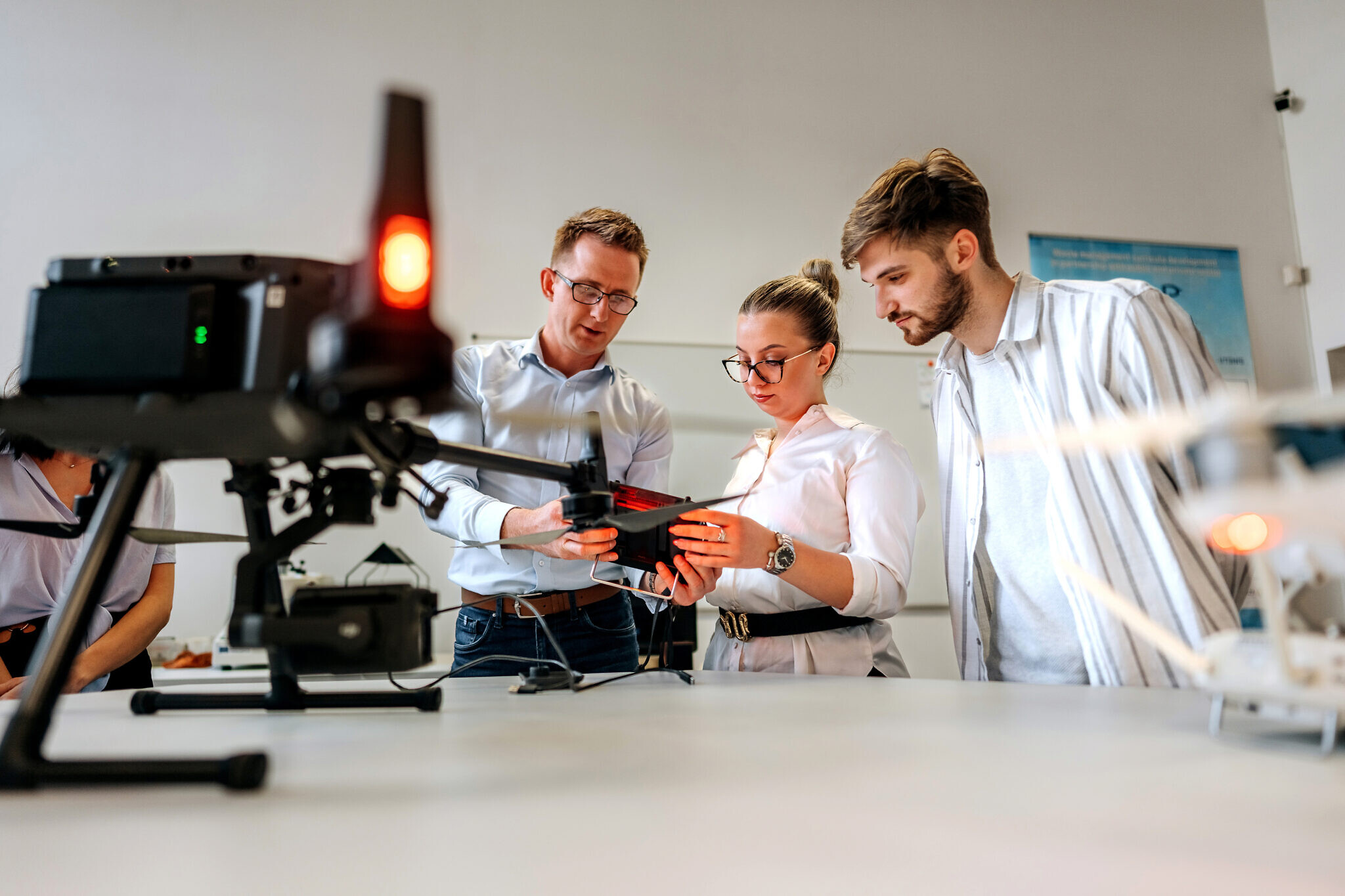
For a long time, there was a massive gap between the people doing deep scientific research and the people building companies. They lived in different worlds, spoke different languages, and had different goals. On one side, you had the pursuit of pure knowledge; on the other, the pursuit of a scalable business.
But lately, that wall is coming down. Thanks to the AI revolution, we are seeing a new type of leader emerge. I call them the Renaissance Entrepreneurs. These are founders who have the brainpower of a scientist but are hungry to transform their discoveries into products that address the world’s most urgent challenges.
In my day-to-day job managing an accelerator programme at a large tech company, I have a front-row seat to the evolution of the startup DNA. For the last decade, the landscape has been dominated by Software as a Service (SaaS) – companies that revolutionised how we work, communicate, and sell. And while some SaaS companies are currently forced to reshape their business model, SaaS still remains the bedrock of the modern economy, providing the infrastructure that allows businesses to scale globally.
However, we are starting to see a significant new layer being added to this foundation. More and more of the companies entering our accelerator program now originate directly from research labs. While they often use a software-driven model to deliver their value, their core “moat” isn’t just a better workflow – it’s a scientific breakthrough.
The founding teams usually include a few researchers who have spent years in academia or at hospitals, and often they join forces with a more industry-experienced figure to bridge the gap between the lab and the market. AI has become the primary “unlock” for them. It has created a massive change in how research is conducted, serving as a bridge that allows a technical finding to be transformed into something that can be used by millions.



In the past, this process took a decade of manual trial and error; today, AI allows these founders to trim the research time and build prototypes in months.We see this most clearly in sectors where the stakes are highest, moving us from “nice-to-have” tools to solutions that address fundamental global needs:
Health and Genetics: Startups are using AI to map genomes or identify markers for diseases years before symptoms appear. For instance, companies use generative AI to “design” molecules from scratch, while others apply computer vision to radiology, spotting tumors with an accuracy that exceeds human experts.
Climate Tech: This is where hard science is finally meeting the market to solve the climate crisis. We’re seeing startups focused on carbon capture, grid optimization, and complex chemical engineering. This includes breakthroughs in 3D battery architecture, led by companies like Addionics, which uses AI to design “smart” electrodes that improve energy and performance or even the creation of “self-healing” concrete. These are massive, physical problems that require a deep research background to even begin to solve.
Quantum Technologies: The biggest Scientific Problems have a good chance to be solved using Quantum computers which can accelerate computations exponentially and solve practically unsolved scientific problems by using classical computers. Beyond raw power, we are seeing the rise of Quantum Communications for unhackable data transmission and Quantum Sensing, which allows for subatomic measurement precision. Whether it’s accelerating drug discovery or securing global financial networks, “Quantech” is turning theoretical physics into a backbone for future infrastructure.
Of course, this transition isn’t easy. When a scientist enters the startup world, they hit two major walls:
The “Valley of Death”: In a research-based startup, a prototype might require years of testing before it even works once. Finding investors who provide “patient capital” for these long-term bets is a massive hurdle.
The Mindset Shift: In research, you are rewarded for being thorough. In a startup, you are rewarded for being fast. Shifting from the pursuit of a perfect paper to the pursuit of product-market fit is a steep learning curve.
We already see some momentum in addressing these challenges. Science-focused funding is scaling through initiatives like the UK government’s Advanced Research and Invention Agency (ARIA), backed by an £800M budget, and private entities like Oxford Science Enterprises, a £1bn multi-stage VC dedicated to Oxford University spin-outs.
Beyond capital, new specialised programs are nurturing ‘renaissance founders,’ guiding them through the transition from lab to market and plugging them into the broader global ecosystem.
Those who manage to make the leap are becoming the most formidable founders in the ecosystem. By combining the rigor of science with the speed of AI, they are tackling the world’s most stubborn problems, from incurable diseases to the energy transition.
Because their value is rooted in deep discovery rather than just a better interface, these science-led entrepreneurs are far more resistant to becoming a commodity. If they can master the shift from the lab to the market, we can definitely expect to see them becoming the “unicorns” of the next ten years.
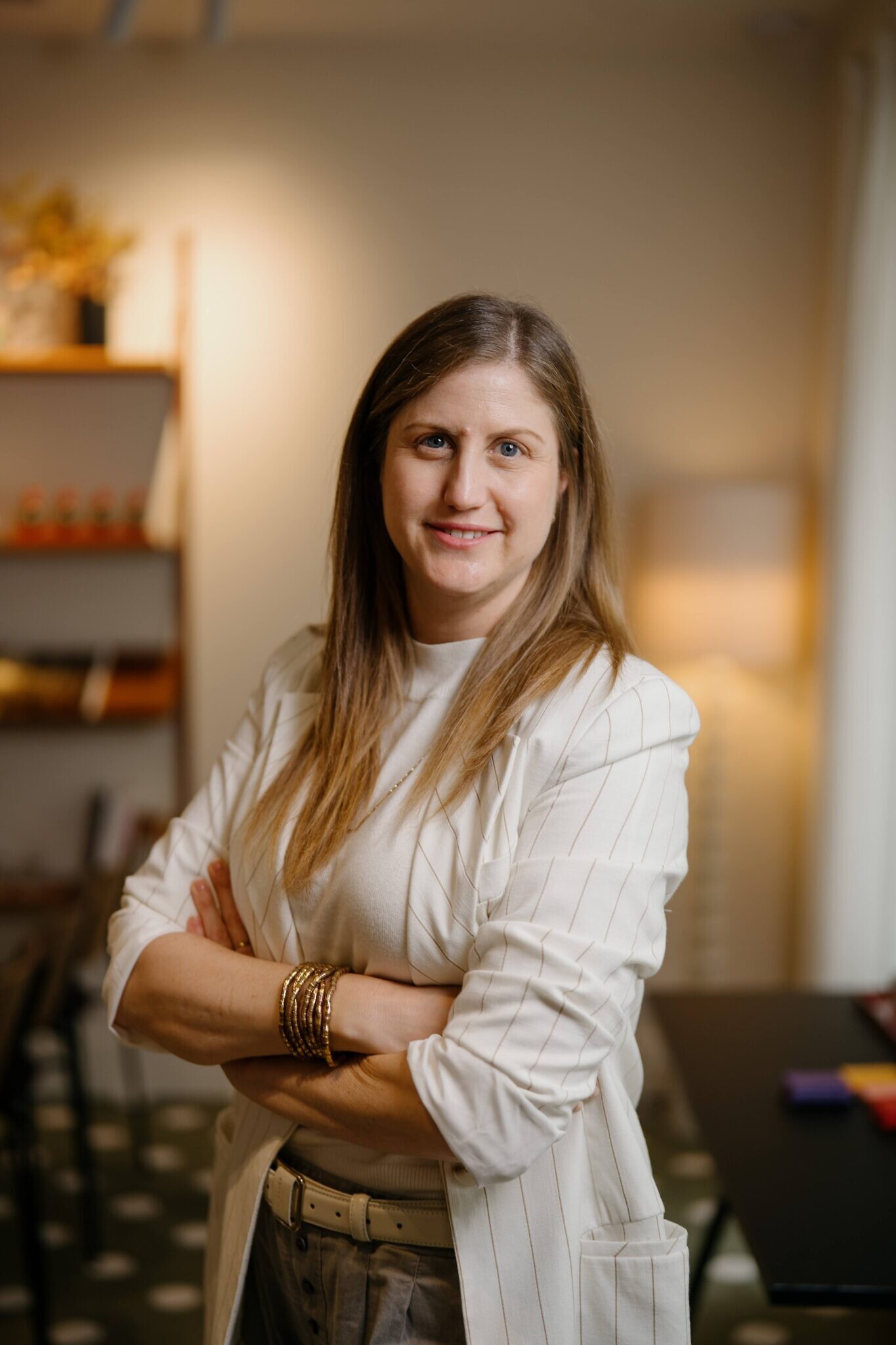
Noa Havazelet is the head of the Google Accelerator. The views expressed in this article are her own and do not necessarily reflect the official policy or position of her employer.

Keep community journalism free.
Jewish News is free for everyone. No paywall. No barriers. Just trusted journalism for anyone who wants to stay connected to Jewish life in Britain.
If you value that, please support us.
From as little as £5 a month, you can help keep our journalism free and accessible to all.
Every day, we report on the issues that matter to our community. We celebrate achievements, support charities, challenge antisemitism and ensure Jewish voices are heard more widely.
From as little as £5 a month, you can help us continue to:
- Report on the stories shaping Jewish life in the UK and beyond
- Bring our community together through shared stories, events and campaigns
- Celebrate the people, culture and moments that define our community
- Support organisations doing vital work across Jewish Britain
You can make a one-off donation or become a regular supporter. Every contribution helps keep our journalism free, independent and accessible to all.
If everyone who values Jewish News gave a small amount, it would make a real difference to our future.