Prefer Jewish News on Google

OPINION: West must drop Palestinian state push until Hamas is history
Recognising Palestine now rewards terror and undermines peace; the West must tie recognition to disarmament and lasting security
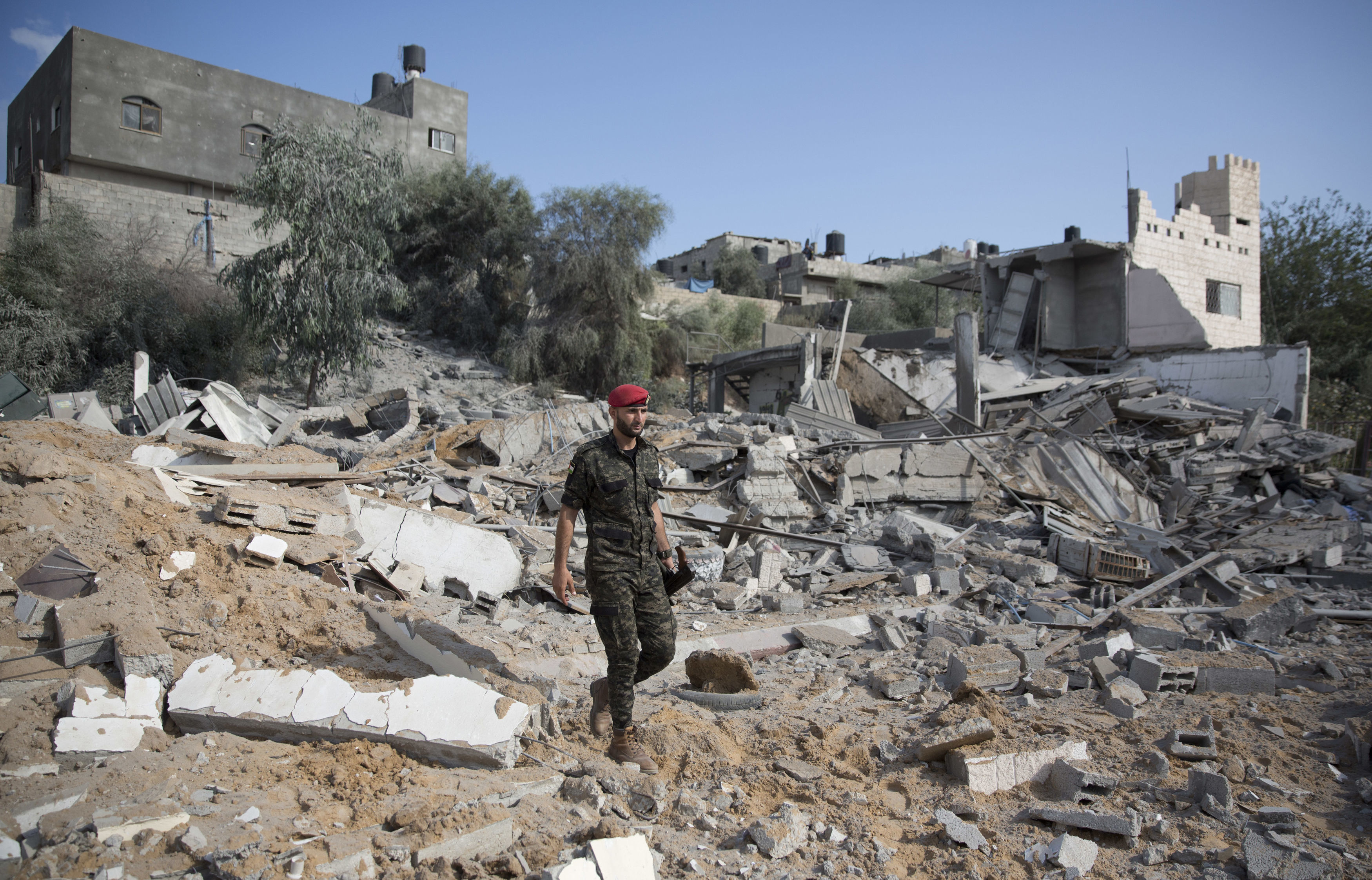
Israel’s announcement that it intends to take control of Gaza City has been widely condemned across Europe and other Western capitals. President Macron has said that it risks “war without end”, while for Sir Keir Starmer, the plan “will only bring more bloodshed”.
A statement from Western leaders, including those of Australia, Germany and Canada, warned that it could “aggravate the catastrophic humanitarian situation, endanger the lives of the hostages, and further risk the mass displacement of civilians”.
Regardless of Israel’s questionable strategy, this decision does not violate the laws of armed conflict. If, as widely believed, there are thousands of terrorists holed up in central Gaza, together with an array of military hardware and the remaining hostages, it is entirely legitimate to pursue this plan under the laws of armed conflict. Hamas has never reneged on its promise to carry out further massacres in the future, and so the threat from the terror group remains.
Yet, there are genuine concerns about this latest proposal. One of the biggest is the fate of the remaining hostages, at least twenty of whom are believed to be alive. The reported warning of Lt Gen Eyal Zamir, namely that ‘the lives of the hostages will be in danger’ from the operation, is certainly a chilling one.
Extended fighting in the streets of central Gaza, amid booby-trapped buildings, IEDs and hidden fighters, is likely to add to the grave toll of Israeli soldiers who have fallen in this war. There will be concerns too for Palestinian civilians, whose suffering will be exploited by Hamas as a weapon of war.



Moreover, there is little guarantee that the operation will bring about the demise of Hamas as a fighting force. Instead, there are concerns that Israeli troops will be sucked into an ever-expanding counterinsurgency that benefits only the terrorists.
Right now, almost the entire Western political class opposes Israel’s plan, with the White House alone remaining on side. But an extended war with harrowing images of civilian deaths may force even President Trump to demand a halt to the conflict, just as he did in January 2025. The risk of further diplomatic isolation is palpable.
The tragic reality is that in this current impasse, Israel has few good choices right now. Hamas has rejected the notion of an interim ceasefire under which a period of calm can see the release of some hostages, an extension of aid and the partial withdrawal of Israeli troops. Israel cannot negotiate with itself, while the option to unilaterally withdraw from Gaza would be suicidal.
Ending the war by capitulating to Hamas’s demands would also be deeply problematic in the medium to long term. Their principal aim is to survive this war; thus, it will not independently agree to its own disarmament or exile. As has been stated so many times, even a rump of the Hamas terror group in Gaza, whether or not in government, poses a threat to Israel in the long term. It also presents a major dilemma for any successor regime implanted by the Arab world.

Yet if Western leaders are so desperate to end this war, they need to reverse previous policy positions. The concerted campaign to unilaterally recognise a non-existent Palestinian state has simply emboldened Hamas, made them more obdurate and reduced their incentive to accept a ceasefire.
Western leaders should therefore call off any recognition of ‘Palestine’, insisting that there can be no ‘fruits of 7 October’. They should make it clear that such recognition will come only after the war has finished, Hamas has been disarmed, and Israelis and Palestinians have negotiated an end to the conflict. The process will take years of hard work, compromise and reconstruction.
In the short term, the West must place more pressure on Qatar, the chief sponsor and supporter of both Hamas and the Muslim Brotherhood. They should demand that Qatar exile all Hamas leaders, cut off their media support for the terrorists and insist on the immediate return of the hostages. As leverage, they could threaten to move the Al Udeid Air Base out of Qatar and cease the country’s designation as a ‘major non-NATO ally’.
Qatar should be seen for what it is: a prime supporter of Islamist extremism, an instigator of media manipulation and a subversive influence within Western academia and policy circles. It is both the arsonist and the firefighter, and its duplicity should no longer be tolerated.
For its part, Israel must articulate a strategic policy for the ‘day after’ this war, one which properly explains the long-term future of Gaza under non-Hamas rule. Moreover, it is right that the annexationist fantasies of the Kahanist far right have been ruled out and that the Trump proposal for emptying Gaza is a thing of the past.
But the West, too, must withdraw from its fantasies. The Middle East was permanently changed by 7 October, and no amount of diplomatic platitudes will change that.
- Jeremy Havardi is a freelance journalist and author

Keep community journalism free.
Jewish News is free for everyone. No paywall. No barriers. Just trusted journalism for anyone who wants to stay connected to Jewish life in Britain.
If you value that, please support us.
From as little as £5 a month, you can help keep our journalism free and accessible to all.
Every day, we report on the issues that matter to our community. We celebrate achievements, support charities, challenge antisemitism and ensure Jewish voices are heard more widely.
From as little as £5 a month, you can help us continue to:
- Report on the stories shaping Jewish life in the UK and beyond
- Bring our community together through shared stories, events and campaigns
- Celebrate the people, culture and moments that define our community
- Support organisations doing vital work across Jewish Britain
You can make a one-off donation or become a regular supporter. Every contribution helps keep our journalism free, independent and accessible to all.
If everyone who values Jewish News gave a small amount, it would make a real difference to our future.