Prefer Jewish News on Google
OPINON: England shouldn’t have to change for anyone
First World War poet Edward Thomas fought for a country defined by its landscape and its people. Families like mine came here seeking that same tranquillity, not to remake it in our own image
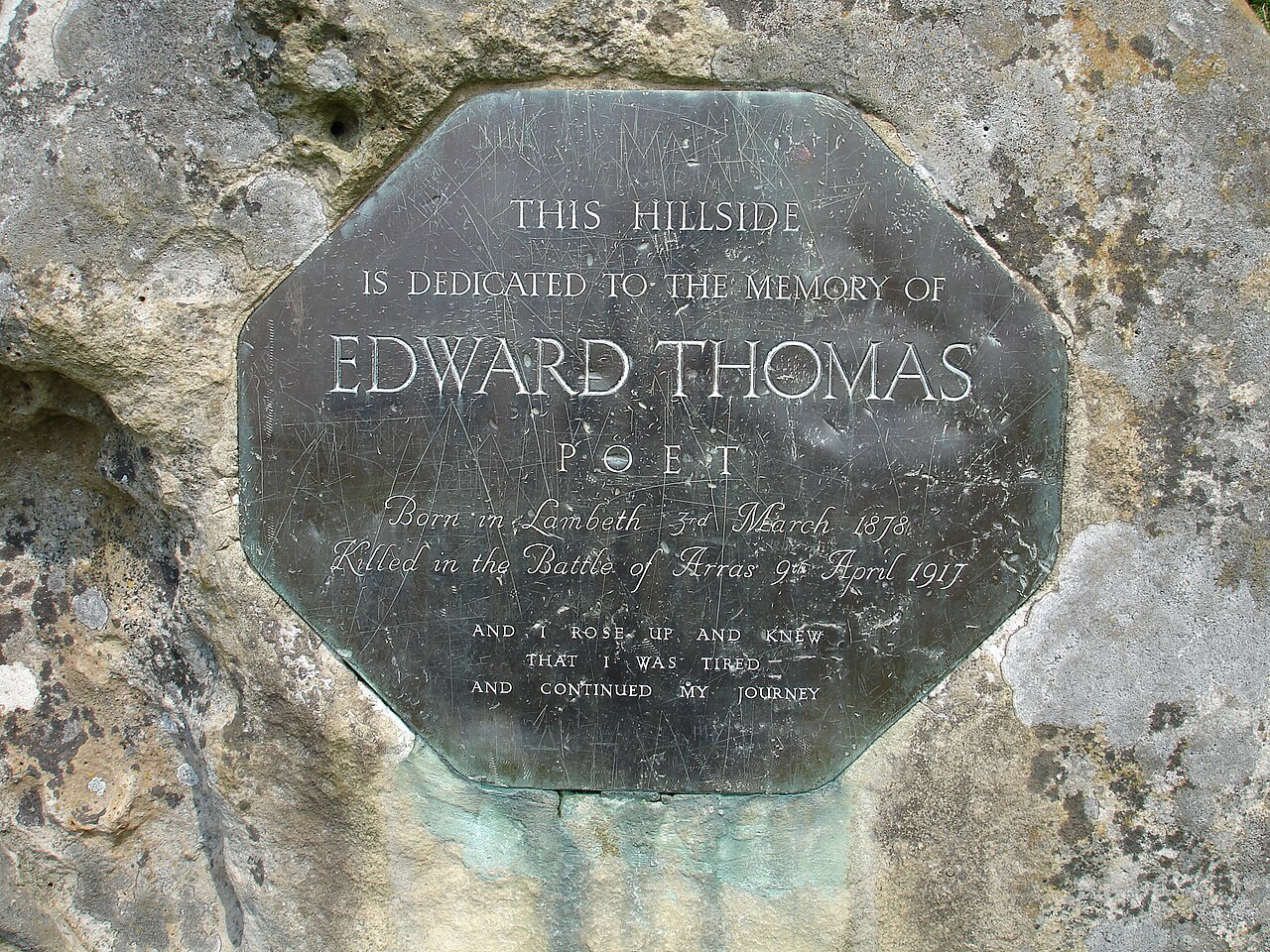
In December 1915, during one of the most sodden and dismal winters ever recorded on these well-washed isles, the poet Edward Thomas found himself at Hare Hall in Romford, training with the Artists Regiment of the British Army.
Suspicious of the jingoism that greeted the outbreak of war in 1914, Thomas had initially wavered over whether to join up. He needed to find his own moral rationale for fighting.
In time, Thomas found this rationale in England itself. In its hedgerows and spinneys, in Adlestrop station on a fierce summer’s day and in flowers left thick at nightfall in the wood. Thomas decided that he could fight for his homeland even though he did not despise its enemies.
While camped at Hare Hall, an elegant Palladian mansion muddied by pounding storms and the yomp of military parade, Thomas somehow found the time to write my favourite of his poems: This is No Case of Petty Right or Wrong, which explored his reasons for fighting. He wrote:
“But with the best and meanest Englishmen
I am one in crying, God save England, lest
We lose what never slaves and cattle blessed.
The ages made her that made us from dust:
She is all we know and live by, and we trust
She is good and must endure, loving her so:
And as we love ourselves we hate our foe.”


“The ages made her, that made us from dust”. This is the line that lingers for me. The idea that England was shaped over eternity and then shaped its people in turn. There is something distinct in this land and its inhabitants that is worth fighting and dying for.
I thought of Edward Thomas recently when I read The University of Leicester’s Unpacking Expressions of Hostility report into racism in the countryside. The report criticises the “silences” and “stares” directed at ethnic minority visitors to rural areas. It laments the lack of halal food available in rural areas and suggests that “welcoming minoritised individuals into the countryside means more than tolerance; it requires thoughtful adaptation, sustained inclusion efforts and a willingness to change”. (Somewhere in the small print I’m told the report also makes a reference to kosher food, though I couldn’t find it.)
To me this prescription seems entirely inverted. For starters, rural suspicion towards outsiders, white, brown or black, is as old as the hills themselves. It is a natural product of living in smaller, more isolated communities and hewing to older customs. Rural life is inherently conservative.

But also, as ethnic minorities who have chosen to make this country our home, it is not England that should adapt for us but we who should adapt for England. As Edward Thomas well understood, this country has an essence, a character and an immemorial history which is best preserved in its plunging valleys and crumbling graveyards and gnarled woodlands.
This is where I introduce some caveats. Racism anywhere is deplorable and I’ve no doubt there are some bigoted old bumpkins out in the shires who have been unpleasant to visitors. And of course, immigrants change their new countries too, often positively. Think where this country would be if the Jews hadn’t brought them cholent, for example.
But it’s also worth remembering why most of us Jews came in the first place. For better opportunities, of course, but also because the Cossacks and their ilk kept trying to slaughter us. Because Jews across eastern Europe were immiserated, discriminated against and excluded from advancement. Because they weren’t safe and they hoped they might be here.

“What is most astonishing to an American is not so much the liberty the English enjoy as the tranquility with which they enjoy it,” wrote the French philosopher (and revolutionary veteran) Alexis de Tocqueville. My ancestors shlepped over from Poland and Russia because they wanted a piece of that tranquility for themselves and their children. And they were right to do so. Most of those who stayed ended up being incinerated.
I don’t wish to overdo my dewy-eyed patriotism. This country can be violent and domineering and bigoted, just ask the Kenyans or the Indians. But England is also a place of mild climate and mild government. It is a country that has proven itself persistently allergic to political extremism and political violence. It abjured communism and drained its own life force almost entirely in the battle against Nazism. It is not a place where Jews are murdered or excluded, but accepted or at least tolerated.
This historically distinct character, and it is distinct, is woven inextricably into the land and culture of the English countryside. It is not the progressives of London or Brighton or Manchester who best embody and maintain this distinctiveness, but the people and places of deep England. The village halls and churchyards across the land where fading Ukrainian flags still fly, fluttering in defiance of feckless injustice.
For the same reasons my ancestors came to this country, I want those people and places to be preserved, not lectured about how they must embark on “adaptation” and “sustained inclusion efforts”. I want them to stay as they are.
Last summer, I went to the Lake District with my sister and her children, who are all strictly orthodox. We rented a cottage near Grasmere and filled it with a frankly staggering volume of kosher food. We made chicken soup and challah and lit Shabbat candles and my nieces and nephews wandered through villages and valleys in their kippot and long skirts.
It was a splendid week. Would I have liked there to be a kosher cafe or bagel bakery nearby? I mean, sure, it would have been convenient. But we have those things at home. Instead we gloried in the eternal landscape of pikes and fells that inspired William Wordsworth, Arthur Ransome and Beatrix Potter. “Not even Hitler can damage the fells,” Potter once wrote.
Well quite.
Edward Thomas went to war for England and in 1917 he died for it too, in the mud and gore of Arras. He died not for hatred but for love, because he felt there was something good about his country and its people that must endure. “I could not let others be killed without a word from me,” he wrote.
In recent years I find myself wondering occasionally if what’s good and enduring about this country is changing. When I read that one in five British people are apparently now antisemitic or watch faeces being smeared upon the door of a shul in Golders Green, I wonder if the land that Thomas died for is losing its temperance. But whenever I turn off my screens and leave the city, when I walk through England’s lanes and listen to its people, I tend to find that it is not. Not yet at least.
• Josh Glancy is associate editor at The Sunday Times

Keep community journalism free.
Jewish News is free for everyone. No paywall. No barriers. Just trusted journalism for anyone who wants to stay connected to Jewish life in Britain.
If you value that, please support us.
From as little as £5 a month, you can help keep our journalism free and accessible to all.
Every day, we report on the issues that matter to our community. We celebrate achievements, support charities, challenge antisemitism and ensure Jewish voices are heard more widely.
From as little as £5 a month, you can help us continue to:
- Report on the stories shaping Jewish life in the UK and beyond
- Bring our community together through shared stories, events and campaigns
- Celebrate the people, culture and moments that define our community
- Support organisations doing vital work across Jewish Britain
You can make a one-off donation or become a regular supporter. Every contribution helps keep our journalism free, independent and accessible to all.
If everyone who values Jewish News gave a small amount, it would make a real difference to our future.