Prefer Jewish News on Google
Organisation offers to pay British Museum’s ‘security costs’ to allow Jewish history event to proceed
The Free Speech Union described the suspension of the event, which was due to take place on Thursday night, as 'abject and unacceptable'
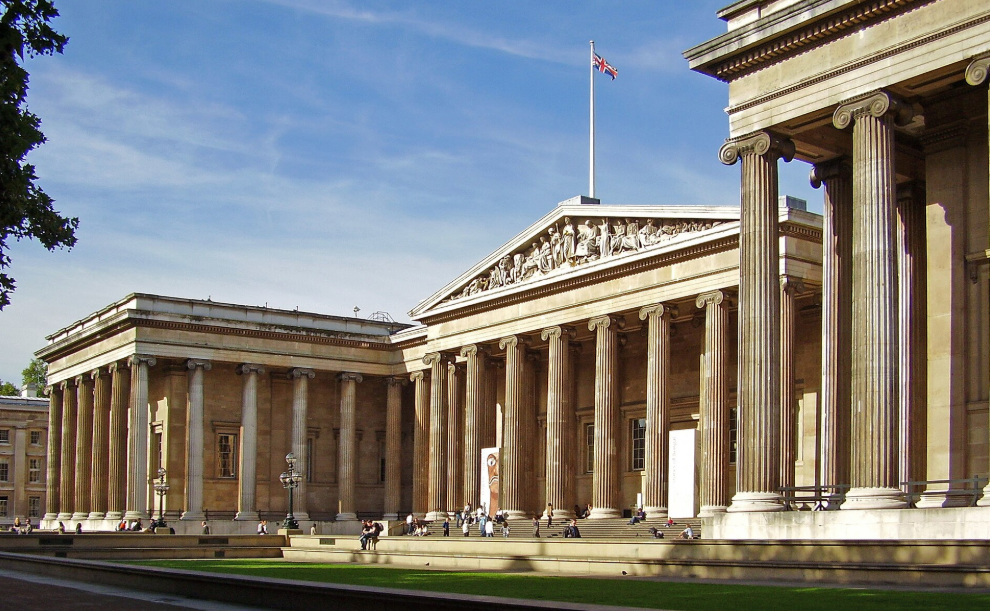
The Free Speech Union has reached out to the British Museum, offering to pay for extra security so that a lecture on the topic of “Ancient Israel and Judah” can go ahead at the prestigious venue.
The talk, which was due to be given by Dr Paul Collins, keeper of the Museum’s Department of the Middle East, was set to take place on Thursday evening as part of the UK’s ongoing Jewish Culture Month. However, on Wednesday the museum announced it would be “postponing the event”, citing “security concerns”. It went on to say that it had been made aware that “a significant proportion of registered attendees were individuals intending to deliberately disrupt the event”.
In a letter to Dr Nicholas Cullinan, the director of the British Museum, the director of the FSU, Lord Young, said: “That a leading national institution, in receipt of substantial funds from the Department for Culture, Media and Sport, has responded to these alleged threats by surrendering to them is abject and unacceptable.”
Lord Young went on to describe how since the passing of the Higher Education (Freedom of Speech) Act (HEFSA), passed into law last year, English universities are now prohibited from no-platforming speakers because of “security concerns” except in “exceptional circumstance.
“A variation on this excuse is to claim that the cost of providing security at a speaking event targeted by protestors is ‘prohibitively expensive’, something also prohibited by HEFSA”, the peer wrote.


“Nevertheless, we also hear this excuse often – most recently from Cardiff University, which falls outside the scope of HEFSA. Thankfully, we were able to get round the objection by footing the bill for additional security ourselves. If the expense of providing security for Dr Paul Collins is a consideration, the Free Speech Union would be happy to pay any additional security costs if that means the event can go ahead.”
The British Museum’s decision to suspend the event at short notice was met with widespread dismay from British Jewish individuals and organisations.
Historian Simon Schama described it as “pathetic cowardice”, while the historian Simon Sebag Montefiore wrote: “I am sure the BM realizes it is essential to announce a new event fast lest it give the impression that the permission of tiny cadres of aggressive bullies are required before it hold events.” Lord Wolfson, the Shadow Attorney General, said that “if publicly-funded institutions cannot host such events without folding to pressure, serious questions arise about that funding… this is the wrong decision, at the wrong time, and sends precisely the wrong message.”
Meanwhile, the Jewish Leadership Council said that “extremists and agitators who cannot see past their hatred should not be allowed to force British Jews to live smaller lives in this country, nor prevent us from sharing our culture and heritage with the wider British public.” And the Campaign Against Antisemitism described how “the Prime Minister recently talked about how Jewish people are being bullied out of the arts: now we’re seeing it at the country’s leading museum. We are still waiting for some brave institution to stand up and say that the Jew-hating mob will not win in their space. One wonders if there are any still left in modern Britain.”
In Lord Young’s letter to the museum, he also specifically cited a comment piece published by Jewish News last year, which set out, as he described, how “cultural and sporting institutions in several countries, including the UK, have been “weaponising” concerns over safety to dress up the exclusion of Jews and the cancellation of Jewish events as an “unavoidable” exercise of due diligence.”
Asking a series of questions as to how the Museum had come to make it decision to postpone, Lord Young summarised by saying that “a talk by an expert on objects in the Museum’s own collection that was advertised months in advance ought to have defended from vexatious activists. To cancel it at such short notice sends a message to British Jews that Jewish Culture Month is disposable if platforming Jewish events involves any inconvenience to the host venue.”
The British Museum’s original statement said that it had taken the decision “following discussions with organisers and security partners” and that the postponement decision had been made “jointly”.
The Board of Deputies, which is the organisation behind Jewish Culture Month, said: “It is highly regrettable that individuals have sought to deliberately disrupt a Jewish Culture Month event celebrating Jewish cultural heritage at the British Museum. Jewish Culture Month has seen many of Britain’s great cultural institutions partner with us in celebration of British Jewish culture, community and creativity, and we will not allow the actions of extremists to prevent the British public from enjoying these events.
“We will be working with our partners at the British Museum to reschedule this event as soon as possible.”

Keep community journalism free.
Jewish News is free for everyone. No paywall. No barriers. Just trusted journalism for anyone who wants to stay connected to Jewish life in Britain.
If you value that, please support us.
From as little as £5 a month, you can help keep our journalism free and accessible to all.
Every day, we report on the issues that matter to our community. We celebrate achievements, support charities, challenge antisemitism and ensure Jewish voices are heard more widely.
From as little as £5 a month, you can help us continue to:
- Report on the stories shaping Jewish life in the UK and beyond
- Bring our community together through shared stories, events and campaigns
- Celebrate the people, culture and moments that define our community
- Support organisations doing vital work across Jewish Britain
You can make a one-off donation or become a regular supporter. Every contribution helps keep our journalism free, independent and accessible to all.
If everyone who values Jewish News gave a small amount, it would make a real difference to our future.