Prefer Jewish News on Google
Orthodox Judaism continues to grapple with the roles of women and LGBT people
Movement forward has been incremental, yet still noticeable
Outside of the Jewish community, the world is changing. A woman has been appointed Archbishop of Canterbury, the most senior position in the Church of England. Weddings of same sex partners have been blessed in Anglican churches since 2023. Even the Roman Catholic Church now permits weddings of same sex partners to be blessed in non-liturgical nontheological settings.
Orthodox Judaism, however, is sticking to its traditional principles. Orthodox synagogal bodies have not yet agreed that women may be called rabbis at all, let alone actually lead the movement. Similarly, there has been no move in Orthodox organisations to bless unions between same sex partners male or female.
Yet even so, some progress has been made. Deuteronomy 17:16 provides that, if the people of Israel so decide then, they should appoint a king. From this the rabbis learnt that a king excludes a queen. For many centuries, this was provided as a reason why women should not be considered eligible for high office of any kind. But at the turn of the millennium, the London Beth Din ruled that women could stand for election as vice chairs of their synagogues – but not chairs. At the time, some United Synagogues, exercising Talmudic logic of their own, elected women as vice chairs and then declined to elect a chair, leaving the female vice chair as the effective lay leader of the congregation.
Now, a quarter of a century later, there is no issue at all in women becoming United Synagogue chairs in their own right. Orthodox institutions – from the London School of Jewish Studies to the United Synagogue itself – have had female chief executives. Last year there was even a female candidate for President of the United Synagogue. Though she did not get elected, she was a credible candidate and an encouraging sign for the future.
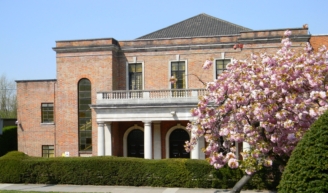
Gay relationships have proved more difficult but even here progress, though slow, is being made. Hampstead Garden Suburb Synagogue (HGSS), an impeccably Orthodox synagogue with an impeccably orthodox rabbi, has announced an event for members to reach out to family and friends in the LGBTQ community. In 2017 a prominent orthodox rabbi made some sympathetic remarks about people who were attracted to members of their own sex, leading to an angry chorus from some leaders of the strictly-Orthodox community. I wrote to one of those leaders, with whom I had friendly relations from my time at the Board, saying that homosexuality is a complex issue. He wrote back agreeing with me. My subtext was that people do not choose their sexual preference – I can’t vouch for his.

Many people brought up as I was in a conservative religious background can vividly recall their first encounter with an openly gay person. Mine took place at university. When I was a student at Cambridge there were eight male undergraduates for every female. My first gay acquaintance was a very attractive, highly intelligent woman. In such an environment, men flocked around her.
Coming from a deeply conservative Christian background, it was hard for her to accept that she was not attracted to any of her numerous admirers. Arriving at the conclusion that the explanation was simple – she was queer – led to an enormous amount of unhappiness and emotional turmoil, but accepting that fact was a major step in her becoming a mature, well-grounded adult.
It is hard to avoid the seemingly unequivocal utterances around homosexuality in the Torah. Historians have posited that statements about homosexuality as an “abomination” in Leviticus, for example, may have been a reaction to homoerotic religious practices common in both the Egyptian and Canaanite cultures.
It is hard to credit now, but in 1972, five years after gay sex was decriminalised between consenting adults, the Chief Rabbi of the time, Lord Jakobovitz, wrote an entry for the Encyclopaedia Judaica making the rather extraordinary assertion that homosexuality was virtually non-existent among Jewish communities, with the proof for the statement being that there were no references to it in rabbinical responsa! This somewhat questionable observation was only modified slightly in the second edition brought out ten years later.
Evidence, however, indicates that being LGBT is no more or less common among Jews than among non-Jews. This means that in the UK alone there are likely hundreds if not thousands of children in Charedi schools who are having to cope with an emerging sexuality which is not what they have been brought up to believe in, inasmuch as sexuality is discussed at all.
This makes the recent announcement in HGSS all the more encouraging. The rabbi who promoted this worthy initiative has had, I believe, some push back, but as the comedian Les Dawson said, with some audiences if you come out alive, and with your clothes intact, you are ahead of the game. As a member of the community my impression is that the majority are with him and support this initiative.
But let the Bible have the last say. David’s elegy for Jonathan, in my opinion one of the most moving of its poems, finishes with the words ’your love was wonderful for me more than the love of women’. We can only speculate what the author of those words had in mind. Perhaps the Bible, which another former Chief Rabbi, Joseph Hertz, described as the supreme book of love and friendship, is saying that love will triumph over all such obstacles.
Perhaps it will, in time, even in Orthodoxy.

Keep community journalism free.
Jewish News is free for everyone. No paywall. No barriers. Just trusted journalism for anyone who wants to stay connected to Jewish life in Britain.
If you value that, please support us.
From as little as £5 a month, you can help keep our journalism free and accessible to all.
Every day, we report on the issues that matter to our community. We celebrate achievements, support charities, challenge antisemitism and ensure Jewish voices are heard more widely.
From as little as £5 a month, you can help us continue to:
- Report on the stories shaping Jewish life in the UK and beyond
- Bring our community together through shared stories, events and campaigns
- Celebrate the people, culture and moments that define our community
- Support organisations doing vital work across Jewish Britain
You can make a one-off donation or become a regular supporter. Every contribution helps keep our journalism free, independent and accessible to all.
If everyone who values Jewish News gave a small amount, it would make a real difference to our future.