Prefer Jewish News on Google

Peace is made with enemies: Why Turkey and Qatar should be at the table
The new 'Board of Peace' is not a gesture of reconciliation. It is a mechanism of leverage.
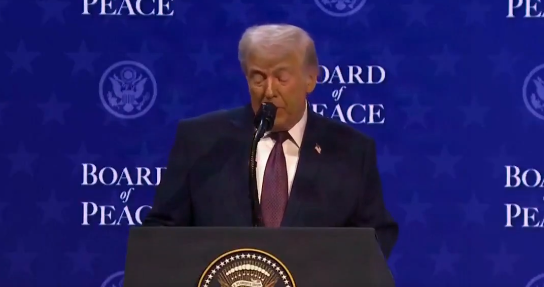
As the UK announced that it won’t be joining President Trump’s “Board of Peace”, as it recalibrates the role of Russia, Middle East policy, humanitarian obligations, legal scrutiny, and strategic partnerships, the debate over who belongs in the “Board of Peace” has sharpened in Israel.
The inclusion of Turkey and Qatar has triggered unease across the political spectrum throughout the country. The reaction is understandable. Both Qatar and Turkey have been among Israel’s most vocal critics during the war, and their regional roles are viewed as outright hostile.
Yet peace processes rarely begin with comfort. They begin with reality.
Israel’s own diplomatic history offers a reminder: the most consequential breakthroughs in the region did not come from alignment with like-minded states, but from engagement with former adversaries. Egypt and Jordan were not natural partners; they became partners after bloody wars and through structured, conditional, and internationally supported diplomacy. The Abraham Accords, too, were less about sentiment and more about incentives, guarantees, and shared interests.
Seen in that light, the presence of Turkey and Qatar should not be understood as a concession, but as a test.
Qatar has, for years, maintained channels to Hamas. As the key financier, with Netanyahu’s blessing, their role is absolutely controversial, but it is also what makes them relevant. When hostages were released, it was not only through appeals to international law or public pressure, but through mediation and leverage exercised by actors who could reach those Israel could not. Turkey, similarly, has positioned itself as a regional interlocutor, often rhetorically confrontational, but diplomatically embedded nevertheless.


A formal peace framework has the potential to shift that influence into responsibility. Participation means visibility, accountability, and the expectation of results. It turns back-channel mediation into a public stake in de-escalation, humanitarian access, and political outcomes.
This is not trust. It is conditional engagement.
Relations between Israel and Turkey were once strategic, not symbolic. They were grounded in trade, tourism, security cooperation, and regional coordination. Their collapse was political, not structural. That distinction matters, because it suggests that a pathway back, however narrow, still exists.
A multilateral peace mechanism can offer such a pathway. For Ankara, it is an opportunity to move from performative diplomacy to practical contribution. For Doha, it is a chance to step beyond the role of intermediary to armed actors and toward a broader, more transparent role in regional stabilization.
For Israel, the calculation must be pragmatic: if these states have influence, the question is not whether to acknowledge it, but whether to shape how it is used.
The Abraham Accords changed the regional conversation by treating normalization as a platform rather than a prize. Economic cooperation, technological partnerships, and diplomatic presence became tools for reshaping incentives over time.
Extending that logic does not require idealizing new participants. It requires binding them to a process in which constructive behavior brings standing, and obstruction carries costs. Even partial alignment on reconstruction, humanitarian mechanisms, or conflict de-escalation can alter the strategic environment in meaningful ways.
There is also a broader international dimension. Like the UK, several European governments, deeply engaged in the diplomatic, legal, and political debates surrounding the war, have chosen to remain outside this emerging peace framework.
Moral leadership and political relevance are not the same thing, but they are not mutually exclusive. Influence in a post-war environment is shaped not only in courts, parliaments, and press conferences, but in the rooms where arrangements are negotiated and commitments are secured. By stepping back from formal mediation structures, European capitals risk limiting their ability to shape outcomes on the ground from humanitarian access to reconstruction standards and security guarantees.
For Israelis, particularly after the profound trauma and lossof the war, the idea of engaging with governments supportive and sympathetic to Hamas is deeply uncomfortable. But diplomacy is not an exercise in moral clarity alone; it is an exercise in altering behaviour.
The “Board of Peace” is not a gesture of reconciliation. It is a mechanism of leverage.
For this reason it places Turkey and Qatar under the same scrutiny as any other participant. It exposes their actions to international assessment. It ties their regional standing to their willingness to contribute to stability rather than continued conflict.
No framework can erase the realities of war, violence, ideology, or deep political division. But if Turkey and Qatar can help deliver concrete outcomes, hostage release frameworks, humanitarian corridors, reconstruction oversight, or channels for de-escalation, then excluding them would be a strategic choice, not a moral one.
Peace, in the Middle East, has never been made with friends alone. It has been made through processes that turn adversarial influence into conditional cooperation, and rhetoric into responsibility.
The question is not whether this path is comfortable. It rarely is. For most in Israel it fuels the political division. The question is whether, imperfect as it may be, it offers a better chance of shaping the next phase of the region than standing outside the room while others decide it.

Keep community journalism free.
Jewish News is free for everyone. No paywall. No barriers. Just trusted journalism for anyone who wants to stay connected to Jewish life in Britain.
If you value that, please support us.
From as little as £5 a month, you can help keep our journalism free and accessible to all.
Every day, we report on the issues that matter to our community. We celebrate achievements, support charities, challenge antisemitism and ensure Jewish voices are heard more widely.
From as little as £5 a month, you can help us continue to:
- Report on the stories shaping Jewish life in the UK and beyond
- Bring our community together through shared stories, events and campaigns
- Celebrate the people, culture and moments that define our community
- Support organisations doing vital work across Jewish Britain
You can make a one-off donation or become a regular supporter. Every contribution helps keep our journalism free, independent and accessible to all.
If everyone who values Jewish News gave a small amount, it would make a real difference to our future.