Prefer Jewish News on Google
Exclusive event: Photographer Ziv Koren’s October 7 images on show in London
The multi-award-winning photojournalist was one of the first on the scene following the Hamas attacks
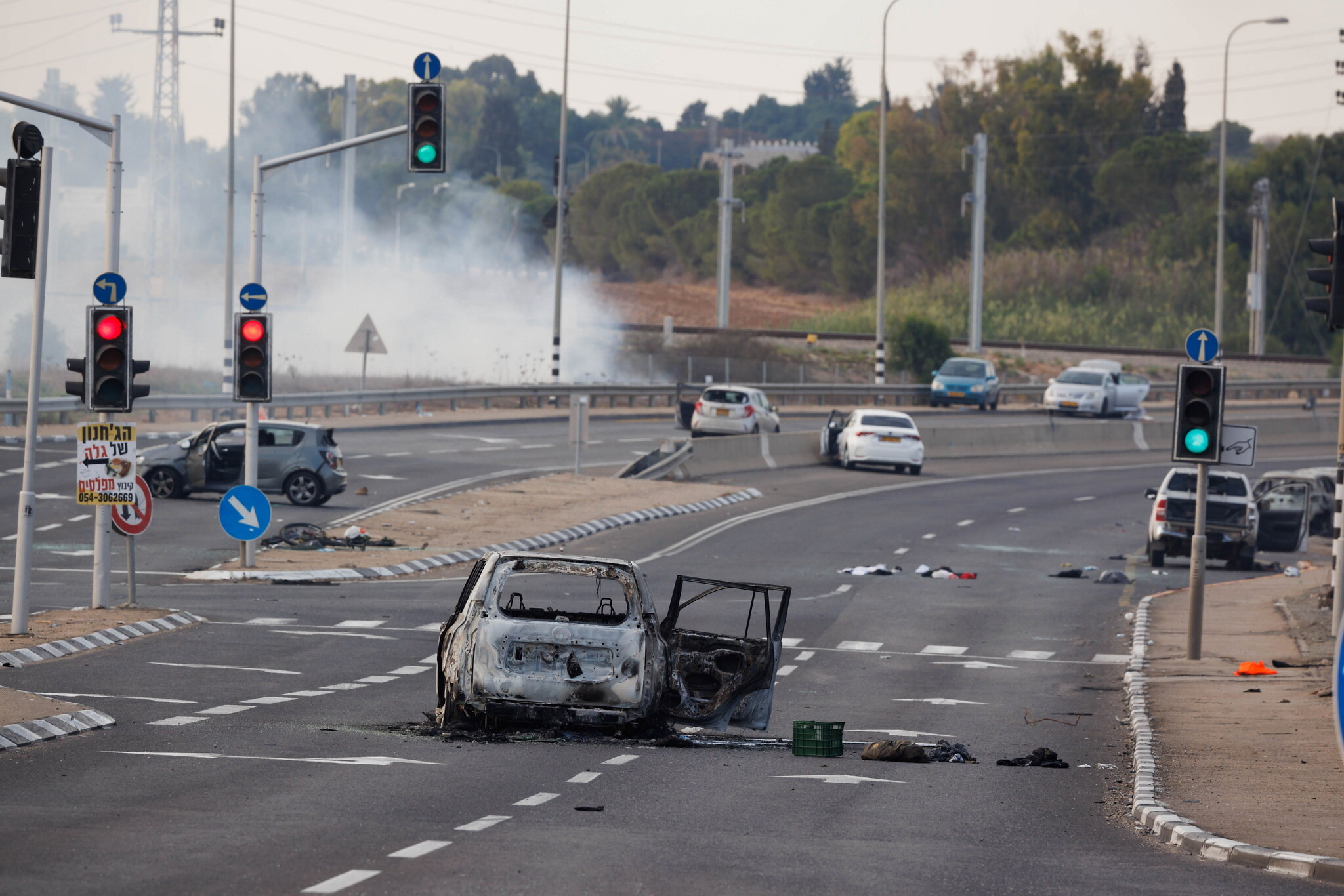
While other Israelis were waking in confusion on 7 October 2023, Ziv Koren already knew the sirens were not warning of missile strikes over Tel Aviv.
His first concern was how quickly he could get his seven-year-old daughter, who was sleeping over, safely home to her mother. Then he ran home, called his contacts in the military and a few trusted colleagues: “Much as you want an exclusive, when you need to you travel in a pack for safety.”
Then the 56-year-old grabbed his camera, helmet and flak jacket, jumped on his motorbike and headed south to document what he describes as “one of the biggest disasters in human history”.
Koren, a multi-award-winning photojournalist, was first on the scene recording some of the atrocities of that day, bypassing police barricades at Ashkelon by going off-road, still with no understanding of the magnitude of what was going on. “How many people had been slaughtered or how many Hamas terrorists were in Israel? I only knew they had entered.”

He got his first clue on the approach to Sderot. “The first scene was a road where everyone was dead. A bus stop with dead people around it, cars in which everyone was dead, motorcycles turned upside down – I didn’t see anyone alive.”
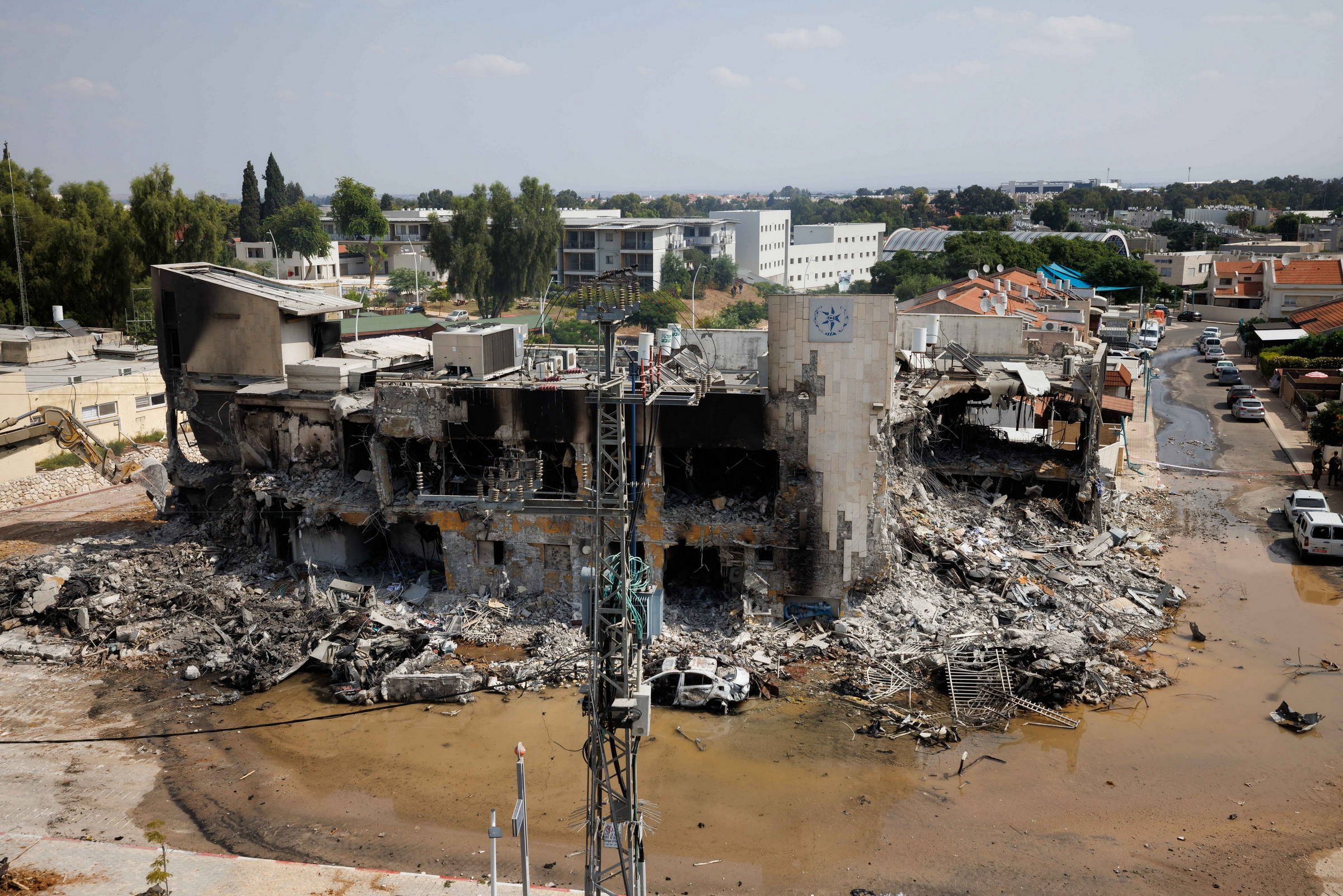
While not the first confrontation with mass murder for a man who has covered “every conflict since the 1990s including Ukraine”, he confesses: “It was still one of the most shocking sights I’ve ever experienced.” At the police station he was trapped with colleagues under fire until soldiers arrived to join the gunfight, enabling him to flee home to send his first pictures.
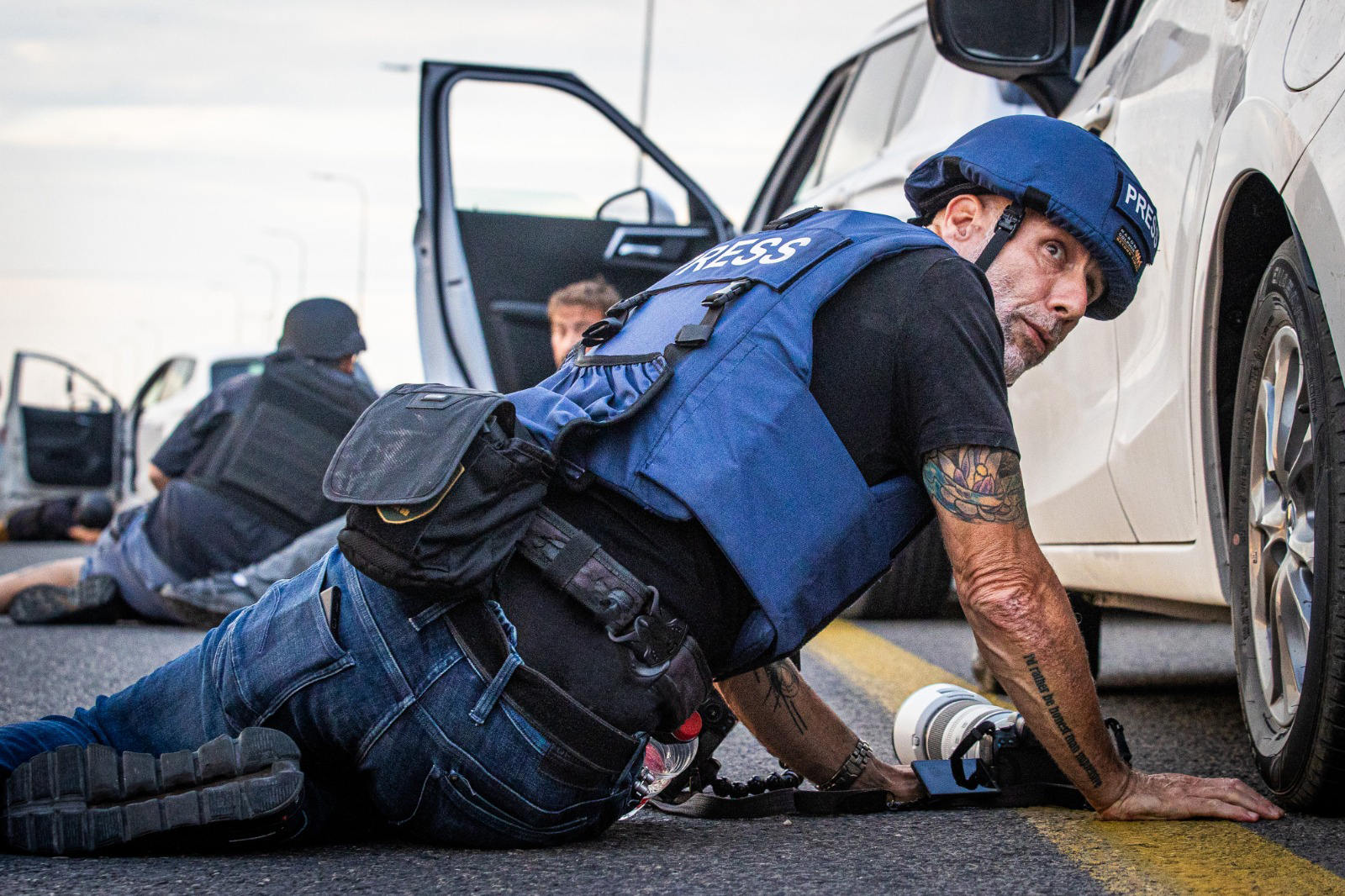
By dawn the next day Koren was back, en route to the invaded kibbutzim while Hamas terrorists were still inside Israel. It was just the beginning of an unrelenting three years during which he has worked 18 hours a day following hundreds of victims, survivors and their families: “Photographing on a daily basis the battlefields in Gaza and Lebanon, the hostages who came back, the soldiers wounded on October 7 undergoing rehabilitation. Some of the families I’ve followed for a year or two now, telling their stories over a period of time.”
After filling two books and 80 international exhibitions with selections from his 750,000 images, Koren is coming to London for the first time in several years to show some of his incredibly moving pictures and tell the stories behind them at an event organised by the World Zionist Organisation under the leadership of Matan Bar Noy.
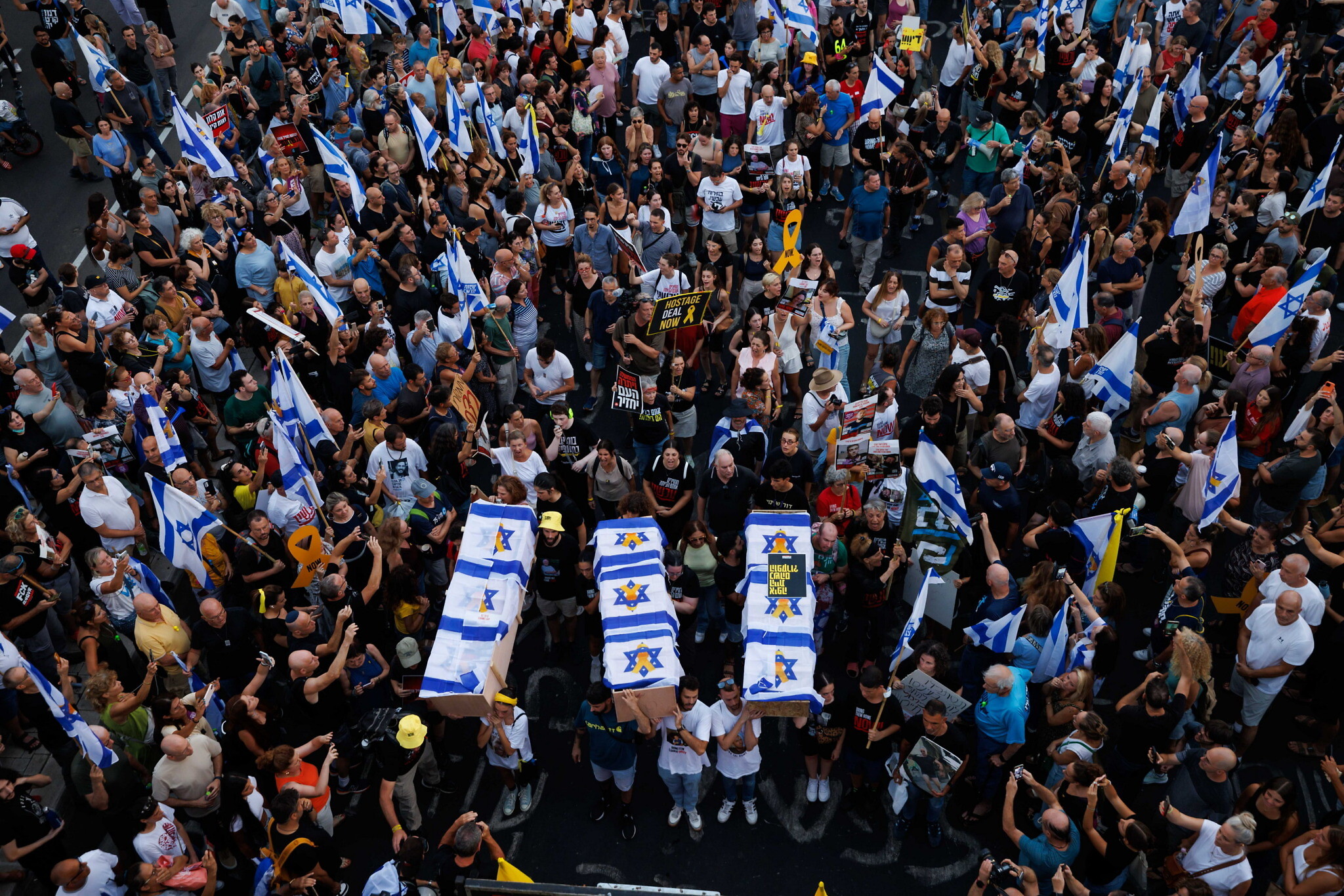
So many are unbearably sad – the little girl on a swing is three-year-old Avigail Idan, whose father was a friend and colleague of Koren’s. “He heard the sirens and went out to photograph. When he saw Hamas parachuting in he ran back to his kibbutz, but by the time he got home his wife had already been murdered.
“As he ran to grab his daughter, he got a bullet in the back and dropped dead. Full of his blood, Avigail got herself from under his body and ran to the neighbours. She was taken hostage with the family she ran to for help.” Avigail was released after 52 days in captivity and her siblings, hiding in a cupboard, escaped capture by keeping themselves hidden for 14 hours. “These are tales of the Holocaust; this is the modern Holocaust,” says Koren.
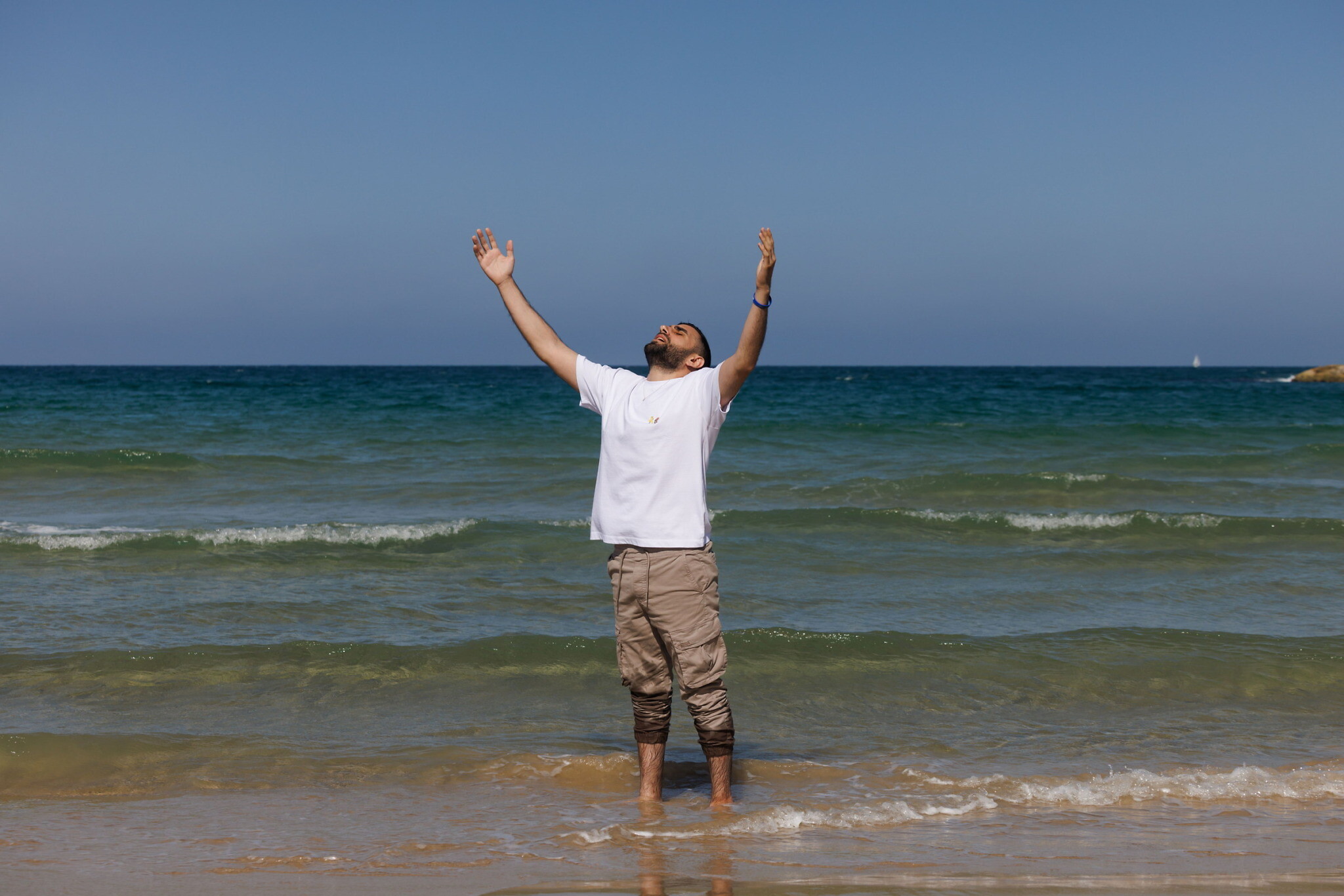
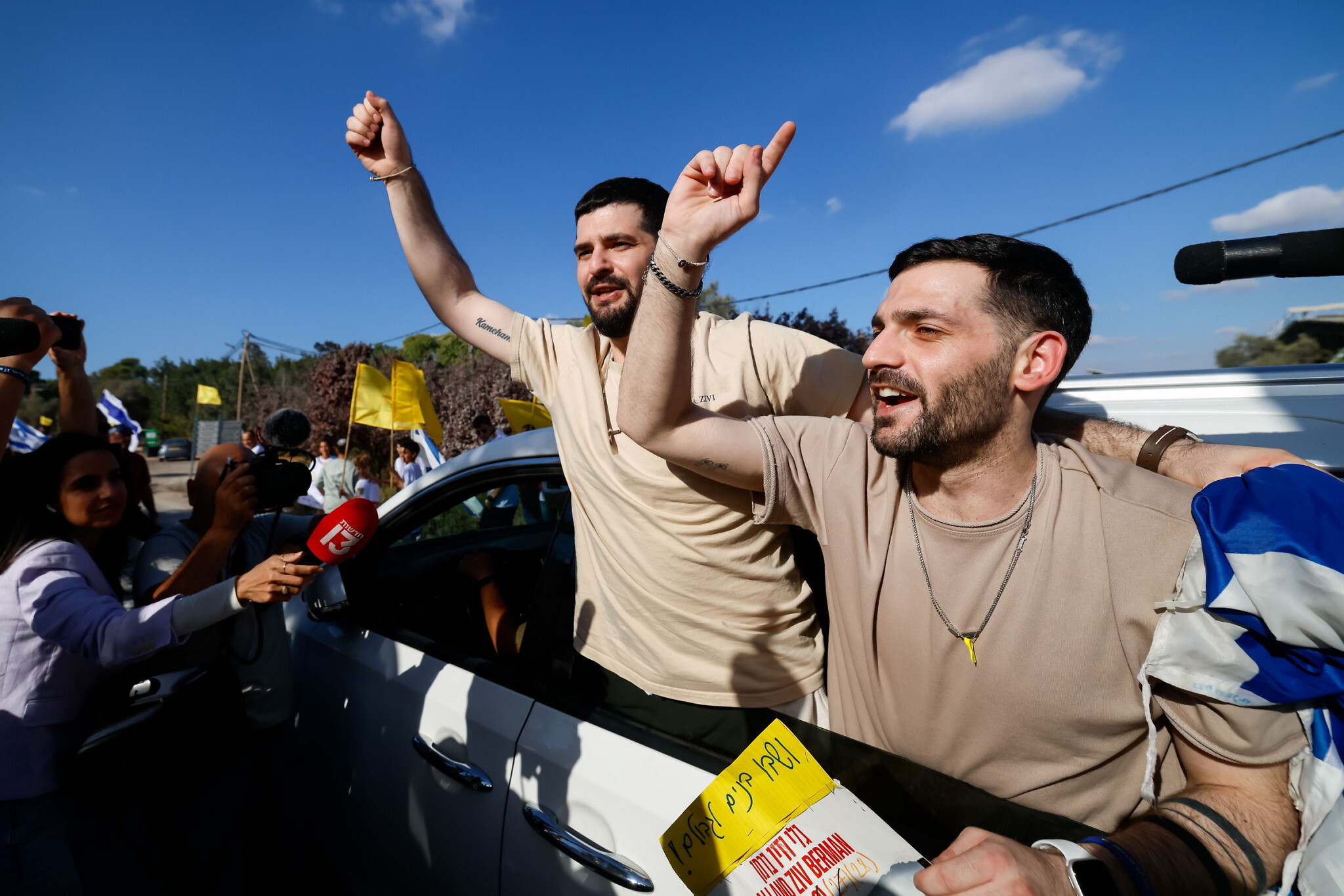
But the man whose mission statement is “I’d rather be honest than impressive” is also ace at capturing joy – and there is real jubilation in his shot of Segev Kalfon leaping in the surf as he fulfills his wish to go to the beach and smell the sea after 758 days in captivity. Then there are Gali and Ziv Berman, twin brothers who were separated in Gaza during the 738 days they were held hostage after being kidnapped from Kibbutz Kfar Aza, exuberantly celebrating their release together.
Unlike many hardened war photographers, Koren does not see the camera as a barrier between himself and the emotions triggered by capturing immense grief in the aftermath of violence. “When I document these heroes I have to tell the truth, and one of the most important things is being able to transfer a glimpse of the emotional experience I witness while being with them. “Those emotions don’t bypass me when they travel from the subject to the viewer.”
He does not believe any event will surpass October 7 in terms of the intensity with which he experienced what transpired. “I’m sure it has changed me – I don’t think anyone in Israel is the same as they were on 6 October 6 2023.” He lost friends, has attended dozens of funerals and regrets he was not always there to support his two grown-up daughters at the funerals of the friends they lost themselves at the Nova festival.
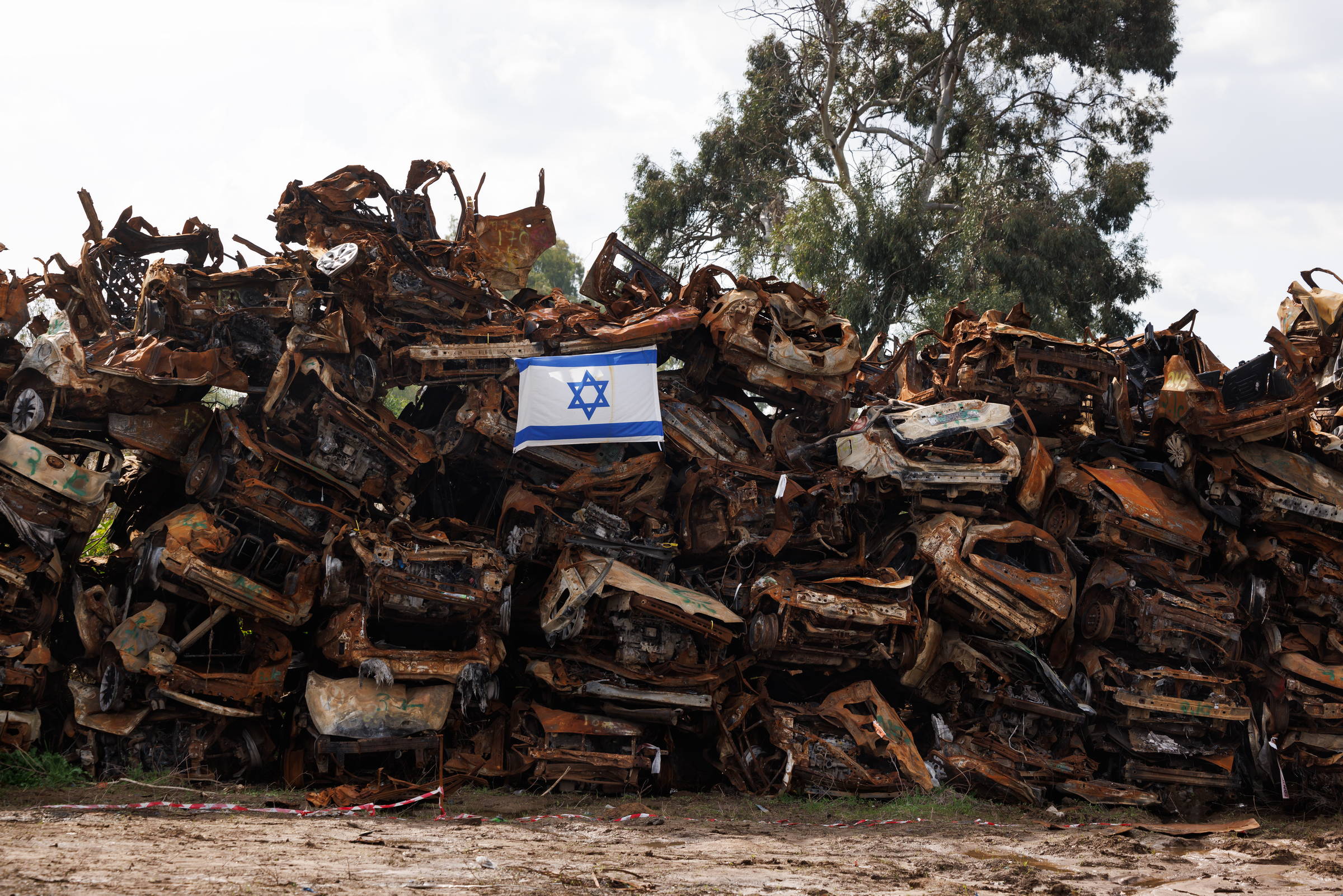
So how on earth does he cope mentally with three years of continuous work, during which he has not taken a break, only occasionally travelling for no more than 48 hours to accept an award or open an exhibition? “I have two items in my office – a pool table inside and a basketball hoop in the garden,” he explains. “So when I need to think or break loose I go and shoot pool or shoot hoops – and I take a lot of cigarette breaks. But I never forget I’m telling a story for future generations with photographs that will be talked about in schools.”
As for the books, Koren is longing for what he calls his black book and his grey book to be followed in the future by a white book. What would have to happen to make that possible?
“Hopefully we will live in peace with our neighbours, see prosperity again, understand that lives were not lost for no reason defending the State of Israel, and have a better life when peace breaks out.” An impossible dream? “It sounds strange, but for some reason I’m still an optimist.”
“Each of us remembers where we were when the devastating news reached us on Simchat Torah (2023), says Matan Bar Noy, head of WZO in London. “I was called from synagogue to join my reserve unit under emergency mobilisation. My tallit was replaced by an olive-green uniform, and the melodies of the festival by the sound of a machine-gun. Even then, we were thinking about the day after, and how we would tell the story of what was almost impossible to comprehend. I thank Ziv Koren, whose camera has created a powerful visual testimony for an entire people, ensuring that we never forget.
My sincere thanks to the Embassy of Israel and to Tzemach Productions for their initiative in producing this important event. May peace and quiet return to our beloved homeland and may those who seek peace never have to know war again.”
October 7, Through the Lens is showing in London on 13 October. Click here to buy tickets
This event is organised by the World Zionist Organization, under the leadership of Matan Bar Noy. Additional partners include the Embassy of Israel and South Hampstead Synagogue. Production by Tzemach Productions.

Keep community journalism free.
Jewish News is free for everyone. No paywall. No barriers. Just trusted journalism for anyone who wants to stay connected to Jewish life in Britain.
If you value that, please support us.
From as little as £5 a month, you can help keep our journalism free and accessible to all.
Every day, we report on the issues that matter to our community. We celebrate achievements, support charities, challenge antisemitism and ensure Jewish voices are heard more widely.
From as little as £5 a month, you can help us continue to:
- Report on the stories shaping Jewish life in the UK and beyond
- Bring our community together through shared stories, events and campaigns
- Celebrate the people, culture and moments that define our community
- Support organisations doing vital work across Jewish Britain
You can make a one-off donation or become a regular supporter. Every contribution helps keep our journalism free, independent and accessible to all.
If everyone who values Jewish News gave a small amount, it would make a real difference to our future.