Prefer Jewish News on Google
Polanski fails to clarify whether he believes Zionism is racism as his family’s pro-Israel views are raised
Green Party leader tells LBC's Iain Dale he does not believe Israel has 'right to exist'
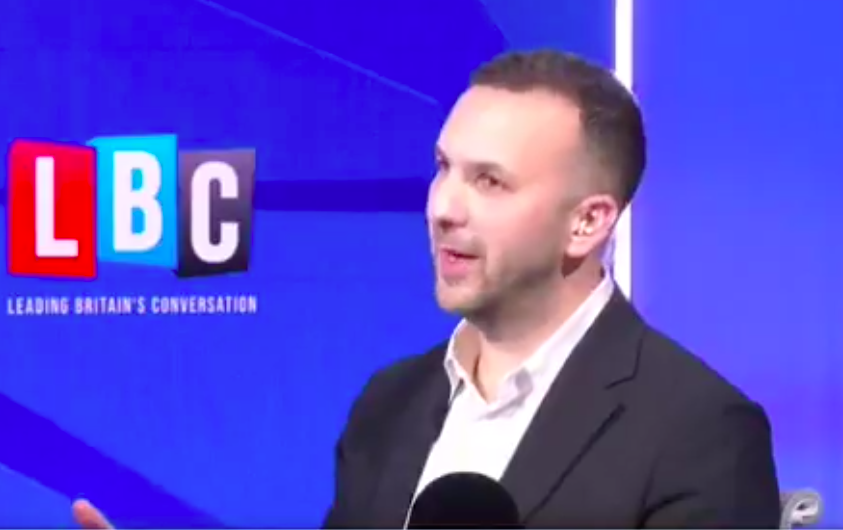
Zack Polanski has been accused of equivocating over whether he believes that “Zionism is racism,” following a Jewish News report revealing his mother and other immediate family members hold pro-Israel views.
The Green Party leader also admitted he does not believe the state of Israel has the “right to exist,” but stopped short of endorsing a one-state solution for the Middle East.
Appearing on Iain Dale’s LBC show, Polanski was questioned about a motion likely to be debated at the party’s Spring Conference next month, a motion that openly declares Zionism to be racism and demands all members share this stance.
Dale referenced a Jewish News report published earlier in the week that revealed Polanski’s mother, sister, and other family members had made their pro-Zionist views clear, attending demonstrations and supporting Jewish organisations, especially after October 7.
Polanski was specifically asked: “It seems to me that you are equivocating on whether Zionism is a racist ideology.”

“If this motion passed at your conference, your mother and sister—who have been openly pro-Israel—would be cast as racist.
“As leader of the Green Party, you can’t possibly want that to happen, can you?”
Polanski responded, “I am equivocating, actually, and I’m openly equivocating.”
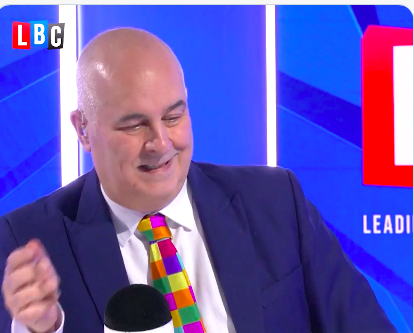
Earlier, he said: “My family—the Holocaust is in our DNA.
“And I think the idea of Zionism, initially, was to ensure there was a peaceful place for Jewish people persecuted across Europe, most notably in Nazi Germany.”
Dale then pressed Polanski to “put to bed” the notion that Zionism is racism, but Polanski responded, “It depends on what you mean by Zionism.”
The presenter also asked Polanski how, as a Jewish person, he could equivocate on such an issue.
“Because you need to define the label first of all. Different people define it in different ways, and so I find it unhelpful,” he said.
Pressed on what he would do if his own mother called the show to say she defined herself as a Zionist, Polanski added: “What do you mean by Zionism?
“And that’s why I think the motion… Terms are abstract, and this is a very abstract term. It depends on what exactly you’re talking about. If you’re talking about the original, historical definition—no, I don’t think it’s racist.
“If you’re talking about the genocide of the Palestinian people under the definition of Zionism, then yes, it’s clearly racist. I think you need to know which version you’re talking about.”
Polanski attempted to downplay support for the “Zionism Is Racism” motion, submitted for the upcoming conference.
However, Jewish News understands it is among the most popular motions so far, with members able to show their support online ahead of the selection process.
“The first thing to mention is the Green Party’s democratic process: any member can submit a policy to our conference, and we have 195,000 members,” said Polanski. “So I have to be a little careful about commenting on every motion that arrives.”
Later in the same LBC interview, Polanski was pressed further on his views on Israel. When asked if he believed Israel had the right to exist, he replied: “I generally don’t think any state has a right to exist. People have a right to exist.”
“So Israelis have a right to exist. Palestinians have a right to exist. But the ideas of borders and countries are an esoteric conversation.”
He added, “I think it’s important that it’s ultimately up to the Palestinian and Israeli people to decide what their self-sovereignty looks like.”
“The reason I said no initially is because I don’t think it’s for political leaders from other countries to decide what that looks like.”
The Greens leader was pressed about his involvement in the formation of the Jewish Greens group, but Dale added, “You’ve been on a bit of a journey since that.”
Polanski said: “As a Jewish person, I think it’s really important that I speak out against antisemitism.”
But he continued: “I also think as a political leader, it’s important to talk about the genocide that’s happening in Gaza and to express my solidarity with the Palestinian people.
“You can do both those things. Far too often, in our national discourse, antisemitism gets conflated.”

Keep community journalism free.
Jewish News is free for everyone. No paywall. No barriers. Just trusted journalism for anyone who wants to stay connected to Jewish life in Britain.
If you value that, please support us.
From as little as £5 a month, you can help keep our journalism free and accessible to all.
Every day, we report on the issues that matter to our community. We celebrate achievements, support charities, challenge antisemitism and ensure Jewish voices are heard more widely.
From as little as £5 a month, you can help us continue to:
- Report on the stories shaping Jewish life in the UK and beyond
- Bring our community together through shared stories, events and campaigns
- Celebrate the people, culture and moments that define our community
- Support organisations doing vital work across Jewish Britain
You can make a one-off donation or become a regular supporter. Every contribution helps keep our journalism free, independent and accessible to all.
If everyone who values Jewish News gave a small amount, it would make a real difference to our future.