Prefer Jewish News on Google
Pop music, the swastika and the Third Reich
Daniel Rachel's new book explores the Nazi infatuation of some of the greatest musicians
Daniel Rachel looks every bit the rock musician he once was. Wearing skinny jeans, he gets a focussed, intense look on his face when talking about music of all kinds, showing immediately why he now writes so passionately about artists.
“I was a musician for all of my life and then I became an author,” he explains, as if it’s the most natural thing in the world. Most of us dream of doing just one of these jobs.
Why did he make the transition from making music to writing about it? “I just thought Alex Turner’s around, and if the Arctic Monkeys exist, I don’t need to. So I locked my guitar away, shoved my singing voice down my throat and decided I was going to write a book, and that’s what I’ve done ever since.”
Since tracks like I Bet You Look Good on the Dancefloor and Mardy Bum put paid to his performing ambitions, Rachel has gone on to author and co-author numerous volumes. His latest work, This Ain’t Rock ‘n’ Roll, looks at pop music’s various flirtations with, and sometimes full-on embrace of, the swastika and other Third Reich imagery. Rachel’s research spans multiple genres and eras – from John Lennon’s private collection to metal icons Slayer’s ode to Nazi doctor Josef Mengele and Kanye West’s more recent ‘issues’.
I’ve seen Slayer perform their infamous track live as the climax to their set at the Bloodstock festival in 2016. “Did you sing along?” inquires Rachel. The truth is I was three days into a music festival, and my memory is somewhat blurred. I probably did though. Slayer are scheduled to be back there next summer. I suspect I will view the performance in a somewhat different light after talking with Rachel and reading his work.




Few, if any, of the artists the author analyses would consider themselves antisemites, let alone Nazis. Yet their interest in the Third Reich is undeniable, and hard to ignore once it has been explicitly pointed out.
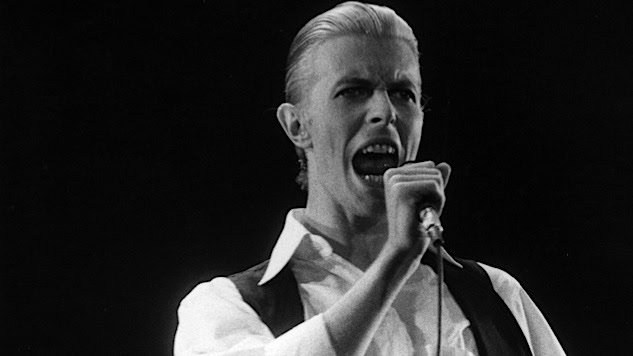
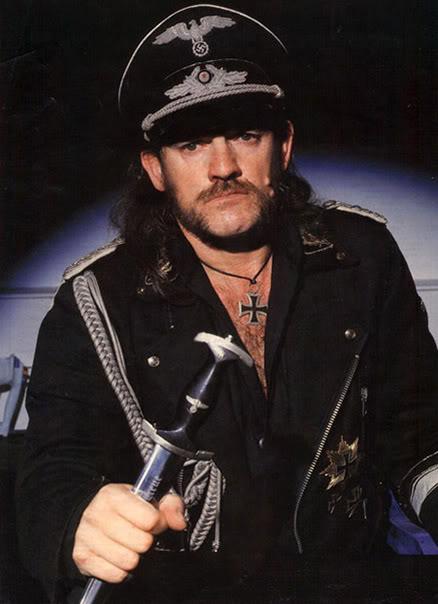
Think of David Bowie’s Thin White Duke, or of the late Motorhead frontman Lemmy Kilmister, who had a collection of Nazi paraphernalia. What is it that draws such people towards the murderous regime? Much of it is about imagery, not ideology, explains Rachel.
“I think ultimately that rock and roll divorces theatrical spectacle from atrocity,” he concludes. A key point of reference is the work of filmmaker Leni Riefenstahl, who made propaganda movie Triumph of the Will about the Nuremberg rally. Rachel told Jewish News that “within [the film] is the brilliance of Hitler’s architect Albert Speer and his theatrical ideas and imagination for pageantry are extraordinary.”
The rockstars seem unable to resist creating that same rally-like nature at their concerts, deploying elaborate costumes and light setups. Think too of moments like Queen performing Radio Ga Ga at Live Aid – Freddy Mercury, the crowd in the palm of his hand, getting hundreds of people to clap and then sing on command.
It is hard not to feel despondent when talking to Rachel or reading his book. So many of our favourite artists seem to on some way embrace a regime that would have had the author, a Jewish man from Birmingham, this writer and readers of this newspaper wiped out.
Rachel is not prepared to offer the benefit of the doubt. “I’m not aware of anybody doing it unconsciously or subconsciously. They know they’re flirting with imagery. I’m not certain there’s a singular exception to that.”
It is a rather depressing thought that so many great acts could have looked over or even embraced the horrors of the Nazis for their own artistic ends. How can all the musicians we love be taken, to one degree or another, with something so awful. Worse still, how can they be so unashamed about it in public?
In part, it is about showing off. Rock musicians want to shock, and little is more shocking than the Nazis. The problem is exacerbated by ignorance and a lack of education.
“In the mid-70s a punk band in the mid-70s called Dead Boys went to a studio in New York to record with Nazi memorabilia to give to their guests the Ramones, who also talk about Nazism [and] are half Jewish as a band,” recalls Rachel. “They arrived at the studio with cases emblazoned with swastikas. The producer, Genya Ravan, a survivor of the Holocaust through her family, said, ‘we don’t record a single note until those go.’
“She then had to explain the significance of the marking because the musicians ‘had no idea what the swastika is’. This all happened in a studio run by a Jew. It seems almost impossible that anyone could not know what a swastika is, but the band needed the explanation. A week later, everyone returned to the studio, the insignia gone.”
This Ain’t Rock ’n’ Roll makes it clear that the Nazi infatuation is not confined to some weird musical outposts, highlighting the tendencies of some of the greatest artists of all time. And Daniel Rachel still clearly adores many of the musicians he writes about. We all do. But we can no longer ignore the more unpleasant bits of iconography they draw on.
This Ain’t Rock ‘n’ Roll: Pop Music, the Swastika and the Third Reich is published by White Rabbit, £12.99

Keep community journalism free.
Jewish News is free for everyone. No paywall. No barriers. Just trusted journalism for anyone who wants to stay connected to Jewish life in Britain.
If you value that, please support us.
From as little as £5 a month, you can help keep our journalism free and accessible to all.
Every day, we report on the issues that matter to our community. We celebrate achievements, support charities, challenge antisemitism and ensure Jewish voices are heard more widely.
From as little as £5 a month, you can help us continue to:
- Report on the stories shaping Jewish life in the UK and beyond
- Bring our community together through shared stories, events and campaigns
- Celebrate the people, culture and moments that define our community
- Support organisations doing vital work across Jewish Britain
You can make a one-off donation or become a regular supporter. Every contribution helps keep our journalism free, independent and accessible to all.
If everyone who values Jewish News gave a small amount, it would make a real difference to our future.