Prefer Jewish News on Google
Pound slides as resilient shekel strengthens
Sterling falls to multi-year lows against the Israeli currency as UK economic headwinds intensify
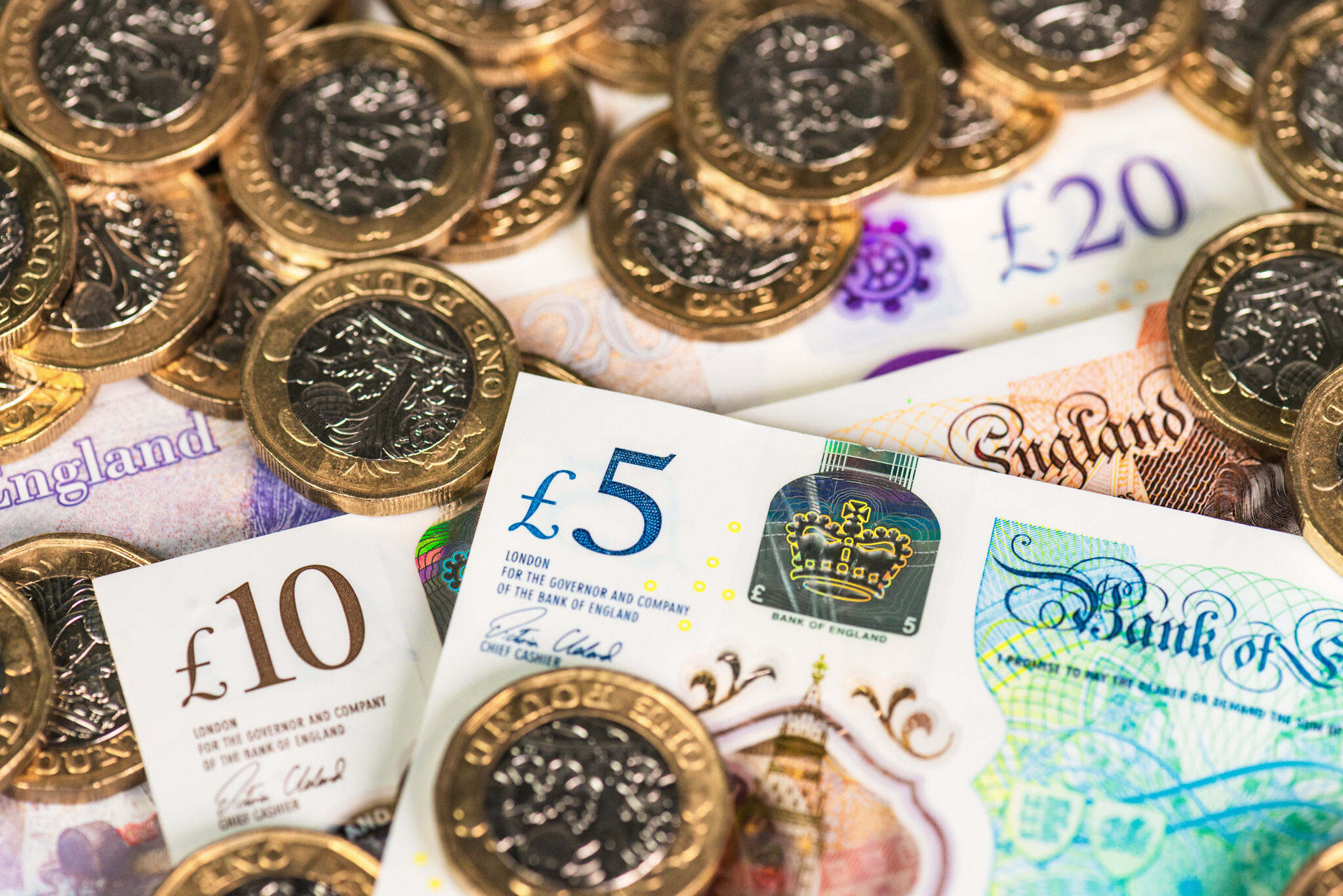
The shekel has strengthened sharply against sterling in recent months, gaining ground again this week with the Bank of Israel setting the exchange rate at around NIS 4.03 to the pound – close to its strongest level in years.
Analysts say that if the current trend continues, sterling could fall to its weakest level against the Israeli currency since the early 1990s.
The trend reflects a widening gap between the UK’s economic outlook and Israel’s relative currency strength.
Sterling has slipped to around NIS 4.05–NIS4.10 in recent weeks, down from highs above NIS4.30 at the start of the year, reflecting a steady weakening trend in 2026.
At the same time, the shekel has strengthened overall, gaining roughly 3–4 percent against the pound this year, underlining the shift in relative currency performance.



Modi Shafrir, chief strategist financial markets, Bank Hapoalim, told Jewish News: “The shekel has appreciated to record levels against other global currencies – it is at its highest level against the dollar since 1995 and also at record levels against the euro.
“A weakening pound against the dollar (since the end of January this year) also explains why the shekel has appreciated to record levels against the pound. The reason for this appreciation against the other currencies includes the fact that global markets are going up – the Nasdaq has shot up after the slam at the start of the war. When this happens, the shekel appreciates because financial institutions in Israel, which are selling dollars in order to hedge their FX exposure.
“Secondly, the Israeli balance of payments are in a positive position – we have more exports of services; hi-tech, gas, defence, which are much higher than the imports, and the net Foreign Direct Investment continues to be high. All of these factors plus the weakening dollar and pound, are having a huge impact on the strength of the shekel.”
Sterling has been impacted by a combination of economic and geopolitical factors.
Rising inflationary pressures in the UK, driven in part by energy costs and global instability, have unsettled markets and weakened confidence in the currency.
At the same time, slowing business activity and concerns over economic growth have added to the pressure, with surveys pointing to weaker expansion and rising input costs.
Currency markets have also been influenced by wider global dynamics, including geopolitical tensions in the Middle East, which have increased volatility in sterling.
In contrast, the Israeli shekel has shown resilience, supported by strong underlying economic fundamentals.
Israel’s currency has also been supported by a strong performance in its high-tech sector, which saw investment rebound to near-record levels in 2025. The sector continues to attract global investment, despite geopolitical risk, helping to underpin the currency, while relatively contained inflation has allowed policymakers greater flexibility.
Economic growth expectations also remain robust, with the Bank of Israel forecasting GDP growth of around 3.8% in 2026, rising to 5.5% in 2027 as the economy rebounds following the war.
The weaker pound is already having a tangible impact.

Economist Matthew Salter, the the former trade director at the UK Embassy in Tel Aviv, said: “The shekel has strengthened almost 25% against the pound in a single year. Changes of that magnitude are never painless.
“The most immediate casualties are those with fixed pound-denominated incomes including retirees and olim still employed by UK-based companies. But the effects will ripple outward. Israeli exporters are already suffering, and as profit margins are squeezed, the drag on the broader economy will follow though on a slower timescale. Cheaper imports should offer some relief to consumers, though whether retailers actually pass on all those savings is another matter entirely.
“Expect growing calls for a weaker shekel as the pressure spreads. But currency markets are notorious for overshooting and slow reversals; like a supertanker, they take a long time to change course. Until that happens, the pragmatic move is to put the strong shekel to work and book some overseas travel which has just become significantly more affordable!”
For UK-based buyers, including property investors, importers and those sending money to Israel, costs have risen significantly.
At the same time, Israeli consumers and investors are finding UK assets relatively cheaper, potentially increasing demand for British property, businesses and investments.
Forecasts suggest the pound could remain under pressure against the shekel in the near term, with some projections pointing to the exchange rate hovering in the NIS 3.90– NIS 4.10 range through 2026.
Much will depend on the path of UK inflation, interest rate decisions by the Bank of England, and broader global economic conditions.
For now, however, the direction of travel is clear: the balance has shifted and sterling is no longer the dominant currency in the UK-Israel relationship it once was.

Keep community journalism free.
Jewish News is free for everyone. No paywall. No barriers. Just trusted journalism for anyone who wants to stay connected to Jewish life in Britain.
If you value that, please support us.
From as little as £5 a month, you can help keep our journalism free and accessible to all.
Every day, we report on the issues that matter to our community. We celebrate achievements, support charities, challenge antisemitism and ensure Jewish voices are heard more widely.
From as little as £5 a month, you can help us continue to:
- Report on the stories shaping Jewish life in the UK and beyond
- Bring our community together through shared stories, events and campaigns
- Celebrate the people, culture and moments that define our community
- Support organisations doing vital work across Jewish Britain
You can make a one-off donation or become a regular supporter. Every contribution helps keep our journalism free, independent and accessible to all.
If everyone who values Jewish News gave a small amount, it would make a real difference to our future.