Prefer Jewish News on Google
Shekel hits 30-year high as investor confidence returns
Currency strength is easing inflation and supporting rate cuts, though exporters are feeling the squeeze, economists warn

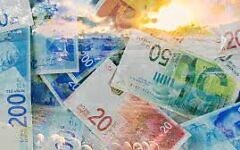
The Israeli shekel has climbed to its strongest level in roughly 30 years, with the dollar dipping to around NIS 3.055 in recent trading – a milestone not seen since the mid-1990s.
Economists say the rally reflects a mix of global dollar weakness and renewed demand for Israeli assets, alongside major foreign currency flows within Israel itself.
Bank of Israel data show that institutional investors sold approximately $13.2 billion in net foreign currency during the fourth quarter alone. Total net sales across 2025 reached around $20.7 billion.
Modi Shafrir, chief strategist, financial markets at Bank Hapoalim, said those institutional flows, combined with Israel’s balance-of-payments surplus, a decline in the country’s risk premium, and the fact that the central bank has not intervened by buying foreign currency over the past year, have helped drive the shekel to record levels against a basket of currencies.
The stronger currency is already having an impact on inflation expectations.



“The appreciation reduces inflation,” Shafrir told Jewish News “allowing the Bank of Israel to continue cutting the rate.”
However, the rapid strengthening also creates challenges for Israel’s export-driven sectors, particularly companies earning revenues in dollars.
That includes much of Israel’s globally focused technology industry, where startups and major firms alike often generate income overseas while paying costs at home in shekels.
“On the other hand,” Shafrir warned, “the appreciation is hurting local exporters.”
Looking ahead, he suggested the main factor that could interrupt the shekel’s upward momentum in the short term would be a decline in US equity markets, which could quickly shift investor sentiment.
Despite the risks, Shafrir said the currency’s strength remains a broader sign of resilience.
“I think the shekel appreciation is a reflection of the strong economy and the strong balance of payments,” he said. “So overall, it’s good for the Israeli economy.”

Economist Matthew Salter is the former trade director at the UK Embassy in Tel Aviv. He told Jewish News: “We’re witnessing a convergence of both dollar weakness and shekel strength. The dollar’s decline stems from concerns over the American administration’s policies, particularly tariff uncertainty. Meanwhile, the shekel has gained strength from sustained high investment in Israel’s tech sector and the Tel Aviv Stock Exchange’s strong performance relative to global markets.
“With exports holding up well, exporters have voiced fewer complaints about the strong shekel than during previous appreciation cycles. Barring a sudden shift in the geopolitical situation (which is always a possibility in the region), it’s hard to see why the current exchange rate won’t remain at around current levels in the short term.”

Keep community journalism free.
Jewish News is free for everyone. No paywall. No barriers. Just trusted journalism for anyone who wants to stay connected to Jewish life in Britain.
If you value that, please support us.
From as little as £5 a month, you can help keep our journalism free and accessible to all.
Every day, we report on the issues that matter to our community. We celebrate achievements, support charities, challenge antisemitism and ensure Jewish voices are heard more widely.
From as little as £5 a month, you can help us continue to:
- Report on the stories shaping Jewish life in the UK and beyond
- Bring our community together through shared stories, events and campaigns
- Celebrate the people, culture and moments that define our community
- Support organisations doing vital work across Jewish Britain
You can make a one-off donation or become a regular supporter. Every contribution helps keep our journalism free, independent and accessible to all.
If everyone who values Jewish News gave a small amount, it would make a real difference to our future.