Prefer Jewish News on Google
Pro-Palestinian legal bid against British-Israeli IDF reservist ends with £82k bill
Campaign group ordered to pay full legal costs after judge ruled its failed prosecution had no legal basis and was politically motivated
A pro-Palestinian campaign group has been ordered to pay more than £82,000 after its failed attempt to prosecute a British-Israeli man for serving in the Israel Defence Forces.
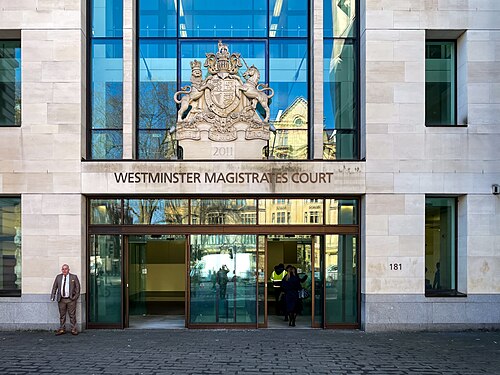
Westminster Magistrates’ Court ordered the International Centre of Justice for Palestinians (ICJP) to pay £82,130 to the man, known only as Soldier A, after Senior District Judge Paul Goldspring ruled the case should never have been brought.
The ICJP argued that the dual British-Israeli national broke the Foreign Enlistment Act 1870 by returning to Israel to serve as an IDF reservist after the Hamas attacks on 7 October 2023.
But the judge ruled that the law does not apply to dual nationals serving in the armed forces of their other country of citizenship, meaning the case had no legal basis.
In his latest ruling, Goldspring said the ICJP should pay all of Soldier A’s legal costs because it had committed “culpable, profound breaches of the fundamental duty of candour.”



He said the £82,130 legal bill was “entirely reasonable and proportionate given the complexity of the response forced upon Soldier A.”
The judge also said the organisation had accepted what he described as “systemic failures of candour” and had apologised to both the court and Soldier A.
Speaking after the ruling, Soldier A said: “It really shows that justice can prevail and that this judge saw through the games, the political meddling that was trying to be done here.”
He added that the decision brought “a great end to a long and stressful saga.”
Earlier this year, Goldspring dismissed the prosecution, describing it as “fundamentally misconceived in law”, “egregious” and “an abuse of the process of this court.”
He said the case had been used as “a platform for political posturing” rather than a genuine criminal prosecution, and found that the group’s “dominant motive” was “the advancement of a political and ideological agenda.”
The judge also criticised evidence from one of the ICJP’s expert witnesses, saying it was “partisan and misleading” and closer to “propaganda” than independent expert evidence.
Responding on X, the ICJP said: “Private prosecutions are a lawful and long-established route to accountability where public authorities do not act. Testing that route carries risk, risk which doesn’t always deliver the results we seek. But we will continue to pursue accountability for grave international crimes through every lawful avenue available.”
The group added: “This ruling is not a verdict on the underlying allegations. Those who present it as so have failed to understand the court’s reasoning.”
It said it would review the judgement and its own procedures, adding that while the case had ended, “not the pursuit of accountability.”

Keep community journalism free.
Jewish News is free for everyone. No paywall. No barriers. Just trusted journalism for anyone who wants to stay connected to Jewish life in Britain.
If you value that, please support us.
From as little as £5 a month, you can help keep our journalism free and accessible to all.
Every day, we report on the issues that matter to our community. We celebrate achievements, support charities, challenge antisemitism and ensure Jewish voices are heard more widely.
From as little as £5 a month, you can help us continue to:
- Report on the stories shaping Jewish life in the UK and beyond
- Bring our community together through shared stories, events and campaigns
- Celebrate the people, culture and moments that define our community
- Support organisations doing vital work across Jewish Britain
You can make a one-off donation or become a regular supporter. Every contribution helps keep our journalism free, independent and accessible to all.
If everyone who values Jewish News gave a small amount, it would make a real difference to our future.