Prefer Jewish News on Google
Progressively Speaking: Are hunger strikes in line with Jewish values?
Student Rabbi Deborah Blausten reflects on a topical issue with a progressive Jewish response
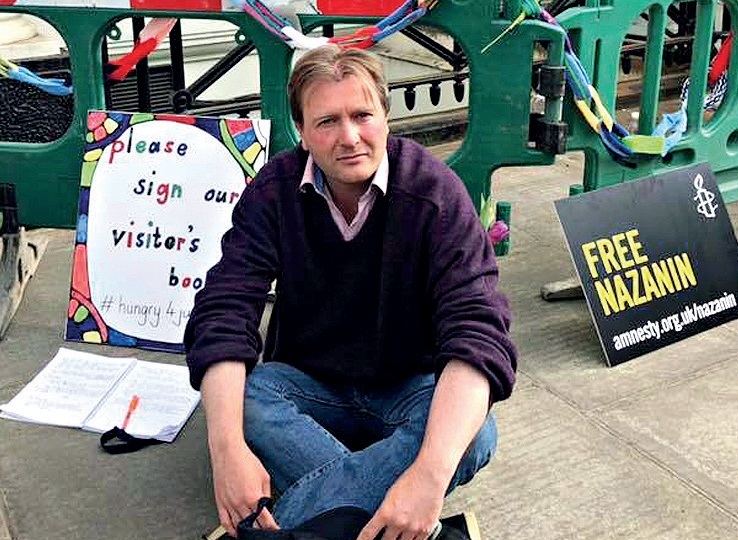
As Nazanin Zaghari-Ratcliffe’s husband Richard joins her hunger strike to pressure the Iranian government to release her after three years in captivity, it invites a conversation about whether hunger strikes are a protest tool in line with Jewish values.
There are two competing religious duties at play in this situation.
On the one hand is Pidyon Shvuyim, the obligation to bring about the release of one’s fellow who has been unjustly imprisoned.
The Shulchan Aruch, one of our foundational legal codes, teaches that every moment a person delays in freeing a captive when they are able to expedite their freedom is considered equivalent to murder.
Being held captive is understood Talmudically to be worse than starvation or death and redeeming captives is something Maimonides and others have taught that all Jews should work towards.



On the other hand is the principal of Pikuach Nefesh- the preservation of life.
In Jewish law, preserving life is a duty, and hunger strikes are a real and serious danger to the lives of those who undertake them.
It is not that long in British memory since the deaths of several prisoners on hunger strike, and though time has passed, the real danger this tactic presents must not be forgotten.
In this case, we encounter the question of whether it is acceptable to put your life on the line to try and save the life of another.
Jews are permitted to endanger themselves to save another, as long as the danger they put themselves in is not greater than that experienced by the person they are trying to save – and as long as they have a reasonable chance of achieving their goal through this method.
A hunger strike is not something embarked upon lightly. It reflects the severity of circumstance and the depth of concern on the part of the striker.
It is right that people do whatever they can to secure the liberty of captives, but the approach must be morally preferable and in accordance with Jewish values.
We cannot condemn someone for embarking on a hunger strike, especially one rooted in deep love and concern, but the best situation to hope for is a safe resolution and that freedom is on the horizon.
Deborah Blausten is a rabbinic student at Leo Baeck College

Keep community journalism free.
Jewish News is free for everyone. No paywall. No barriers. Just trusted journalism for anyone who wants to stay connected to Jewish life in Britain.
If you value that, please support us.
From as little as £5 a month, you can help keep our journalism free and accessible to all.
Every day, we report on the issues that matter to our community. We celebrate achievements, support charities, challenge antisemitism and ensure Jewish voices are heard more widely.
From as little as £5 a month, you can help us continue to:
- Report on the stories shaping Jewish life in the UK and beyond
- Bring our community together through shared stories, events and campaigns
- Celebrate the people, culture and moments that define our community
- Support organisations doing vital work across Jewish Britain
You can make a one-off donation or become a regular supporter. Every contribution helps keep our journalism free, independent and accessible to all.
If everyone who values Jewish News gave a small amount, it would make a real difference to our future.