Prefer Jewish News on Google
Progressively Speaking: Is Donald Trump the answer to peace in the Middle East?
Deborah Blausten takes a topical issue and offers a progressive Jewish response
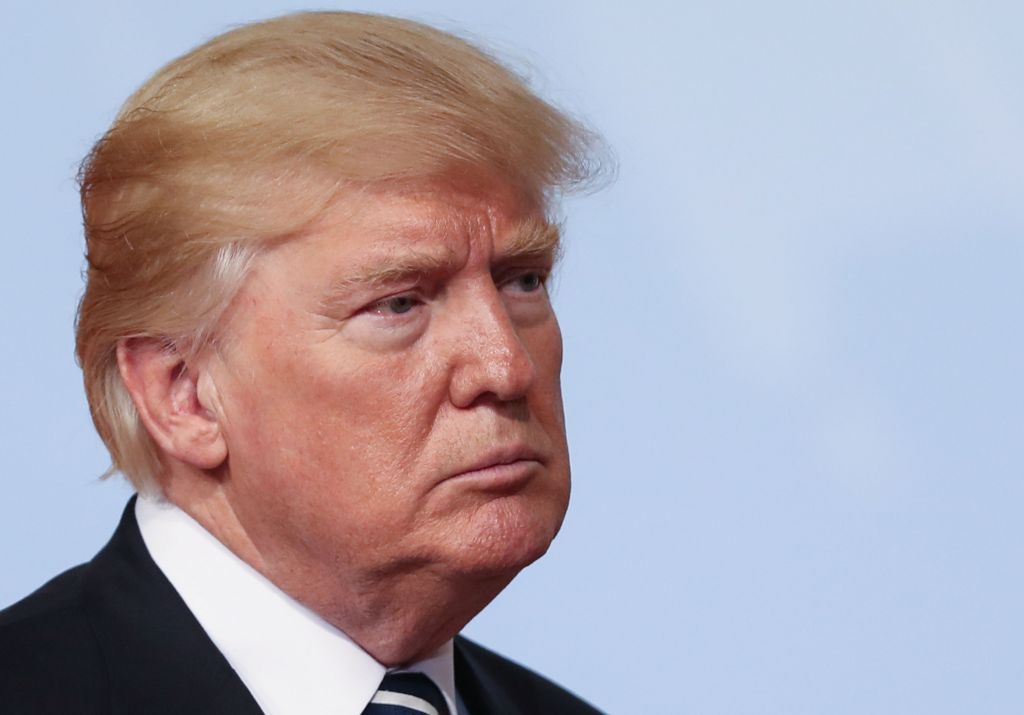
With talks still suspended after four years, any attempt at resurrecting the moribund Middle East peace process would seem
reasonable to consider.
The pursuit of peace is valued highly in Judaism. The psalmist urges us to “seek peace and pursue it”, the words “justice, justice shall you pursue” animate our sense of religious purpose.
Our daily Amidah prayers end with a prayer for peace. So surely any attempt to move towards this goal should be welcomed?
Although noble in its professed aims, the desire of the Trump administration to have a deal on the table within two to four months should be met with trepidation, not because of the goal, but because of the conduct of those pursuing it.
The nature of the peacemaker matters in Jewish tradition, and the Talmud says: “There is no one more humble of spirit than he who pursues peace.”


According to Rabbi Daniel Roth, Aaron the priest is depicted as a model peacemaker.
He is given the honour because he was willing to humble himself to make peace and never rebuked one of the sides or dismissed their argument.
The archetype of Aaron the priest, humble peacemaker who respects both sides, feels far from that of Donald J Trump.
One of the key attributes of peacemakers in Jewish tradition is that the peacemakers themselves are secondary to the people who matter most – those who are involved in the conflict.
We should ask whether the peacemaking plan is motivated by helping those involved, or merely to achieve the prowess of having solved a difficult problem.
Steps already taken by Trump, including withdrawing US funding to the UN’s Palestinian Refugee Agency, have caused concern among the Palestinian leadership that the US might not be equally committed to both sides.
From a religious perspective, our values demand that we must expect others to enjoy the same rights as we do.
Achieving a solution where the rights of one side are given automatic primacy over another is clearly not equitable.
If we would reject this treatment, we must also consider whether it is acceptable when the bias appears in Israel’s favour.
True peace requires enfranchisement and the people it impacts at its core if it is to last longer than the peacemaker’s flight back home.
υDeborah Blausten is a rabbinic student at Leo Baeck College

Keep community journalism free.
Jewish News is free for everyone. No paywall. No barriers. Just trusted journalism for anyone who wants to stay connected to Jewish life in Britain.
If you value that, please support us.
From as little as £5 a month, you can help keep our journalism free and accessible to all.
Every day, we report on the issues that matter to our community. We celebrate achievements, support charities, challenge antisemitism and ensure Jewish voices are heard more widely.
From as little as £5 a month, you can help us continue to:
- Report on the stories shaping Jewish life in the UK and beyond
- Bring our community together through shared stories, events and campaigns
- Celebrate the people, culture and moments that define our community
- Support organisations doing vital work across Jewish Britain
You can make a one-off donation or become a regular supporter. Every contribution helps keep our journalism free, independent and accessible to all.
If everyone who values Jewish News gave a small amount, it would make a real difference to our future.