Prefer Jewish News on Google
‘Be a refusenik’: students urged to channel their inner dissident
USSR-born writer Izabella Tabarovsky says ‘the new antisemitism’ is a resurfacing of Soviet-era tropes and it is vital to resist efforts to destroy Jewish pride and identity
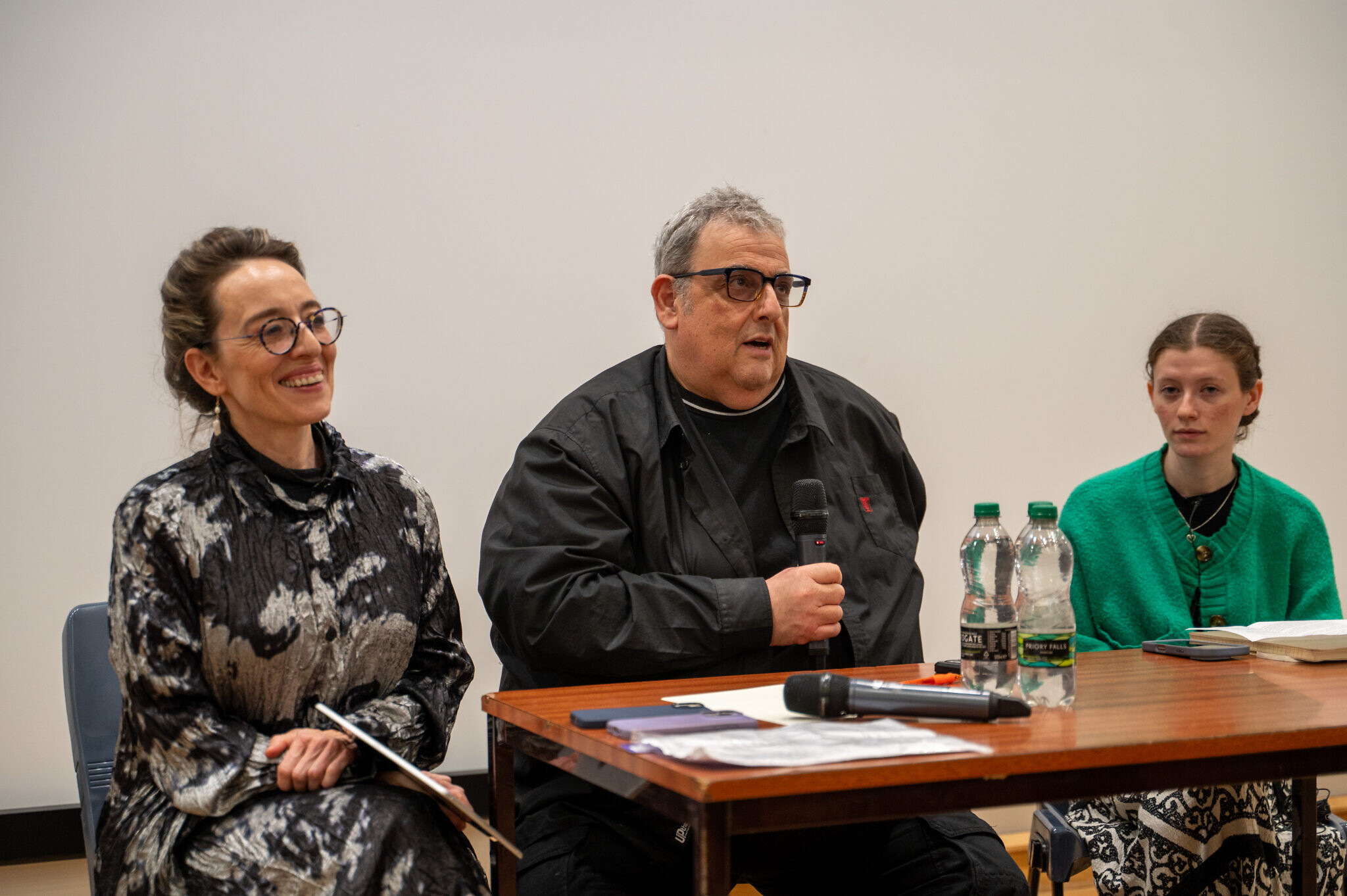
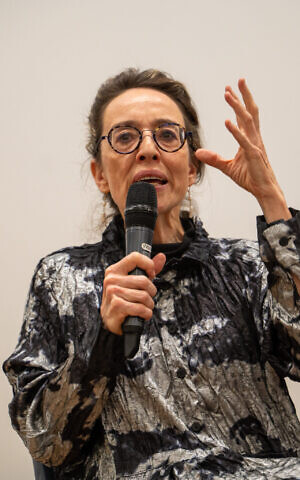
An academic who grew up in the USSR told an audience in central London this week there was nothing new about the phenomenon that some people call ‘the new antisemitism’.
Izabella Tabarovsky said Jews in the west today were facing threats comparable in many ways to those faced by the Soviet-era refuseniks.
“As in the Soviet Union, the campaign of anti-Israel demonisation and libel [today] is not organic,” she said. “It’s sleek and expensive. It’s designed to manipulate emotion to achieve desired outcomes, and the desired outcome is to turn global public opinion against Israel, Zionism and ultimately Jews.
“As in the Soviet Union, this toxic ideology has captured entire institutions of culture, media and academia. The aim of the strategy is the same as it was then – to change who you are, to destroy the foundations of your Jewish identity and to force you to submit to the anti-Jewish worldview, or face potentially devastating consequences.”
Tabarovsky, a writer and activist who grew up in Novosibirsk, Siberia, moved to the United States in 1990. She said Jewish students needed to learn about the Russian antisemitism of the 1970s and 80s and emancipate themselves by employing some of the tactics the dissidents used.



She was speaking on Wednesday at the launch, organised by the London Centre for the Study of Contemporary Antisemitism (LCSCA), of her book Be a Refusenik.
Written as a primer for Jewish students in the United States, it has a foreword by Natan Sharansky, the former refusenik who was imprisoned by the Soviets for nine years and who has been a mentor to Tabarovsky. In her opinion he was “possibly the closest we have to a consensus figure” for the Jewish people today.
While Jewish students in the west were not living in a dictatorship, the similarities in their treatment were too striking to ignore, Tabarovsky said.
They faced anti-Zionism that was part of anti-western propaganda and that echoed the USSR’s anti-Zionist campaign after 1967. They were harassed by mobs chanting recycled Soviet slogans that equated Zionism “with every evil under the sun”.
“You may not stand accused in Kafka’s Trial but you’re judged in the kangaroo courts of TikTok and Instagram.”
Prof David Hirsh, a sociologist at Goldsmiths, University of London and director of the LCSCA, chaired the event. During questions, the origins and nature of anti-Zionism kept returning. Hirsh made the point that “the majority of Jewish people have their own particular relationship to the history of Zionism and the State of Israel”.
He spoke critically of comments by a leader at another London centre, the Birkbeck Centre for the Study of Antisemitism, “who had told us that there is no evidence that antisemitism has risen since 7 October, and that we should not rely on Jewish lived experience as evidence to tell us what antisemitism is and isn’t”.
Samantha Cass, head of campaigns for the Union of Jewish Students, said the hope was to shift from protecting students to enabling them.
Next week was Jewish Experience Week – “or the acronym JEW,” she said – where the aim was to listen to students on campus and help them shake off the notion of victimhood, to “build allies by bringing hundreds of non-Jewish students into Jewish student spaces, to watch Jewish student pride in action, rather than focusing on Jewish people as political footballs”.

Keep community journalism free.
Jewish News is free for everyone. No paywall. No barriers. Just trusted journalism for anyone who wants to stay connected to Jewish life in Britain.
If you value that, please support us.
From as little as £5 a month, you can help keep our journalism free and accessible to all.
Every day, we report on the issues that matter to our community. We celebrate achievements, support charities, challenge antisemitism and ensure Jewish voices are heard more widely.
From as little as £5 a month, you can help us continue to:
- Report on the stories shaping Jewish life in the UK and beyond
- Bring our community together through shared stories, events and campaigns
- Celebrate the people, culture and moments that define our community
- Support organisations doing vital work across Jewish Britain
You can make a one-off donation or become a regular supporter. Every contribution helps keep our journalism free, independent and accessible to all.
If everyone who values Jewish News gave a small amount, it would make a real difference to our future.