Prefer Jewish News on Google
Rare photos reveal how Israelis celebrated Sukkot more than 60 years ago
Black and white images evoke vibrant historic moments from autumn harvest festival
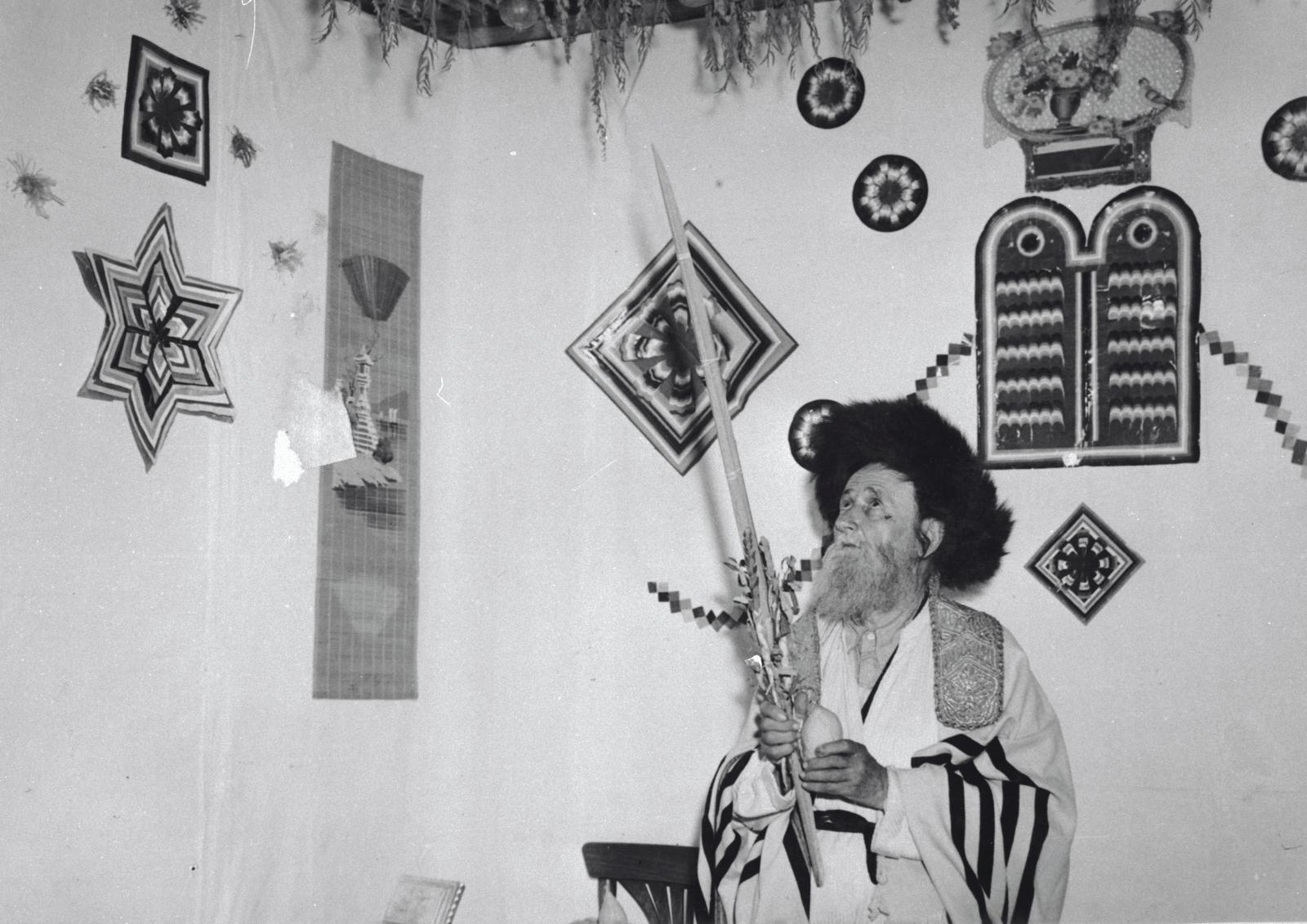
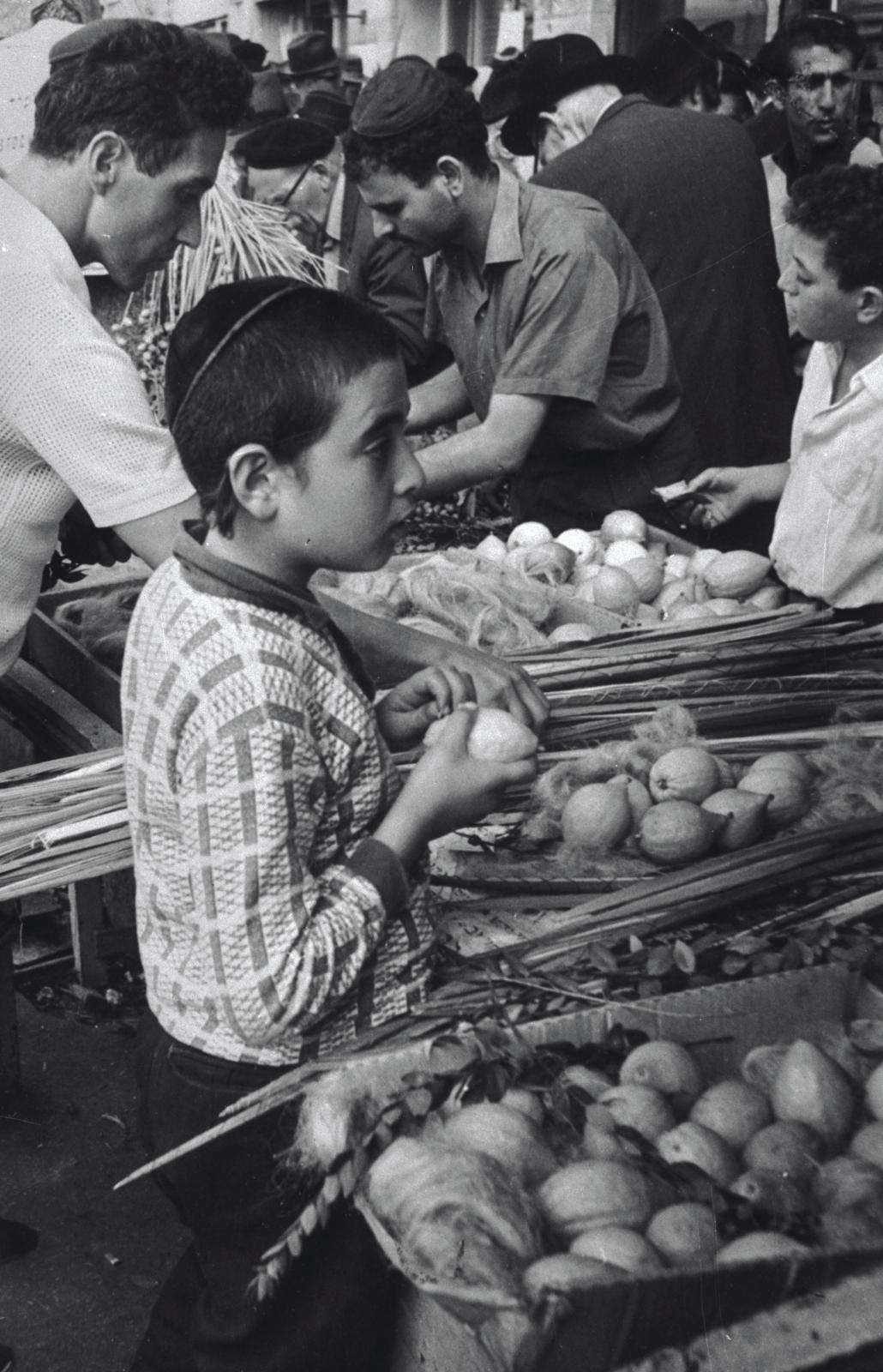
A Hasidic man holding a lulav in a Jerusalem sukkah, crowds celebrating the harvest festival at Horshat Tal, children marching in a holiday ceremony, and a bustling market: four previously unseen photographs from the KKL-JNF Archive offer a glimpse into Sukkot celebrations in Israel during the 1950s and 1960s.
The historic images depict the Israel of more than six decades ago and the different ways in which the holiday was celebrated at the time.
In a photograph from 1959, a Chasidic man is seen performing the mitzvah of the Four Species inside a sukkah in Jerusalem. Wrapped in a tallit, he holds a lulav and looks upward toward the s’chach, the natural covering of the sukkah. Around him are handmade decorations – paper chains, ornaments and pictures hung on the sukkah’s walls.
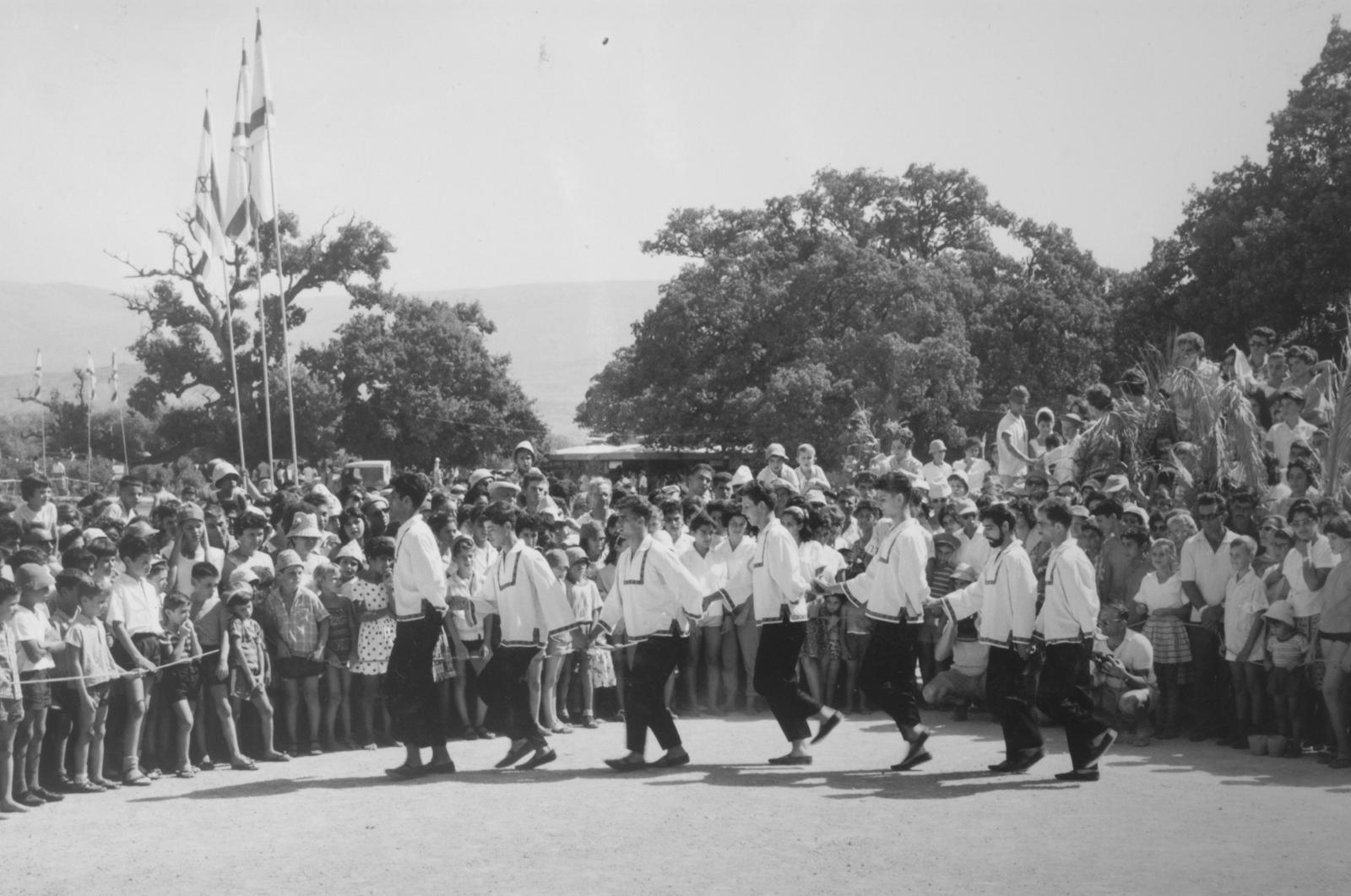
By contrast, a photograph taken at Horshat Tal in 1963 shows Sukkot as a large-scale Israeli celebration attended by crowds of people. Families and children gathered to celebrate the harvest festival, with dancers holding sheaves of grain. Israeli flags fly above, while the trees of the grove and the Galilee landscape can be seen in the background.
The combination of an agricultural festival, folk dancing and time spent in nature tells the story of a young Israel seeking to connect ancient tradition with an emerging local culture.

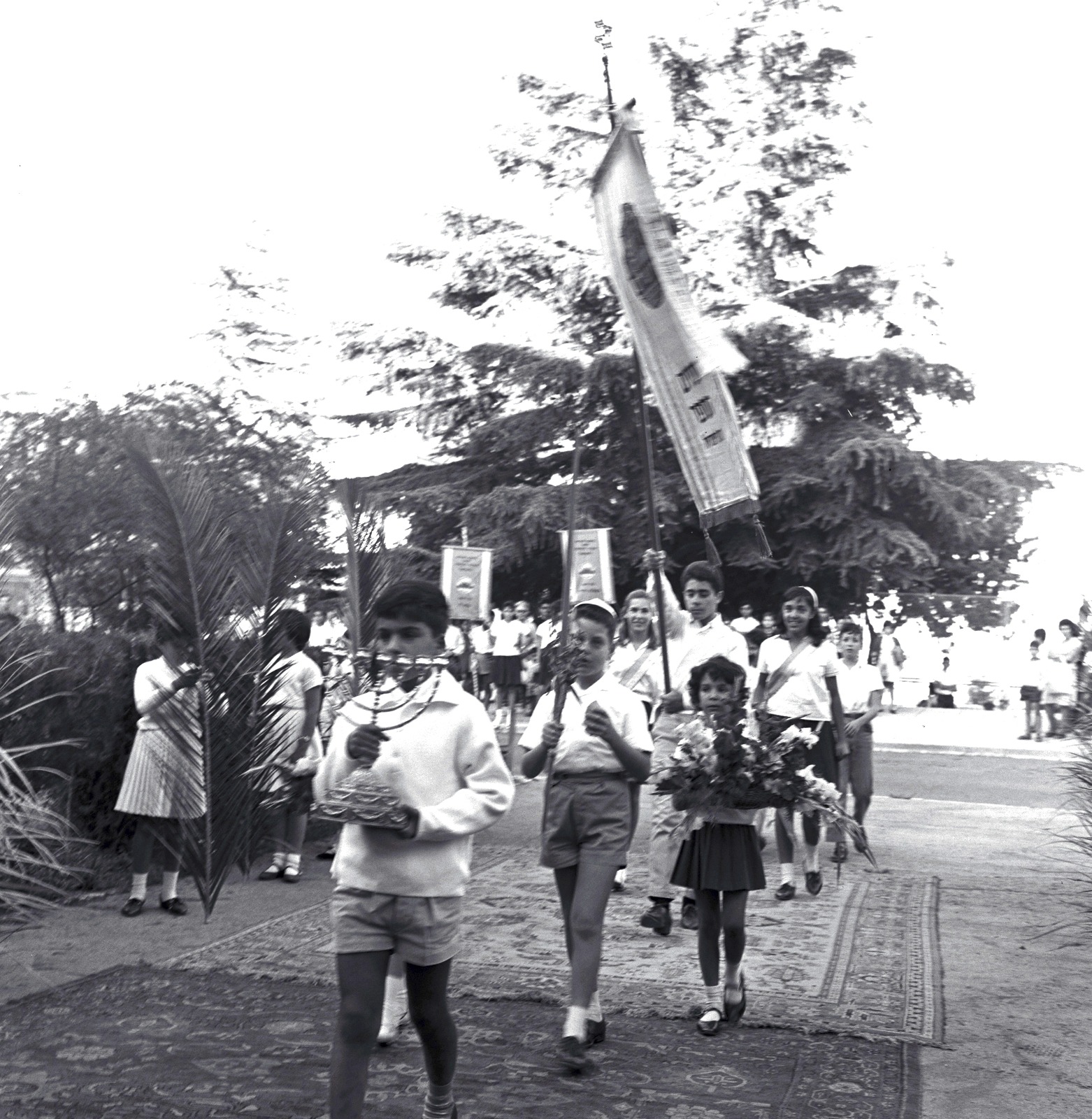
Another photograph, taken in 1964, documents children participating in the “Jerusalem Flag” ceremony in Jerusalem during the intermediate days of Sukkot.
A nationwide educational initiative that began as early as 1934, schools and kindergartens from across the country competed to carry out activities including planting trees, activities on behalf of the land, and contributing to the iconic Blue Box.
During Sukkot, the educational institution that won the competition received the flag in a ceremony and kept it for one year, until it was passed on to the next winner.
The fourth photograph was taken at Jerusalem’s Four Species market in 1967. At its centre, a young boy is seen examining an etrog in one hand, surrounded by piles of lulavs, myrtle branches and fruit. Buyers and sellers crowd around him, inspecting the merchandise and preparing for the holiday.
Efrat Sinai, director of archives at KKL-JNF, said: “These photographs allow us to encounter Sukkot once again as it was celebrated in Israel decades ago, and as it is still celebrated today: in the family sukkah, at the Jerusalem market and at large outdoor gatherings. They show how tradition, Zionist education, agriculture and community came together to create the holiday’s unique Israeli character. Beyond their historical value, these are vibrant, deeply human moments that remind us how much we have changed, and how the customs of the holiday continue to connect generations.”

Keep community journalism free.
Jewish News is free for everyone. No paywall. No barriers. Just trusted journalism for anyone who wants to stay connected to Jewish life in Britain.
If you value that, please support us.
From as little as £5 a month, you can help keep our journalism free and accessible to all.
Every day, we report on the issues that matter to our community. We celebrate achievements, support charities, challenge antisemitism and ensure Jewish voices are heard more widely.
From as little as £5 a month, you can help us continue to:
- Report on the stories shaping Jewish life in the UK and beyond
- Bring our community together through shared stories, events and campaigns
- Celebrate the people, culture and moments that define our community
- Support organisations doing vital work across Jewish Britain
You can make a one-off donation or become a regular supporter. Every contribution helps keep our journalism free, independent and accessible to all.
If everyone who values Jewish News gave a small amount, it would make a real difference to our future.