Prefer Jewish News on Google
Scarlett Letter: A note of thanks to a star
Scarlett Johansson turns from screen icon to storyteller with a film honouring the Holocaust with real survivors.

Dear Scarlett,
You made me cry last night – and for that, I want to thank you. Your directorial debut, Eleanor the Great – the gala opener for the UK Jewish Film Festival moved me in a way I didn’t expect. It’s a story told beautifully and without artifice, about memory, loss and what it means to be seen after we’re no longer here. Timing is everything and you could never have known that you would be telling this very Jewish story when so many are rewriting our history – but that is what makes your film so poignant.
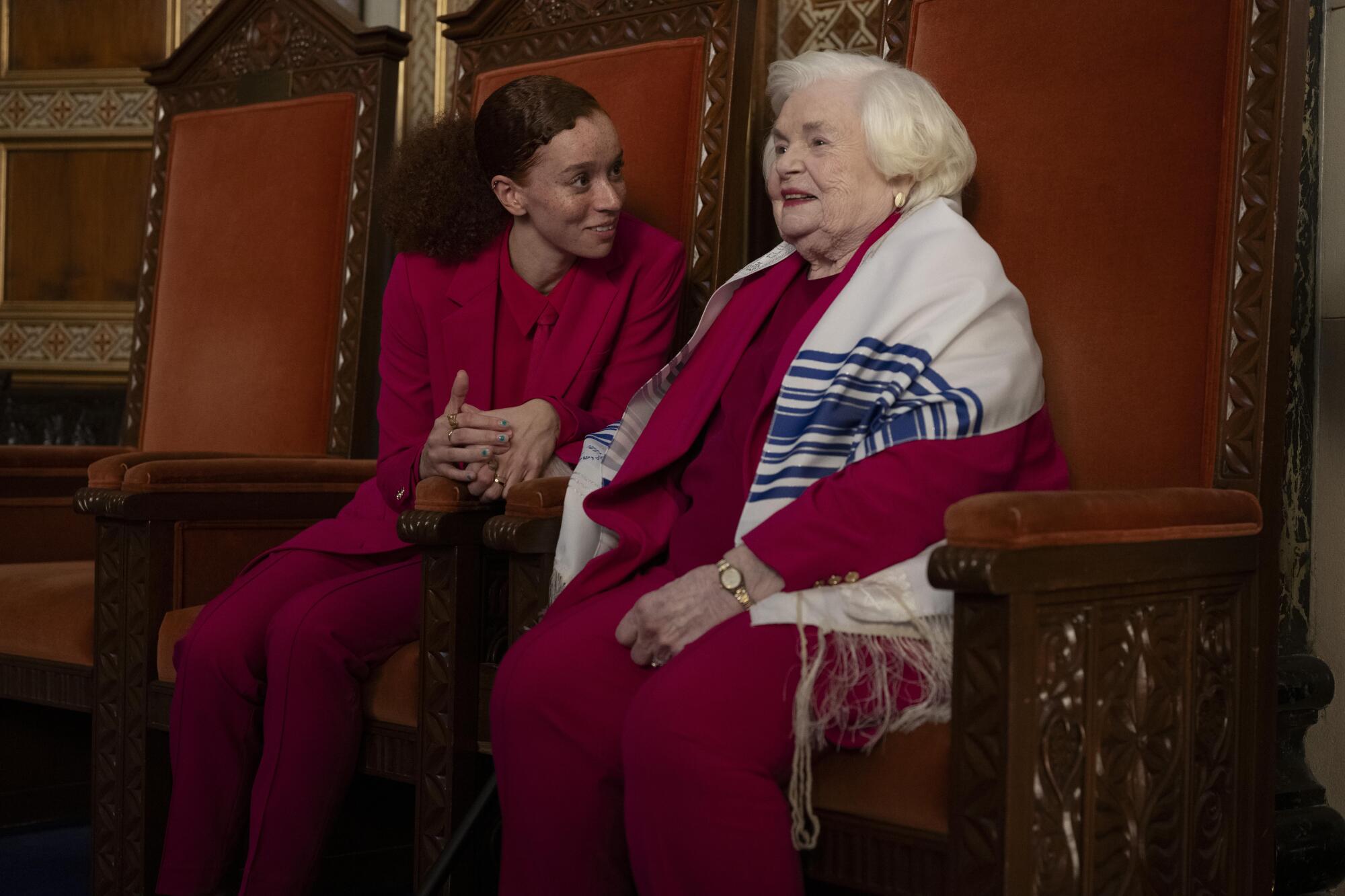
Your lead actor June Squibb is exceptional as Eleanor Morgenstein – a 94-year-old widow uprooted after the death of her best friend who finds herself drawn into a community of Holocaust survivors in New York. Squibb, born in 1929 made her Broadway debut in 1959 alongside Ethel Merman in Gypsy. She is now two years older than her character and like her character not Jewish, but she inhabits Eleanor completely – from the way she folds her hands to her expressions— it’s all so real.
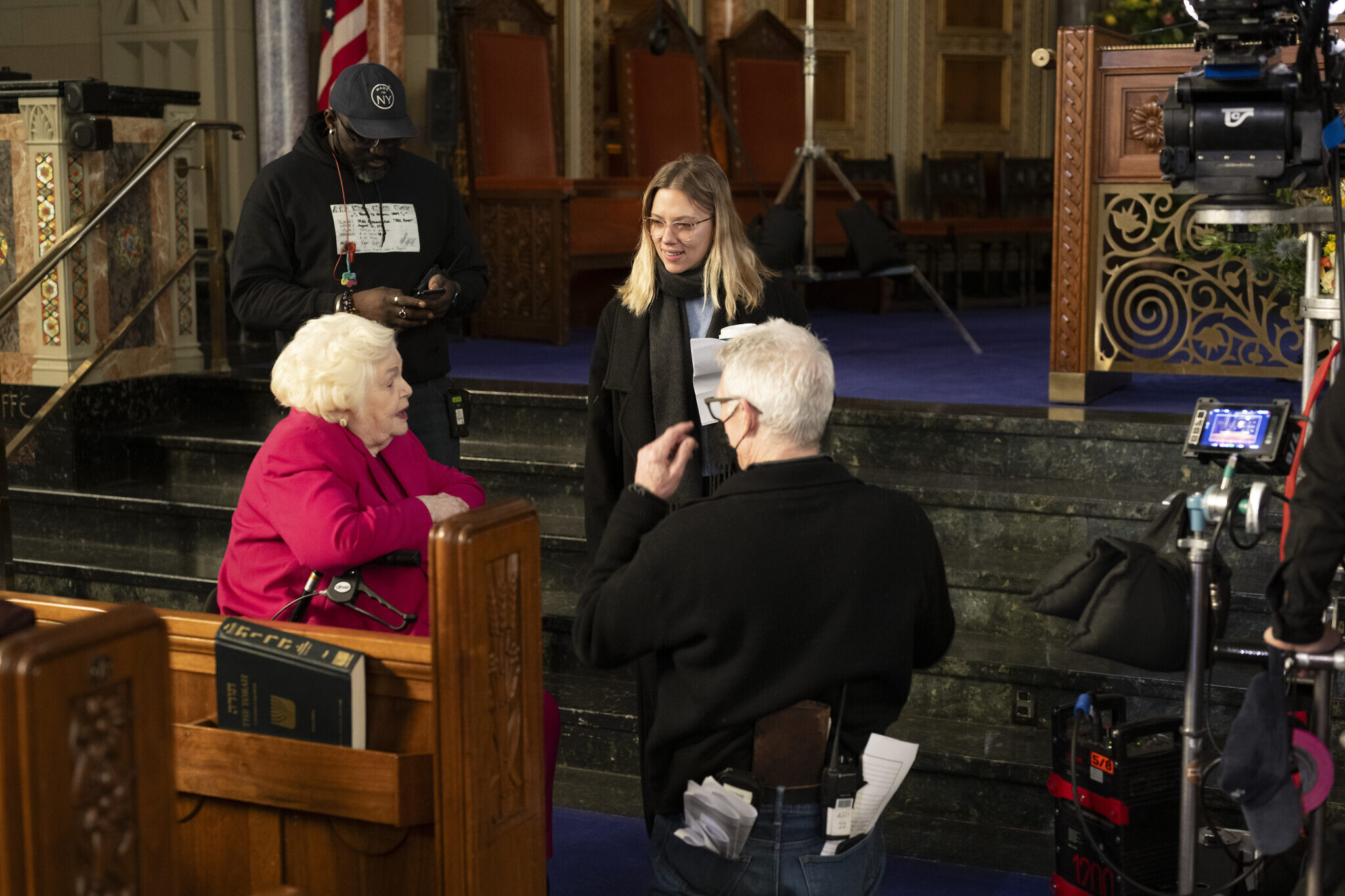
You have said in interviews that your grandmother Dorothy was “not like Eleanor in some ways, but also kind of …” which explains why “her spirit was deeply felt throughout” the film. Through Dorothy or with her guidance you have given June Squibb, the role of a lifetime and she in turn has rewarded you with one of those rare performances that lingers and may well lead to an Oscar.
Your casting of Erin Kellyman as Nina Davis — the young journalist who befriends Eleanor is another smart choice. It is she who gives the film its heartbeat and provides the bridge to a generation that will eventually learn everything about the Holocaust from screens not from real survivors.
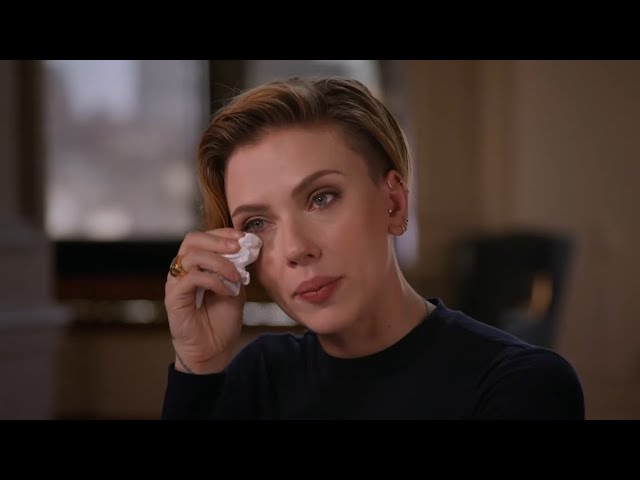
It is obvious this film comes from somewhere deeply personal and draws from your appearance on Finding Your Roots – the US equivalent of Who Do You Think You Are? That was when you discovered that your great-grandfather’s brother and his family were murdered in the Warsaw Ghetto. You cried when you heard, and then regaining your composure told host, Henry Louis Gates Jr. “It makes me feel connected to history in a way I never had before.”



It would seem that Eleanor the Great is a way of connecting and remembering your family’s story through art, and I applaud your decision to include real Holocaust survivors – found with the help of the Shoah Foundation, as it gives the film emotional weight and such honesty.
And that is why I was cross when I saw Peter Bradshaw’s review in The Guardian, where he described your film as “a well-intentioned but ultimately flawed story that struggles to handle its sensitive themes.” I was tempted to call and correct him, because what you’ve done is the very opposite of misjudged – you’ve humanised it.
You’ve shown how the shadows of the Holocaust live on not only in those who endured it, but in those who inherit its echoes through family, friendship and faith. I’ve already mentioned the fact that when production began, you couldn’t have known Eleanor the Great would be released into a climate of rising antisemitism. And you acknowledged this yourself recently when you said, “I didn’t set out to make a political film, but if compassion and truth are now political, I’ll live with that.”
But the film’s timing feels almost fated, arriving precisely when it was needed most. In an industry where so many have stepped back – or worse – taken the other side, you have stood your ground quietly, with grace.
Watching Eleanor the Great at UKJFF, the auditorium was still and tears fell ahead of and during the credits. That’s what happens when you remind us what empathy feels like.

I still remember when we first met – just before the release of your first big feature Lost in Translation. We were in the lobby of a half-built Soho House in New York with ladders everywhere, and you were dressed in a beanie and puffer jacket. “Scarlett is about to be a star,” said, my friend Mandy- also the club’s manager. You blushed, embarrassed, almost hiding from the attention – but we shook hands and I wished you success. I take no credit for what followed. You were luminous then as you are now. But it’s from behind the camera that you’ve become a star and found your truest voice -as the storyteller we require now. Thank you, Scarlett, for remembering, what others choose to forget.
Yours most sincerely – Brigit
Eleanor the Great is due for general release in December

Keep community journalism free.
Jewish News is free for everyone. No paywall. No barriers. Just trusted journalism for anyone who wants to stay connected to Jewish life in Britain.
If you value that, please support us.
From as little as £5 a month, you can help keep our journalism free and accessible to all.
Every day, we report on the issues that matter to our community. We celebrate achievements, support charities, challenge antisemitism and ensure Jewish voices are heard more widely.
From as little as £5 a month, you can help us continue to:
- Report on the stories shaping Jewish life in the UK and beyond
- Bring our community together through shared stories, events and campaigns
- Celebrate the people, culture and moments that define our community
- Support organisations doing vital work across Jewish Britain
You can make a one-off donation or become a regular supporter. Every contribution helps keep our journalism free, independent and accessible to all.
If everyone who values Jewish News gave a small amount, it would make a real difference to our future.