Prefer Jewish News on Google

Second Temple mikveh complex uncovered in Jerusalem’s Old City
Monumental 240 square metre archaeological discovery at the foot of the Temple Mount
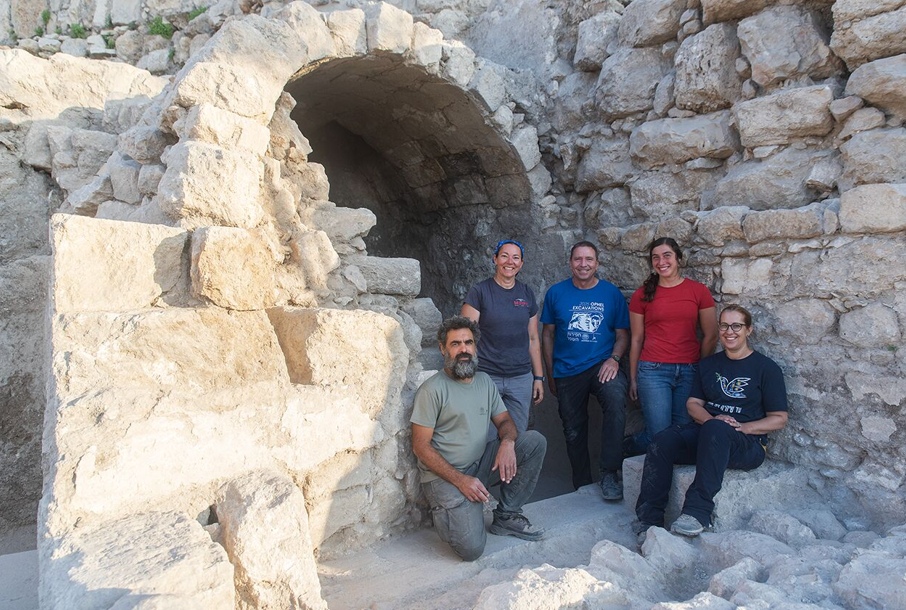
A monumental complex of ritual baths, most likely used by Jewish pilgrims visiting the Temple in Jerusalem, has been uncovered at the foot of the Temple Mount.
Dating to the late Second Temple period (first century BCE–70 CE), the site includes three large ritual baths (mikva’ot), a monumental plastered pool, a paved plaza, and an extensive water system.
Experts believe its location and size suggest that it played an important role in accommodating the large numbers of Jewish pilgrims who came to Jerusalem and underwent ritual purification before visiting the Temple.
At the centre of the complex, built in the early first century CE, is a large plastered pool measuring approximately 12 by 9.5 meters, with steps descending into it from all four sides. Northwest of the pool stands a structure containing four rooms, three of which were identified as large public ritual baths. Altogether, the complex covers approximately 280 square meters.
Excavation directors Prof. Leibner and Prof. Peleg-Barkat, from the Institute of Archaeology at the Hebrew University of Jerusalem called the find“a truly unparalleled phenomenon” adding that the complex “goes to the heart of our research into the archaeology of Second Temple-period pilgrimage: how the area immediately south of the Temple Mount was designed to accommodate the many pilgrims who came to Jerusalem to visit the Temple, and what activities and rituals took place near its gates.”



The complex met a dramatic end in the summer of 70 CE, when Jerusalem and the Temple were destroyed by the Romans. Evidence of this destruction includes dozens of coins dating to the First Revolt against Rome, discovered on the floors of the complex and within the debris.

Keep community journalism free.
Jewish News is free for everyone. No paywall. No barriers. Just trusted journalism for anyone who wants to stay connected to Jewish life in Britain.
If you value that, please support us.
From as little as £5 a month, you can help keep our journalism free and accessible to all.
Every day, we report on the issues that matter to our community. We celebrate achievements, support charities, challenge antisemitism and ensure Jewish voices are heard more widely.
From as little as £5 a month, you can help us continue to:
- Report on the stories shaping Jewish life in the UK and beyond
- Bring our community together through shared stories, events and campaigns
- Celebrate the people, culture and moments that define our community
- Support organisations doing vital work across Jewish Britain
You can make a one-off donation or become a regular supporter. Every contribution helps keep our journalism free, independent and accessible to all.
If everyone who values Jewish News gave a small amount, it would make a real difference to our future.