Prefer Jewish News on Google
Seven of the best places to eat in Seville
From empanadas to pinchos and steak to sherry, Seville has great food and drink at amazing prices
As the days draw in and we head towards months of darkness, one thing I love about living in London is the proximity of so many European destinations that can be reached in two to three hours. This makes a long weekend excursion both accessible and affordable.
My daughter is doing A level Spanish and so when I wanted to book a trip to spend some time with her Seville came up as a clear winner for all the things I was looking for: culture, great food, good value and sun-sure weather.
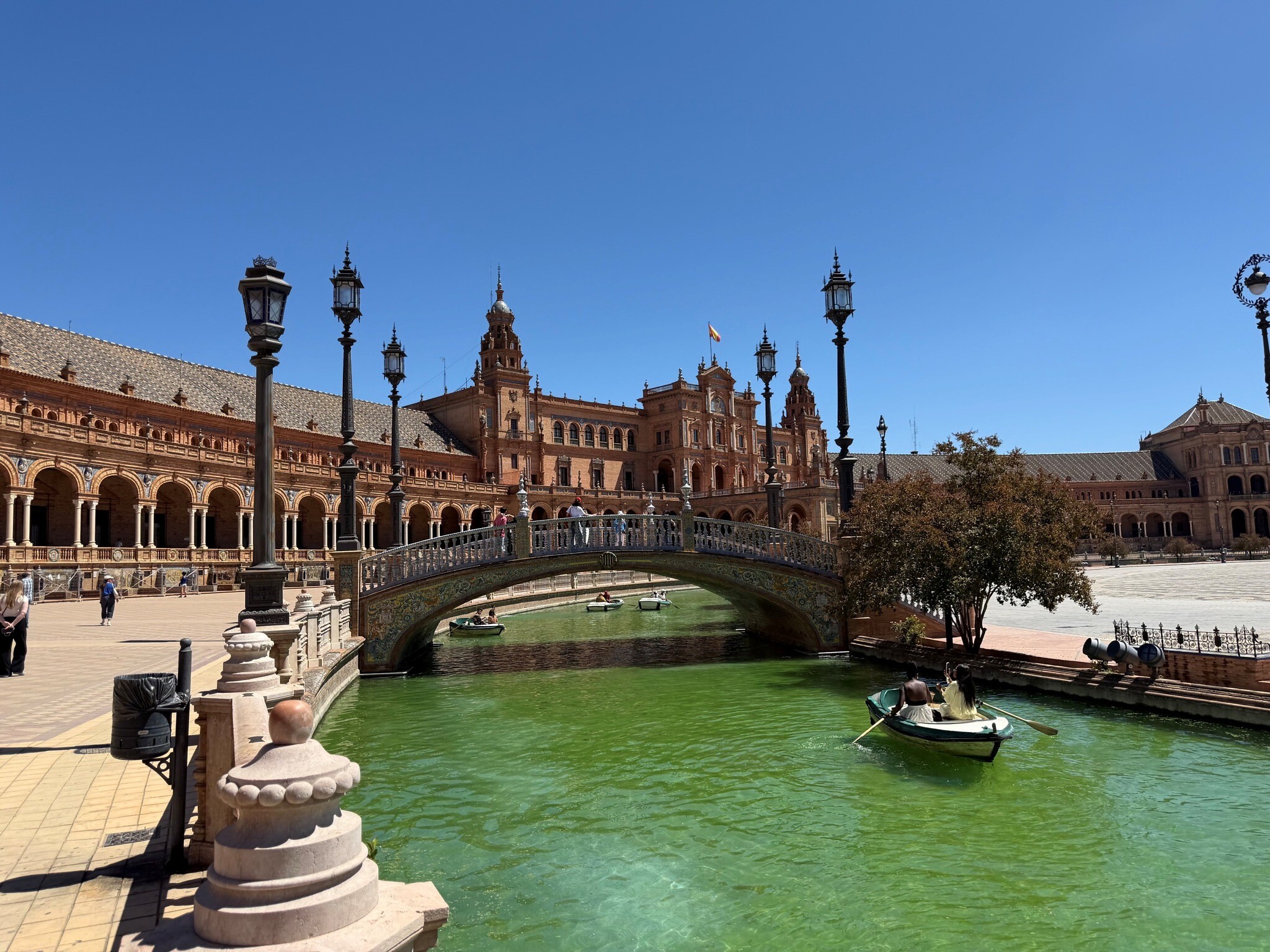
Seville is truly a beautiful city steeped in history, with no fewer than three UNESCO World Heritage sites to admire: the Catedral de Santa María de la Sede, the Royal Alcázar, and the impressive Plaza de España, built in 1929 for the Iberian American Expo. All thoroughly worth your time, but we were there for the important stuff- the food! And crucially the value for money, because wow, wow, wow.
Walking around the Casco Antiguo (old town) is basically walking through an open-air food market. Every corner ambushes you with smells and colours engineered purely to make you salivate: empanadas stuffed with meat or cheese, pinchos, slices of pizza, paella-like rice dishes, bits and bobs to nosh on wherever you stand. It has it all.
I’d promised my daughter a proper tapas crawl, and that’s exactly what was delivered. Below are the highlights and anyone who knows me knows I don’t hand out recommendations lightly. I’ve done the legwork for you, so follow this trail and you won’t go far wrong. One can eat extremely well for under a tenner a head; even the gourmet-looking sandwich shop only charged eight euros a pop.



I tend to go on TripAdvisor for initial suggestions and then tap the locals for knowledge. I then do a cross check as if I have a virtual Venn diagram and hopefully I can identify those places in the middle.
A short walk across the Isabel II bridge from the Casco Antiguo takes you into Triana, the more bohemian side of the river, dotted with tapas bars and the odd impromptu flamenco show.
 We ate at El Mercader de Triana, and it was outstanding. There are only a handful of tables, so get there early or realise that you will be in for a bit of a wait. We worked through pinchos of goats’ cheese which had a very punchy taste; croquetas with potato and cheese, and a slow-cooked beef short rib that dissolved on contact. This region does excellent things with tuna, so seek out the bonito al horno: tuna baked in the oven with tomatoes and general deliciousness. I washed mine down with a small glass of dry sherry, given we were practically down the road from Jerez de la Frontera, sherry’s birthplace. Also worth trying: Mojama, cured tuna that looks like jamón ibérico but is in fact salted, dried tuna. This is pretty unusual and not for everyone, to be honest.
We took a day trip down to Cádiz for some sightseeing and landed a great arroz dish at La Marea, right by the sea. Just a side note, learned from my year spent as a student in Madrid many moons ago: “paella” technically refers to the pan itself, not the dish. It’s only really called paella in Valencia, though the concept travels everywhere under other names. Ours was effectively a paella Valenciana which has rice, chicken and vegetables. Not too shabby.
We drove back via Jerez, hoping for a sherry tasting although it would have been baby measures as I was driving this day. The place to do this is Bodegas Tío Pepe, but it was shut, being a Sunday. Jerez is a small city, known as much for its equestrian scene as its sherry, with a genuinely beautiful Gothic-tinged cathedral and a smaller, quieter Alcázar. It was a very chilled place, much less busy than Seville and Cadiz. We liked it.
Back in Seville, we did a Segway city tour with Top Segway (www.vamosday.com) – thoroughly worthwhile – and our guide pointed us to Casa Morales for tapas. Delicious and sooooooo cheap. Platters of tiny wagyu burgers, and cheesy croquetas with homemade crisps, all washed down with una caña (a small glass of cold draft beer). We ate loads and the bill still only came to €40.
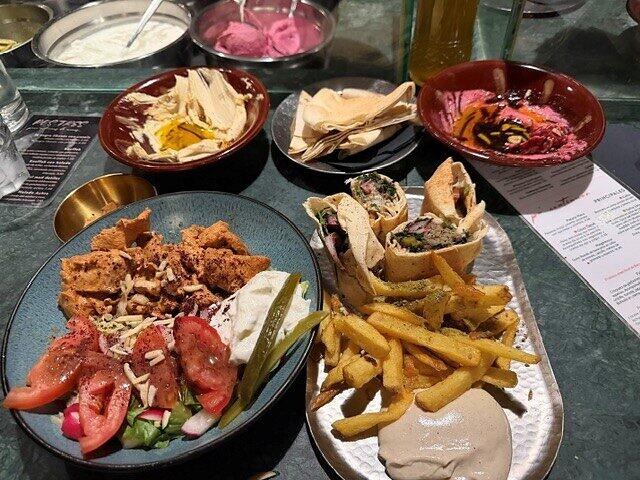
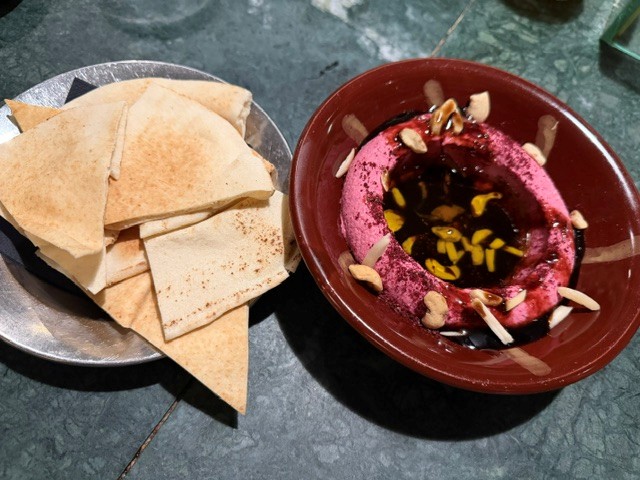 Having binged on lunch, we wanted something lighter for dinner. Our guide’s tip this time was Fatoush, a small Lebanese spot with an open kitchen in what used to be a furniture shop. Feeling adventurous, I ordered the hummus rosa. This is beetroot hummus drenched in tart-sweet pomegranate molasses. My daughter went for the classic hummus instead, and hers won, comfortably. I can say without exaggeration that it was the best hummus I’ve had in my life, including in Israel. Genuinely memorable, served with warm flatbread for scooping. We also had a chicken dish comprised of tender thigh pieces in a lemony sauce with a hint of sweetness that took the edge off the tartness. This was served with salad and a yogurt sauce. We added a kofte wrapped in flatbread with salad. The whole meal, drinks included, came to €45 for both of us!
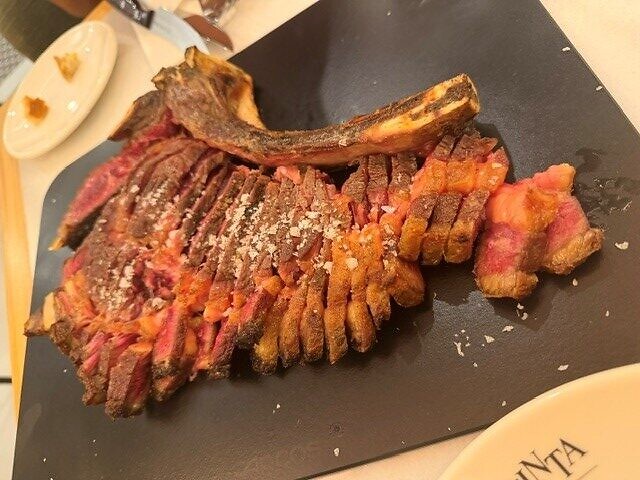
On our last evening I went hunting specifically for Rubia Gallega steak, and found it at the excellent Retinta, a short walk from our hotel in the old town. For those in the know, this is the same matured Galician Blonde beef served at Ibai in Farringdon, London. There, they charge £160 for 1.2kg of it. At Retinta, the server walked us through the cuts and sizes and we settled on just under a kilo for around €52, comfortably enough for three. The meat had been aged 38 days: dark, with a yellowish fatty edge, a pungent smell, and an almost gamey flavour. A genuinely beautiful piece of meat, and probably not the wisest thing to eat past 11pm though judging by how packed the restaurant still was, I was in good company.
 Then came the wine. Several solid options from Ribera del Duero, and a copita of vino tinto cost.. wait for it… €3.5 a glass, poured with real generosity, as the photo will attest. We kept it simple: one shared starter, then steak and chips as the main event. The starter was a portion of croquetas with, gorgonzola, and parmesan. The bold red wine paired with those creamy cheeses was sublime.
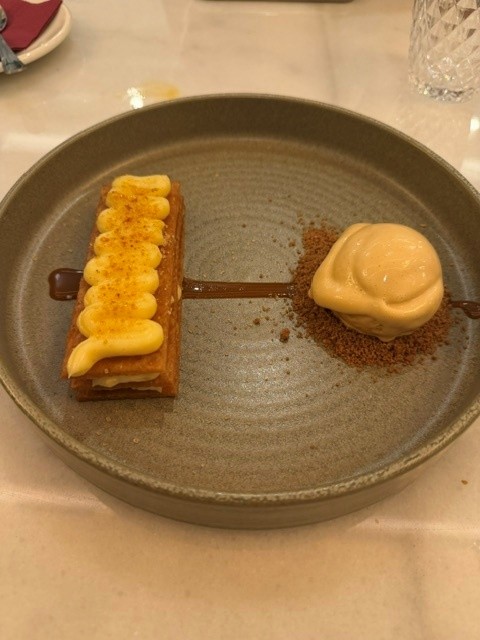
Back to the steak itself. Every succulent mouthful was like being in steak nirvana, but be warned, it doesn’t taste like a standard steak. The flavour is strong, and my daughter, who genuinely loves a good steak, wasn’t a fan. If you like game, though, the Galician Blonde will win you over completely. It would be rude to leave without tasting the dessert so we shared the millefeuille with swirls of dulce de leche and caramel ice cream. The full bill, including three very generous glasses of wine, came to €120 for the two of us. You simply cannot food of this quality at this price at home!
After touring the cathedral, we had 20 minutes to eat before our next stop, so we grabbed a small bowl of Paella Valenciana at La Paella. Whilst not the most original of names, this is a small local chain, does exactly what it says on the tin, four dishes to choose from, generous portions for €9.50. On the way to the taxi stand for the airport, we stopped at Kala for frozen yoghurt, tipped to us as the best in town and it was pretty good to be fair.
If you want real culinary substance and a genuine taste of Spain, forget Marbella and take a long weekend in Seville. The true food pilgrims will point you to San Sebastián in the Basque Country, but that trip is only about the food. Seville gives you the history and architecture on top.

Keep community journalism free.
Jewish News is free for everyone. No paywall. No barriers. Just trusted journalism for anyone who wants to stay connected to Jewish life in Britain.
If you value that, please support us.
From as little as £5 a month, you can help keep our journalism free and accessible to all.
Every day, we report on the issues that matter to our community. We celebrate achievements, support charities, challenge antisemitism and ensure Jewish voices are heard more widely.
From as little as £5 a month, you can help us continue to:
- Report on the stories shaping Jewish life in the UK and beyond
- Bring our community together through shared stories, events and campaigns
- Celebrate the people, culture and moments that define our community
- Support organisations doing vital work across Jewish Britain
You can make a one-off donation or become a regular supporter. Every contribution helps keep our journalism free, independent and accessible to all.
If everyone who values Jewish News gave a small amount, it would make a real difference to our future.