Prefer Jewish News on Google
Shabbat Shalom: To Those Who Offer Hope
Hope has sustained the Jewish people for so long, not because our history has been easy, but because we refused to surrender it.
For the past few weeks, it has been almost impossible to ignore politics.
Since Andy Burnham entered Downing Street, we’ve witnessed an extraordinary flurry of announcements. Appointments and rhetoric that suggest Britain’s approach to Israel may be returning to some of the worst instincts of Corbyn’s Labour, perhaps even edging towards the worldview of Zack Polanski’s Green Party.
There will no doubt be plenty more to say about that in the weeks and months ahead, but one of the gifts of Shabbat is perspective. It reminds us that whilst politics dominates the headlines, it rarely defines the character of a people. In fact, one of the dangers of spending too much time watching politics is that you begin to believe politicians are the authors of history, they are not.
History is written every day by ordinary people making extraordinary choices. Whilst governments issue statements and social media argues over headlines, countless acts of courage, resilience and humanity pass almost unnoticed.
This week, four seemingly unrelated stories caught my attention.


A basketball team, a pop star, a journalist, a group of firefighters.
At first glance, they had nothing in common. Yet together they all pointed towards one of the most profound ideas in Jewish history.
Hatikvah.
Hope.
Not hope as wishful thinking, hope as a choice. The choice to keep building when others seek to destroy, to keep speaking when silence would be easier, to keep returning when terror tells you never to come home and to keep helping others, even when they have not always helped you.
This week’s Shabbat Shalom is dedicated to four reasons why, even now, we should continue to choose hope.
Shabbat Shalom to Israel’s Under-20 Women’s Basketball Team, for giving hope to a new generation.
Before every game at the European Championships, they stood shoulder to shoulder and sang Hatikvah, Israel’s national anthem. Its name simply means The Hope.
Most national anthems tell the story of a country, military triumph, national greatness or historical victory. Hatikvah tells the story of a people, the Jewish state chose Hope.
For almost two thousand years, whilst living in exile, Jews never stopped turning towards Jerusalem, never stopped praying for their return, never stopped believing that one day the hope carried from generation to generation would become reality.
That hope eventually became a country, it also became its national anthem.
This week, inspired by those words, a remarkable group of young Israeli women achieved something no Israeli women’s basketball team had ever achieved before. Against nations with larger populations, deeper basketball traditions and far greater expectations, they fought their way to a historic silver medal.
Their coach, Tal Nathan, spoke afterwards not about tactics, but about something far more important, love, resilience & the extraordinary bond between his players.
Captain Gal Raviv revealed what inspired them most.
“Hatikvah made us all come crazy to every game.”
There is something beautifully symbolic about that. The anthem wasn’t simply something they sang before tip-off. It reminded them that they represented the fulfilment of two thousand years of hope.
As Liron Cohen told them afterwards, they had done more than win a silver medal. They had inspired the next generation of Israeli girls to believe that they could one day stand where they stood.
Shabbat Shalom to a team that reminded an entire nation that hope still has the power to shape the future.
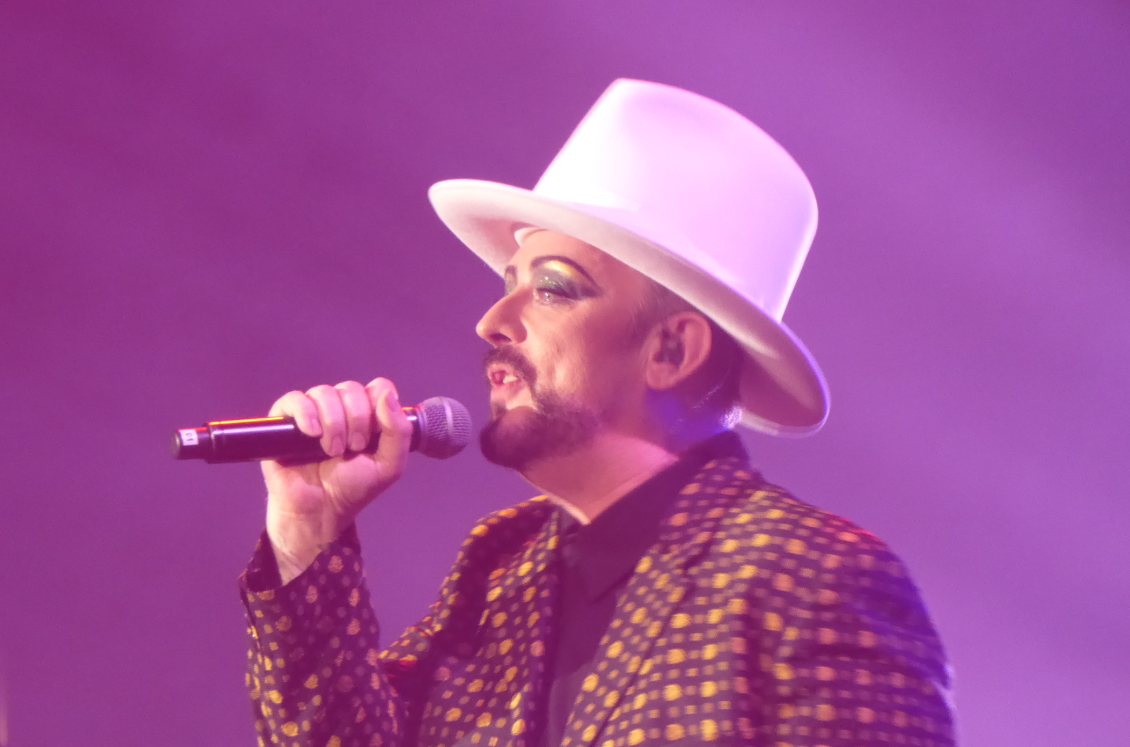
Shabbat Shalom to Boy George, for giving us the hope that we are not alone.
For much of the past two years, one feeling has become painfully familiar for Jews around the world, loneliness.
To watch artists, musicians and public figures either remain silent or enthusiastically join the hostility towards Israel has left many Jews wondering who, if anyone, was still prepared to stand beside us. That is why this week mattered so much.
Boy George has no Jewish family, no Israeli passport, no personal obligation to involve himself in one of the world’s most divisive debates. He had every incentive to stay silent, instead, he chose to speak. Not because it would make him more popular, quite the opposite.
When asked about the inevitable backlash, his answer was beautifully simple.
“I don’t feel brave. I just need to behave like a human.”
Perhaps the greatest gift an ally can give a minority is not agreement, it is the reassurance that they are not standing alone. For a community that has often felt isolated over the past two years, that reassurance matters more than many people will ever understand.
Hope sometimes arrives from the most unexpected places.
Shabbat Shalom to a musician, and to every ally who offers hope by reminding the Jewish people that we are not alone.
Shabbat Shalom to Amir Tibon for the hope that a home cannot be stolen.
Like so many the horror of 7 October was a deeply personal experience for journalist Amir Tibon. As Hamas terrorists overran Kibbutz Nahal Oz, he, his wife and their two young daughters were trapped inside their safe room. It was his parents, both in their seventies, who drove into an active war zone to rescue them.
That extraordinary story became his memoir, The Gates of Gaza: A Story of Betrayal, Survival, and Hope in Israel’s Borderlands. This week it received the Sami Rohr Prize, one of Israel’s highest literary honours.
That achievement deserves celebrating in its own right, but there is another detail worth reflecting upon.
Amir Tibon has been one of Benjamin Netanyahu’s fiercest critics, writing regularly in Israel’s left wing newspaper, Haaretz. He has opposed much of the government’s conduct throughout this war and called for Netanyahu and various right wing ministers to be held to account not only for 7 October itself, but also for their conduct subsequently.
But Israel did not ask whether Amir Tibon supported the government, it simply asked whether he was worthy of an award for the quality of his work, that distinction matters.
Around the world, Israel is routinely caricatured as intolerant of dissent. Yet one of its highest literary honours has just been awarded to a journalist whose criticism of the country’s leadership has been both sustained and uncompromising.
That is not a contradiction, it is democracy and Israel stands apart in that respect from every single one of the countries they have been fighting these past three years.
Then this week came another announcement, Amir and his family are moving home, back to Nahal Oz. The place Hamas intended to erase, the place where terrorists believed Jewish life would never return.
His answer is not revenge, it is not hatred, it is not retreat, his answer is return. Because the greatest defeat you can inflict upon terrorism is to deny it the future it sought to create. The greatest victory is simply refusing to let it determine where your children will grow up.
Shabbat Shalom to a journalist, and to every Israeli family, fuelled by hope, rebuilding where others sought only to destroy.
Shabbat Shalom to Israel’s Firefighters, for the hope that comes from recognising that our values are greater than our enemies.
Over the past two years, few European governments have been more critical of Israel than France and Spain. Both have recognised a Palestinian state, both have repeatedly intensified diplomatic pressure on Israel, both have become home to some of Europe’s most visible anti-Israel demonstrations.
At the same time, both countries have witnessed a deeply troubling rise in antisemitic incidents. Jewish schools and synagogues have required increased protection. Jewish communities have reported unprecedented levels of intimidation. Many Jews no longer feel comfortable openly displaying symbols of their identity in public.
None of this has gone unnoticed in Israel. Yet this week, as devastating wildfires swept through both countries, Israel’s first instinct was not to remember diplomatic disagreements, or hostile UN votes, or inflammatory political rhetoric. It was to ask a far simpler question. How can we help?
The Israeli government offered firefighters, aircraft, expertise, support. They did so without conditions or resentment, no score-settling, simply help offered at a time of need.
This tells us something important. Israel’s values are not determined by how others choose to treat her, because if your compassion depends upon reciprocity, it is not really compassion at all, it is transaction.
The Torah repeatedly commands us to care for human life. Not only when it is convenient, not only when it is reciprocated, not only when those in need happen to agree with us politically.
Hope, in the Jewish tradition, has never been passive, it has always demanded action.
Perhaps that is Israel’s quietest act of defiance. To refuse to allow those who increasingly demonise her to redefine her moral character. To continue saving lives, even when those lives belong to people whose governments have so often stood against her.
Israel refuses to allow other people’s hate to determine its own moral character.
Shabbat Shalom to those who remind us that the strongest values, those that offer hope for a better future, are the ones we uphold when they cost us something.
Four stories, four reminders that hope is not optimism, hope is an active decision. The decision to believe tomorrow can be better than today, to build when others destroy, to speak when silence is easier, to return when terror tells you never to come back, to help those who have not always helped you.
That is why hope has sustained the Jewish people for so long. Not because our history has been easy, but because we refused to surrender it.
Perhaps that is why Hatikvah has endured for so long, it was never simply a song, it was never simply an anthem, it was a promise.
A promise that the Jewish story would not end in exile.
For almost two thousand years, Jews carried that promise across continents and generations until, against every expectation, it became reality. After everything the Jewish people have endured, no words capture that promise better than these:
As long as deep in the heart,
The soul of a Jew yearns,
And towards the east,
An eye looks to Zion,
Our hope is not yet lost,
The hope of two thousand years,
To be a free people in our land,
The land of Zion and Jerusalem.
This week, and every week, may we continue to choose hope.
Shabbat Shalom.

Keep community journalism free.
Jewish News is free for everyone. No paywall. No barriers. Just trusted journalism for anyone who wants to stay connected to Jewish life in Britain.
If you value that, please support us.
From as little as £5 a month, you can help keep our journalism free and accessible to all.
Every day, we report on the issues that matter to our community. We celebrate achievements, support charities, challenge antisemitism and ensure Jewish voices are heard more widely.
From as little as £5 a month, you can help us continue to:
- Report on the stories shaping Jewish life in the UK and beyond
- Bring our community together through shared stories, events and campaigns
- Celebrate the people, culture and moments that define our community
- Support organisations doing vital work across Jewish Britain
You can make a one-off donation or become a regular supporter. Every contribution helps keep our journalism free, independent and accessible to all.
If everyone who values Jewish News gave a small amount, it would make a real difference to our future.