
 Prefer Jewish News on Google
Social media has overtaken the battlefield, Patrikarakos tells JW3 audience
War correspondent warns that modern conflicts are fought online as much as on the ground, reshaping global power
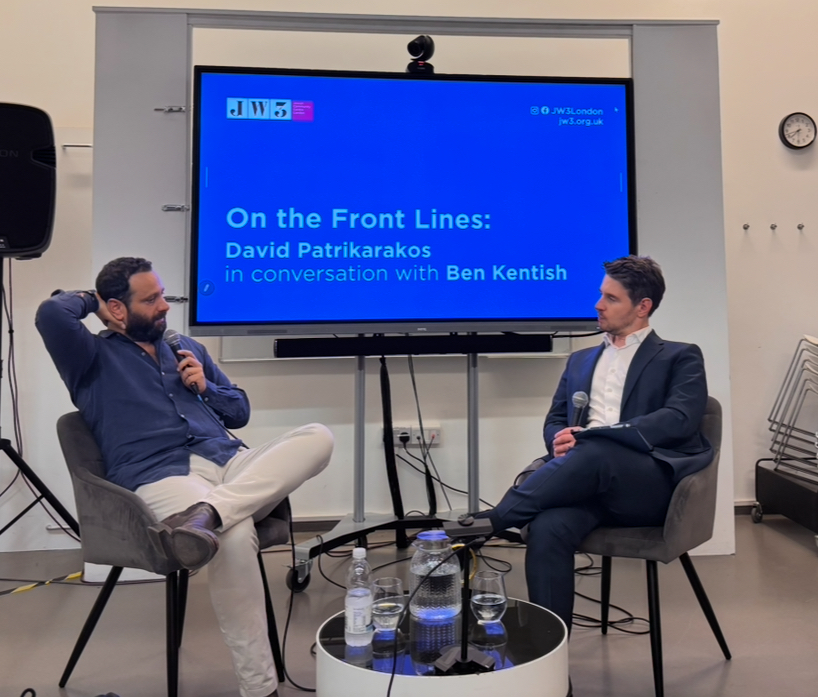
Social media has become more decisive than tanks or missiles in shaping the outcome of modern wars, acclaimed war correspondent David Patrikarakos told a London audience this week.
Speaking in conversation with LBC presenter Ben Kentish at JW3, in an event held in partnership with Jewish News, Patrikarakos described how his reporting from eastern Ukraine in 2014 revealed a new kind of war. “I realised eventually that I was looking at two wars,” he said. “One fought with guns and tanks and soldiers, and the other fought online with tweets and posts and shares. The war online back then was more important.”
The journalist, whose book War in 140 Characters is now taught at military academies including Sandhurst and West Point, called 2014 “the birth of the 21st century public sphere”. He said that while propaganda had always accompanied battle, for the first time “military operations on the ground were supporting operations in cyberspace, not the other way around”.
Patrikarakos accused technology companies of warping public life by rewarding falsehood and outrage. “These are businesses… constitutionally, algorithmically curated toward virality,” he said. “If I post ‘eat onions for five days instead of seeing a doctor’, it does better than the truth. Nazis buy trainers too. Zuckerberg and Musk have no responsibility to ensure what’s on their platforms is true. Only to their shareholders.”
He said the result was a poisoned public sphere that fuels polarisation and leaves democracies vulnerable to manipulation by hostile states. “We’ve gone from a shared media space, however imperfect, to a fragmented one where everyone only sees content proving they’re right. That makes politics more tribal, more extreme, and more dangerous.”

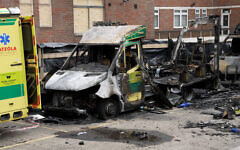
The shift has profound consequences for Israel and its neighbours, he argued. Israel’s deterrence, badly shaken on 7 October 2023, was partly restored through operations designed as much for perception as for battlefield effect. “The extraordinary Pages-and-walkie-talkies operation massively downgraded Hezbollah’s command and control capabilities,” he said. “Hezbollah is down, 100 percent, not out.” On Iran, he noted that the regime had “spent billions” on its nuclear programme only to suffer “incredible humiliation” from repeated Israeli strikes. “You can’t afford to look stupid if you’re a dictatorship.”
Asked about Donald Trump, Patrikarakos said the president’s unpredictability sometimes acted as a deterrent but warned that his disregard for norms had permanently damaged America’s role in the world. “We’ve gone from ‘the buck stops here’ to ‘I take absolutely no responsibility whatsoever’”, he said.
Looking ahead, he predicted that resource wars – over rare earth minerals, water, gas, and Arctic shipping lanes – would define the next era of global conflict. China, he said, was the only state with the scale to challenge the US-led post-war order. “Russia can spoil things, but it can’t remake the world in its image. If there is a competitor, it is China.”
Despite the bleak assessment, he pointed to early signs of resistance to online toxicity, particularly among younger generations. “They’re savvier. Schools are banning phones. Customers can push back,” he said. “But real change tends to come only after crisis.”

Keep community journalism free.
Jewish News is free for everyone. No paywall. No barriers. Just trusted journalism for anyone who wants to stay connected to Jewish life in Britain.
If you value that, please support us.
From as little as £5 a month, you can help keep our journalism free and accessible to all.
Every day, we report on the issues that matter to our community. We celebrate achievements, support charities, challenge antisemitism and ensure Jewish voices are heard more widely.
From as little as £5 a month, you can help us continue to:
- Report on the stories shaping Jewish life in the UK and beyond
- Bring our community together through shared stories, events and campaigns
- Celebrate the people, culture and moments that define our community
- Support organisations doing vital work across Jewish Britain
You can make a one-off donation or become a regular supporter. Every contribution helps keep our journalism free, independent and accessible to all.
If everyone who values Jewish News gave a small amount, it would make a real difference to our future.





















