Prefer Jewish News on Google
SPECIAL REPORT – 50th anniversary of Yom Kippur War: ‘Those first days of battle were chaos’
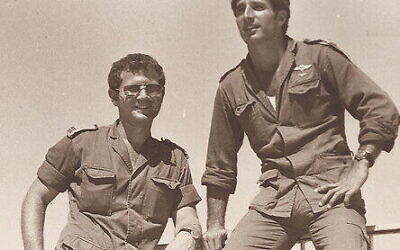
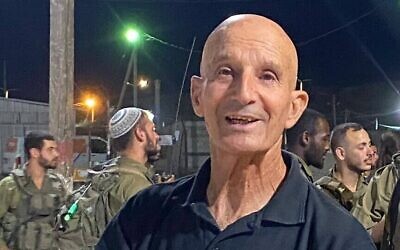
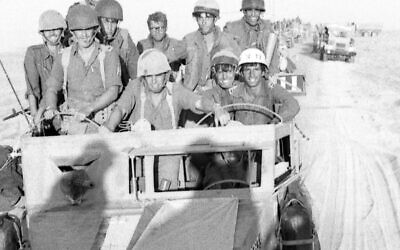
Now 71, Israeli army veteran Danny Pearl recalls his harrowing memories of fighting the Egyptian army in the Sinai Desert during the Yom Kippur War.

“There were many killed, a lot of them in front of me. Many were my friends.” Danny Pearl chokes up as he recalls the horrors of the Yom Kippur war in 1973.
Jewish News spoke to the 71-year-old on the 50th anniversary of the war, which to this day is seen as the biggest intelligence failure in Israel’s history.
A war that nearly brought Israel to its knees.
Pearl, who was a soldier in the IDF Southern Command special forces unit, was stationed in the Sinai Desert when the war broke out. But it took him almost 48 hours before he knew that Israel was facing a multi-front war, and not just a limited military attack.
Pearl, who was the commander of the 14 soldiers in his unit, was ordered to go to Mount Um Hashiba, which served as the “army’s eyes over the Sinai desert.”


“I was told to go and check the Wadi (Arabic for valley) and spend Shabbat there. It was supposed to be a regular exercise, checking if there were any terrorists or weapons and so on. But we had absolutely no idea what was waiting for us,” he said.
The following day, on Yom Kippur – 6 October – war broke out. Unlike the government and IDF central command, Pearl and his unit had no idea what was happening.
“At around 2pm we saw four planes above us, flying in pairs of two. We didn’t know who they were, and thought maybe it was some sort of exercise. But all of a sudden they start dropping bombs on Umm Hashiba where we had just come from. They flew so low we could look the pilots in the eyes. Then I understood something was wrong and we started firing at the planes. We hit one of them and it exploded,” Pearl recalls.
What Pearl and his unit witnessed was the Egyptian surprise attack over the Sinai desert, which bombarded Israeli army bases and caused panic in the Israeli security cabinet.
Pearl’s unit left the Wadi and drove to the nearest IDF base where they were met with the sight of Israeli soldiers killed and injured. An Egyptian commando unit had ambushed them.
“It was chaos. There were many injured and killed. We stayed there overnight where we helped helicopters land in the desert at night by putting gasoline in tuna cans and lighting them on fire to mark a runway.”
The massive assault by the Egyptian army had caused severe damage to antennas carrying the radio signals in the Sinai Desert. It therefore took Pearl a long time to understand that Israel was at war and that it wasn’t just a limited military operation by the Egyptians.
“Me and my unit had no idea we were at war yet. It was only the next day we knew what was really happening,” he said.
“Yard of Death”
“It was only when I arrived at the Tassa base (in Sinai), which is huge, that I realised that we were at war. There were constantly planes over us. Our job was to protect the base from Egyptian attacks,” Pearl recalled.
Pearl said that both Ariel Sharon and Shmuel “Gorodish” Gonen were at the base (Gonen had replaced Sharon as the commander of the IDF southern command), illustrating the strategic importance of the base.
There were many killed, a lot of them in front of me. Many were my friends. Soldiers blew up and were thrown in the air.
It didn’t take long for Israel to decide that the army had to cross the canal to fight back the Egyptian army and halts its advancement in Sinai.
“We had to cross the Suez Canal but because we couldn’t cross by swimming we kept waiting for a temporary bridge to be built.
The day before the bridge was ready, the Egyptians launched a massive attack on the bases next to the canal where Pearl was stationed, which was later named the “Yard of Death”, due to the many people killed there.
The biggest surprise, he said, was the Egyptian commando units that were so lethal.
“There were many killed, a lot of them in front of me. Many were my friends. Soldiers blew up and were thrown in the air. The fire was as big as the Azrieli mall (in Tel Aviv). One big chaos,” Pearl said.
It was in the middle of the chaos that Pearl had to make one of the hardest decisions in his life. He saw a soldier searching frantically for his brother, whom Pearl had witnessed being killed moments before.
“I suddenly saw a soldier named Itay walking around looking for something. He was looking for his brother, Omri Atzmon, whom I had just witnessed being killed in front of me. I spoke to the doctor who told me to send him home. So I did. I couldn’t tell him what had happened. You can’t give those kind of news in that situation,” Pearl said.
When Itay returned to his family in Israel he was given the news about his brother. “When I talk about it now it hurts more than it did back then when I was running on adrenaline. You just have to move forward,” Pearl said with tears
Pearl and his Israeli comrades eventually managed to break the Egyptian army, fighting day and night during the 18 days the war lasted. “You don’t feel the days pass. And you have no contact with anyone at home,” he said.
For Pearl, the memories of his friends and comrades who were killed will always be with him.

Keep community journalism free.
Jewish News is free for everyone. No paywall. No barriers. Just trusted journalism for anyone who wants to stay connected to Jewish life in Britain.
If you value that, please support us.
From as little as £5 a month, you can help keep our journalism free and accessible to all.
Every day, we report on the issues that matter to our community. We celebrate achievements, support charities, challenge antisemitism and ensure Jewish voices are heard more widely.
From as little as £5 a month, you can help us continue to:
- Report on the stories shaping Jewish life in the UK and beyond
- Bring our community together through shared stories, events and campaigns
- Celebrate the people, culture and moments that define our community
- Support organisations doing vital work across Jewish Britain
You can make a one-off donation or become a regular supporter. Every contribution helps keep our journalism free, independent and accessible to all.
If everyone who values Jewish News gave a small amount, it would make a real difference to our future.