Prefer Jewish News on Google
SPECIAL REPORT: How Etgar reshaped Jewish learning
Jo Rosenfelder and Adam Taub saw Jewish pupils leaving school with major knowledge gaps. Their Etgar curriculum now reaches thousands
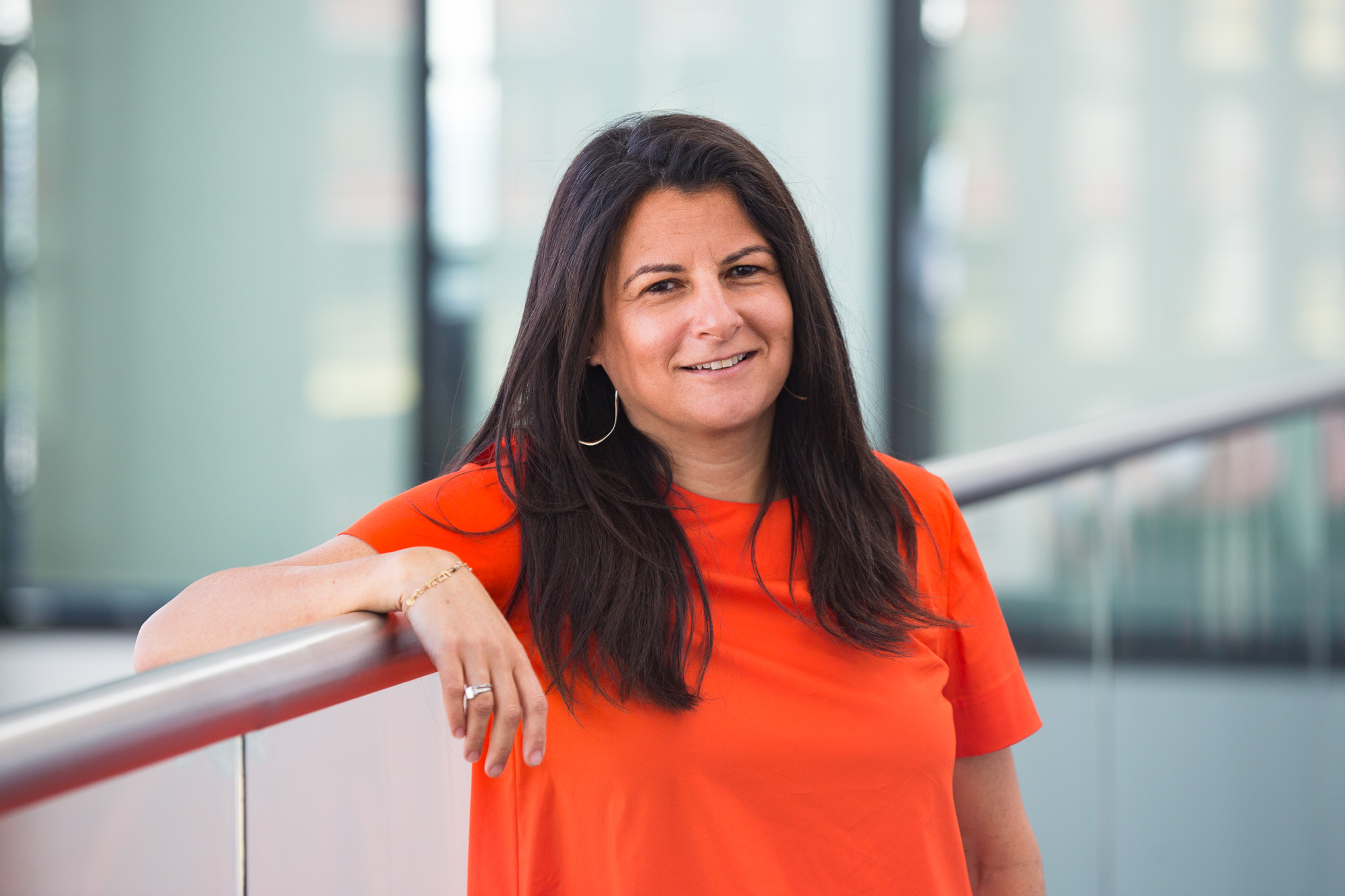
When Jo Rosenfelder looks back to when her own children were in Jewish primary schools, she recalls something beyond the warmth of assemblies and the buzz of playground chatter. What stood out most, she says, were the things pupils weren’t learning.
“We were really worried about their Jewish knowledge,” she tells Jewish News. “Lovely schools, and most Jewish kids were going to Jewish schools, but almost ubiquitously, very, very significant gaps in quite a lot of areas of Jewish knowledge.”
She and co-founder Adam Taub noticed that while children were enthusiastic, their grasp of basics like Jewish history, the calendar, the story of Israel, or the difference between Torah and Talmud was shaky. “Fundamental building blocks of Jewish life and Jewish knowledge hadn’t been covered,” Rosenfelder explains. “That omission effects them as they’re growing up. It makes them feel very lost Jewishly… there are great dangers in neglecting the teaching of educational foundations.”
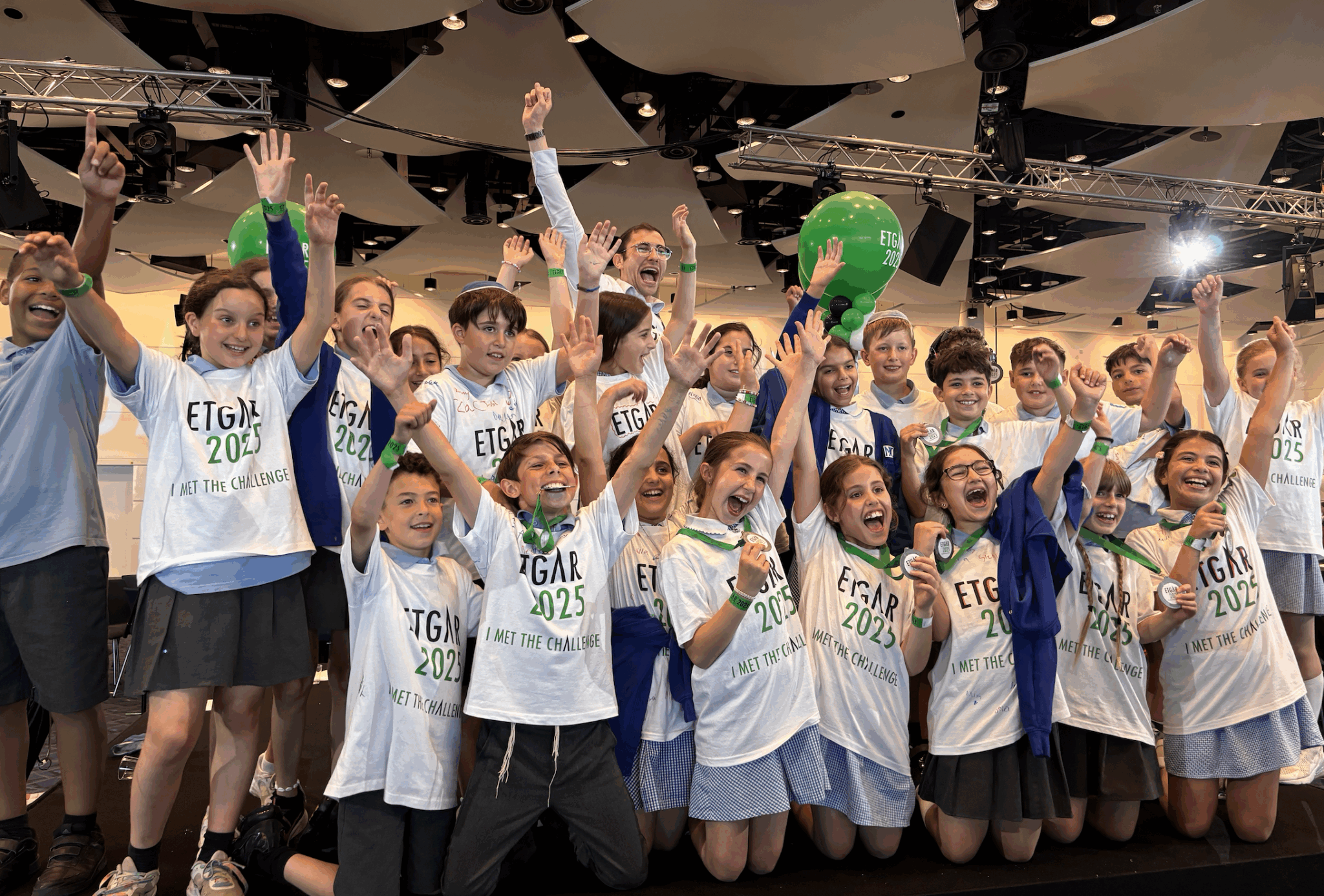
In 2013 they launched Etgar with a single Sunday quiz, attended by 200 children. The following year it doubled, and soon every mainstream Jewish school wanted in. Today, about 1,000 pupils from 28 schools gather each summer at Wembley for European Jewry’s biggest educational event. Since its inception, more than 10,000 children in the UK have taken part, and over 15,000 worldwide.

Each child receives a high-quality printed Jewish General Knowledge Handbook. “It is crucial that the books are published and bound to a really high standard,” Rosenfelder says. “Every kid has to receive their own book, which we really want them to keep forever, so they can keep sneaking a peek when they’re 20 or 30.”



The year of preparation ends with a high-energy inter-school quiz. At Wembley, teams of ten confer over carefully designed questions. “We try very much to avoid these regurgitative questions,” she insists. “It’s not just rote learning. One of the questions we had this year was we had a picture of the moon. We said, if the moon looks like this, what festival could be starting tonight? The kids are really engaging. With the multiple-choice questions, we test higher-order thinking. We also set several creative tasks, allowing pupils to display their learning in different ways.”
For Rosenfelder, the real goal is to equip pupils with a language that will carry them through life. “It’s like the times tables. You can’t do much maths if you don’t know your times tables. The same thing with Jewish general knowledge – if you don’t know what certain words mean, how Jewish history has developed or stories from the Torah, you could get lost very quickly.”
Older teenagers, she notes, are often too embarrassed to admit what they don’t know. “For a student of 13 or 14 to not know roles played by Theodor Herzl and David Ben-Gurion makes it very difficult for them to carry on engaging.” Etgar aims to solve that problem by age ten.
The programme is evidence-driven. Every year the organisers analyse all 100 quiz questions, rating their difficulty and tracking how children respond. “We’ve made the quiz harder and harder each year,” Rosenfelder says. “And the kids’ scores have gone up. That really shows how Etgar is impacting.”
By completing the quiz at the end of the year, organisers can measure how much pupils from different schools have absorbed. “We know that they know more and are more familiar with their Jewish knowledge,” Rosenfelder explains. The figures bear this out: median scores have risen year on year, even as the tests become tougher. At Wembley, every child now also joins in the songs sung on stage, including Hatikvah.
The impact is backed by qualitative surveys. Teachers consistently rate the Challenge around 4.8 out of 5 for management, enjoyment, and effectiveness. Informally, too, responses are powerful. Parents text Rosenfelder to say Etgar has completely transformed their child’s engagement with Jewish learning. Teachers sometimes leave Wembley in tears: “We just hadn’t expected how badly we needed this.”

The project arrives at a critical time. This summer’s Jewish Policy Research survey concluded that while upbringing remains the strongest predictor of Jewish identity, “no single programme” carries the weight alone. The Chief Rabbi’s own education review earlier this year acknowledged “a lack of effective Jewish knowledge” among some pupils despite years in Jewish schools. Rosenfelder welcomes the recognition. “This was the first one that actually acknowledged the fact that kids don’t know very much. The question is how you shift that.”
Her answer is to complement, not criticise schools. Etgar provides the Handbooks, Weekly Challenges and the final event, while teachers decide how to teach and integrate it into their own classrooms. “You’re really best placed to be teaching this,” she says. “You know the kids, you know the nature of your schools. We will give you all the resources you need.”
What began as a UK project is now spreading abroad. After early experiments in South Africa, Etgar launched in Paris this summer with 250 children, projected to rise to over 600 next year. The Handbook has already been translated into French, Hebrew and Hungarian. The programme now runs in Hungary, South Africa, France, and Ireland, with launches this year in the UAE and Atlanta, Georgia. Talks are also under way for a Nordic edition, with translations planned into Swedish, Danish, Norwegian and Finnish, while communities in Brazil, Argentina and Mexico are exploring Portuguese and Spanish versions. Israel is expected to host its own Challenge soon. “It’s really going global,” Rosenfelder says.

Running Etgar remains lean. The organisation currently has just three part-time staff and relies on support from major funders including JNF UK, the Charles Wolfson Charitable Trust and the Dorset Foundation. Schools pay a small charge per pupil to take part, with the remainder of costs covered by philanthropy.
“Success in three to five years is to see Etgar embedded in the UK Jewish community and in other communities around the world, reflecting the importance of having a basic standard of Jewish knowledge. Together with the expansion of the programmes here in the UK and abroad, we are also looking at our own structural growth so that we can meet the growing demand for an evaluated, experiential Jewish knowledge programme, which we welcome.”
Asked what she most wants Jewish News readers to take away, Rosenfelder doesn’t talk about numbers, funding, or even Wembley. Her message is simpler. “I just want the community to care a bit more. Without caring, we’re losing. You can’t just do it through a feel-good factor. A positive learning experience is critical – but the knowledge is also really critical. If you manage to do both together, you’ve got a really winning formula.”

Keep community journalism free.
Jewish News is free for everyone. No paywall. No barriers. Just trusted journalism for anyone who wants to stay connected to Jewish life in Britain.
If you value that, please support us.
From as little as £5 a month, you can help keep our journalism free and accessible to all.
Every day, we report on the issues that matter to our community. We celebrate achievements, support charities, challenge antisemitism and ensure Jewish voices are heard more widely.
From as little as £5 a month, you can help us continue to:
- Report on the stories shaping Jewish life in the UK and beyond
- Bring our community together through shared stories, events and campaigns
- Celebrate the people, culture and moments that define our community
- Support organisations doing vital work across Jewish Britain
You can make a one-off donation or become a regular supporter. Every contribution helps keep our journalism free, independent and accessible to all.
If everyone who values Jewish News gave a small amount, it would make a real difference to our future.