Prefer Jewish News on Google
SPECIAL REPORT: Jewish charities warn Labour plan risks disabled support
Kisharon Langdon and Jewish Blind & Disabled fear Labour’s welfare reform plans will put vital disability support services at risk
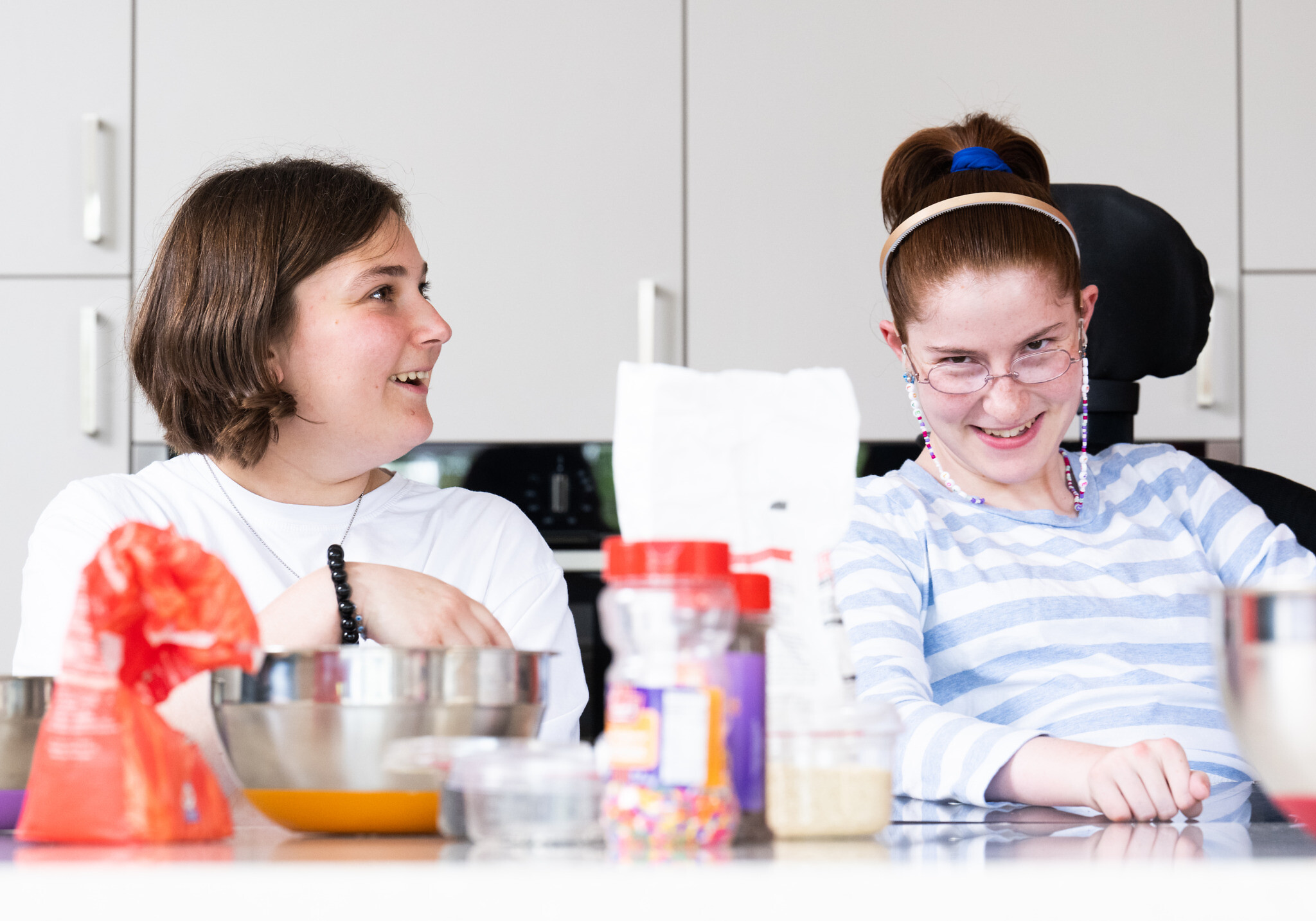
Every Friday evening, Deena helps prepare a Shabbat meal. Surrounded by friends in her supported living home, she lays the table, lights the candles, and welcomes the peace of the weekend. It’s a simple tradition, but for Deena and her family, it represents something profound.
As Labour signals a stricter approach to welfare spending, the future of that independence is being called into question. Jewish charities supporting people with complex disabilities say proposed reforms could jeopardise the lifelines that make moments like Deena’s possible – and place vulnerable people at greater risk of isolation, poverty and institutionalisation.
“Deena has been supported by Kisharon Langdon since she was a toddler,” says her mother, Sylvia. “From nursery to school to college and now in Supported Living, the charity has been integral to Deena’s life. We chose it for its unique offering in the Jewish learning disability and autism community; we can’t imagine our journey without their support.”
At the Spring Budget in March 2025, Shadow Chancellor Rachel Reeves reaffirmed Labour’s commitment to reducing welfare spending and increasing workforce participation. “The Labour Party is the party of work,” she said. “We believe that if you can work, you should work. But if you can’t work, you should be properly supported.”

While no specific changes to disability benefits have been announced, Reeves’ focus on fiscal responsibility and her pledge to make “tough decisions” have unsettled many within the disability sector. Charities warn the rhetoric risks oversimplifying the reality for people with profound or complex needs who are simply not able to work and whose lives rely on consistent, specialist support.


![Yad Fellowship Co-Founders Irfan Zaman [L] and Noah Katz [R]](https://static.jewishnews.co.uk/jewishnews/uploads/2025/04/y7DarBZF-240x150.jpeg "Yad Fellowship Co-Founders Irfan Zaman [L] and Noah Katz [R]")
Kisharon Langdon, which supports Jewish people with learning disabilities and autism across education, employment, and independent living, is among those sounding the alarm.

“We are deeply disappointed by the government’s latest budget,” says the charity’s Chief Executive, Richard Franklin. “The plans, which include cuts to disability benefits, do nothing more than place further strain on those using the services of charities like Kisharon Langdon and their families, who are already struggling to navigate the chronically underfunded social care sector.
“This latest round of welfare cuts will only limit those already needing more support and places significant limits on the opportunities they should be provided with
Franklin also criticised the decision to reject an exemption for charities on Employer National Insurance Contributions, saying the combination of rising taxes and higher wage bills poses a severe challenge.
“For Kisharon Langdon, the rise in employer national insurance contributions and the increase in the national minimum wage will cost us an additional £400,000 a year on top of the £4.5 million it costs us to run our vital services,” he said.
The warning comes as many UK households face a fresh wave of cost-of-living pressures. From this week, energy, water, and council tax bills are rising, with Ofgem confirming a £111 increase in the energy price cap, bringing the average annual dual-fuel bill to £1,849. Some local councils have been authorised to raise council tax by nearly 10 percent. The Resolution Foundation has warned the poorest families will be hit the hardest.
For people reliant on benefits or facing high care costs, these rises add yet another layer of financial strain.
Meanwhile, analysis for the Department for Work and Pensions suggests that recent changes to welfare policy will push 250,000 more people – including 50,000 children – into relative poverty after housing costs by 2029-30.
Zoe, a tenant in Kisharon Langdon’s Supported Living service, has taken part in its employment programme and now works two days a week at its head office in Colindale.

“I work in the office on Tuesday and Wednesday,” she says. “I work on reception and welcome people, and I offer them a drink and ask them to sign in. I really enjoy coming to work at Kisharon Langdon. I really enjoy meeting people. It is a pleasure coming to work here.”
Charity leaders are quick to emphasise that supported employment is a positive step for some but not a viable goal for all. Many of the people they support require round-the-clock care and simply cannot work. Policies that frame employment as the expected outcome, they say, risk further marginalising people with complex needs.
“One of the highlights for our family is the Friday night dinners coordinated by the Jewish Life team,” says Sylvia. “Seeing Deena and her friends come together to prepare and host their own Shabbat meal is truly heartwarming; it gives them a deep sense of pride and belonging.”
She fears that political decisions made without a real understanding of disability could threaten the support systems that enable Deena to live a full, connected life.
Another charity raising concerns is Jewish Blind & Disabled (JBD), which provides accessible housing and support for people living with physical disabilities or sight loss.
“The government’s recent announcement in relation to disability benefit reforms has created anxiety and concern for many of the people we

support,” says Chief Executive Lisa Wimborne. “We understand the need to manage the benefits bill, but the potential loss or reduction of PIP will impact people’s ability to retain their independence.”
PIP, she explains, covers critical costs that arise from living with a disability – from mobility aids and assistive technology to transport and home adaptations.
“If you take away access to essential funding, this could result in failed employment or, at the other end of the spectrum, people ending up unnecessarily in hospital or residential care – at a huge cost to the individual and to the public purse
JBD tenants say they are already worried about what the future holds. Neil, who lives with multiple sclerosis, said: “I received enhanced PIP, and a big part of this pays for my mobility car, which gives me the independence to get out and about. I also use it for laundry and specialist products I need to manage my condition. A reduction of PIP for anyone like me living with a progressive condition would have a huge impact. It could leave people with no quality of life, struggling to cope.”
Chris, another JBD tenant, said PIP is his “lifeline”.
“It allows me to maintain my personal identity. Now my personal care takes place at home. PIP makes it possible for my barber, chiropodist, and all specialised care providers to come to me. Combined with the severe pain and the nature of my condition, this enables me to live my best life.”
Wimborne adds that benefit systems must also be made more accessible. “We often have to support our tenants to access the benefits they are entitled to, as the system is a minefield. We urge the government to ensure that any changes simplify the system and ensure people with complex disabilities can apply for the benefits they need without the need for support agencies.”
While Reeves has long been viewed as an ally of the Jewish community – she is vice-chair of Labour Friends of Israel and has spoken out against antisemitism in her party – some now worry that her determination to project economic toughness could come at the expense of vulnerable people and the services inclusive Jewish charities have spent decades building.
Labour has said that any welfare reforms will be implemented in a “compassionate way”. But for families like Sylvia’s, the question remains: will that compassion survive contact with the numbers?
A Department for Work and Pensions spokesperson said:
“Helping people into good work and financial independence is at the heart of our Plan to Change, but the broken social security system we inherited is failing people who can and have the potential to work, as well as the people it’s meant to be there for.
“That’s why we’re delivering a £1 billion employment support package to break down barriers for disabled people into work. We’re also rebalancing Universal Credit payment levels so the benefit’s main rate rises permanently above inflation for the first time, in a boost for low income families.
“We will continue to deliver a social security system for those with severe health conditions and we will protect the income of those who will never be able to work.”

Keep community journalism free.
Jewish News is free for everyone. No paywall. No barriers. Just trusted journalism for anyone who wants to stay connected to Jewish life in Britain.
If you value that, please support us.
From as little as £5 a month, you can help keep our journalism free and accessible to all.
Every day, we report on the issues that matter to our community. We celebrate achievements, support charities, challenge antisemitism and ensure Jewish voices are heard more widely.
From as little as £5 a month, you can help us continue to:
- Report on the stories shaping Jewish life in the UK and beyond
- Bring our community together through shared stories, events and campaigns
- Celebrate the people, culture and moments that define our community
- Support organisations doing vital work across Jewish Britain
You can make a one-off donation or become a regular supporter. Every contribution helps keep our journalism free, independent and accessible to all.
If everyone who values Jewish News gave a small amount, it would make a real difference to our future.