Prefer Jewish News on Google
Starmer gave ‘absolute’ pledge to widen Hamas-linked sanctions, lawyers reveal
At Limmud, hostage families’ lawyers detail PM pledge on wider sanctions and how pressure shaped policy
The UK government has committed to deepening and widening sanctions not only against Hamas but against individuals and organisations connected to it, lawyers representing British-linked hostage families revealed at Limmud.
Giving an update on their work in 2025, Adam Wagner KC and Adam Rose said Prime Minister Keir Starmer gave what they described as a “very absolute commitment” to expand the UK’s sanctions regime – a pledge they said has since been reconfirmed by Middle East minister Hamish Falconer.
The disclosure goes beyond earlier public statements from ministers, with the lawyers telling Limmud audience that the commitment includes targeting those “around Hamas and organisations like Hamas”, not only the terror group itself.
Wagner said officials are now examining gaps in the sanctions framework, including whether it should be lawful for people in the UK to give money to groups that are sanctioned in other countries but not formally sanctioned in Britain.
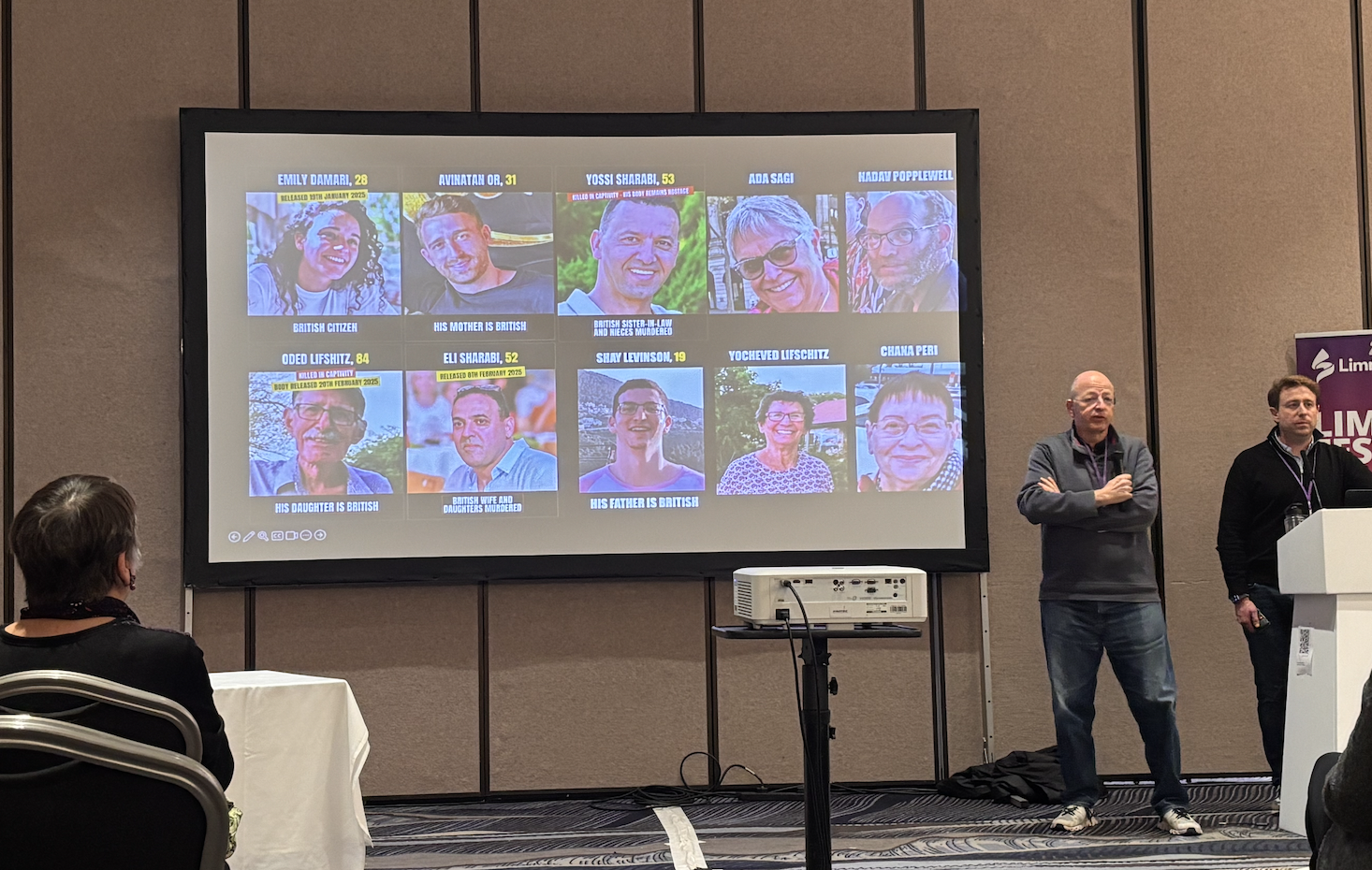
The lawyers, who since October 2023 have represented families of 10 hostages who are British or closely connected to the UK, spoke about several of the cases that have shaped their advocacy. These include Emily Damari, who was released in January 2025 after being shot and seriously injured during her abduction, and Eli Sharabi, who was freed in February after nearly 500 days in captivity and later learned that his wife and two daughters had been murdered on 7 October.


They also referred to Yossi Sharabi, whose body was returned after he was killed in captivity, as well as Avinatan Or, who has since been released and whose mother is British. The lawyers said the physical suffering endured by hostages, alongside the prolonged trauma faced by families, had been central to their discussions with UK ministers.
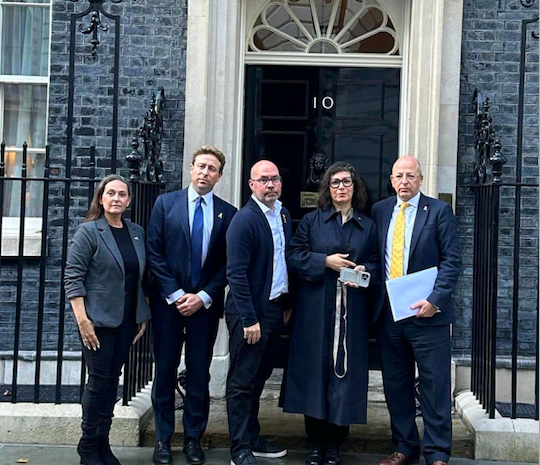
Wagner and Rose gave a candid account of how government action was secured, saying public criticism of inaction helped force movement inside Whitehall, directly preceding the creation of a dedicated Gaza Hostage Unit with the Foreign Office. That unit, they said, provided families with unprecedented access to ministers and senior officials.
“That structure changed everything,” Wagner suggested, adding that families of detainees from other countries did not receive comparable levels of support.
The session also highlighted a significant international legal development: the UN Special Rapporteur on Torture has formally recognised hostage-taking as a form of torture not only of captives but also of their families – a finding that lawyers said could strengthen future international pressure on hostage-takers and those with influence over them.
Rose, a partner at Mishcon de Reya, and Wagner, a KC at Doughty Street Chambers, stressed that there is no legal mechanism to compel a terrorist organisation to release hostages.

Instead, they argued, state leverage – particularly sanctions, diplomatic pressure and sustained political engagement – remains the most effective tool available.
The update, delivered at the Limmud Festival, was framed as both a record of progress and a warning: commitments on sanctions must now be translated into action, and the UK must be better prepared should British citizens face hostage-taking again.

Keep community journalism free.
Jewish News is free for everyone. No paywall. No barriers. Just trusted journalism for anyone who wants to stay connected to Jewish life in Britain.
If you value that, please support us.
From as little as £5 a month, you can help keep our journalism free and accessible to all.
Every day, we report on the issues that matter to our community. We celebrate achievements, support charities, challenge antisemitism and ensure Jewish voices are heard more widely.
From as little as £5 a month, you can help us continue to:
- Report on the stories shaping Jewish life in the UK and beyond
- Bring our community together through shared stories, events and campaigns
- Celebrate the people, culture and moments that define our community
- Support organisations doing vital work across Jewish Britain
You can make a one-off donation or become a regular supporter. Every contribution helps keep our journalism free, independent and accessible to all.
If everyone who values Jewish News gave a small amount, it would make a real difference to our future.