
 Prefer Jewish News on Google
Starmer tells Commons: Hezbollah must disarm but Israel’s Lebanon strikes ‘wrong’
PM and Macron to convene Hormuz summit

Keir Starmer has called for the Lebanese terror group Hezbollah to disarm, but says he is “equally clear Israel’s strikes are wrong” as he gave a statement on the Middle East conflict in the Commons.
Speaking in the House of Commons on Monday, the Prime Minister said: “Whilst the ceasefire between the US, Israel and Iran is undeniably welcome, it is also highly fragile.
“The region remains on edge, and a lot of work is required to reopen the Strait of Hormuz, to de-escalate the situation, leading to a sustainable ceasefire.
“In pursuit of that goal, we call for Lebanon to be included urgently in the ceasefire.
“Diplomacy is the right path, and I welcome the talks taking place this week. Hezbollah must disarm, but I’m equally clear that Israel’s strikes are wrong. They are having devastating humanitarian consequences and pushing Lebanon into a crisis.”


The PM also said he was continuing to press to ensure that Lebanon was included in a ceasefire.
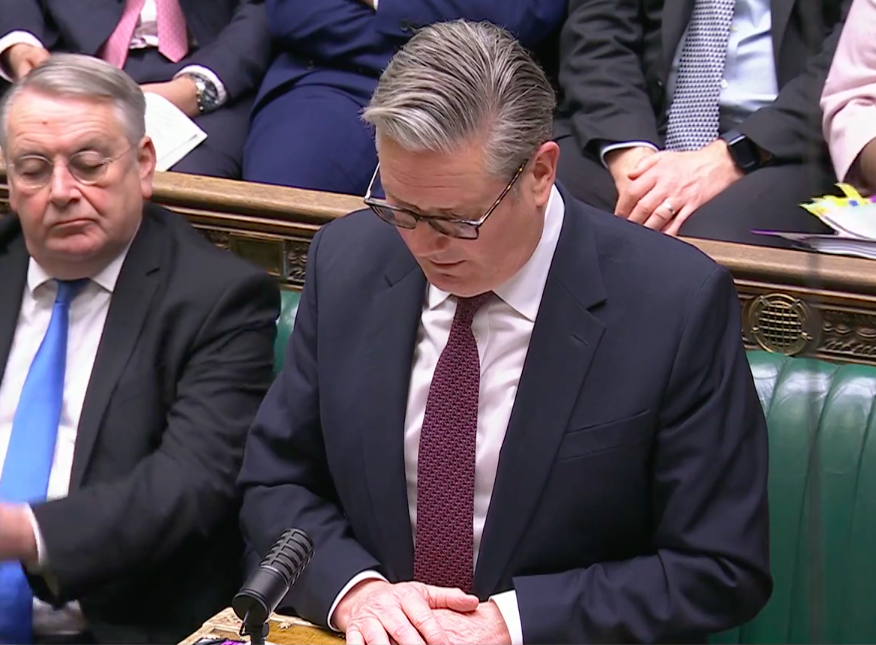
He also later branded settler violence in the West Bank as “wrong” and admitted the problem in the region was “getting worse.”
During Monday’s statement, Conservative leader Kemi Badenoch said the UK “must take rapid action to increase our energy security and keep bills down, not just until July, but longer than that, permanently.”
“Britain is particularly vulnerable to energy price shocks because we are killing domestic oil and gas production in the North Sea,” she added.
“Britain must be able to defend herself, and that means we must be ready for these situations before they happen.”
Badenoch said it was a “national embarrassment” that the UK was not able to immediately send a ship to protect British bases in Cyprus.
She also reiterated calls for Labour to publish the long-awaited defence investment plan, which was originally set to be published last year.
The PM responded, saying the previous government were responsible for “hollowing out” our military capabilities.
Starmer will also host a summit with French President Emmanuel Macron, focused on diplomatic efforts to end the conflict in the Middle East and military planning to help shipping through the Strait of Hormuz.
He told the Commons: “I’ve met UK businesses in energy, shipping, insurance and finance, and they are clear that vessels will not be put through the strait until they are confident that it’s safe to do so.
“And that’s why we’re working around the clock on a credible plan to reopen the strait.
“And I can confirm today that, together with President Macron, I will convene a summit of leaders this week to drive forward the international effort we have built in recent weeks, bringing together dozens of countries to ensure freedom of navigation in the Strait of Hormuz.
“The summit will be focused on two things. First, diplomatic efforts to bring pressure to bear for a negotiated end to the conflict and for the strait to be opened.
“Second, military planning to provide assurance to shipping as soon as a stable environment could be established.”

Pic: PA Wire
Also on Monday, Starmer confirmed the UK is not supporting the US naval blockade of Iranian ports, announced by President Trump earlier in the day, saying Britain would not be “entangled” in the conflict
Earlier, a Downing Street spokesperson had refused to discuss the invite list to the summit or whether the United States were sending a representative.
Starmer first condemned the Israeli strikes last week during a diplomatic tour of Gulf states, telling ITV News’ Talking Politics podcast that the attacks were “wrong” and “should stop” as a “matter of principle”, regardless of the technical question of whether they constituted a breach of the ceasefire agreement.
Foreign Secretary Yvette Cooper echoed those remarks, saying she was “deeply troubled” by the escalating attacks and that the UK “strongly” wanted Lebanon included in the ceasefire.

Keep community journalism free.
Jewish News is free for everyone. No paywall. No barriers. Just trusted journalism for anyone who wants to stay connected to Jewish life in Britain.
If you value that, please support us.
From as little as £5 a month, you can help keep our journalism free and accessible to all.
Every day, we report on the issues that matter to our community. We celebrate achievements, support charities, challenge antisemitism and ensure Jewish voices are heard more widely.
From as little as £5 a month, you can help us continue to:
- Report on the stories shaping Jewish life in the UK and beyond
- Bring our community together through shared stories, events and campaigns
- Celebrate the people, culture and moments that define our community
- Support organisations doing vital work across Jewish Britain
You can make a one-off donation or become a regular supporter. Every contribution helps keep our journalism free, independent and accessible to all.
If everyone who values Jewish News gave a small amount, it would make a real difference to our future.





















