
 Prefer Jewish News on Google
“Surely it’s better to be a Jew than an atheist?’
Before his UK tour writer and documentarian Jon Ronson talks about how he was outed at a jihadi camp
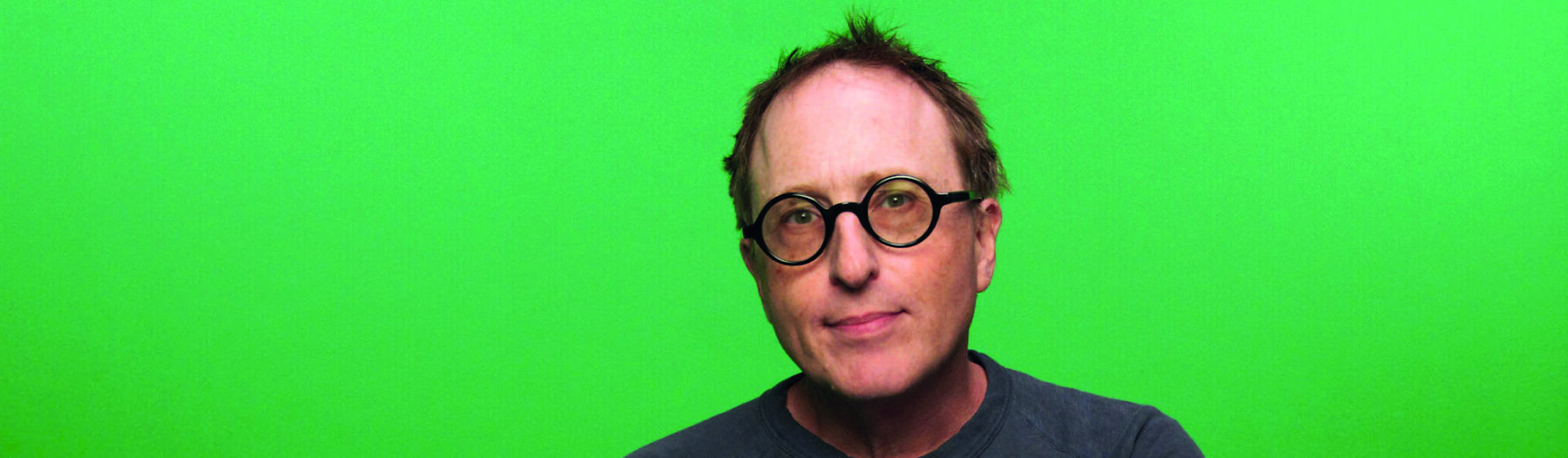
Jon Ronson sums up his schtick – across newspaper journalism, bestselling books and pioneering documentaries – as telling “nuanced, humanist,
grey-area stories about how people are a complicated mix of positive and negative characteristics”.
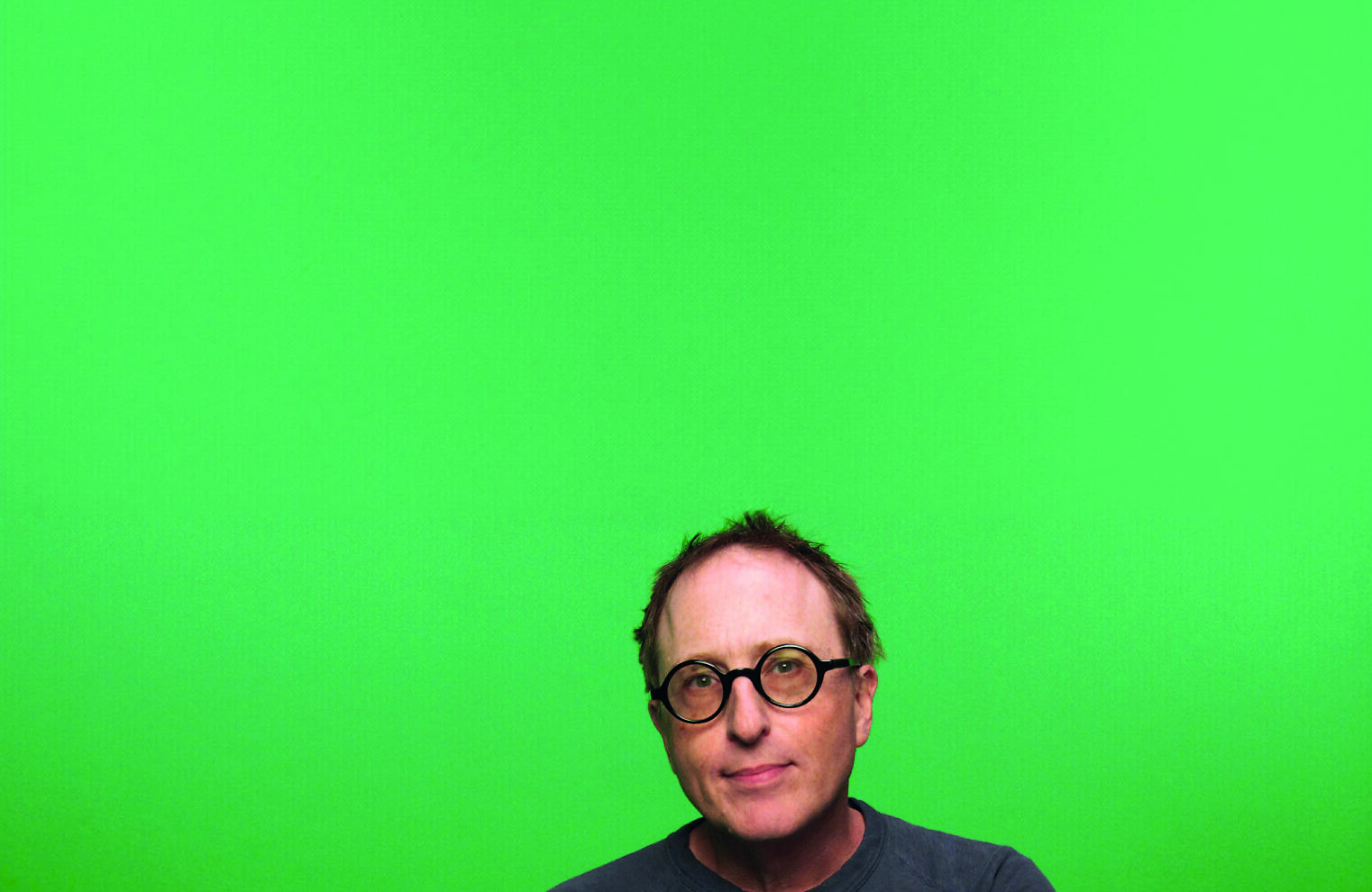
But even the mellow-mannered and softly-spoken merchant of ambiguity has struggled to respond to the outburst of anti-Jewish racism since October 7.“It’s been a shock, right?” he says, his wide-eyed expression enhanced by his circular, bug-like specs, on a video call from his home – a former llama farm – in Upstate New York.“I’ve never experienced antisemitism… until now. I went to Cardiff High School, which wasn’t the roughest school in Cardiff, but it was no picnic, and I never experienced any antisemitism at all.”
I was hoping Ronson might have some wisdom to impart, having studied so many of the currents of our times during the past quarter-century: Islamists and conspiracy theorists in 2001’s Them: Adventures with Extremists; the madness industry in 2011’s The Psychopath Test; and internet mob mania in 2015’s So You’ve Been Publicly Shamed.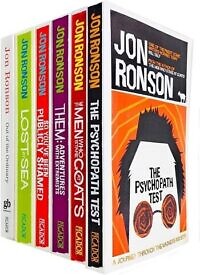
But he seems as befuddled as the rest of us. “I don’t know,” he stutters. “I think I’m still feeling too surprised at the rise of antisemitism to really know how to counter it.” He falls back on his life’s credo (but, I sense, espouses it less convincingly than he might have done two years ago). “Complicated, clever people do stupid things,” he says, “stupid people do clever things. You know, humans are just a mess. My way of handling all of this horror is just to keep telling those stories. That’s all I’ve got.”
It has all made the 58-year-old feel “a lot more Jewish” of late. “I’ve been going to Shabbat dinners more frequently. I think a lot of people have. Somebody said to me the other day: ‘Nothing gives you more of a sense of identity than when that identity is under attack from other people.’”
 At the same time, he has watched friendships dissolve before his eyes. “A friend of mine posted a message on Instagram that said something along the lines of, ‘We all know that Zionists take pleasure from seeing photographs of dead children. We’re not dealing with human beings.’ And I don’t need to tell you how ‘blood libel’ that sounds. So I’ve lost friends because I felt that their anti-Zionism has become antisemitic. You just think, ‘Well, they’ve lost their sense of reason.’”
Even though Ronson’s family was not “particularly religious, we went to an Orthodox shul”. Then he discovered Reform. “The girls were hotter and [youth movement] RSY was kind of cool. Everyone was lounging around smoking and listening to Simon & Garfunkel. I thought, ‘This is my version of Judaism.’ Going to the summer camp and winter camp are the happiest memories of my teenage years.”
Ronson exhibited his journalistic instincts from a young age. “I remember I used to really piss off my parents because they’d tell an anecdote. And everybody would laugh. Then I would always say, ‘Well, what happened after that?’ They’d get really annoyed with me, like, you know, ‘No, that’s the end of the story.’ So I’d always want it go on a little bit further.”
It is this need to forever dig deeper that sees him return to Britain to revisit The Psychopath Test, on a UK-wide tour. Mystery special guests will help answer readers’ burning questions… What happens when a psychopath is in power? Could you learn to spot a psychopath? Are you working for a psychopath?
It is 14 years since the book became a hit, and Ronson is fascinated by how psychopathy is now becoming “destigmatised”. “You’ve got psychopathic TikTokers now. People are like, ‘I love you, Kanika – thank you for this lifestyle advice about how to love bomb somebody and then devalue them.’”
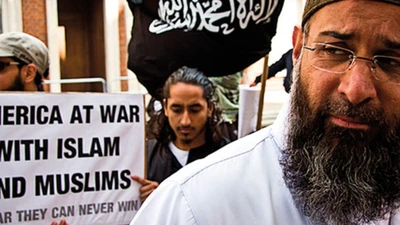
His foray into international Islamism, originally for 1997 documentary Tottenham Ayatollah, was equally prescient, even though the jaunty tone – as Ronson trailed cleric Omar Bakri Muhammad – jars with what we know now, post 9/11, 7/7 and so on.
Ronson recalls the Channel 4 commissioner saying that everyone would love there to have been a documentary about Hitler before he was infamous. “He said to me, ‘Maybe this will be your Hitler The Watercolorist’. And it kind of turned out to be true, right?”
The hairiest moment came when Bakri announced his recent discovery to the crowd at a training camp in a Scout hut in Crawley. “Omar suddenly says, ‘Look at me with the infidel Jon, who is…’ and he paused, ‘A Jew!’ They all went ‘Ahhh!’ And I said, ‘Surely it’s better to be a Jew than
an atheist?’”Ronson chuckles. “Why I would choose
a jihad training camp to assert my Jewishness is beyond me.”
Jon Ronson’s Psychopath Night UK Tour runs throughout November. Tickets are on sale now at fane.co.uk/jon-ronson

Keep community journalism free.
Jewish News is free for everyone. No paywall. No barriers. Just trusted journalism for anyone who wants to stay connected to Jewish life in Britain.
If you value that, please support us.
From as little as £5 a month, you can help keep our journalism free and accessible to all.
Every day, we report on the issues that matter to our community. We celebrate achievements, support charities, challenge antisemitism and ensure Jewish voices are heard more widely.
From as little as £5 a month, you can help us continue to:
- Report on the stories shaping Jewish life in the UK and beyond
- Bring our community together through shared stories, events and campaigns
- Celebrate the people, culture and moments that define our community
- Support organisations doing vital work across Jewish Britain
You can make a one-off donation or become a regular supporter. Every contribution helps keep our journalism free, independent and accessible to all.
If everyone who values Jewish News gave a small amount, it would make a real difference to our future.





















