Prefer Jewish News on Google

The BBC will learn precisely nothing from the latest anti-Israel bias revelations
There is a deep seated denial from within the bowels of the Corporation, which is also expressed by its most doughty external defenders
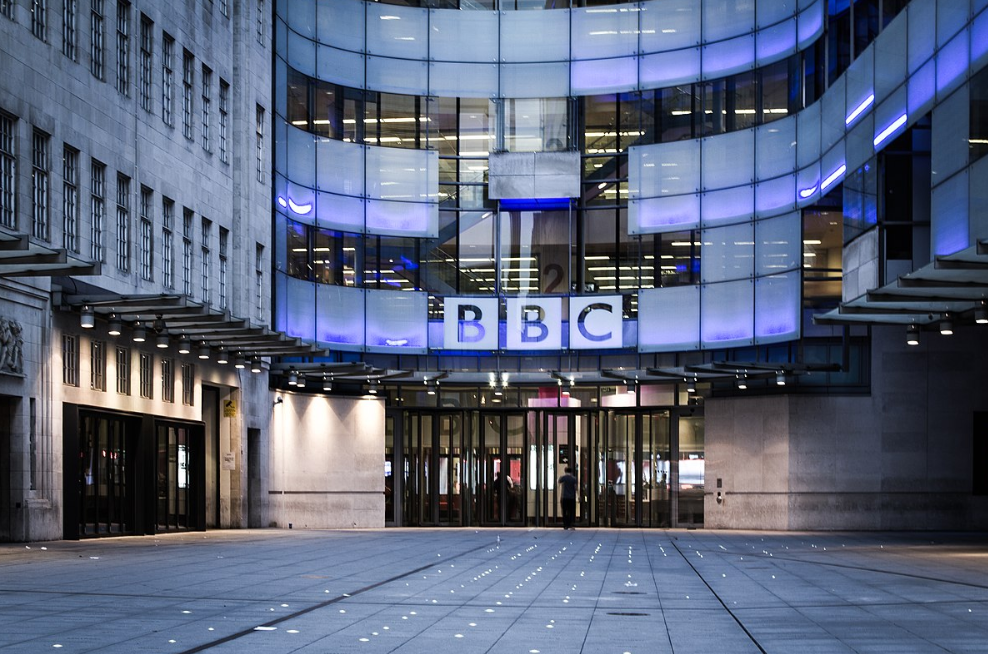
A couple of years ago, while in my previous job, I was present at a meeting between Jewish community representatives and some of the BBC’s most senior figures, including the Director General, Tim Davie.
I won’t go into the details of that meeting, but the general nature of it will be obvious to everyone. The Board of Deputies – the organisation I was working for – was deeply concerned at some of the coverage that the BBC had been producing on issues of deep concern to many in the UK Jewish community. And as you’ll appreciate from the fact that these issues still very much exist, there was no significant, deep-seated effort by the Corporation to address those concerns. The deep irony is that it seemed to me that of all the senior executives present, Tim Davie engaged the most closely with what we had to say. And now he’s gone.
Two weeks ago the Daily Telegraph published a dossier put together by Michael Prescott, who served as an independent advisor to the BBC’s Editorial Guidelines and Standards Board. Though it focused on a number of key areas, the one it outlined in the most detail was that of deep inaccuracies and bias in the Corporation’s reporting of the Israel-Gaza conflict. You can read a summary of those points elsewhere on the Jewish News website, but in a way, what’s most remarkable is what isn’t there.
Of the 10 different abject failures which we set out, drawing from Prescott’s dossier, there is no mention of the BBC documentary which featured the son of a senior Hamas official as its main narrator. There is no mention of the BBC’s total failure – apologised for, but never satisfactorily explained – to cut the live feed at Bob Vylan’s Glastonbury set, despite it having been identified as high risk, despite the presence of senior BBC executives at the festival itself, and despite the confirmation of the organisation’s own Executive Complaints Unit in the aftermath that “the content of this act, taken in the round, can fairly be characterised as antisemitic.” There is no mention of the fact that the BBC suspended multiple members of its Arabic team after their social media posts celebrating 7 October were revealed – only to subsequently reinstate them with no proper reason or justification given. There is no mention of the BBC’s policy – defended for years, now apparently to be changed – to incorrectly translate the word “Yahud” when stated by Gazans as “Israeli” instead of “Jew”. There is no mention of the Corporation’s woeful misreporting on the explosion at Gaza’s Al Ahli hospital in October 2023, when its international editor Jeremy Bowen claimed incorrectly that the hospital was “flattened”, with Bowen later admitting that he had been “wrong” but that “I don’t feel particularly bad about that. It was just the conclusion I drew.”
The very fact that a list of 10 major problems with anti-Israel bias in the BBC’s reporting does not even mention some of the biggest examples of such bias in the past few years shows that the issue is an institutional one.

The response from some of the Corporation’s biggest supporters, both past and present, has been revealing of the general attitudes surrounding the Broadcaster. In particular, there is the targeting of Sir Robbie Gibb, who is on the BBC board – often with a focus on his connections to the Jewish Chronicle. The subtext appears to be that there is some sort of shadowy coup, orchestrated by Gibb, to supplant the forces of light at the Corporation. The term “Zionist” is rarely used at this rarified level of the commentator class, but only because everyone can infer it regardless. Gibb, of course, is just one of the ten non-executive members, and there is no apparent explanation as to how he might have cajoled, suborned or otherwise neutralised others at the BBC to execute some sort of nefarious plan. Nor is there any answer as to how, if Gibb has indeed inserted some hypothetical malign hooks into the Corporation, it has so consistently and obviously operated with such deep anti-Israel bias. Either Sir Robbie is in fact the worst secret agent ever to have emerged from the bowels of Mossad or – and I know this may be hard for some of the Centre Left’s most sage minds to grasp – he is in fact not attempting to bring down the BBC at all! Inconceivable!
In the meantime, however, there is no indication that the BBC is even close to learning the lessons of the Prescott dossier – namely, that perhaps it would be wiser not to ignore or bat away internal warnings about deep-seated bias when they are brought to your attention. I would be stunned if a couple of years down the line we were not having similar conversations, about similar problems – and facing similar levels of deep-seated denial – from the apparatchiks at Broadcasting House. Whether in respect of a country or a corporation, it is almost impossible to affect any sort of change when the dominant internal mentality and narrative is that there are enemies at the gates.

Keep community journalism free.
Jewish News is free for everyone. No paywall. No barriers. Just trusted journalism for anyone who wants to stay connected to Jewish life in Britain.
If you value that, please support us.
From as little as £5 a month, you can help keep our journalism free and accessible to all.
Every day, we report on the issues that matter to our community. We celebrate achievements, support charities, challenge antisemitism and ensure Jewish voices are heard more widely.
From as little as £5 a month, you can help us continue to:
- Report on the stories shaping Jewish life in the UK and beyond
- Bring our community together through shared stories, events and campaigns
- Celebrate the people, culture and moments that define our community
- Support organisations doing vital work across Jewish Britain
You can make a one-off donation or become a regular supporter. Every contribution helps keep our journalism free, independent and accessible to all.
If everyone who values Jewish News gave a small amount, it would make a real difference to our future.