
 Prefer Jewish News on Google

The Foreign Secretary has shown what happens when pandering becomes policy
Britain’s increasingly hostile approach to Israel is being driven as much by domestic politics as foreign policy. The hypocrisy is striking and may come at a cost
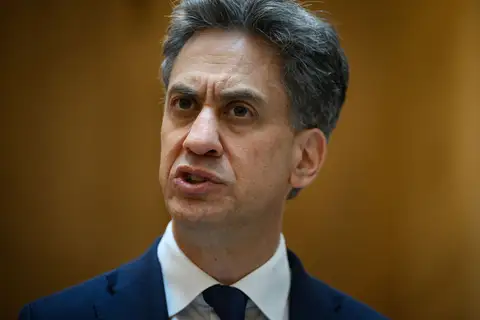
Ed Miliband has announced the British government’s much anticipated “reset” of relations with Israel, complete with new sanctions and the usual assurances that Britain remains committed to Israel’s security.
Britain will ban imports of goods produced in Israeli settlements in the West Bank, target individuals and companies providing services connected with settlement expansion, prohibit the advertising of settlement properties in Britain and introduce a new “double lock” on arms exports.
Miliband went considerably further, accusing “settler terrorists” of carrying out “ethnic cleansing” of Palestinians and claiming that the Israeli government has too often turned a blind eye or actively supported their forced displacement.
Strong stuff from an ally.
It came wrapped in all the appropriate expressions of friendship. Miliband described himself as a proud British Jew, spoke movingly about his grandmother finding sanctuary in Israel after her husband and 60 members of her family were murdered by the Nazis, condemned the Hamas atrocities of October 7 and reaffirmed Britain’s commitment to Israel’s security.



He then announced another package of punitive measures against the Jewish state.
Therein lies the contradiction increasingly at the heart of British policy. Britain wants to punish Israel in public while continuing to rely on the Jewish state in private for security cooperation, intelligence and defence technology.
In short, when it comes to Israel, Britain wants its cake and to eat it. It wants all the benefits of the relationship while increasingly pandering to those who would happily dismantle that relationship altogether.
Hamas Killed the Two-State Solution
Miliband repeatedly returned to the two-state solution, the supposed “north star” of British Middle East policy.
The problem is that Hamas did more to destroy the prospect of two states on October 7th than settlements have managed in decades. For Israelis, 7 October killed, once and for all, the basic premise behind territorial withdrawal. The belief that relinquishing territory would necessarily bring greater security.
Perhaps one day Israelis and Palestinians will find a way to live peacefully alongside one another. But not any time soon. Pretending 7 October did not fundamentally change reality and what Israelis are prepared to risk for peace, is frankly delusional.
Israel withdrew completely from Gaza in 2005. Every settlement was dismantled, every permanent Israeli military presence removed and around 8,000 Israelis uprooted from their homes.
Hamas then took control. The radical Islamist terror organisation chose oppression over civil society. Hatred over peace. Terror and conflict over prosperity. Rockets, tunnels, terror attacks, endless wars, culminating in the atrocities of 7 October. The world talks of genocide, The only attempt at genocide was that of Hamas on 7 October.
Britain’s response has been extraordinary.
Following the greatest massacre of Jews since the Holocaust, rather than confront what 7 October did to the prospects of two states, Britain simply carried on as though nothing had changed. Moreover, the UK has suspended more than 30 arms-export licences used by the IDF in Gaza, frozen negotiations on an upgraded trade agreement, and sanctioned Israeli government ministers.
It also recognised a Palestinian state, essentially rewarding terror, providing a victory to Hamas and sending a dangerous message to the Palestinians that the massacre of Jews achieves far more than negotiation and compromise could ever do. Indeed, state recognition by the UK and other Western countries, may have put the final nail in the coffin of the two-state solution.
And now, these latest sanctions.
What Ed Was Told
Miliband’s approach to Gaza raises another troubling issue.
On 1 September, he posted a video after meeting medical and humanitarian workers who had been in Gaza or were continuing to work there. He described what they told him as horrific and repeated accounts of medicines being blocked and children dying while waiting for life-saving treatment.
These testimonies are questionable at best. Miliband is not an activist attending a solidarity event or an influencer recounting somebody’s testimony on social media. He is the Foreign Secretary, with British diplomats, intelligence agencies, military advisers, international organisations and Israeli government channels at his disposal.
He may have thought to verify the claims, but apparently didn’t find it necessary.
We have seen this throughout the war. False accusations against Israel are peddled as established fact without supporting evidence and repeated endlessly by politicians, NGOs and the media. Repetition replaces evidence and allegation becomes accepted truth.
Interestingly, Miliband understands the principle perfectly well when he chooses to apply it, albeit with qualification. Asked about accusations of genocide, he stressed the need for “full, robust and fair judicial processes” and a determination by a competent court. Miliband would have been better advised to apply this rigour to all the claims and allegations he listened to.
When Pandering Becomes Policy
Several weeks ago, writing about Andy Burnham’s increasingly strident attacks on Israel, I warned that British foreign policy risked becoming hostage to domestic electoral politics.
Labour has a Gaza problem. At the 2024 general election it lost five seats to independents campaigning primarily on the issue, while other Labour MPs saw large majorities collapse in constituencies with substantial Muslim populations. The Greens have since made Palestine central to their challenge to Labour from the left.
Muslim voters are perfectly entitled to campaign and vote according to whatever issues matter to them. The problem arises when government allows those electoral calculations to determine foreign policy.
British policy towards Israel should be based on British interests, British values, moral clarity and a sober assessment of what advances peace and security. It should not depend on which constituencies Labour fears losing to the Greens or pro-Gaza independents.
Yet there are votes to be won by taking an increasingly hard line against Israel, seemingly with little or no cost, at least politically.
British Jews are already paying the price. The Community Security Trust recorded 3,700 antisemitic incidents in 2025, the second-highest number in its history. More than half were linked to Israel, Palestine, Hamas and the war in Gaza. So, while politicians continue to insist that hostility towards Israel and hostility towards Jews are entirely separate matters, the reality on Britain’s streets tells a very different story.
Britain’s independent reviewer of terrorism legislation, Jonathan Hall KC, warned only this week that turning Israel into a pariah could place “a bit of a target on the back” of British Jews.
Pretending the relentless demonisation of Israel has no consequences for Jews in the UK is simply denying reality.
There is a considerable difference between criticising Israeli policy and creating a political culture in which Israel is routinely described as genocidal, colonial, apartheid and uniquely evil, with Britain’s Foreign Secretary now accusing its government of facilitating ethnic cleansing.
The language and the message it sends find their way from Westminster onto Britain’s streets.
Miliband himself spoke about Jewish children attending schools protected by security guards and the hundreds of millions of pounds Britain is spending protecting its Jewish community.
There is something grotesquely contradictory about a government spending vast sums protecting British Jews from an increasingly hostile environment while pursuing policies and rhetoric towards the Jewish state that only make that environment worse.
Self-Inflicted Wounds
Israeli-headquartered pharmaceutical company Teva is one of the largest suppliers of medicines to the NHS. According to Teva UK, one in seven generic prescription packs supplied in Britain is a Teva product, as is one in eight prescription packs overall. The company estimates its generics saved the NHS around £2.4 billion in 2023.
Last year, when Labour MP Patricia Ferguson asked whether NHS England should stop purchasing Israeli-manufactured generic medicines, the Department of Health said it had no plans to do so. Will this change?
Today Tom Tugendhat pressed Miliband on whether Israeli-developed medicines used by patients suffering from Parkinson’s, multiple myeloma and multiple sclerosis would continue to be protected.
Miliband immediately assured him they would. Did anyone say hypocrisy? Double standards?
Apparently, so-called principle becomes rather more complicated once British patients and British lives are at stake.
And it’s not just medicine.
Tugendhat served as Britain’s Security Minister and therefore knows considerably more about the UK-Israel intelligence relationship than most politicians commenting on it. This week he said that during his time in office “a lot of incidents did not happen” because cooperation with Israeli intelligence helped protect British citizens from terrorist attacks.
Former Mossad director Yossi Cohen has claimed that a former MI5 director-general told him Mossad deserved an “Oscar” for disrupting terrorist activity in Britain and that Israeli intelligence had saved many British lives. Cohen’s account is his own, but Tugendhat’s intervention is wholly British, recent and unequivocal.
Israel’s contribution goes beyond intelligence. British forces relied extensively on the Israeli-developed Hermes 450 drone in Afghanistan. Rafael’s Trophy active protection system has been selected for Britain’s Challenger 3 tanks. Israeli technology is deeply embedded across Western cyber security, surveillance and defence.
Then there is Israel’s decades of operational experience confronting Iran, Hezbollah, Hamas, jihadist networks, terrorism, drones, ballistic missiles and cyber warfare.
Without a hint of irony, Miliband himself acknowledged this absurdity even as he announced sanctions. While announcing further measures against Iran and Hezbollah, he described confronting those threats as an important, shared UK-Israeli national-security interest on which Britain would continue to cooperate.
Israel is apparently objectionable enough to punish, but important enough to help keep Britain safe. Britain seems to believe it can continue sanctioning and condemning Israel while still relying on Israeli intelligence to prevent terrorist attacks, Israeli cooperation to confront Iran and Israeli medicines to treat British patients. It is an extraordinarily convenient definition of an ally.
Britain Cannot Have It Both Ways
There is no excuse for Jewish terror and violence on the West bank. It is real and must be dealt with an iron fist, notwithstanding ongoing Palestinian terror that exists. I am highly critical of Netanyahu and his government. The political and military failures that allowed 7 October to happen demand accountability, as do the policies and actions of a disastrous government in over the past three years.
But Britain’s policy increasingly looks less like coherent foreign policy and more like domestic political expediency.
Apparently, there are now two Israels in British politics. The Israel presented for domestic consumption, a convenient villain that can be condemned, sanctioned and increasingly ostracised.
While there is also the Israel Britain needs and actually deals with. An intelligence partner helping prevent terrorism, a source of military and security technology, an ally against Iran and Hezbollah and home to pharmaceutical companies supplying millions of British patients. All of which protect and save British lives.
This British government believes it can pander at home while cooperating in private, punish Israel politically while relying on it strategically, reassure British Jews while contributing to the political climate from which they increasingly need protection, and continue preaching a two-state solution while refusing to acknowledge that the two-state solution is a “dead parrot”.
That may be a flawed assumption.
When the political grandstanding is finished, and Labour has counted whatever votes it hopes these measures will deliver, Britain will still need intelligence, anti-terror expertise, cyber security and advanced military technology, as well as life-saving medicines for British patients.
Miliband and his boss Burnham may want to consider what Britain is prepared to put at risk in pursuit of a policy increasingly driven by domestic politics and electoral concerns.
In reality, the effects of these sanctions on Israel will be minimal. The cost to the UK however, is yet to be counted.
Gary Cohen is a writer and filmmaker. His substack can be found here:

Keep community journalism free.
Jewish News is free for everyone. No paywall. No barriers. Just trusted journalism for anyone who wants to stay connected to Jewish life in Britain.
If you value that, please support us.
From as little as £5 a month, you can help keep our journalism free and accessible to all.
Every day, we report on the issues that matter to our community. We celebrate achievements, support charities, challenge antisemitism and ensure Jewish voices are heard more widely.
From as little as £5 a month, you can help us continue to:
- Report on the stories shaping Jewish life in the UK and beyond
- Bring our community together through shared stories, events and campaigns
- Celebrate the people, culture and moments that define our community
- Support organisations doing vital work across Jewish Britain
You can make a one-off donation or become a regular supporter. Every contribution helps keep our journalism free, independent and accessible to all.
If everyone who values Jewish News gave a small amount, it would make a real difference to our future.





















