Prefer Jewish News on Google


The Israeli Election Is Not a Trial of the Jewish People
Our history is not standing for election, and our connection to our homeland is not awaiting international approval
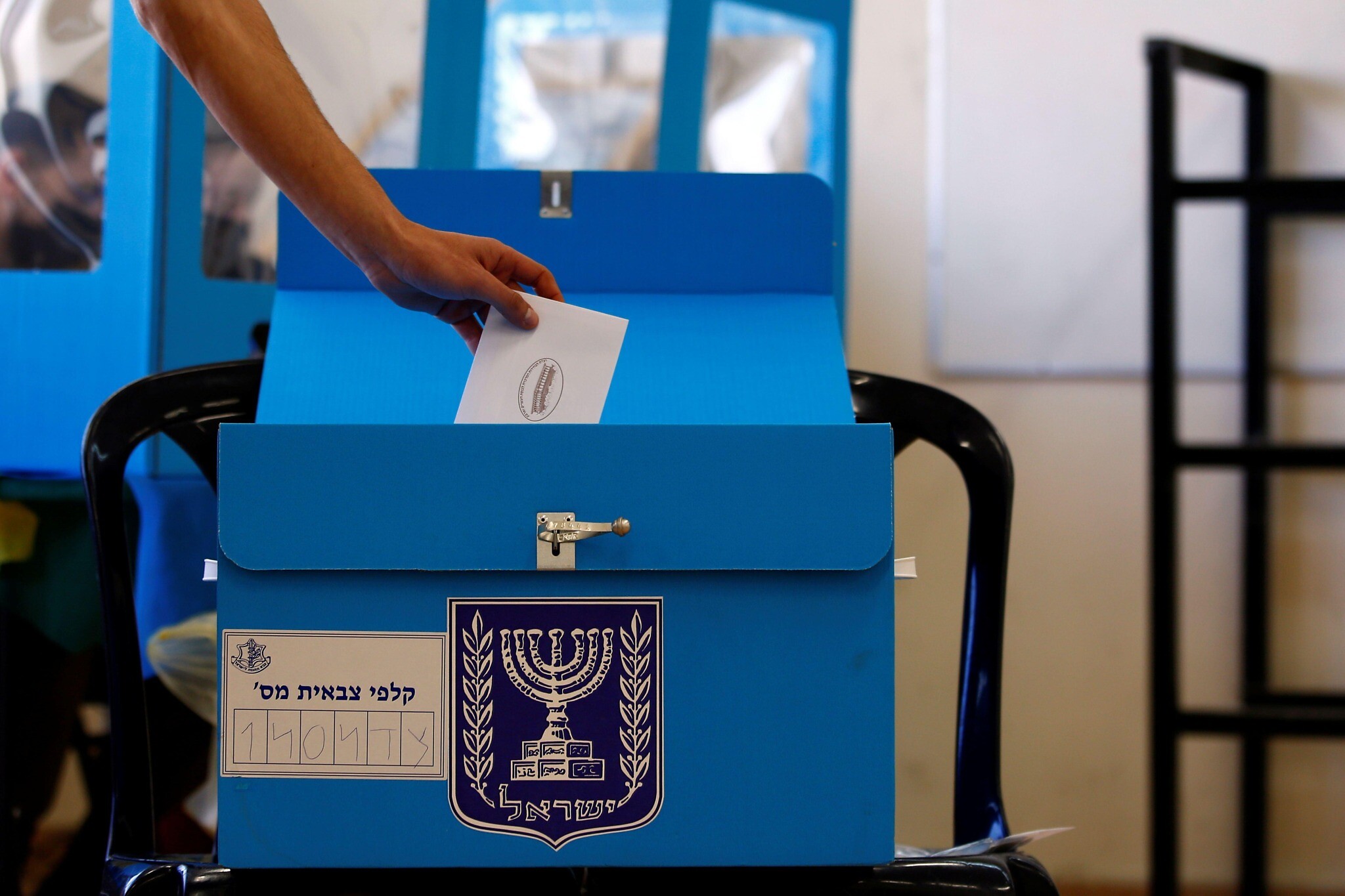
Everyone, it seems, has an opinion about Israel’s upcoming election. Its allies and its enemies, governments and campaigners, Jews and non-Jews. People who follow every twist of Israeli politics and people whose knowledge begins and ends with their hatred of Benjamin Netanyahu.
On 27 October, Israelis will go to the polls. They will make a choice shaped by the catastrophe of 7 October, the wars that followed, profound questions of accountability and competing visions of their country’s future. The election will determine the composition of the next Knesset and the struggle to form a governing coalition.
The world will watch, and whatever the outcome Jews far beyond Israel’s borders will be expected to explain themselves. So let us establish something before a single ballot is counted.
Israel is going to the polls, Jews are not going on trial.
Whether you despise Netanyahu, admire him or simply believe him to be the best available leader for this moment, you have nothing to apologise for in your attachment to Israel. Neither his victory nor his defeat can turn Jewish belonging into a charge that requires a defence.


Our history is not standing for election, our connection to our homeland is not awaiting international approval. The legitimacy of Jewish self-determination will not be decided by whether foreign commentators approve of the coalition Israelis produce.
I am a Jew and a Zionist, for me, those identities are inseparable. They speak to the same history, the same people, the same ancestral connection and the same determination that our future should never again depend entirely on the goodwill of others.
No prime minister gave me that conviction, no election result will take it away and I am tired of the expectation that expressing it must begin with an apology.
Let us say something else without embarrassment, not as a whisper, but as a cry: I am proud of the country we have built.
A flower in the desert, a homeland restored by a people who refused to disappear, a country built by survivors, refugees and generations determined that Jewish life would have a future we could defend for ourselves. A democracy with challenges, certainly, but what true democracy does not suffer in this way? Fierce disagreements, institutions to defend, work still to do, but a democracy nonetheless.
Israel’s citizens can challenge their government, organise against it, campaign to replace it and vote its leaders out of office. Its Arab citizens participate in its elections, can be elected and do indeed sit in the Knesset. Its political life contains competing parties and convictions that no single leader can claim to own.
Freedom House’s 2026 assessment classifies Israel as “Free”, describing a parliamentary democracy with a multiparty system and independent institutions. That assessment covers Israel separately from the West Bank and Gaza, ruled and governed by Hamas and the Palestinian Authority, neither of whom qualify as even close to democratically elected bodies.
These facts deserve more than a grudging footnote in the international conversation. The right to dismiss your rulers is an extraordinary achievement in a region where rulers treat power as a possession and their people as subjects.
Israelis possess that right and on 27 October, they will exercise it.
Some will vote as I would wish, others will not. That is what an election means. Respecting democracy requires accepting that the electorate may reach a conclusion you dislike. The ballot does not become illegitimate because the result makes a newspaper editorial board uncomfortable. Nor does a country forfeit its right to exist because its citizens choose a government others oppose.
I am proud that the Jewish people have sovereignty in our ancestral homeland. Proud that, after everything done to us, we built a country where our children can grow up knowing that their future is theirs to shape. Israel is bigger than any prime minister, any party or any coalition. I will argue about its future because I care about it, I will not apologise for loving it.
Now look at the contrast.
Mahmoud Abbas has postponed Palestinian legislative elections until September 2027, with a presidential election set for the same date. His original presidential mandate expired in 2009. Palestinians last held presidential elections in 2005 and legislative elections in 2006.
Seventeen years after that mandate expired, Palestinians are being told to wait again. An entire generation has reached adulthood without choosing its national leadership. For them, democratic renewal remains permanently scheduled for next year.
Where is the outrage? Where are the demonstrations demanding freedom for Palestinians from Hamas? Where are the marches demanding that Abbas face his electorate? Where are the university encampments insisting that Palestinian young people deserve the right to choose and remove their own leaders?
Palestinians themselves have shown the courage to protest. In Gaza, demonstrators have chanted “Hamas out”, in the West Bank, critics of the Palestinian Authority have faced arrest and abuse. These people risk their freedom and safety to challenge the men who govern them. Where is the mobilisation in their name? Where are their faces on placards, their demands amplified through megaphones, their courage celebrated by our supposedly freedom-loving activists?
The Islamist organisations and their allies on the Western left should be confronted with that question at every march. You claim to stand with Palestinians, then stand with the Palestinians demanding freedom from Hamas and the PA. Carry their demands through London, shout them outside an embassy, insist that Palestinian rulers answer to Palestinian people.
It takes courage to shout “Hamas out” in Gaza. It costs you nothing to repeat it in London. If you cannot bring yourselves to do even that, stop lecturing the rest of us about liberation. Palestinian voices do not become disposable the moment they name an oppressor you would rather excuse.
What does “Free Palestine” mean if it never includes freeing Palestinians from the men who rule them?
Hamas won the Palestinian legislative election in 2006 and its violent seizure of Gaza followed in 2007. A ballot victory two decades ago cannot confer a perpetual right to govern, and armed domination cannot renew an electoral mandate.
Nobody acquires ownership of a people because they once won an election. Palestinian children do not inherit an obligation to submit to the rulers their parents were unable to remove. Their right to political freedom does not become less important because exercising it might inconvenience Hamas or Fatah.
Yet how often do we hear that demand from those who insist they speak for them?
The flags are everywhere, the slogans are deafening, the insistence that Palestinian lives matter is repeated across our streets, our campuses and our cultural institutions.
Then insist that Palestinian voices matter too. Demand elections, demand accountable government, demand that those who exercise power over Palestinian lives explain how they use it and answer to the people who suffer the consequences. Demand that liberation includes the freedom to oppose a Palestinian ruler without fear, to challenge his authority and to remove him.
A Palestinian deserves more than another postponed election and another promise of reform from the people who benefit from its absence. If your solidarity cannot accommodate those demands, whom is it actually serving?
Britain’s response, alongside Australia, Canada and France, was to “deeply regret” the postponement. What political price attaches to denying Palestinians another opportunity to vote? What happens when the promise of democratic renewal is broken again? How long can governments keep presenting reform as the foundation of their policy while accepting its indefinite postponement?
Regret is cheap, while accountability requires something of the people being held accountable.
Instead, we have the spectacle of Israel preparing to hold an election under intense international scrutiny while the Palestinian leadership postpones another and receives an expression of disappointment. That is the moral inversion: when the democracy must explain its electorate and the rulers who deny their people an electorate are offered another opportunity to promise reform.
Israel’s citizens are examined for the choices they make. Palestinian leaders are accommodated as they withhold the choice itself and Palestinians are among those paying for it.
Anyone who believes in their dignity should find that intolerable. Anyone who believes in self-determination should insist that it includes determining who governs you. A movement that can mobilise against Israel but cannot sustain a demand for Palestinian democracy needs to explain its priorities.
For diaspora Jews, this imbalance carries a familiar threat. Whatever Israelis decide, someone will demand that we establish our distance. From Netanyahu, from his coalition, from Zionism, eventually and inevitably, from Israel itself.
You may remain attached to your people’s homeland, apparently, provided you make that attachment sufficiently apologetic to satisfy those who resent it. I refuse.
I will not perform estrangement from Israel to establish my respectability in Britain. I will not treat Jewish sovereignty as an unfortunate development that I must explain away before being admitted to polite company. I will not teach my children that acceptance is something they purchase by disowning part of themselves.
Our connection to Israel reaches far beyond the life of any government. It lives in our prayers, our language, our history and our families. For mine, it lives in the story of grandparents who met during the siege of Jerusalem in 1948, and a grandfather who fought for the country whose existence others now expect us to discuss with embarrassment.
That connection is ours, it is not a concession for someone else to grant or withdraw.
We should be able to say, clearly and without flinching: yes, Israel matters to me, yes, Jewish self-determination matters to me, yes, I care who governs it and what they do and no, you do not get to turn that connection into a confession.
There will be fierce arguments after 27 October. Israelis will have them, Jews around the world will have them, we are hardly a people unfamiliar with disagreement, but we should enter those arguments standing upright.
The people casting these ballots have lived through the consequences of their country’s decisions in ways most foreign observers have not. They have buried relatives, waited for loved ones, served, sheltered, rebuilt and argued about what must happen next. They are entitled to make their choice.
The rest of us are entitled to our opinions, but we are not entitled to demand an outcome, judge others for their decision or pretend that democracy only counts when it produces the answer we prefer.
Nor should Jews accept that our place in the world depends on delivering an Israeli government that satisfies anyone else.
I want Israel to flourish, I want its democracy defended, its citizens secure and its future strong. I want Palestinians to have the political freedom their leaders have denied them for far too long. Those convictions belong together. They demand accountability from the people who wield power, rather than apologies from Jews who do not.
So watch the election, debate it, care about it, argue passionately about the country we want Israel to become. But let nobody confuse an Israeli ballot with a summons to the Jewish people.
We did not reclaim a voice in our own history only to ask permission to use it and we will not apologise for the country we built because the world dislikes the choices its citizens are free to make.

Keep community journalism free.
Jewish News is free for everyone. No paywall. No barriers. Just trusted journalism for anyone who wants to stay connected to Jewish life in Britain.
If you value that, please support us.
From as little as £5 a month, you can help keep our journalism free and accessible to all.
Every day, we report on the issues that matter to our community. We celebrate achievements, support charities, challenge antisemitism and ensure Jewish voices are heard more widely.
From as little as £5 a month, you can help us continue to:
- Report on the stories shaping Jewish life in the UK and beyond
- Bring our community together through shared stories, events and campaigns
- Celebrate the people, culture and moments that define our community
- Support organisations doing vital work across Jewish Britain
You can make a one-off donation or become a regular supporter. Every contribution helps keep our journalism free, independent and accessible to all.
If everyone who values Jewish News gave a small amount, it would make a real difference to our future.