Prefer Jewish News on Google

The Netanyahu government’s avoidance, reframing and betrayal of 7 October
By changing the official description of what took place on 7 October 2023 from a 'massacre' to an 'event', Netanyahu and his government are insulting those murdered
Imagine that from today, it was decided that the Holocaust would be referred to as “the tragic event of WW2”. The Inquisition will be described as ‘a case of overzealous reversal of DEI’. The Hebron massacre? It will know be known as simply ‘a neighbourhood dispute that got out of hand’. The pogroms will be cited as nothing more than ‘a series of unfortunate events’.
“Seriously?” I hear you say. “That’s obscene!” And you would be right.
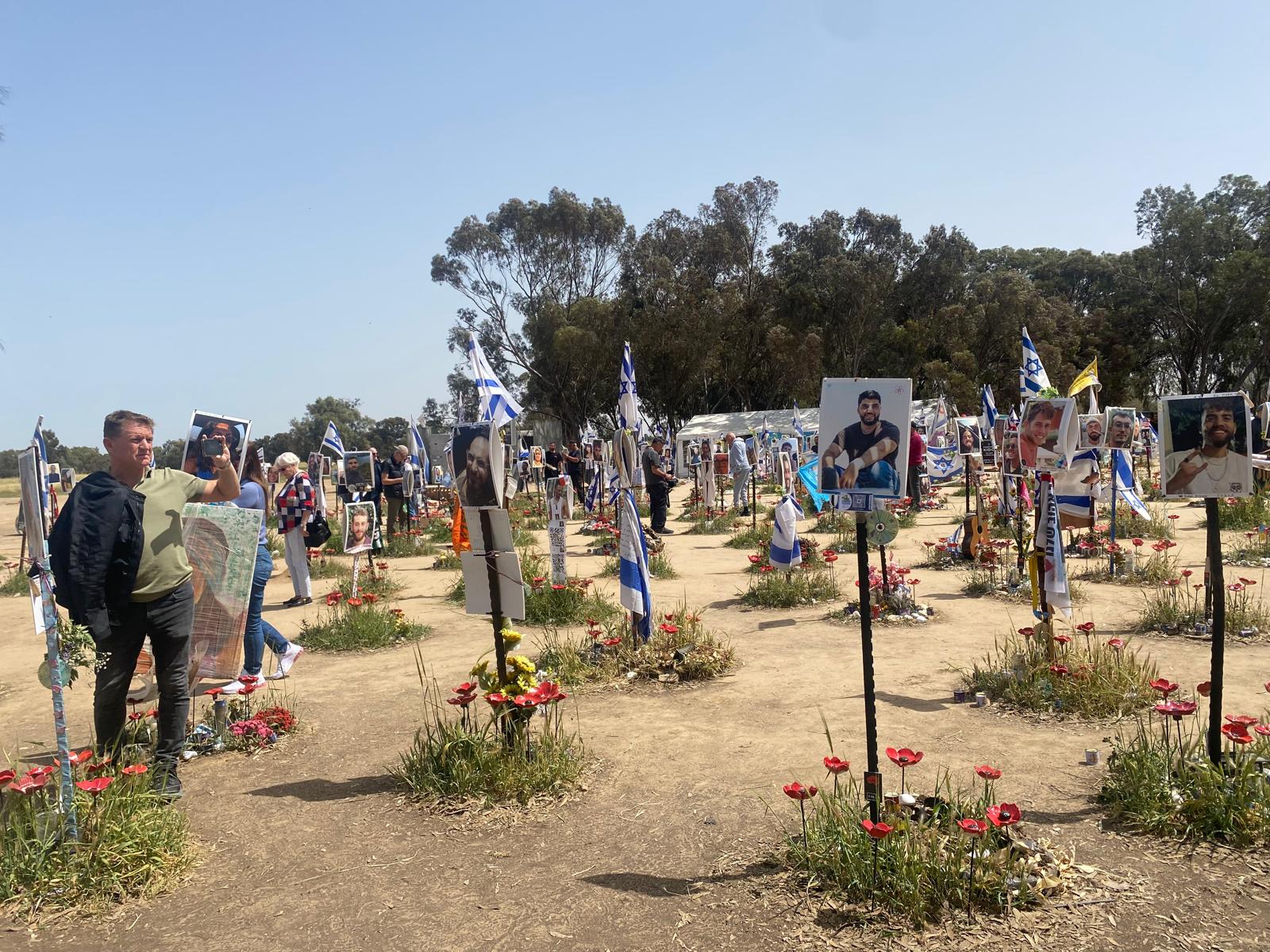
So why is the Israeli Prime Minister’s Office intent on changing the official name of the 7 October commemoration bill to “Memory and Commemoration of the events of Simchat Torah,” in the process deliberately removing the term “massacre” from the title.
This alteration in language has triggered furious backlash from bereaved families and local leaders, who see it as yet one more slap in the face, one more betrayal. An attempt to sanitize the narrative and rewrite history for political reasons.
Language matters. Words have power.

Nothing has changed. The facts remain the same. 7 October was a massacre, the largest slaughter of Jews since the Holocaust. This proposal is offensive in the extreme and a gross betrayal of the victims, their families, the evacuees, the hostages and the country.
The original official framing referred directly to the ‘massacre’ of 7 October. Removing the word ‘massacre’ entirely is not a minor adjustment or a technical issue, but rather a deliberate shift in how the most catastrophic day in Israel’s history is to be formally recorded and remembered.
For more than two years, 7 October has been accurately described as a massacre. Netanyahu himself has described it as such on multiple occasions, both in the immediate aftermath and since, speaking of its horrors and warning that Hamas intends to repeat them. Ministers, officials, journalists and the general public did the same. There is no other word that captures the scale and brutality of that day. It was not simply an ‘event’. It was not just another terror attack. It was a massacre, unlike any other in the history of the modern state.
A massacre carries weight. It demands answers. How did this happen? How did the border collapse? Why was it left so poorly defended? Why did it take so long to respond, leaving entire communities standing alone for hours? Why were warnings ignored? What about the assumptions, the payments of millions in cash to Hamas, the intelligence failures, the years-long policy of ‘managing’ the conflict – how was such a flawed concept allowed to continue for so long? How did all of it converge into a single catastrophic morning that left over 1,200 people dead, thousands injured, 251 kidnapped, families shattered, communities destroyed and a country permanently scarred?
On the other hand, an ‘event’ may or may not carry weight. Events describe something matter of fact, something that happens, rather than an apocalyptic failure. Once that shift is made, in law and in official commemoration, it shapes how 7 October will be understood over time. That’s how history is written.
Young and old who lived through 7 October will always see it as a massacre and the calamitous failure it was. Their children will hear about it first-hand as a massacre. Their children’s children, however, will have to read about it and will be commemorating the “events” of 7 October 2023, not the massacre.
The change in language is deliberate and cruel in the extreme. It comes from a government that, for more than two years now, has simply refused to confront 7 October, the failures, the consequences, their role and responsibility for the greatest disaster in the country’s history.
In essence, Netanyahu’s recently released, 55-page response to the State Comptroller’s investigation into 7 October was a blatant case of denial and deflection. “It wasn’t me, guv, it was them”. Not exactly what you expect from a true leader, especially “Mr. Security”.
The removal of the word “massacre” in official documentation is simply more of the same. An attempt to protect Netanyahu’s legacy, or even worse, an attempt to diminish the scale and horror of the greatest slaughter of Jews since the Holocaust, under his watch. Both are contemptible. Both are fundamentally dishonest. Both are a betrayal of his office. It’s part of a pattern. There will be no accountability. Blame will be redistributed. If culpability cannot be avoided, it can be diluted. When failure and its consequences cannot be undone, the way it is to be remembered can be “manipulated”.
Culture Minister Miki Zohar backed the move publicly and argued that Israel should move away from defining itself through the language of victimhood. He spoke about the need to project strength and resilience rather than frame the country through the trauma of that day and that Israel should shift the emphasis away from the word massacre.
Of course, he did. After all it is he, his boss and his fellow ministers that shoulder responsibility for that massacre, whether they accept it or not.
The victim’s families are stunned that this could even be discussed. They demand accountability, and a reckoning. They will not settle for anything less than a full state inquiry – which Netanyahu continues to reject outright. The removal of the word ‘massacre’ is just one more episode in his campaign of denial.
My friends lost their children. My children lost their friends. Their brutal murder was not part of some event. It was an unprecedented act of unspeakable evil, carried out deliberately, with genocidal intent, in full view of the country and the world. Let Netanyahu go to the parents of those murdered and explain that their tragic loss was simply part of an “event”, and see how well that goes down.
Tell Yarden Bibas that his wife and two young children were kidnapped and murdered as part of an “event”. That his kidnap and torture was an unfortunate “incident”. Tell the families of the Nova Music festival victims that their loved ones were simply caught up in the events of that day.
It is cruel in the extreme. Unthinkable. Although, apparently not to Netanyahu and his government.
There are wider implications. For over two years, Israel has been fighting a battle, not only militarily, but over the truth of 7 October, of narrative and perception. Across the world, the massacre has been questioned, minimized, rationalized and justified. It has been labelled resistance, described as a legitimate act in a fight for freedom. There are endless attempts to strip 7 October of its brutality, to deny the atrocities, to reframe the mass slaughter as an “event”, by those who seek to dilute and erase what actually happened.
Israel’s response has been steadfast and consistent, to insist that 7 October was indeed a massacre, involving rape, mutilation, immolation mass slaughter and kidnap.
If the State of Israel itself sees fit to retreat from the word in its own laws and memorial frameworks, what is the world to think? If the government hesitates to call 7 October a massacre, how does it confront those who seek to deny it? How does it maintain the clarity that has underpinned the case it has made to the world since that terrible day?
This proposal should be withdrawn immediately and failing that rejected outright. 7 October should be commemorated and remembered as the terrible massacre it was, and for the massive failure of the state to protect its citizens.
May the memories of those who died be a blessing and may the memory of the massacre be forever preserved.
Gary Cohen is a writer and filmmaker. His substack can be found here

Keep community journalism free.
Jewish News is free for everyone. No paywall. No barriers. Just trusted journalism for anyone who wants to stay connected to Jewish life in Britain.
If you value that, please support us.
From as little as £5 a month, you can help keep our journalism free and accessible to all.
Every day, we report on the issues that matter to our community. We celebrate achievements, support charities, challenge antisemitism and ensure Jewish voices are heard more widely.
From as little as £5 a month, you can help us continue to:
- Report on the stories shaping Jewish life in the UK and beyond
- Bring our community together through shared stories, events and campaigns
- Celebrate the people, culture and moments that define our community
- Support organisations doing vital work across Jewish Britain
You can make a one-off donation or become a regular supporter. Every contribution helps keep our journalism free, independent and accessible to all.
If everyone who values Jewish News gave a small amount, it would make a real difference to our future.