Prefer Jewish News on Google
The Nova exhibition is in London: peace begins with the courage to look
In a city where organisers fear antisemitic attacks simply for hosting it, the Nova Exhibition arrives carrying a warning far beyond the events of 7 October
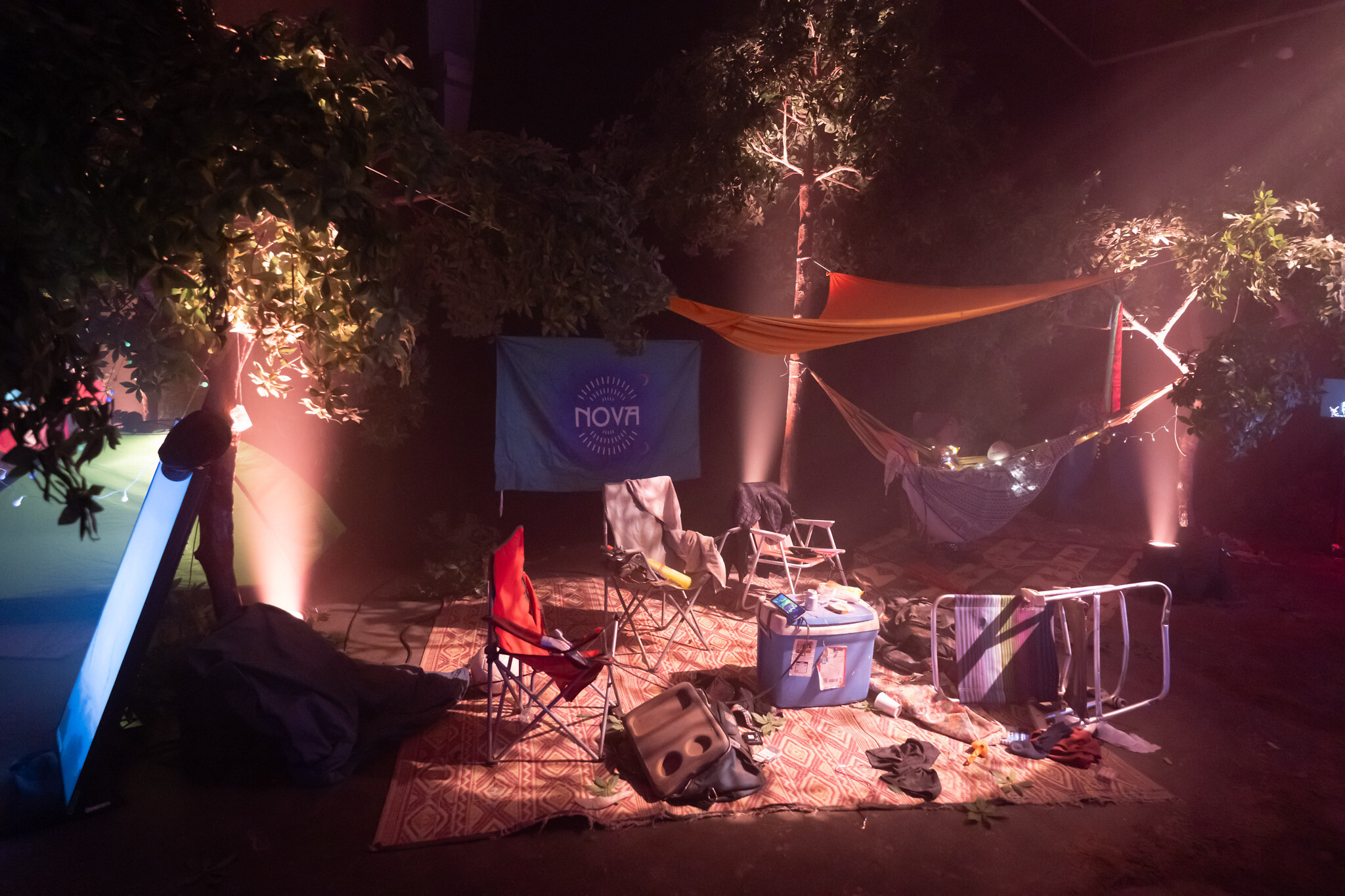
Today, the Nova Exhibition opens in London.
I suspect that for depressingly few people it will be approached in the spirit it is intended: as an opportunity to listen, to learn and to better understand the horrors inflicted on young people at the Nova music festival in southern Israel on 7 October 2023.
For many, it will instead be ignored, dismissed or instinctively rejected. For others, worse still, it will become yet another excuse to shout, to abuse and to deepen the divisions that already scar so much of our public discourse.
That reality weighs heavily on me because nearly two years on from 7 October, I increasingly find myself reflecting on my own role in trying to tell the story of that day and questioning whether the medium I believed could cut through the noise ever truly could.
Following the attacks, I was involved in producing We Will Dance Again, the documentary charting the massacre at the Nova festival. The film went on to air on the BBC in the UK, Paramount/CBS in the United States and across multiple territories around the world. It received extraordinary critical acclaim, won multiple Emmy Awards and was recognised with journalistic honours for its forensic depiction of what happened that morning.


It is, without question, the piece of work I am proudest of in my career.
Yet, with time and distance from its release, I cannot shake the feeling that it somehow failed in the one area that mattered most. Not because it was inaccurate, not because it lacked evidence, not because the testimony of survivors was anything other than devastatingly clear. But because I am no longer convinced it reached the people who most needed to see it.
The purpose of the documentary was never to speak to those who know what happened on that fateful day, those from within the Jewish community or otherwise. We know what happened, we have lived with the horror, grief and trauma of it every day since.
Nor was it intended as an argument against Palestinian self-determination or a denial of the immense suffering and tragic loss of civilian life in Gaza that followed and which should absolutely be mourned.
The film’s purpose was something far more basic than politics.
It was to establish a binary truth in the face of attempts to minimise, justify or outright deny the murders, rapes, kidnappings and torture carried out by Hamas on 7 October.
That should not be controversial, and yet somehow it became so.
Within hours of the massacre, days before Israel had even begun its military response in Gaza, social media was already filling with euphemism, justification and celebration. Young people massacred at a music festival became “settlers”. Women whose bodies told stories too horrific to repeat became subjects of conspiracy. Hostages dragged into Gaza became inconvenient details in a broader ideological struggle.
It was as though for some people, the victims themselves had become unacceptable because acknowledging the humanity of those killed or taken captive complicated a narrative such individuals had already chosen.
That is why I now wonder whether film itself was ever enough. Cinema allows distance, a screen, no matter how powerful the images upon it, still provides a filter. The viewer remains physically safe, emotionally detached, able to pause, switch off or scroll elsewhere. Perhaps truly understanding what happened at Nova requires something more immediate and confronting. Perhaps it requires proximity.
That is why this exhibition matters.
The Nova Exhibition has already travelled through cities including New York, Los Angeles, Berlin and Melbourne. At each stop, it has sought to reconstruct not merely the brutality of the attack, but the humanity of those who were there, the music, the joy, the idealism, the innocence and ultimately the terror.
Everywhere it has gone, it has been met by virulently antisemitic demonstrations from activists who claim to stand first and foremost for peace and justice, yet somehow cannot tolerate an exhibition documenting the murder of Jews. That contradiction tells us something deeply troubling about the moment we are living through.
Even now, in London, police have advised organisers that signage identifying the exhibition’s location should be removed for fear of antisemitic attacks.
Think about what that means.
In Britain’s capital city, an exhibition memorialising the slaughter of young people at a music festival cannot openly advertise its own location because Jews attending it may be targeted. No civilised society should become comfortable with that reality.
For anyone intending to demonstrate outside this exhibition, or for anyone performing the moral acrobatics required to justify those demonstrations, I would simply ask you to think carefully about where, and with whom, you truly stand.
Because you are not standing with the young people murdered at Nova. You are not standing with the victims of rape, torture and kidnapping. You are certainly not standing with those on either side of this war who have suffered unimaginable loss since, nor are you advancing their cause.
You are standing alongside the ideology and the movement responsible for the massacre itself.
Too many people now engage with 7 October not as a human tragedy, but as a tribal test. Before they are willing to mourn the dead, they first need to establish whether those dead belong to the “right” side of the argument. Empathy has become conditional, humanity has become politicised. But peace built upon selective compassion is not peace at all.
If we cannot acknowledge the suffering of Jews because we fear it weakens our political position on Gaza, then we are not engaging in moral reasoning. We are engaging in ideological performance.
If we cannot even walk into an exhibition and bear witness to what happened to young people whose final acts were dancing, hiding, calling their parents or trying to save their friends, then what exactly has happened to our capacity for empathy?
So my appeal is simple.
For the next six weeks, this exhibition will be here in London. Whoever you are, wherever you sit politically, whether you march on a Saturday, a Sunday or not at all, whatever you believe about the conflict before 7 October, on the day itself or since.
Go.
Go with scepticism or sympathy, go angry or uncertain, go believing one side is right, believing one side is wrong, but just go.
Because empathy cannot exist without engagement, unity cannot exist without honesty and peace will never come if we are unwilling to look directly at each other’s pain.

Keep community journalism free.
Jewish News is free for everyone. No paywall. No barriers. Just trusted journalism for anyone who wants to stay connected to Jewish life in Britain.
If you value that, please support us.
From as little as £5 a month, you can help keep our journalism free and accessible to all.
Every day, we report on the issues that matter to our community. We celebrate achievements, support charities, challenge antisemitism and ensure Jewish voices are heard more widely.
From as little as £5 a month, you can help us continue to:
- Report on the stories shaping Jewish life in the UK and beyond
- Bring our community together through shared stories, events and campaigns
- Celebrate the people, culture and moments that define our community
- Support organisations doing vital work across Jewish Britain
You can make a one-off donation or become a regular supporter. Every contribution helps keep our journalism free, independent and accessible to all.
If everyone who values Jewish News gave a small amount, it would make a real difference to our future.