Prefer Jewish News on Google
The (surprising) town with a lot of Jewish history where the community is growing
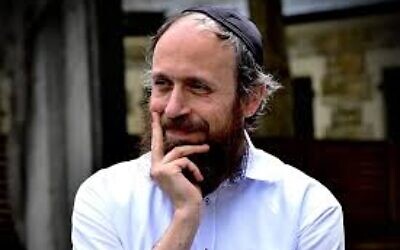
Rabbi Mendy Korer is revitalising a north London area which is now home to one of the largest menorah lightings

You may think of Islington as neither here nor there – it’s not in the City, the West End, or any of the suburbs – but it lays claim to some astonishing Jewish history, and that history is being revealed by the wonderful work of Chabad-Lubavitch Islington, led by Rabbi Mendy Korer.
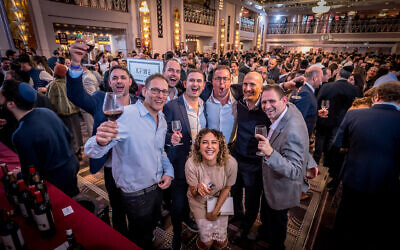
Islington’s Jewish story seemed to come to an end in 1967, when its last shul closed, and there had barely been a Jewish presence from that date until Rabbi Mendy and his wife Hadasa set up Chabad in 2011. For the past 14 years they have revitalised a community which is now growing – by 41 per cent between the two most recent censuses – with events such as their annual menorah lighting, which is one of the largest Chanukah celebrations in Britain and has even featured in Conde Nast Traveller magazine.
Chabad hosts Friday night dinners and Shabbat services, an annual Seder, a BigJewish Summer Fete, and so much more, and in 2021 set up a Jewish community centre. September 2025 saw the first dedication of a Torah scroll in Islington for 100 years with a large public parade along Upper Street.
My focus wasn’t on ‘now’ but ‘then’, as I pitched up on a sunny Sunday morning to walk around the borough with Rabbi Mendy and other guests on his Jewish Islington Walking Tour. My great-grandfather bought 104 Upper Street more than a hundred years ago, my grandparents and my Dad moved there in 1947, and much of my childhood was spent in the surrounding area, but I had no idea how vast – and picturesque – the locale is.
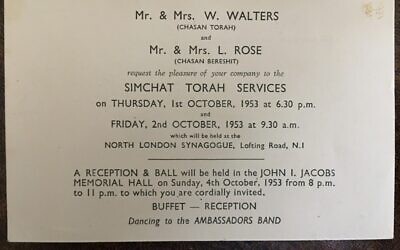 For many years my family had an association with the Lofting Road shul and my grandfather was Chatan Torah in 1953. The shul closed around 1958, but I didn’t know that there was a shul in Poets Road on the other side of Islington until 1967. London is full of contradictions – the official name of Poets Road shul was Dalston Synagogue, but it isn’t in Dalston. Our tour started at the site of that shul, where Rabbi Mendy read us a letter from the honorary officers to the rabbi, in which instructions were given on the limited length of sermon that would be permitted.

Other gems included the unproven tale that Benjamin d’Israeli, who is generally thought to have been born in Bloomsbury, may in fact have been born in a doctor’s surgery in Upper Street that is the site of Budgens today. If you think that Disraeli (as it is commonly spelt) was the only Jewish prime minister born in the area, think again. Clue: another country’s PM was born in Islington.
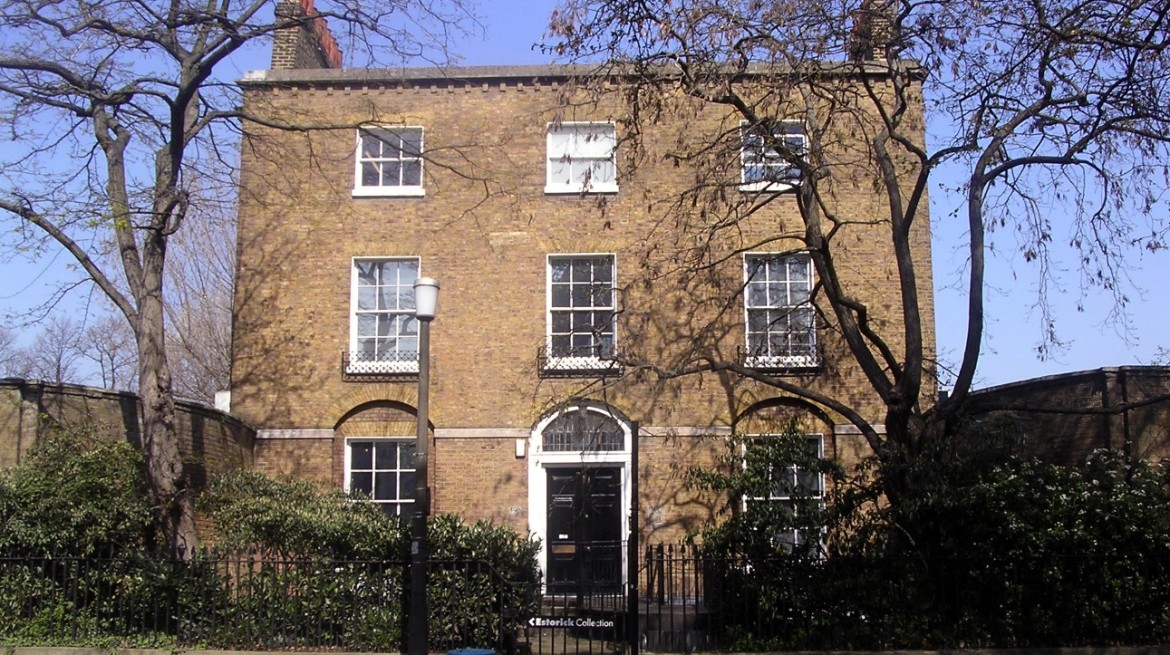
Rabbi Mendy told us how various names embedded in British industry have roots in Islington Jews – Gestetner and Reuter lived locally. Talking of well-known Islington names, as we walked past the Estorick Gallery we were told about the Jewish founder’s incredible role in saving 1,500 sefer scrolls from Nazi destruction.
Being so close to the City of London, it was inevitable that there would be Islington links to the City. But what I didn’t know is that part of the fabric of Bevis Marks shul, founded in 1701, was moved to Petherton Road in Islington in 1894 and adorns the gateposts of a house there today, more than 130 years later.
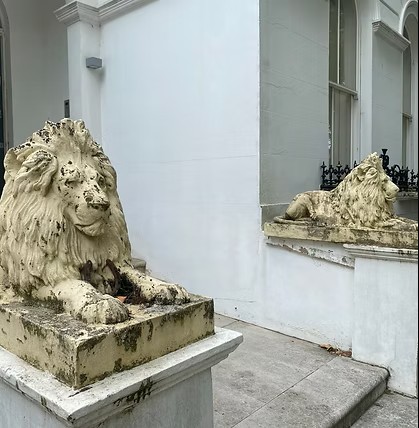 Islington Chabad’s website includes an Untold Stories section trumpeting many famous (and not so famous) Jews who have lived in the area over the years. My favourite is the fabulously named Lion Lion, a shoe manufacturer who lived in Highbury New Park (affectionately known as Highbury Jew Park in the 19th century because of the preponderance of brethren living there). Even today, more than 200 years after Lion was born, the front door of his house is adorned by statues of, you guessed it, two lions.
Even Lion Lion can’t match the best name we heard about on the tour: the splendid Luna de Raphael de Hezekiah Moses de Raphael de Eleazar Meldola.
At a time of rising tensions for Jews living in the UK, it is inspiring to spend a few hours rediscovering the Jewish heritage of an enclave within our capital and the wonderful contribution made by so many prominent (and not so prominent) Jews.
The walking tours are complemented by the Untold Stories project, which includes
signage around the borough about the Jewish residents from yesteryear – a way to make today’s Jews of Islington feel welcome and to educate the non-Jews who spot the QR codes on the signs.
As Jewish interest in the area swells, I have no doubt that Rabbi Mendy will achieve his ambition of a new permanent shul. It has been almost 60 years in the waiting, but I can’t wait to visit. Since 7October 2023, attendance at Islington’s Chabad House has more than doubled, helping young Jewish professionals and all-comers feel accepted, safe and truly at home.
The next Jewish Islington Walking Tour is on 11 January 2026. jewishislington.co.uk/untoldstories

Keep community journalism free.
Jewish News is free for everyone. No paywall. No barriers. Just trusted journalism for anyone who wants to stay connected to Jewish life in Britain.
If you value that, please support us.
From as little as £5 a month, you can help keep our journalism free and accessible to all.
Every day, we report on the issues that matter to our community. We celebrate achievements, support charities, challenge antisemitism and ensure Jewish voices are heard more widely.
From as little as £5 a month, you can help us continue to:
- Report on the stories shaping Jewish life in the UK and beyond
- Bring our community together through shared stories, events and campaigns
- Celebrate the people, culture and moments that define our community
- Support organisations doing vital work across Jewish Britain
You can make a one-off donation or become a regular supporter. Every contribution helps keep our journalism free, independent and accessible to all.
If everyone who values Jewish News gave a small amount, it would make a real difference to our future.