Prefer Jewish News on Google
The women who brought down the Nazis
Natalie Livingstone's newest book spotlights the heroines of the Nuremberg trials
There are a few words which, once spoken or read, bring with them emotional baggage about the Holocaust and almost need no further explanation. Think of Auschwitz, Kristallnacht, and, of course, Nuremberg.
The latter carries with it a special resonance: first as the cradle of Hitler’s propaganda rallies and the home of the antisemitic Nuremberg laws. And then the city became the site of the post-war Nuremberg trials, brought against a slew of Nazi leaders at the insistence of the Americans.
Author Natalie Livingstone has created an unusual niche of bringing back into the public eye the otherwise forgotten: the women who were the untold stories in great national and international narratives.
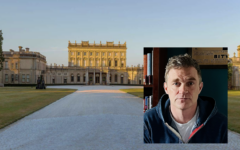
She began with The Mistresses of Cliveden, her curiosity aroused by the pictures in its grand house, after her husband Ian bought the estate in 2012 for £30 million to run as a hotel. In 2022 she published The Women of Rothschild, an indepth look at the distaff side of the banking dynasty.
Four years ago she visited the Imperial War Museum and viewed the artist Dame Laura Knight’s depiction of Courtroom 600 in Nuremberg, the place in the city’s Palace of Justice where the first, and best-known, of the trials of Nazi war criminals took place, between November 1945 and October 1946.

Among the key defendants were Hermann Göring, the highest-ranking Nazi official, Luftwaffe commander; Joachim von Ribbentrop, Foreign Minister; Rudolf Hess, Hitler’s deputy; Hans Frank, governor-general of occupied Poland; Julius Streicher, publisher of antisemitic propaganda; and Albert Speer, Minister of Armaments and War Production.
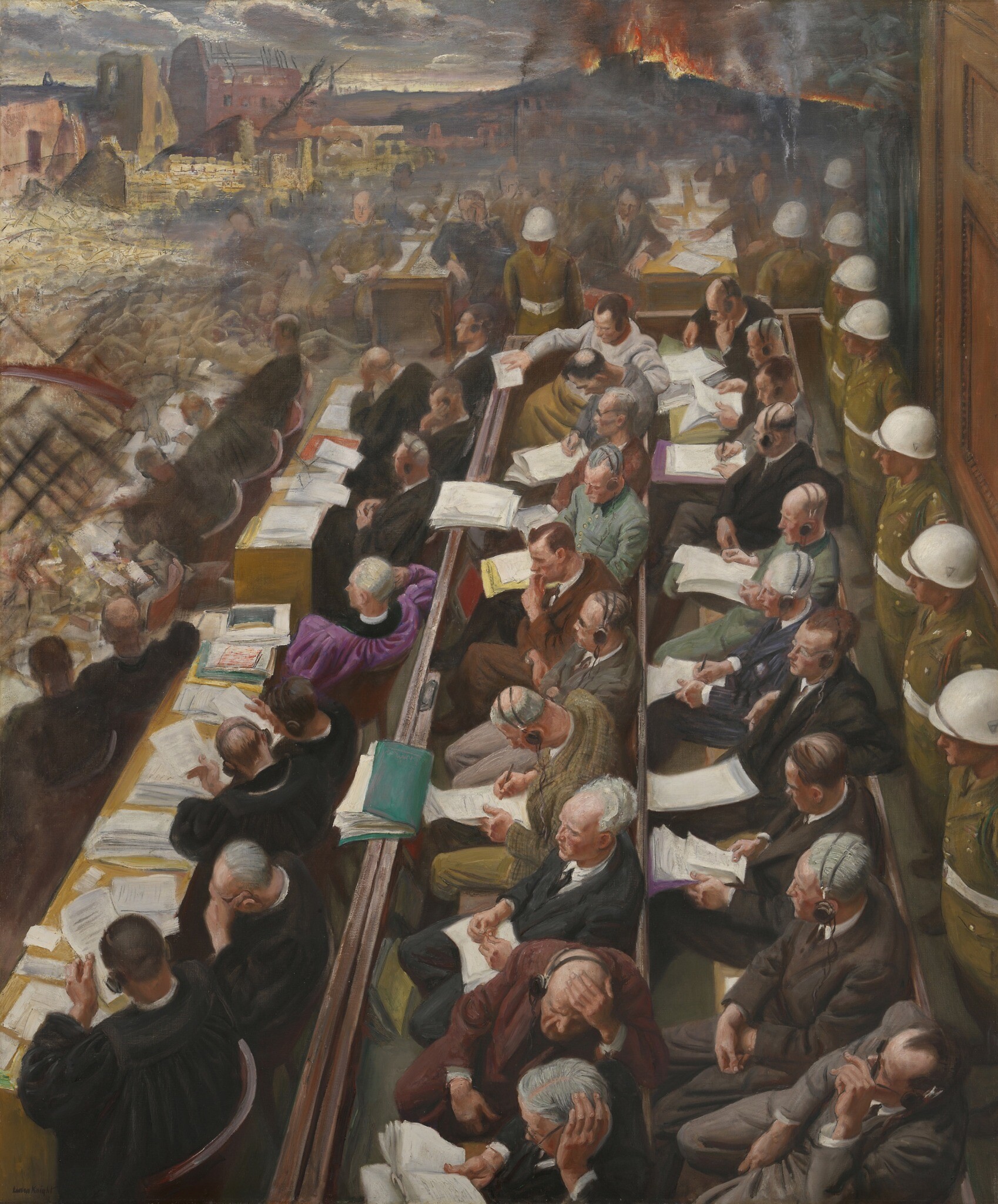
Knight’s is a sweeping six-foot oil painting, which not only shows the courtroom, its prisoners in the dock, the lawyers and the military guards, but also knocks out the far wall of the courtroom so that the viewer is inexorably drawn into the war that sent the defendants to face judgment. There is a pile of naked corpses on view.
It is a striking picture. But, she says: “The more familiar I became with the image, the more I found it impossible to see beyond a glaring absence. There is not a single woman in the picture”.
Thus began Livingstone’s deep dive into the past, all the more poignant as the grandchild of Holocaust survivors, as she looked at the picture which was “just a sea of men. All the defendants were male, the judges, all the military personnel — we were looking at an entirely male cast of characters here”.
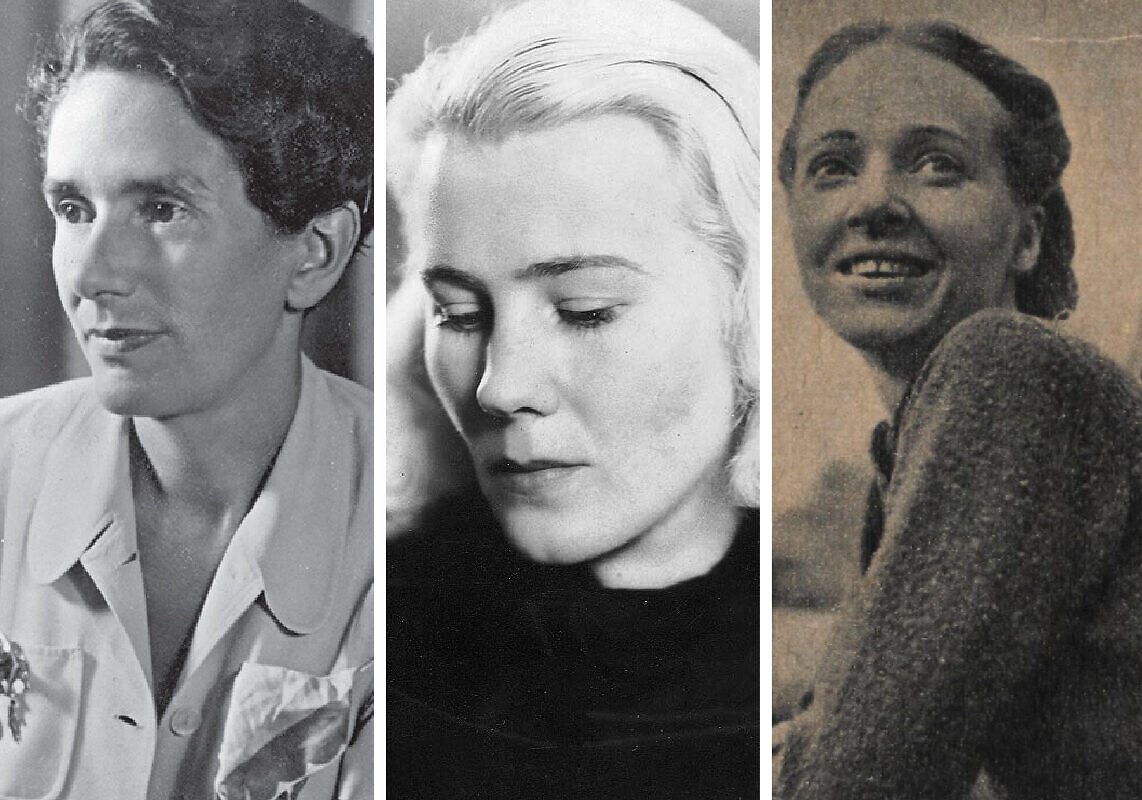
She was convinced that women must have played a significant part at Nuremberg, but where were they? Livingstone started to unearth “remarkable stories”, which she eventually whittled down to eight women, reading and researching voraciously.
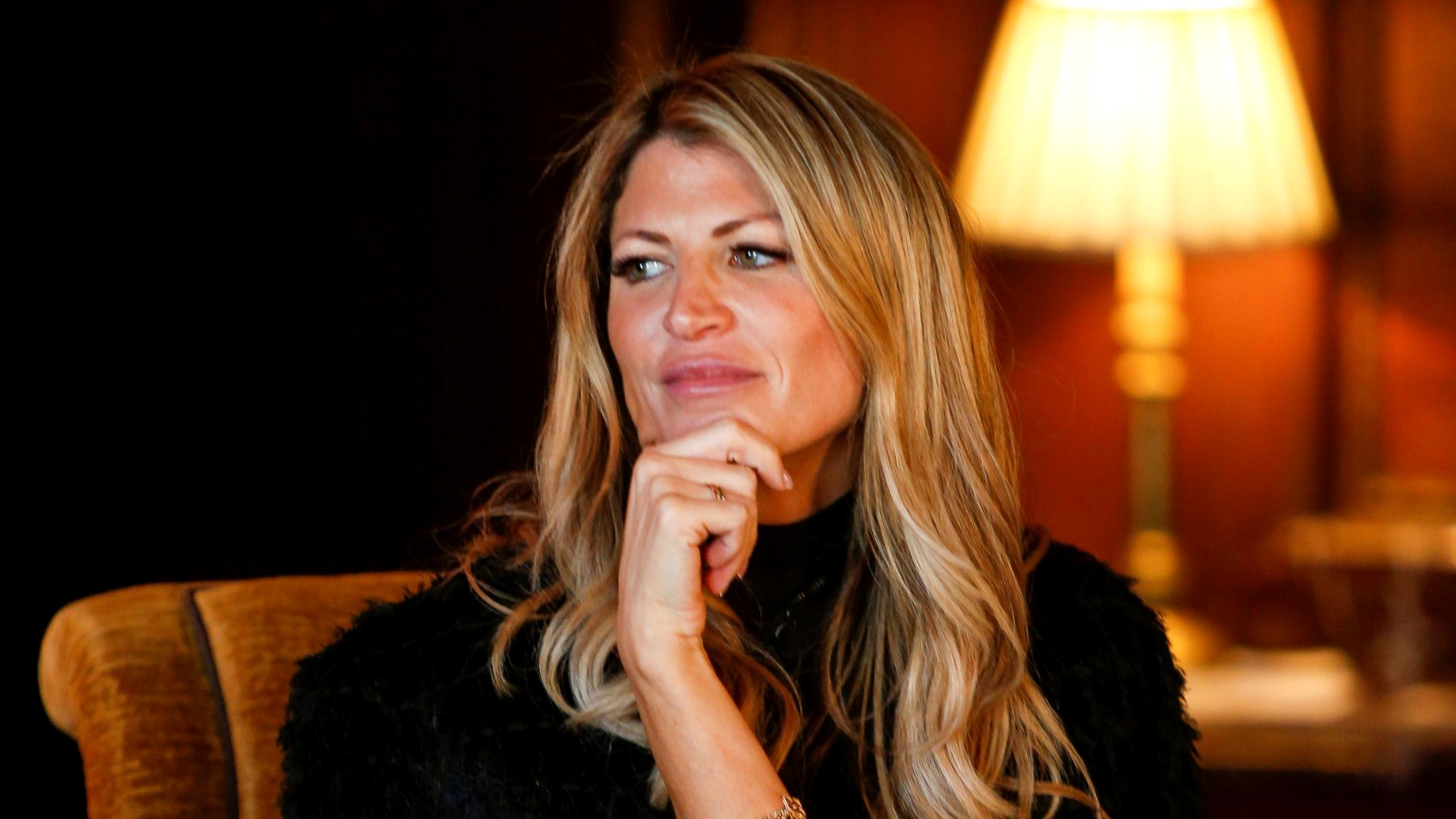
Her heroines — who almost certainly did not regard themselves as such — range from the well-known, such as artist Laura Knight and writer Rebecca West, to background figures like Russian interpreter Tatiana Stupnikova, whose terror at the thought of getting a word wrong in translation during the court proceedings rises almost palpably from the pages. One word out of place and she could have ended up in a Soviet labour camp, a threat unknown to her colleagues from the Western Allied delegations.
We meet the German one-time “wild child” Erika Mann, daughter of the Nobel Prize-winning author Thomas Mann, who transformed herself from a cabaret star to a tenacious reporter, writing for London’s Evening Standard — and along the way entering into a “lavender marriage” with the poet W H Auden.
The future literary giant Rebecca West was also at Nuremberg, prophetically judging it “a man’s world”. She caught the eye of one of the American judges, Francis Biddle, who wrote her love letters from the bench and smuggled her into his luxurious (by the standards of the day) temporary home, where the pair conducted a heated, though brief, affair. West, reporting for the New Yorker, was 53 at the time and trapped in a loveless marriage back in England.
Livingstone decided that she wanted to tell the story of Nuremberg from the beginning of the trial to the end, using each of her women to illustrate vital moments in the story.
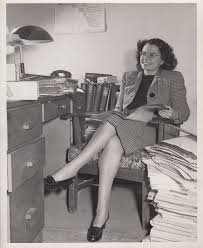
Her initial pick is the lawyer Harriet Zetterberg, a brilliant woman whom the writer discovered as “a footnote” in the memoir of Telford Taylor, assistant to US prosecutor Robert Jackson in the opening trial. Taylor was appointed chief counsel for the Americans in subsequent Nuremberg proceedings.
It turned out, Livingstone found, that Zetterberg had played “a pivotal role” in assembling evidence against Hans Frank, the Butcher of Poland. “She assembled the dossier that actually convicted him, and the irony was that when it came to presenting the evidence in court, because she was a woman, she was unable to do so.
“In order to stand up in court in 1946, Harriet would have had to have been provided with a waiver of disability — and that disability was being a woman. So she had to stand by and watch, while a man read out her carefully articulated work, which had taken hours and hours to do.” Some footnote.
After Zetterberg and Erika Mann, Livingstone discovered the “fascinating” Hungarian countess Ingeborg Kalnoky, nominated by the Americans to run a “guest-house” for witnesses to the trial — not just people who had suffered at the hands of the Nazis, but those giving testimony on behalf of the defendants. The countess, says Livingstone, had no choice but to accede to the Americans’ request if she wanted survival for herself and her three children — the youngest a baby only hours old when the offer was made. “So there was this surreal situation with Holocaust survivors and Nazis sitting in the same room — a sort of shadow trial which unfolded on the outskirts of Nuremberg while the main trial was being played out”.
The “heart and soul” of the book, for Livingstone, was the shattering testimony of Marie-Claude Vaillant-Couturier, the first female witness in January 1946. She was a former Resistance fighter and Auschwitz survivor “who would transport the judges and lawyers, defendants and journalists to the gates of a hell which she and so few others had survived”.
Vaillant-Couturier was 33 when she took the stand, beginning her story after being arrested in January 1942 by Petain’s French police. Handed over to the German authorities, she was told that if she did not sign a statement prepared by them, she would be sent to a concentration camp. She refused to sign and so began a journey in the depths of winter, with 229 other women, to Auschwitz, where she spent three terrible years.
Vaillant-Couturier’s harrowing account of “the causes of death” galvanised the court. She said later: “I speak for all those who are no longer here”. For Livingstone, the French woman’s testimony did not simply electrify all those who heard her, but she believes that she “changed the atmosphere of the Nuremberg trial, and changed the course of history”.
Livingstone’s last Nuremberg woman is an unusual choice — a German reporter, Ursula von Kardorff, one of just 15 German journalists covering the trial. Unlike Erika Mann, she had “chosen to stay in Germany and work as a journalist throughout the Third Reich. For her, Nuremberg was a place not of bitter victory, as it was for journalists from Allied countries, but of shameful and sometimes outraged defeat”. In von Kardorff’s diary, Livingstone found the admission: “Nowhere is it so painful to be German as it is in Nuremberg”.
Livingstone admits that she “fell in love” with nearly all of her Nuremberg women, but reserves a special place for Vaillant-Couturier, “the first woman to tell the world about the Holocaust”. For that reason, if no other, the plain-speaking, undramatic French witness is closest to Natalie Livingstone’s heart.
The Nuremberg Women by Natalie Livingstone is published on 23 April 2026 by John Murray Press at £25
Natalie Livingstone will be in conversation with author Kate Weinberg at JW3 on 5 May at 7pm. This exclusive event is in partnership with Jewish News. jw3.org.uk

Keep community journalism free.
Jewish News is free for everyone. No paywall. No barriers. Just trusted journalism for anyone who wants to stay connected to Jewish life in Britain.
If you value that, please support us.
From as little as £5 a month, you can help keep our journalism free and accessible to all.
Every day, we report on the issues that matter to our community. We celebrate achievements, support charities, challenge antisemitism and ensure Jewish voices are heard more widely.
From as little as £5 a month, you can help us continue to:
- Report on the stories shaping Jewish life in the UK and beyond
- Bring our community together through shared stories, events and campaigns
- Celebrate the people, culture and moments that define our community
- Support organisations doing vital work across Jewish Britain
You can make a one-off donation or become a regular supporter. Every contribution helps keep our journalism free, independent and accessible to all.
If everyone who values Jewish News gave a small amount, it would make a real difference to our future.