Prefer Jewish News on Google
Too many platforms but nothing to do or watch as it’s all overwhelming?
New book makes sense of the multitude of streaming platforms

Hands up if as a child your parents were regularly trying to stop you watching too much TV. It seems almost laughable when reflecting on a time that had a fairly small number of options available. Contrast that with today, and the unlimited amount of programming and content of all kinds that we have at the press of a button or a tap on our phone.
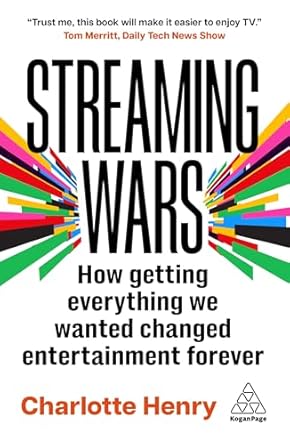
The overwhelming number of options inspired me to write my latest book, Streaming Wars. I’m obsessed with our current media environment – Netflix, Spotify, YouTube Disney+, Apple TV+, Spotify, Amazon Prime and everything else – and wanted to unpack it all, both for readers and myself. Researching this book revealed to me a world that is even more complex than I thought when I started the project.
Alongside the mainstream services that so many of us use, there is a host of specialist ones that readers will likely never have heard of. From handball to horror movies, heavy metal to Bollywood, there is a streamer for whatever you want to watch. And they almost all want you to stump up another monthly or annual payment. This is both fantastic and frustrating. The access we have to TV programmes, films and movies is better than ever before. I’ve rediscovered childhood classics and new favourites across the various catalogues.
On the production side, the growth of streaming has allowed more risky programming to be made. This has given actors, writers and directors opportunities they might not have had back when everything had to fit into linear TV schedules.
However, these developments have also made it increasingly hard for us as consumers to navigate where the things we want actually are. How often do you have to Google where to find that new series you want to watch? How many times have you given up trying to decide what to watch and, overwhelmed by choice, gone back to scrolling on your phone instead?



Sport is a crucial part of the story too. Apart from major news events and rare standalone moments that people don’t want spoilt, like The Celebrity Traitors final or the end of Succession, sport is about the only thing people watch live any more.

An increasing number of live sports rights are being taken up by streaming services desperate not to miss out. In the UK, Amazon Prime Video shows tennis, a Champions League football match every Tuesday night and some NBA basketball matches too. Things have gone even further in the US. NBC’s streamer Peacock shows most Saturday Premier League matches and has shown key NFL matches. Prime Video is now one of the NBA broadcasters Stateside too.
Even Netflix, previously reticent of getting into live sport, has got in on the action, showing two NFL matches on Christmas Day. In July, it broadcast the Katie Taylor vs Amanda Serrano boxing bout – the finale to an epic trilogy of fights and the first all-female card at the iconic Madison Square Guardian. (Boxing and other fight sports, it’s worth noting, have long had a stream home on DAZN.)
The increasing interest in sports by streamers has made more contests of all kinds available. Furthermore, we can watch them wherever we are. No more hoping your relative puts the TV for Super Sunday on when you go visit. You can hide in the corner and watch the match on your phone!
 Of course, the move to streaming has also made things more fragmented. You can ultimately find what you want to watch, but sports fans must stump a lot of cash for multiple services if they do not want to miss a game. We need to get used to it though, because it is only going to get more common.
The streaming services provide plenty for those looking to watch, or tell, Jewish stories. Take Nobody Wants This, for instance. Adam Brody’s Hot Rabbi returned to Netflix in October. There’s also Shtisel (Netflix), or The Marvellous Mrs Maisel (Amazon Prime Video), to name but a few. For adrenaline junkies needing something Israeli and dramatic, there is Fauda on Netflix and Tehran on Apple TV+.
The Jewish News’ own Brigit Grant’s film Midas Man is available to watch on Amazon Prime Video, telling the story of Beatles manager Brian Epstein. These are all great ways to bring some elements of Jewish and Israeli culture in front of mainstream viewers.

Meanwhile specialist services ChaiFlicks and Izzy are dedicated to exclusively Jewish and Israeli programming. Such outlets would have been inconceivable before the streaming era.
I wasn’t sure exactly what I would conclude when I started writing my book, but it seems clear to me that streaming has mostly been a good thing for the viewer. There is more programming, and it is more accessible, than ever before. That’s not the whole story though. We are now starting to see a rebundling, with various services offering shared subscriptions in a way that looks eerily reminiscent of cable television. People do not want to and cannot afford to take out an unlimited number of subscriptions. The fallout from the rise of the streamers was also a large part of the reason why Hollywood was plunged into strikes for most of 2023.
All of this is going to develop more over time. The streaming wars are only just getting started.
Streaming Wars by Charlotte Henry is published by Kogan Page, £14.99

Keep community journalism free.
Jewish News is free for everyone. No paywall. No barriers. Just trusted journalism for anyone who wants to stay connected to Jewish life in Britain.
If you value that, please support us.
From as little as £5 a month, you can help keep our journalism free and accessible to all.
Every day, we report on the issues that matter to our community. We celebrate achievements, support charities, challenge antisemitism and ensure Jewish voices are heard more widely.
From as little as £5 a month, you can help us continue to:
- Report on the stories shaping Jewish life in the UK and beyond
- Bring our community together through shared stories, events and campaigns
- Celebrate the people, culture and moments that define our community
- Support organisations doing vital work across Jewish Britain
You can make a one-off donation or become a regular supporter. Every contribution helps keep our journalism free, independent and accessible to all.
If everyone who values Jewish News gave a small amount, it would make a real difference to our future.