Prefer Jewish News on Google
UK ties Palestinian statehood to major reforms, end of ‘martyr’ payments
Starmer claims he has set out tough reform agenda for Palestinian Authority

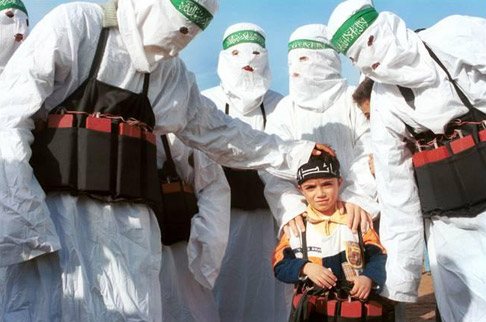
Keir Starmer has demanded that the Palestinian Authority stop its so-called “pay to slay” policy for families of ‘martyrs’ killed for attacks on Israelis as part of reforms set out by the UK and partners before the finalisation of a two-state solution.
Amid an angry backlash over the UK’s decision to recognise the State of Palestine, Jewish News has learned that the government insists it has stipulated that the PA must also:
*Overhaul educational materials, removing antisemitic content from Palestinian schoolbooks.
*Announce and hold elections in both the West Bank and Gaza within a year of any ceasefire.
*Commit to a fully demilitarised Palestinian state, with no army or air force, to assure Israel’s security.
These, and other conditions, are part of the “reform agenda” framework that Palestinian President Mahmoud Abbas has indicated he is willing to accept.
In the past, Israel has expressed outrage that families of those killed by Israeli security forces typically received payments of up to £740 a month, while families of Palestinians jailed in Israel received up to £2,220 a month.
In a sign of some reform of the much criticised Prisoners and Martyrs Funds, a new system – the Palestinian National Economic Empowerment Institution – has taken over, with more than 3,000 welfare recipients informed they are no longer entitled.
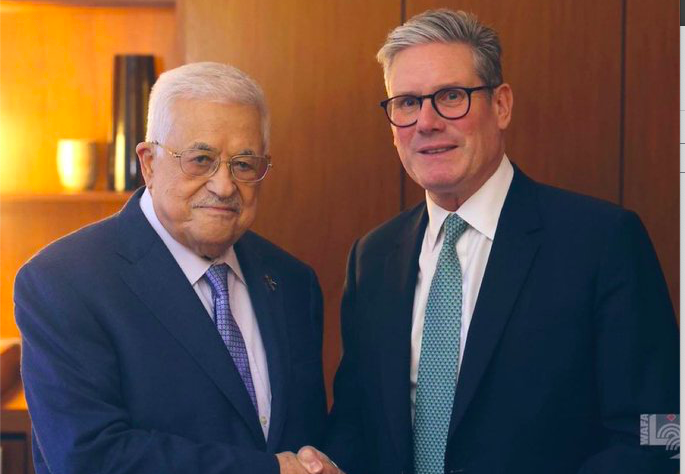
The UK PM, who met with Abbas at Downing Street earlier this month, has insisted rewards for any Palestinian involved in terrorist activity must stop completely.
Confirmation of a framework of demands required from the PA to achieve final statehood, comes amid angry criticism that the UK, French and other European government’s have agreed to recognition without the leverage needed to ensure reforms take place.
In response to the backlash over the government’s move to recognise a Palestinian state and claims it represents a reward for Hamas, UK officials told Jewish News this week: “We have already proscribed and sanctioned Hamas, but we will go further.
“Starmer has directed work to sanction other figures in the coming weeks.
“He has clarified that Hamas will feel the full weight of our sanctions regime, and we will continue working with our international partners on a framework for peace.
“This includes that Hamas has no role in Gaza’s future. Hamas are a terrorist organisation. One that has been proscribed and sanctioned.
“They do not want a two state solution – Israelis and Palestinians living side by side is the exact opposite of their hateful vision. Hamas will be defeated completed with our plan for a two state solution.
“They do not represent the Palestinian people, they cannot play any part in its future”.
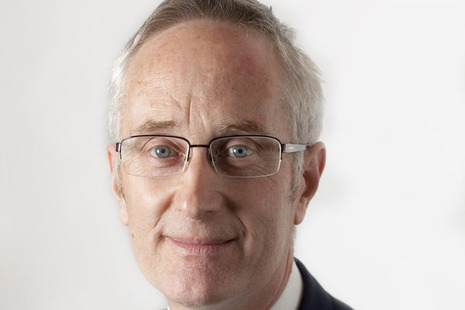
Sir Michael Barber, the UK’s envoy to the Palestinian Authority, is understood to have been at the centre of efforts to get the PA to support reforms.
The UK has also been providing financial and technical assistance, and enhancing governance and delivery capabilities for the PA.
A former head of the Prime Minister’s Delivery Unit under Tony Blair, Barber was appointed as an envoy by Starmer last September.
His extensive experience in implementing large-scale system change and working with many governments internationally was seen as being vital.
Confirmation that the UK has insisted on a series of demands from the PA before final recognition of a Palestinian state went largely unrecognised last weekend as Starmer delivered his video message confirming the controversial move, which Israel and many UK communal organisations have continued to insist is a reward for Hamas after the October 7 massacre nearly two years ago.
One major concern of critics of Starmer’s decision, both within the Jewish community and from political opponents outside, has been over the claim that Hamas can be removed from the governance of a future Palestinian state. Or prevented from returning to control Gaza again by violent means at a later stage.
In his Times newspaper column, Daniel Finkelstein, while expressing understanding of the need for recognition of a Palestinian state, expressed serious concern about Starmer’s decision to proceed with the move, without expressing a framework to effectively counter the threat posed by the Hamas terror group.
He argued that the UK PM had mistakenly opted for recognition without leverage on the Palestinians that left a future state being governed by “Islamist extremists (or) another Iranian proxy government bitterly antagonistic to the West” which would be a threat to the national security of this country, as well as to Israel, and Jews across the globe.
Jewish News attended a briefing session for Westminster journalists this week at which a Downing Street spokesperson and a national security official attempted to address concerns about the move to recognition and the threat still posed by the Hamas terror group.
Starmer’s spokesperson said the UK’s confirmation of Palestinian statehood represented the “first step towards a historic goal: achieving a peaceful settlement in the Middle East”.
The UK has recognised the State of Palestine, with final borders to be determined by future negotiations.
The official position remains that Palestinian territory should be based on the 1967 lines, with agreed land swaps—a framework that includes East Jerusalem, Gaza, and the West Bank.
Recognition is about states, not governments, it was stressed, and the UK remains committed to a two-state solution.
Diplomatic relations with the PA are being established, with ongoing conversations about setting up diplomatic missions and supporting necessary reforms, in coordination with international partners.
Several initiatives—from the Arab League, the US, Tony Blair, and the UK—are underway to “generate new ideas and momentum.”
Downing Street said they were “not aware” of collaboration between the government with the Blair initiative.

The overriding objective is not only to achieve a ceasefire and secure the release of hostages but also to create conditions for a lasting solution.
Diplomatic efforts now focus on aligning these strands to move from immediate relief to sustained peace.
There were now “intense discussions” among the UK, US, and its Arab partners, it was added, on a lasting solution that “must ensure Hamas’s removal from Gaza and create a platform for a future Palestinian state”.
As part of the move towards final recognition of two states, Hamas would critically need to release the hostages, lay down its arms, and end the war with Israel permanently.
Journalists were repeatedly told that the “unprecedented rejection of Hamas by the Arab world, with all 22 Arab League members calling for Hamas to release hostages, lay down arms, and end the war” was a hugely significant development ahead of the UK’s move to announce recognition.
In the coming weeks, the UK will announce further sanctions against individuals abroad linked to Hamas and Palestinian Islamic Jihad groups, building on three previous rounds since October 7, 2023, it was confirmed.
Since the massacre in southern Israel nearly two years ago, the UK government has sanctioned 23 individuals and entities linked to Hamas and PIJ.
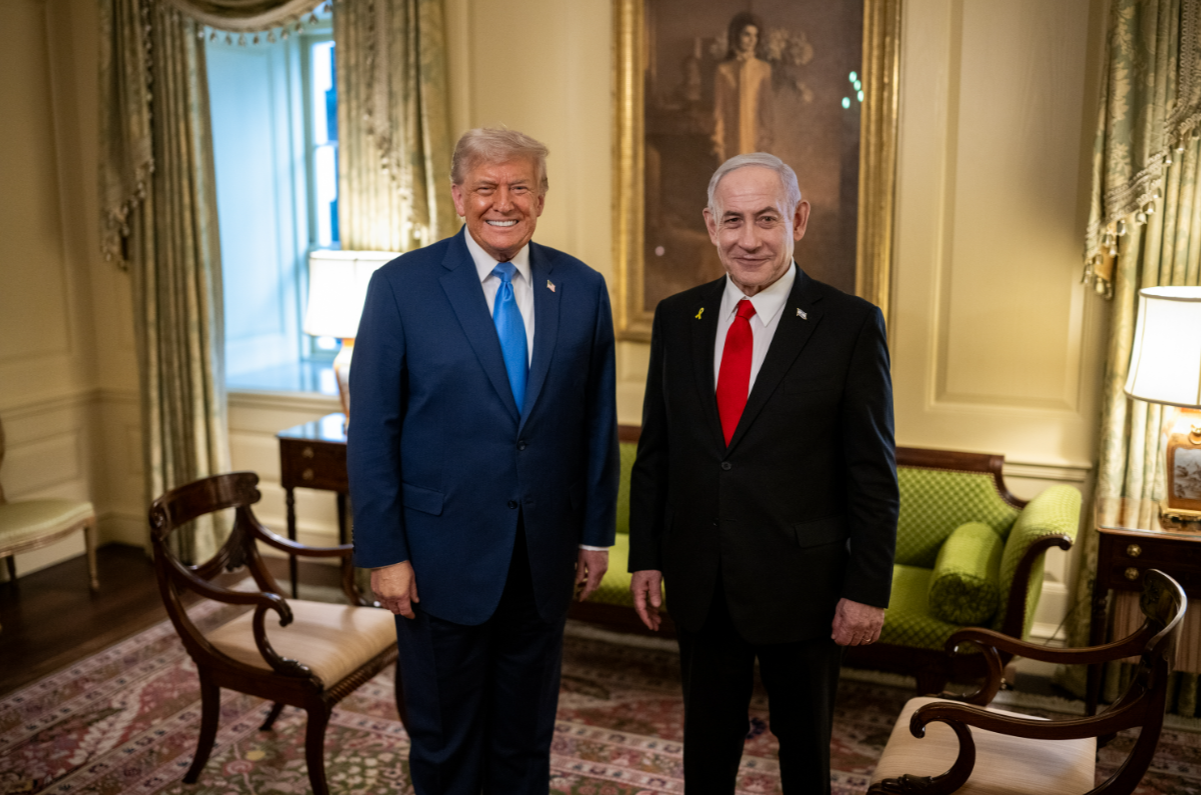
The No.10 spokesperson said this week’s UN conference in New York, sponsored by Saudi Arabia and France, is a significant initiative. Saudi Arabia, a key player in the Abraham Accords, is emphasising the need for a process leading to lasting peace.
The UK remains mindful that nothing should preclude such a solution, especially in the face of Israeli threats of further annexation, added the spokesperson.
Despite President Trump’s remarks at the UN on Tuesday suggesting he continues to believe recognition rewards Hamas, officials insist the UK and US remain unified in seeking a ceasefire and long-term peace in the Middle East, building on the Abraham Accords.
The US remains one of the UK’s closest diplomatic partners, with constant high-level dialogue, journalists were told.
It perhaps the most significant move, the Trump administration proposed a 21-point peace plan to end the war in Gaza to Arab leaders at a meeting on Tuesday.
US Special Envoy Steve Witkoff later expressed confidence that there would be “some sort of breakthrough” as a result of the proposals.
They are believed to include a framework for how Gaza can be governed without Hamas and included a proposal for Israel gradually withdrawing from the Gaza strip.
The new Trump administration proposal was put on the table with Gulf partners just the day after Saudi Arabia and France hosted a two-state solution conference.
The plan would prevent Israel from further annexation, with Arab leaders say would make it impossible to expand the Abraham Accords.
In a speech to the United Nations on Sunday, at a conference discussing a two-state solution that was sponsored by Saudi Arabia and France, Abbas appeared to commit to ending the system of payments to so-called Palestinian “martyrs”.
He said: “The State of Palestine is pursuing a comprehensive reform agenda to strengthen governance, transparency, and the rule of law” before adding that this included the establishment of a “unified social welfare system, following the cancellation of all previous payments to families of prisoners and martyrs, now under international audit by a specialized firm.”
Speaking on Thursday again to the UN, again from Ramallah as he was barred from entering the US, Abbas said the Palestinians accepted the right of Israel to exist, adding,”we will not leave our homeland,” but also that “we want to live in security and peace.”
Abbas again claimed Hamas would play “no part” in a future Palestinian state. “We reject antisemitism,” added the Palestinian president.
Abbas currently has no authority over Gaza, which was controlled by Hamas and is occupied by Israel.
The Palestinian Authority is run by Fatah, a rival political party. It continues to claim the Gaza Strip, despite losing control of the territory following the five-day civil war of 2007, in which Hamas emerged victorious.
Israeli PM Benjamin Netanyahu is expected to again have harsh words to say about countries such as the UK who have recognised Palestine when he addresses the UN on Friday.
He will also attempt to cast doubts on the sincerity and ability of Abbas and the PA to adhere to the reform agenda it says it wants to take forward.

Keep community journalism free.
Jewish News is free for everyone. No paywall. No barriers. Just trusted journalism for anyone who wants to stay connected to Jewish life in Britain.
If you value that, please support us.
From as little as £5 a month, you can help keep our journalism free and accessible to all.
Every day, we report on the issues that matter to our community. We celebrate achievements, support charities, challenge antisemitism and ensure Jewish voices are heard more widely.
From as little as £5 a month, you can help us continue to:
- Report on the stories shaping Jewish life in the UK and beyond
- Bring our community together through shared stories, events and campaigns
- Celebrate the people, culture and moments that define our community
- Support organisations doing vital work across Jewish Britain
You can make a one-off donation or become a regular supporter. Every contribution helps keep our journalism free, independent and accessible to all.
If everyone who values Jewish News gave a small amount, it would make a real difference to our future.