Prefer Jewish News on Google
We may not like it, but the Palestine Action decision was a win for the Rule of Law
Last week's ruling didn’t 'take a side' on Palestine, Israel or Jews. It was about how far the state can go when using terrorism powers and how far it can limit protest and speech
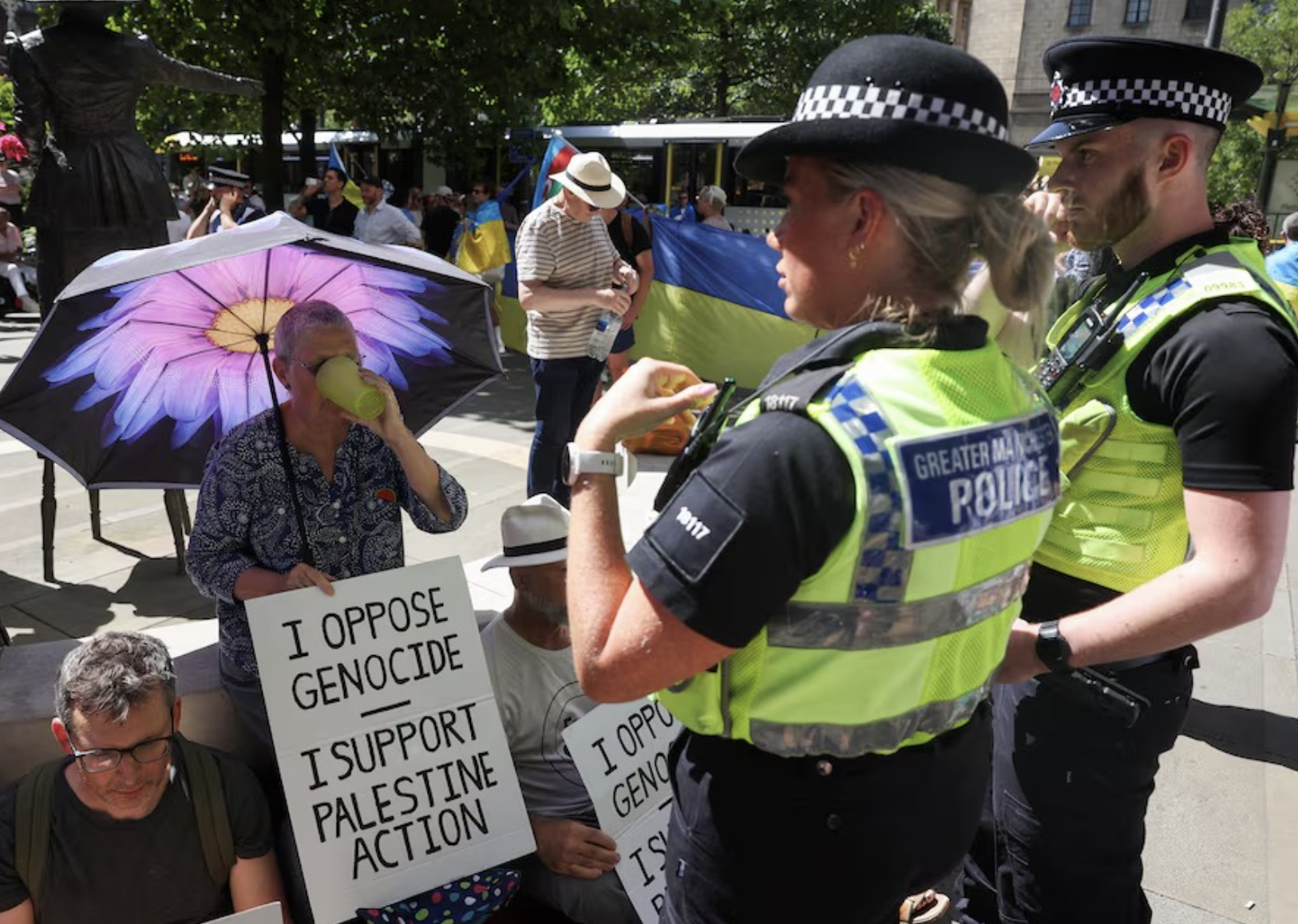
I don’t think our Jewish community will find it hard to grasp the Palestine Action decision at all. Far from it: don’t we want every government in this country to be held to the law, don’t we want every citizen to be able to challenge power, and don’t we want our courts to act fairly, without fear or favour. We know that if they do not, it can come back to haunt us. No, scrap that. We know that if they do not – it will come back to haunt us.
The High Court’s Palestine Action ruling is about law, not politics. The judges asked only whether the Home Secretary used her powers properly and followed the rules Parliament set. In 2025 the Home Secretary “proscribed” (banned) Palestine Action as a terrorist group. That makes it a crime to be a member, to show support, or to display its symbols. The court accepted that some of the group’s actions are crimes, but decided they were not serious or persistent enough to justify the extreme step of a terrorism ban, rather than using ordinary criminal law. I detest Palestine Action. I so much hoped that the Government had got their ban right. It was just that I wasn’t sure they had.
The judges also found that the Home Secretary did not follow her own policy. Proscription is meant to depend on how grave and sustained a group’s terrorist activity is. But the court found that the minister relied too much on the extra “benefit” of being able to prosecute more people simply for support or association, instead of proving that the group’s conduct had reached the high threshold for a ban.
The court was led by Dame Victoria Sharp, who is Jewish and one of the UK’s most senior and respected judges. When she qualified at the Bar in 1979, it would still be nearly a decade before the first woman, Dame Elizabeth Butler‑Sloss, was appointed to the Court of Appeal in 1988. Victoria Sharp herself later became only the fourth woman ever to sit in that court, and is now the first woman President of the King’s Bench Division. Only a small minority of Court of Appeal and senior judges come from non‑Oxbridge backgrounds; unlike most, she read law at the University of Bristol, where she has since been awarded an honorary doctorate. She is, in short, a stand‑out figure: a Jewish woman from a non‑Oxbridge university who has risen to the very top of the legal profession on merit. And Dame Victoria is the grand daughter of Isaac Sharp, head of the Jewish Bakers Union at the turn of the last century. OK, not strictly relevant.
But she should be a source of pride for the Jewish community in Britain. It isn’t just that a Jewish woman holds such a senior office, but that there was never any serious suggestion she would not judge this case fairly, objectively and with great skill. Her job is to apply the law to the facts, and that is what she did.



The work of our highest courts – their day job – includes to decide on the minutiae of how government and public bodies act: immigration rules, welfare decisions, planning, policing, national security, and more. Cases like Palestine Action, or Julian Assange’s fight against extradition, are simply the most visible examples of that routine task. In the Assange litigation, Dame Victoria Sharp was one of the judges who insisted that, before he could be sent to the United States, there had to be rock solid legal assurances that his rights to free expression and equal treatment would be respected. You do not have to like Assange to see why that matters.
Last weeks ruling didn’t “take a side” on Palestine, Israel or Jews. It was about how far the state can go when using terrorism powers and how far it can limit protest and speech. The government can now ask the Supreme Court to look at the decision again. That appeal process is how the legal system works, and it is there to protect everyone – including us – from government overreach.
I know, I know. The talk is so much about Courts over reach, about activist Judges. In the US, in Israel – and here too. But our courts are truly independent. And, in my view at least, the best in the world.

Keep community journalism free.
Jewish News is free for everyone. No paywall. No barriers. Just trusted journalism for anyone who wants to stay connected to Jewish life in Britain.
If you value that, please support us.
From as little as £5 a month, you can help keep our journalism free and accessible to all.
Every day, we report on the issues that matter to our community. We celebrate achievements, support charities, challenge antisemitism and ensure Jewish voices are heard more widely.
From as little as £5 a month, you can help us continue to:
- Report on the stories shaping Jewish life in the UK and beyond
- Bring our community together through shared stories, events and campaigns
- Celebrate the people, culture and moments that define our community
- Support organisations doing vital work across Jewish Britain
You can make a one-off donation or become a regular supporter. Every contribution helps keep our journalism free, independent and accessible to all.
If everyone who values Jewish News gave a small amount, it would make a real difference to our future.