Prefer Jewish News on Google
‘We want to do for market research what Google did for search’
AskIt founder Lotan Magal believes AI can replace traditional surveys and focus groups, helping companies cut research costs and make faster decisions
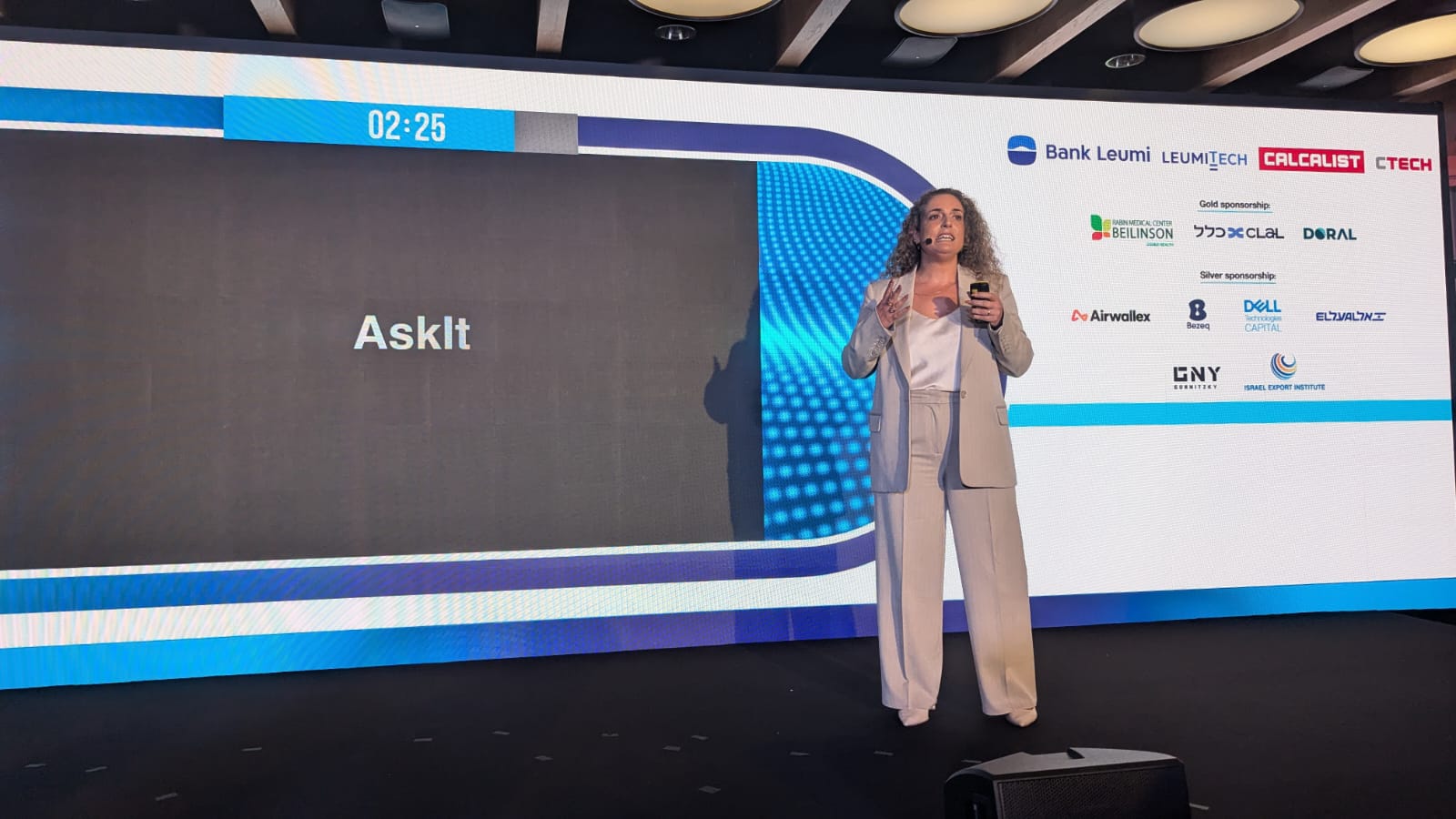
Traditional surveys, focus groups and opinion polls have shaped business decisions for decades. But Israeli entrepreneur Lotan Magal believes their days are numbered.
Magal, now based in California, is the founder of AskIt, an AI-powered platform that uses behavioural simulations to predict how consumers will act before companies launch products, advertising campaigns or major strategic decisions. By combining artificial intelligence with behavioural science, the company aims to help businesses understand customers faster, more accurately and at a fraction of the cost of traditional research methods.
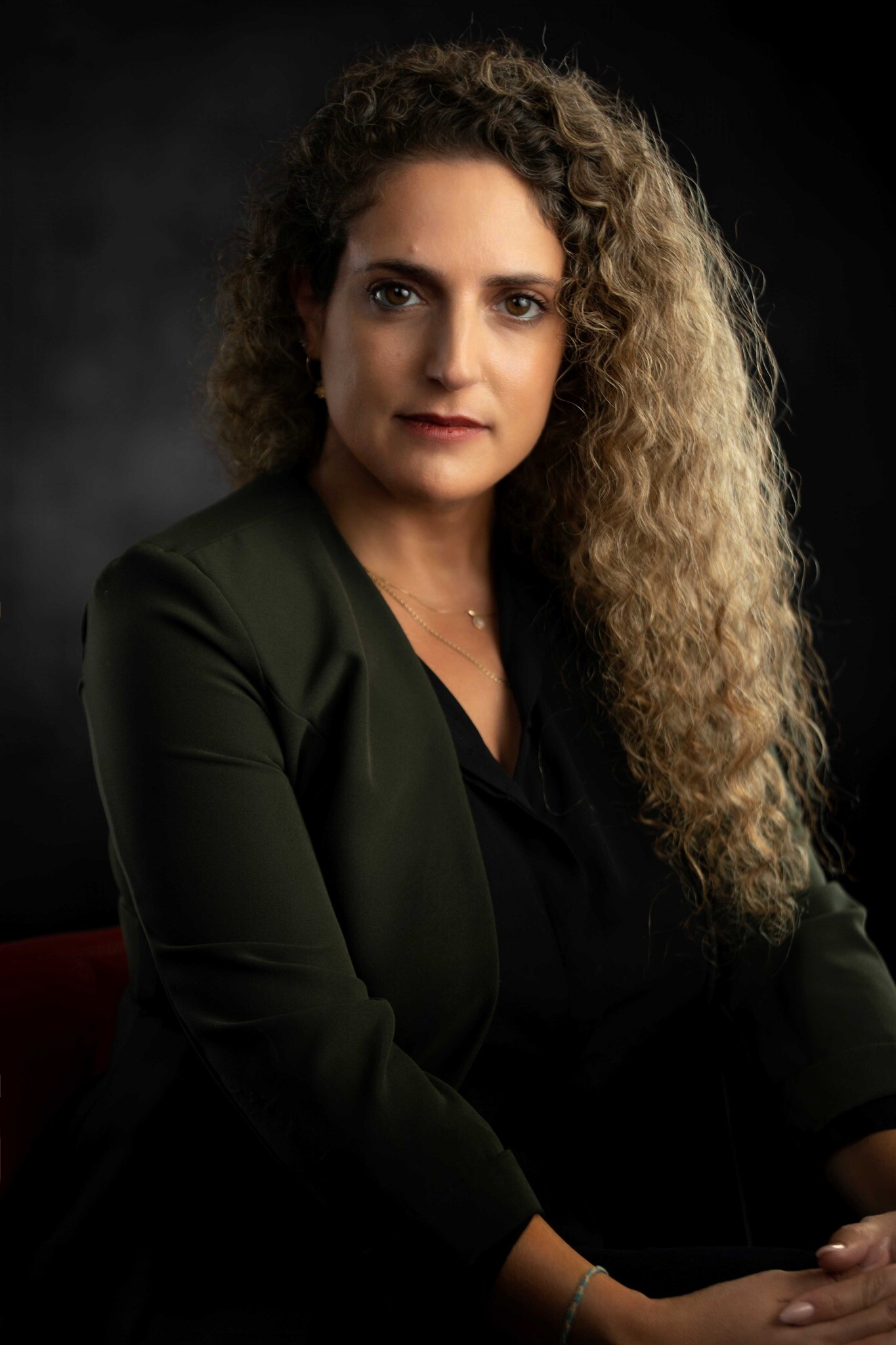
Her ambition is bold.“Imagine it like Google,” she tells Jewish News. “Instead of ‘Google it’, just ‘Ask It’. Anything related to how people will behave, you just ask it.”
It is a vision that appears to be gaining traction. Magal says businesses are increasingly approaching AskIt as they look to cut costs, reduce research budgets and embrace AI-powered decision-making.
Launched in late 2024, AskIt enables marketing teams and business leaders to simulate how target audiences are likely to respond to new products, advertising campaigns and strategic decisions before spending money in the real world.



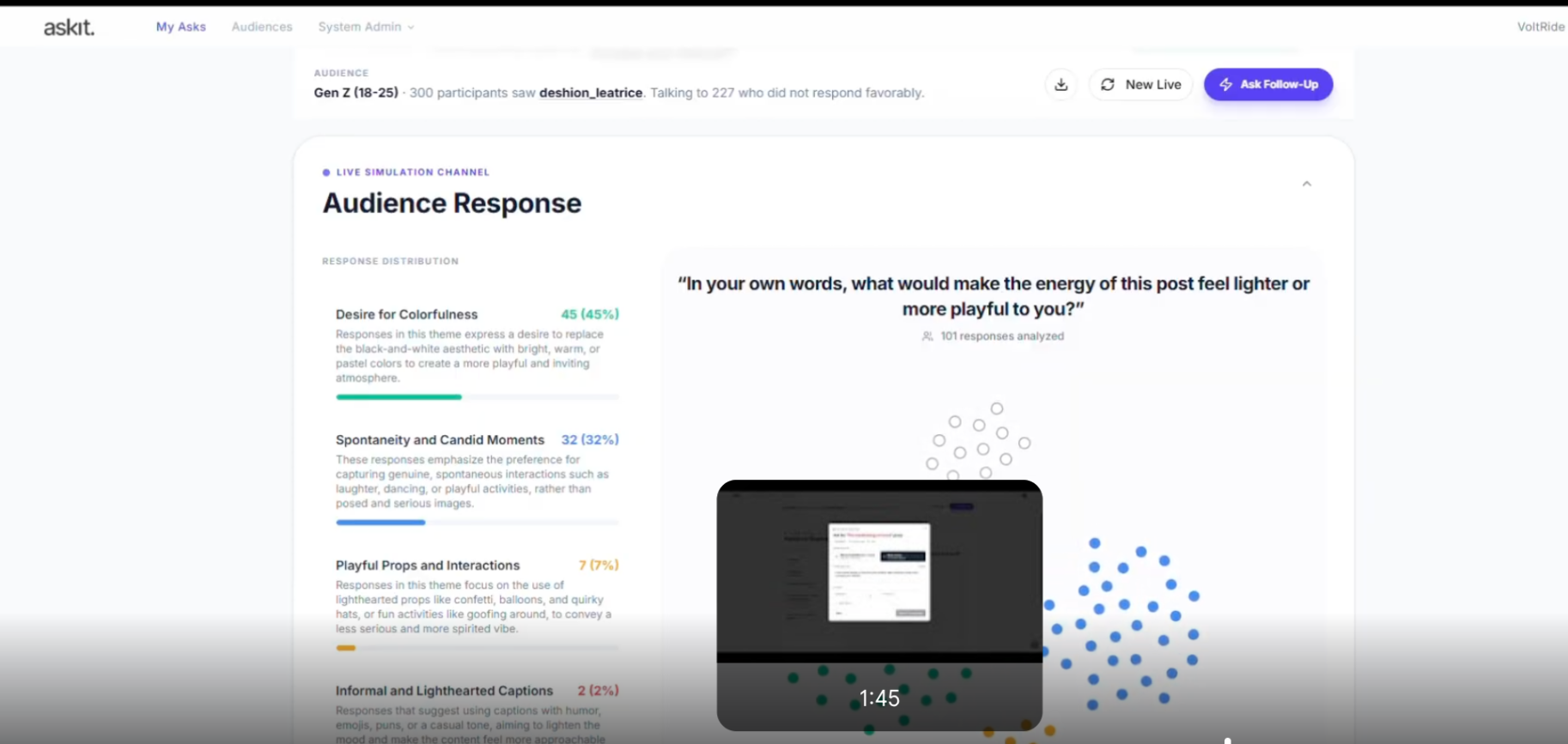
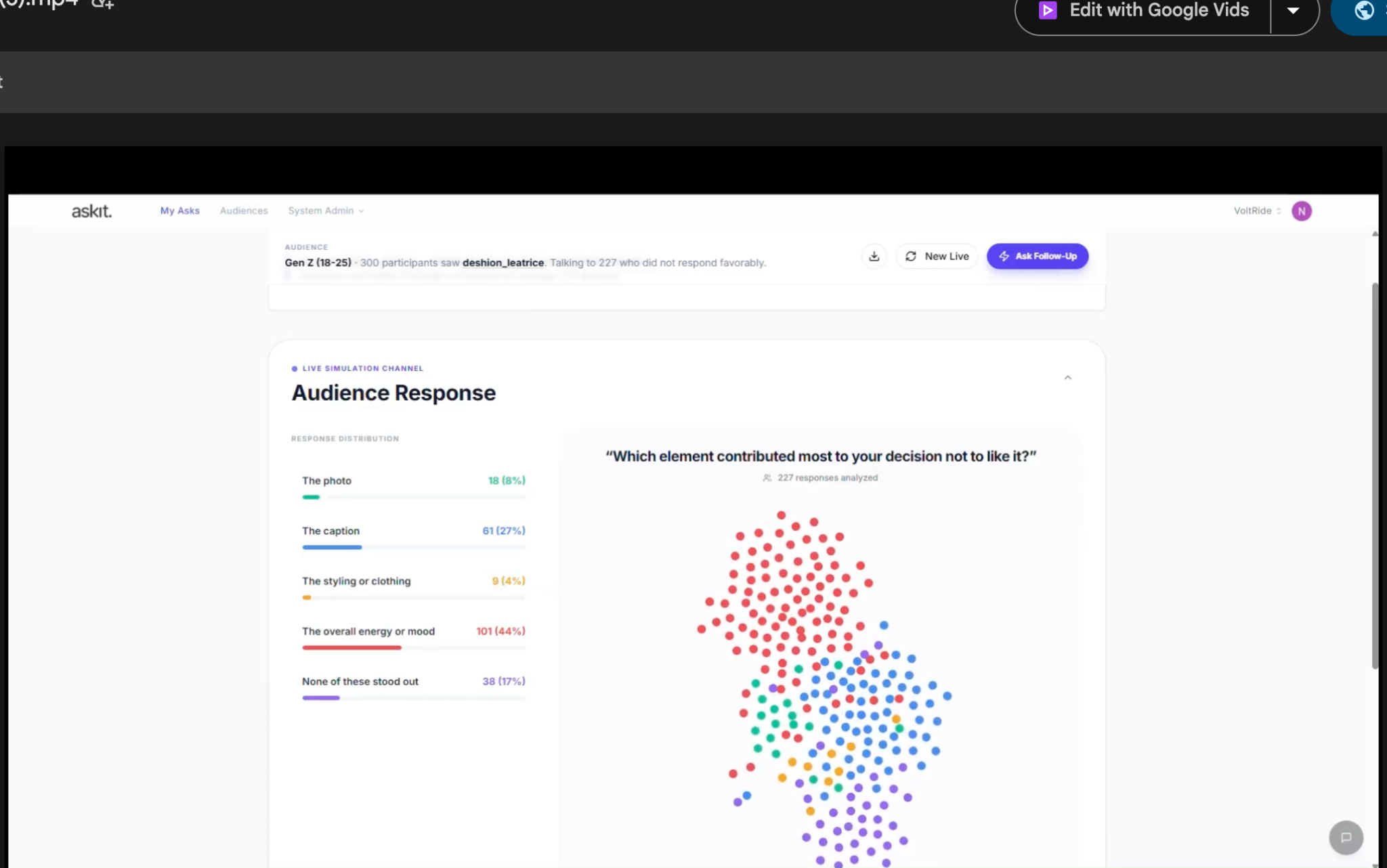
The platform can be used to answer questions that traditionally required weeks of research. Which shampoo bottle looks more premium? Which headline is most likely to drive sales? Instead of relying on surveys or focus groups, businesses can test those scenarios using AI-generated consumer simulations before spending significant time or money in the real world.
AskIt, which recently completed a $1.7 million pre-seed funding, is already working with major brands including one of the world’s largest cosmetic companies, a well-known shoe retailer and one of the biggest fast-food chains in the US.
“A year ago we were looking for them,” she says. “Now they are looking for us.
The shift reflects a broader change taking place across the corporate world. Faced with mounting pressure to save time and money, companies are increasingly questioning whether traditional research methods still make sense.
“In a year’s time, this industry of surveys and traditional research will look very different,” says Magal. “No one will spend thousands of dollars and wait weeks just to understand whether a shampoo will sell.”
Before founding AskIt, mother-of-two Magal spent more than two decades studying behavioural economics – how people make decisions.
Born and raised in Israel, Magal worked alongside renowned behavioural economist Professor Dan Ariely, consulting to the Israeli government and conducting large-scale behavioural experiments. She went on to become chief executive of one of Israel’s largest polling companies, where she saw first-hand how organisations relied on expensive and often imperfect research tools to understand customers.
The idea for AskIt emerged after she came across research exploring the use of “synthetic users” – AI-generated personas designed to replicate human behaviour.
“I was blown away,” she recalls. “I thought, this is the future.”
Soon afterwards, she was introduced to her future co-founder, Dr Neal Tsur, a PhD in social physics who had spent years building behavioural models and, as a hobby, experimenting with synthetic simulations.
Together they began recreating well-known behavioural science experiments using AI-generated populations. “In one case, we replicated a study that had originally taken six months and cost tens of thousands of dollars. Our AI model produced a result with close to 90 percent accuracy in less than 48 hours and at a tiny fraction of the cost.
“That was the moment we knew we had something.”
Earlier this year Magal was named one of FounderSquare’s Top 26 Founders of 2026, selected from a global network of more than 250,000 founders and operators. The recognition, she says, was particularly meaningful given the circumstances in which AskIt was built.
The company was launched during wartime Israel – where a majority of the company’s research and development team are based. During one client meeting earlier this year, they were forced to leave a video call and run to bomb shelters after sirens sounded during Iranian missile attacks.
“We didn’t tell the client what was happening. We just said the Wi-Fi had gone down.”
Magal also faced a profound personal loss after her father passed away suddenly. “In some ways I think AskIt healed me. It forced me to wake up and create something. I knew my father believed in the idea and believed in me.”
Resilience has been a recurring theme throughout Magal’s life. Before her stint in the Israeli army as a commander and officer, and then a career in intelligence and behavioural science, Magal was a competitive swimmer, training before and after school and sacrificing weekends and social events in pursuit of improvement.
“Swimming taught me commitment,” she says. “It taught me how to lose, how to keep going and how you have to work towards something long before you see results.”
Those lessons have proved invaluable in startup life, where success rarely comes quickly.
They have also helped her navigate another challenge: being a female founder in a largely male industry.
“Most of my investors are men. Most founders I know are men,” she says. “The statistics are against female founders, and being an Israeli female founder makes it even more of a challenge. It’s definitely harder today than it was a few years ago.”
Even so, Magal remains optimistic – both for AskIt and for the wider adoption of AI-powered behavioural research.
For now, her focus is on proving that businesses no longer need to wait weeks for answers.
And if her vision becomes reality, one day companies may stop asking whether they should run a survey or focus group and instead pose a different question altogether: “Did you Ask It?”

Keep community journalism free.
Jewish News is free for everyone. No paywall. No barriers. Just trusted journalism for anyone who wants to stay connected to Jewish life in Britain.
If you value that, please support us.
From as little as £5 a month, you can help keep our journalism free and accessible to all.
Every day, we report on the issues that matter to our community. We celebrate achievements, support charities, challenge antisemitism and ensure Jewish voices are heard more widely.
From as little as £5 a month, you can help us continue to:
- Report on the stories shaping Jewish life in the UK and beyond
- Bring our community together through shared stories, events and campaigns
- Celebrate the people, culture and moments that define our community
- Support organisations doing vital work across Jewish Britain
You can make a one-off donation or become a regular supporter. Every contribution helps keep our journalism free, independent and accessible to all.
If everyone who values Jewish News gave a small amount, it would make a real difference to our future.