Prefer Jewish News on Google
‘We wanted our Torah to mean something’: Inside the religious Israeli group protecting Palestinians on Shabbat
Religious Israelis explain how Torah study, protective presence and unlikely partnerships now shape their work across the West Bank
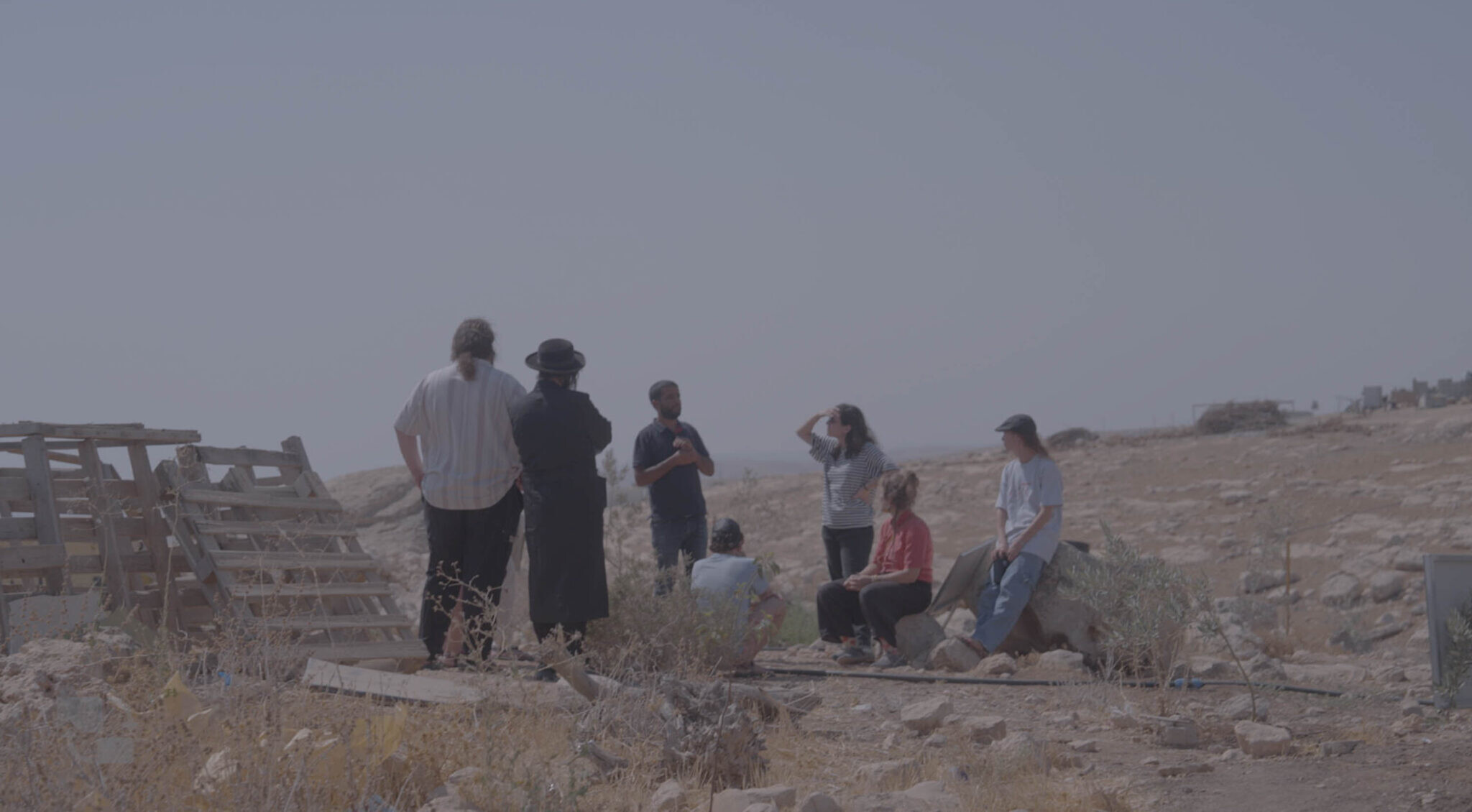
When a small circle of young religious Jews decided to revive Bnei Avraham in 2022, they had no sense of how quickly the project would grow. The original group, active in Hebron two decades ago, had long since dissolved. What began as a few friends studying mystical texts together would become a new movement of religious volunteers working alongside Palestinian communities across the West Bank.
“I think this round of activity really began with our learning,” says Roei Kleitman, one of the group’s co-leaders, speaking slowly as he searches for the right English phrasing. He describes late-night chavruta sessions studying Hasidut and Kabbalistic works. “We would learn together every week… and we felt there had to be an action that came out of it.”
One of the original activists told them about a Palestinian friend he had lost touch with—someone who now lived without any activists visiting or supporting him. The group decided to go on a Friday.
“That’s really how it started,” Roei explains. “Once we began showing up, it all expanded.”
From there, the new Bnei Avraham found itself involved in small but significant acts of solidarity: rebuilding destroyed fences, helping farmers plough and restore land, joining non-violent walks through fields that settlers had tried to take over. Roei recalls one early action in which the group created a Shabbat-themed protest against violence, placing a symbolic notice calling for blessing rather than power.

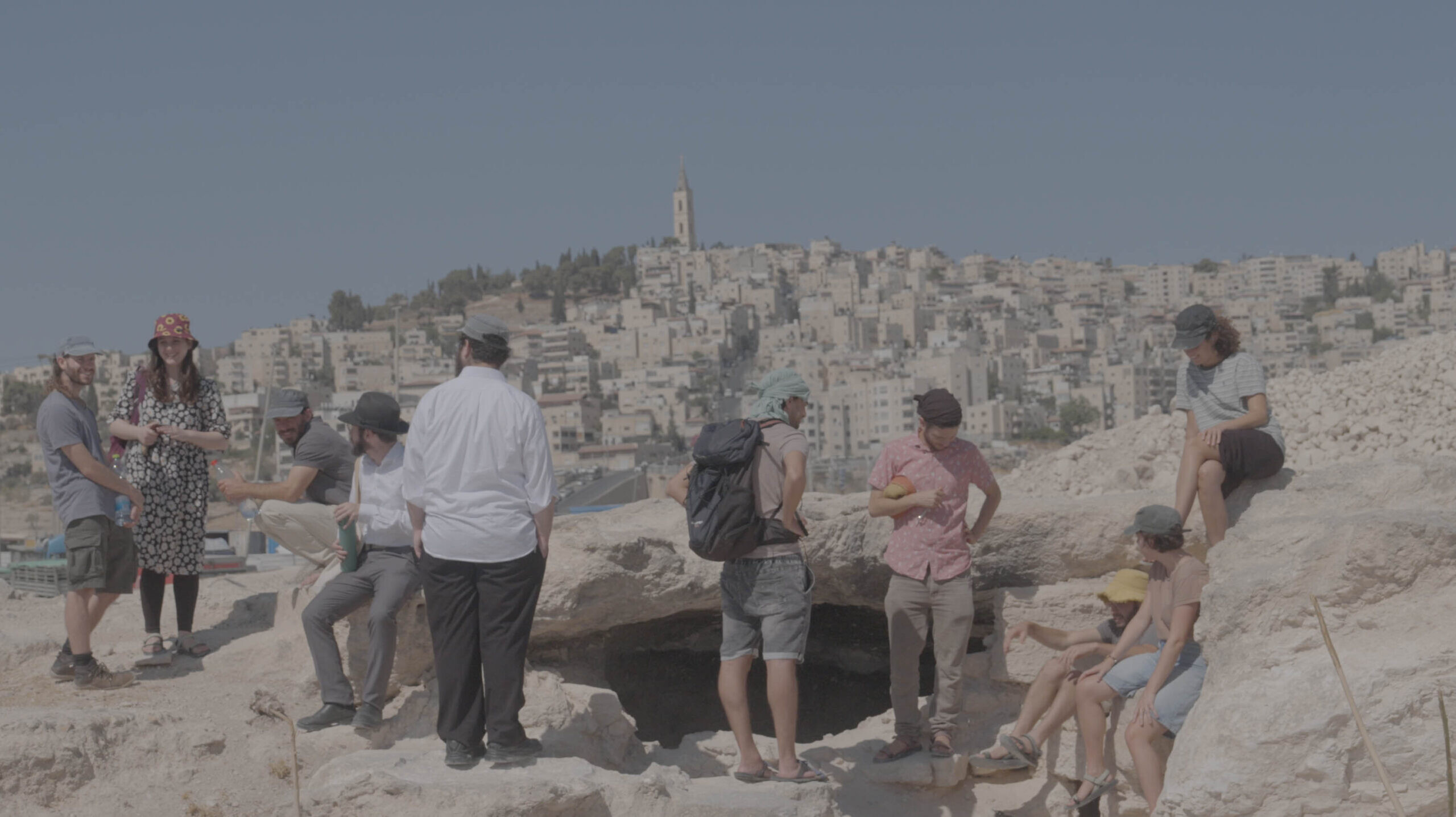
(Photo: Bnei Avraham)
There were moments of real danger. “We were attacked by a settler with a weapon – he put it on the ground in front of us,” Roei says. “Another time they waited with attack dogs. It became too complicated to continue in that area.”
As the violence escalated, the volunteers shifted their focus. “We started doing protective presence,” Roei explains, referring to the practice of physically accompanying Palestinian communities during moments of risk. At the same time, the group opened a midrasha – a small learning institute- to teach young religious Israelis about Hasidut, nonviolence, and spiritual activism. “It really made our numbers grow,” Roei says. “Now we are much bigger and younger than before.”
Dvir, the group’s other co-leader, later expanded the historical details. He traced the origins of Bnei Avraham back to Hebron’s Tel Rumeida neighbourhood, where earlier activists – some of whom later helped found well-known Israeli organisations – worked in close partnership with Palestinian families before the group eventually dispersed. The new generation, he explains, aims to continue that legacy while responding to a very different political landscape.
Much of the group’s activity now centres on supporting communities facing ongoing attempts at displacement. Roei describes one village where settlers had seized land in Area B, a highly unusual and illegal development. “Every Friday, the women, the elders, everyone would walk through the land as a non-violent act. We joined them. They told us that since we started coming, the soldiers were less violent.”
Other activities include agricultural support, soil preparation, fence repair, and community-focused work such as running a travelling circus for children affected by repeated settler incursions into schools. “Sometimes the children have a lot of fear,” Dvir says. “The circus brings positive encounters with Jewish activists.”
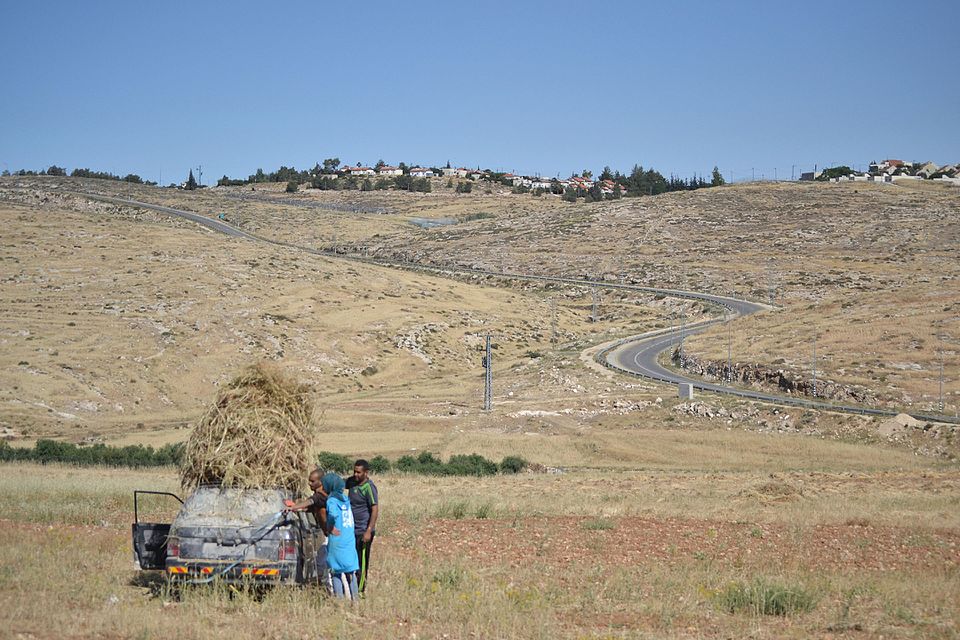
But much of Bnei Avraham’s work takes place on Shabbat, in Bedouin communities such as Ras al-Ain, near Jericho. Volunteers stay in tents prepared before Shabbat, host shared meals, light candles with local families, and walk out quietly if settlers approach.
It was this work that first led Lawrence, a Haredi British-born volunteer, to join the group.
“When I first heard about protective presence on Shabbat, I didn’t want to join. I thought it meant breaking Shabbat,” he says. “So I spoke to my rabbis – dozens of them.”
He explains the halachic reasoning he learned: Jewish law permits breaking Shabbat when failing to act could endanger the wider Jewish community. In his view, settler violence has real repercussions. “When I see how it affects the world’s view of Israel and of Judaism, and how antisemitism grows as a result, that is a danger to Jewish communities. There is precedent in halacha for breaking Shabbat in situations like that. Doctors do it. Soldiers do it. It’s the same idea.”
For Lawrence, the religious dimension is inseparable from the activism. He cites teachings on mishum eiva (avoiding actions that create hatred), darkei shalom (ways of peace), and the Torah obligation to protect the ger toshav – the resident non-Jew living under Jewish authority. “If this were happening to a fellow Jew, I’d be doing the same action,” he says.
The relationships formed with Palestinian families are deeply textured and vary across the dozen communities Bnei Avraham now works with. In Luban, a village near Modi’in, theological discussions unfold between residents and activists. In other areas, friendships have developed over years, rooted in shared concern for children’s safety, everyday difficulties, and the changing political climate.
Dvir explains that since 7 October, the group’s work feels different – more urgent. “The government officially decided to expel many communities,” he says. “Our goal is to keep these very sensitive bridges alive. We want them to remember that there were religious Jews who saw them, who cared for them, even in this time.”
Roei reflects on that idea often. “They might remember the settlers who harmed them,” he says, “but we want them also to remember that there were religious people who stood with them.”
Both leaders hope to expand the movement, diversify its membership across religious backgrounds, and continue building the group’s spiritual framework. “We are bigger every month,” Dvir says. “But capacity is also a challenge.”
Lawrence expresses a hope of his own: that British Jews hear about the work with curiosity rather than fear. “I don’t know how people will react,” he admits. “But I hope they at least hear about it.”
For Roei, the motivation remains theological as much as practical. “There is no real connection to the land without connection to the people who live on it,” he says. “Our ancestors spoke Arabic. They were connected to this place in ways we are still trying to rebuild. For me, activism is part of that – part of making this a holy place that can contain everyone.”

Keep community journalism free.
Jewish News is free for everyone. No paywall. No barriers. Just trusted journalism for anyone who wants to stay connected to Jewish life in Britain.
If you value that, please support us.
From as little as £5 a month, you can help keep our journalism free and accessible to all.
Every day, we report on the issues that matter to our community. We celebrate achievements, support charities, challenge antisemitism and ensure Jewish voices are heard more widely.
From as little as £5 a month, you can help us continue to:
- Report on the stories shaping Jewish life in the UK and beyond
- Bring our community together through shared stories, events and campaigns
- Celebrate the people, culture and moments that define our community
- Support organisations doing vital work across Jewish Britain
You can make a one-off donation or become a regular supporter. Every contribution helps keep our journalism free, independent and accessible to all.
If everyone who values Jewish News gave a small amount, it would make a real difference to our future.