
 Prefer Jewish News on Google
Yet again, Israel’s public shelters become sites of camaraderie amid steep danger
'I’m doing great. We’re all together all the time,' one Jaffa resident said about her neighbours and friends one day into the war with Iranian Regime
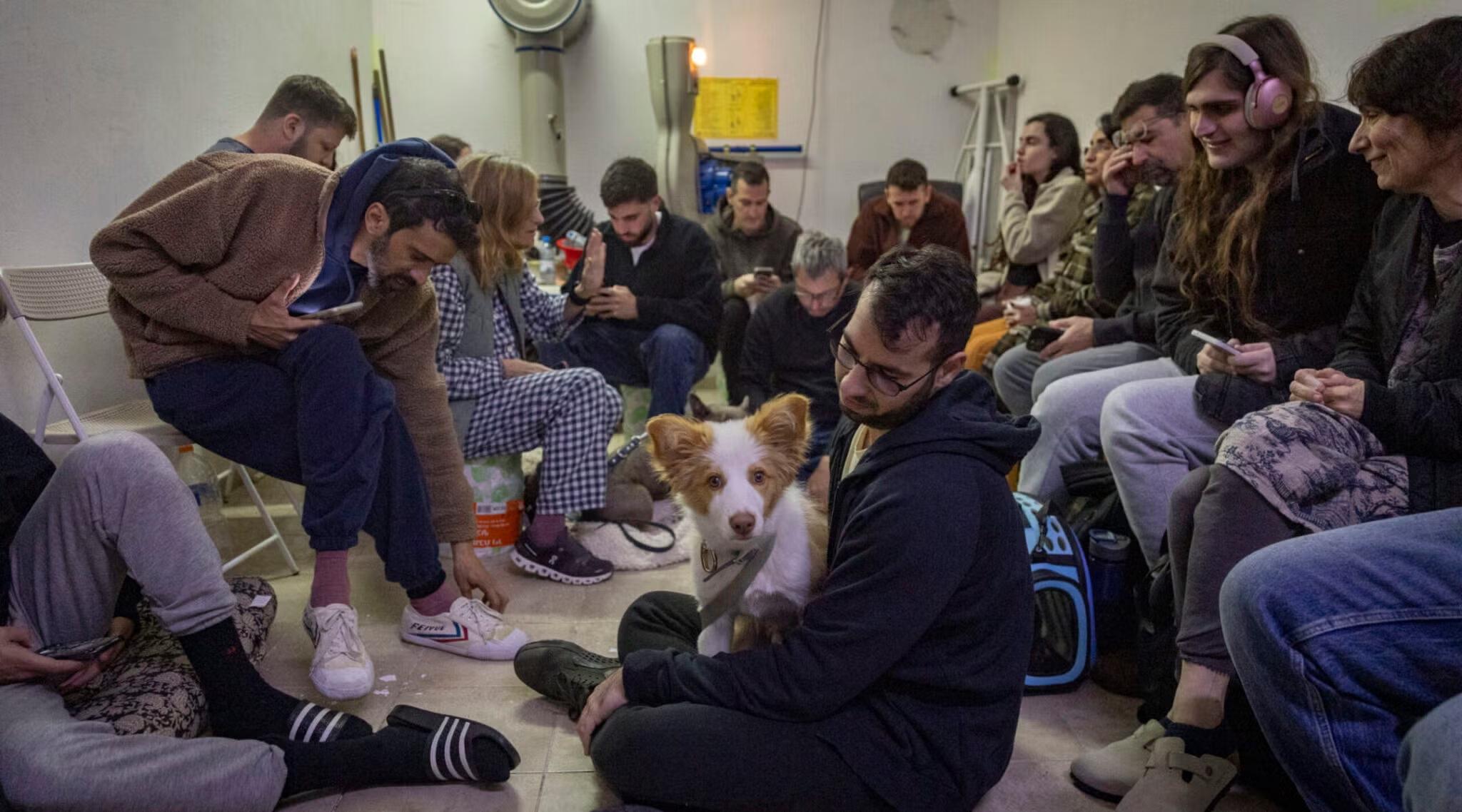
Spirits ran high inside a large public bomb shelter in the Israeli coastal city of Jaffa, with loud chatter, singing and greetings of “Happy Iran Holiday,” an incongruous soundtrack to the joint U.S.-Israeli strike on Iran and the hundreds of missiles that followed.
The room itself looked much cheerier than most shelters, with a ball pit and bright Gymboree mattresses left over from its other job in peacetime, when it doubles as a kindergarten.
A day earlier, the shelter became the accidental venue for a bar mitzvah celebration, when worshipers from the synagogue across the road took refuge there.
One particularly raucous group was made up mostly of American-Israelis from the neighbourhood. One of them, Steph Graber, said she was in a good mood despite being exhausted from middle-of-the-night runs to the shelter.
“I’m not sure why, maybe it’s the adrenaline of war or something,” she said on Sunday morning. “But also it’s amazing to see the U.S. and Israel as allies working together to reduce the threat from Iran.”



Graber said she had been sheltering elsewhere but had “FOMO” about not being with her friends, so she switched over in the brief lull between sirens.
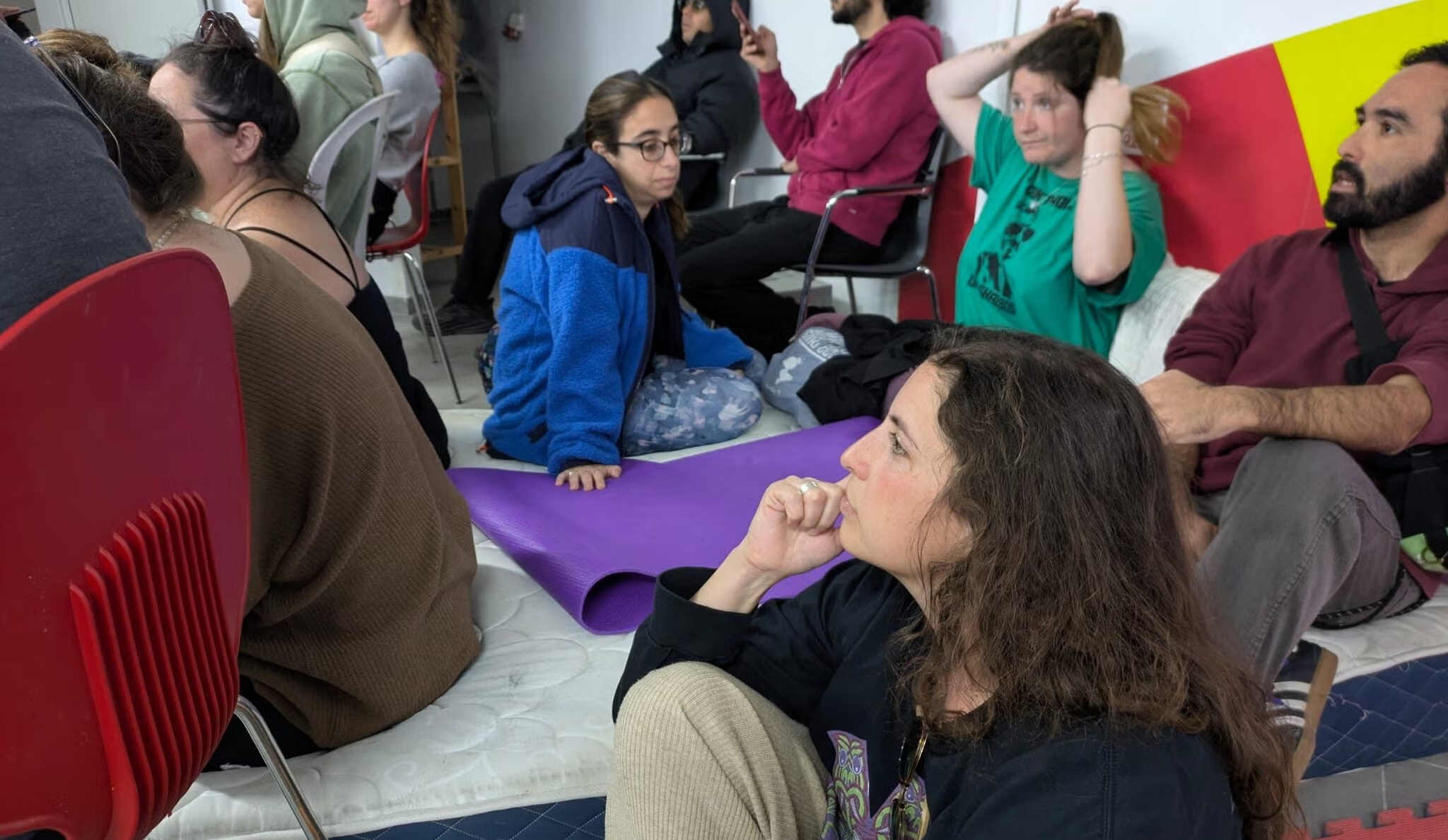
Martine Berkowitz, a friend of Graber’s, also said the community around her was what made the disruption feel manageable. Sirens kept interrupting even basic tasks, she said, including her attempt to take a shower, which she tried five times.
“My friends live on my corner, so I’m doing great. We’re all together all the time,” she said. During the last Iran flare-up in June, she didn’t have that kind of built-in circle nearby, she said. “Being alone then was really rough.”
The mood wasn’t confined to Jaffa. Across the country, similar scenes played out in shelters and spread on social media, including one from Nachlaot in Jerusalem of people singing “For the Jews There was Light and Joy,” a Purim song marking the story’s turn after Haman’s plot to kill the Jews was thwarted. The parallel to the current moment, as the Jews once again sought to topple a Persian rule who had called for their death, was not lost on anyone.
In a sprawling underground parking lot turned shelter at Dizengoff Center in central Tel Aviv, Shabbat prayers gave way to dancing and songs of “Don’t Be Afraid, Oh Israel” and “Am Yisrael Chai.” Saul Sadka, who was there, posted a video of the revelers, captioning it “joy and stoicism.”
Sadka later said he was struck by the “sense of solidarity,” and noted that it was Shabbat Zachor, when Jews read the passage about Amalek, a nemesis that they are commanded never to forget. “People seem willing to suffer for a while if it means the defeat of the IRGC,” he said.
Another bomb shelter in Tel Aviv struck a less pious tone, turning into a makeshift night club with red lights, a DJ and people dancing.
In one video, one of hundreds of comedic shelter clips circulating online, a comedian quipped, “The nation of Israel lives” — but only as long as the shelter “has wifi and the iPads have battery.”
Natalie Silverlieb was in the mamak, the communal reinforced safe room on her building’s floor. She said the logistics of repeated alerts had become harder since she became a mother.
“Doing this with a baby is crazy,” she said. The room was packed, including other babies and dogs, and she and her partner tried to follow a system that would get their baby back to sleep quickly.
“I’m so, so, so exhausted,” she said. “When I was doing this on my own the last time, I could at least come back to my apartment and just lay on the couch. But now there’s no laying on the couch. It’s go, go, go.”
For Silverlieb, the uncertainty of the past few weeks hadn’t disappeared so much as changed shape. “The waiting for it to end is more stressful than the waiting for it to begin,” she said. “I just hope it ends quickly. It’s a lot, period.”
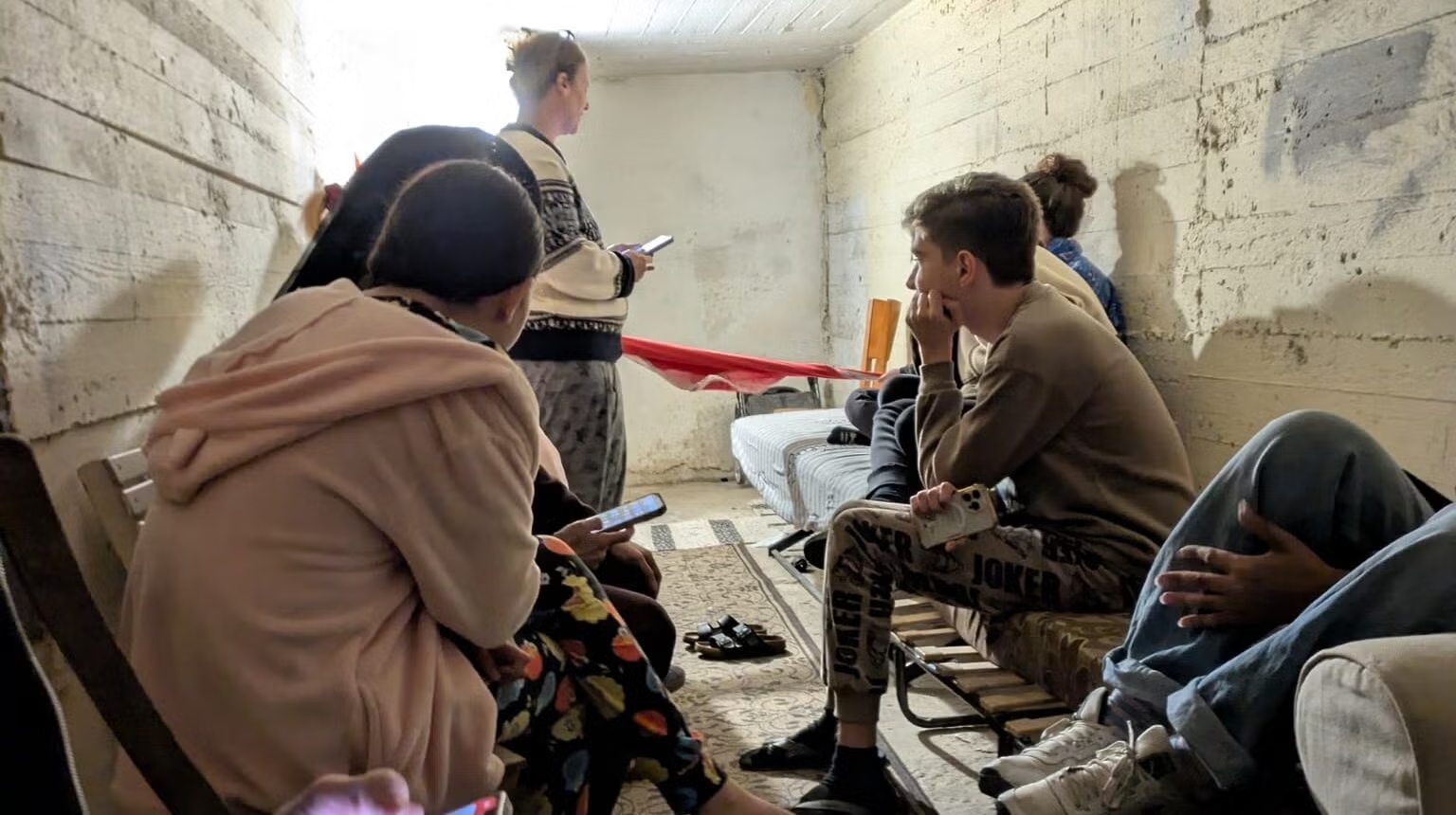
In a nearby grocery store, another siren, the 30th or so in as many hours, sent shoppers scrambling. In the residential building next door, the shelter downstairs was decrepit and doorless. Children played limbo with a strip of red cloth. One woman began pitching HAAT, a new, mostly Arab-run delivery service she said was giving Wolt a run for its money. A few people pulled out their phones to download the app, trading jokes about whether it would deliver to shelters, and during sirens. Because it is Ramadan, Muslims in Israel are doubly on edge, from fasting on top of the missiles.
Sasha, who lives in the building, said she was “half happy” the waiting was over. The repeated dashes up and down the stairs, she joked, were at least getting her to her daily goal of 10,000 steps. Still, she said, it “won’t help us if the [Iranian] regime doesn’t fall.”
A Ukrainian who grew up under Soviet rule, taught her what it meant to live without freedom, she said. “We want to see the Iranian people free and a better Middle East for everyone.”
Evyatar said he doubted the regime would fall “unless the Iranian citizens themselves finish the job.”
Ma’or, another neighbor, said he would “happily sit in my bomb shelter if it meant giving my Iranian friends, both in Iran and out, a chance at a normal life.” He pointed to a friend in Tehran who works as a tattoo artist, an illegal trade under the regime.
“I mean, he’s not even free to give someone a tattoo without going underground,” he said. “I’m baffled by the people cheering [on] the IRGC. People who say this war is illegal are out of their goddamn minds.”
Evyatar said he began Saturday uneasy, but grew calmer as the hours passed and he gauged the pattern of the strikes. The alerts came far more often than the 12-day war, but the blasts felt less intense. “At the beginning I felt scared, like it was June all over again.” Over time, he said, he has learned to tell the difference between the sounds of interceptions, shrapnel and direct impacts.
As he spoke, a loud boom hit outside, rattling the shelter and stopping the conversation. “That, for example, was a June sound,” he said.
It turned out to be shrapnel coming down not far away. The impact was part of a wider series of strikes across central Israel, including one that turned lethal in Beit Shemesh, west of Jerusalem, when a public bomb shelter was hit. Nine people were killed including multiple from the same family. Dozens more were wounded, and others still were unaccounted for.
In Beit Shemesh, the strike changed the atmosphere in a city that had so far heard only occasional sirens, during both this round and the last one.
Netanel Alkoby, a Beit Shemesh resident who spent 12 years in the reserves with the Home Front Command, said he has always taken alerts seriously, but that over time a degree of complacency still set in. The strike, he said, “changed our perspective a lot,” forcing him to be more careful, more on guard, and to treat every warning “with the utmost seriousness.”
In the underground shelter at Wolfson Medical Center in Holon, a sign overhead read “the safest shelter in existence.” Patients hobbled in, some with casts and crutches. With doctors also sheltering there, patients used the moment to buttonhole them with questions.
One staffer watched a line of women form to speak to a physician. “Poor thing, he can’t even enjoy the siren in peace,” she said.
Back in the central Jaffa shelter, a couple in black leather and dark glasses stood apart from the banter around them.
“Any fear and terror that Israeli citizens are feeling right now is a direct result of this violent racist Islamophobic power hungry greedy fascist government,” said the woman, who declined to give her name, referring to the Netanyahu-led coalition.
Asked whether she thought attacking Iran was a bad idea, she said: “I think it’s a bad idea to attack anyone in 2026. We teach toddlers not to fight and here we have fully grown men doing this, dooming all of us.”
“It’s time we take the power from aging white men,” she said.
Nearby, Martine Berkowitz agreed — in part. “Yep, they are behaving like toddlers. And they are aging white men. Who are fighting evil brown men. If it brings freedom to Iran then it was worth it. But if it doesn’t, then it was all for nothing.”

Keep community journalism free.
Jewish News is free for everyone. No paywall. No barriers. Just trusted journalism for anyone who wants to stay connected to Jewish life in Britain.
If you value that, please support us.
From as little as £5 a month, you can help keep our journalism free and accessible to all.
Every day, we report on the issues that matter to our community. We celebrate achievements, support charities, challenge antisemitism and ensure Jewish voices are heard more widely.
From as little as £5 a month, you can help us continue to:
- Report on the stories shaping Jewish life in the UK and beyond
- Bring our community together through shared stories, events and campaigns
- Celebrate the people, culture and moments that define our community
- Support organisations doing vital work across Jewish Britain
You can make a one-off donation or become a regular supporter. Every contribution helps keep our journalism free, independent and accessible to all.
If everyone who values Jewish News gave a small amount, it would make a real difference to our future.





















