Prefer Jewish News on Google
A pot of Jewish tradition for Rosh Hashanah
For Joel Haber, cholent is a window into the extraordinary diversity of Jewish food
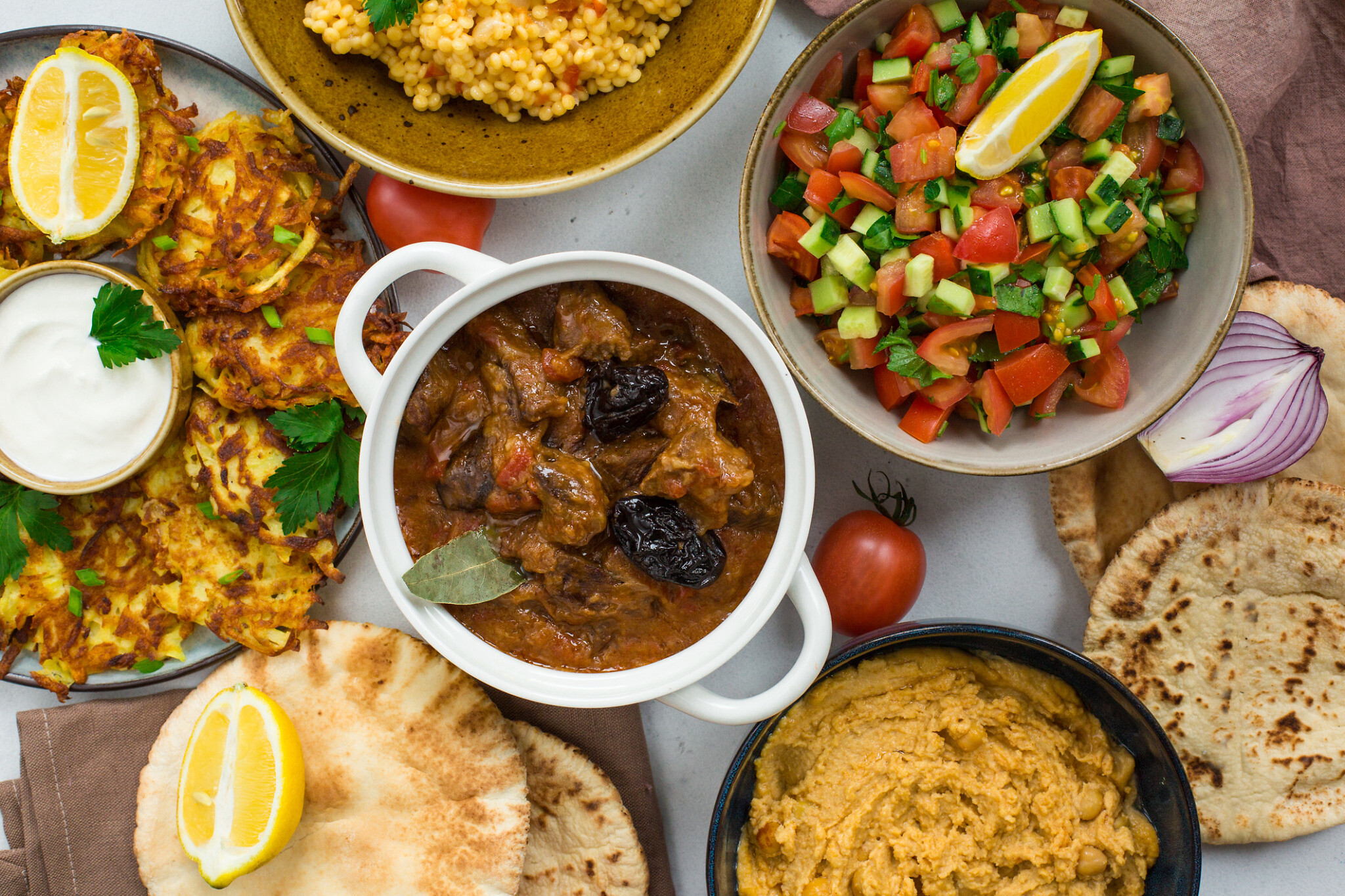
Loving food is one thing – creating a career out of it is another. When Joel Haber lived in the US (New Jersey, New York City and LA) he dabbled in food writing but when he moved to Israel in 2009 – “because it’s awesome” – an initial role as a tour guide led him to develop food tours in Shuk Machane Yehuda, the famous open-air market in Jerusalem.
Researching the tours opened up the world of food history and he devised a lecture called 18 Jewish Foods, which became the name of the podcast he ran a couple of years ago. Then came the idea to turn it into a book but realising that it was too big a subject, he pulled out the chapter about the Shabbat stew and publishedg a book on the subject.
Cholent: The Most Jewish Food on Earth is not a facetious title. “I really do believe that cholent, at least arguably, is the most Jewish food on earth,” he says. “It is the Eastern European version of a Shabbat stew. At the core of the stew is always a type of grain and some type of meat. Based on the region that you’re in, the grain and the meat changes. In Asia, meaning primarily the Middle East, it is rice with chicken. From North Africa would be wheat and lamb, and in Europe it is barley and beef.”
I chatted to him early in the summer and we discussed the London heatwave which seemed an odd juxtaposition when talking about something which is, to me, winter food. But Joel begs to differ.

“I actually eat cholent all year round. I think that’s about going back to your roots and comfort food and what comfort food means to different people. For me, cholent or a bowl of chicken soup would be comfort food, but for your average British person, it’s baked beans on toast.”


Talking of beans, they feature heavily in cholent recipes and in Joel’s opinion tinned versions are fine. “I don’t taste a difference in a in a Shabbat stew between tinned beans and dried beans. So why put in that extra effort?
“After all, Shabbat stew cooking is not fancy cooking. I’m not saying that there’s never a reason to pre-fry onions or sear your meat first, but I think that by and large, the Shabbat stew does not suffer by more or less by throwing it all in the pot and letting it stew. It is simple homestyle cooking that is really delicious due to the long cooking technique.”
We are familiar with the eating of symbolic foods on Rosh Hashanah, most especially apple and honey but there are many other foods that are traditional for Jews around the world and these show up in cholent. “A common one is chard or mangold (a type of beet leaf). There is a type of stew from Tunisia that uses that. It’s called t’fina pakela, and I have come across references to that community eating this specifically for Rosh Hashanah,” Joel explains.
“The Shabbat stew truly embodies Jewish peoplehood and Jewish culture. We are an extremely diverse people, and yet there’s a tremendous underlying unity within that diversity. Finding foods of other Jewish communities that you might not be familiar with is an embodiment of that and Rosh Hashanah is one of the best times to embrace it.”
Joel is keen to point out that this is not a cookbook although it does include recipes (some of which you can see overleaf). “It’s a book of food writing that includes recipes for Shabbat stews from around the world. The whole reason that this dish exists is because people wanted hot food for lunch on Shabbat, but according to Jewish law, we’re not allowed to cook actively so they left it cooking the whole night.”
As someone who likes to do her annual visit to shul on Rosh Hashanah it suits me to get something in the oven the night before and have lunch ready by the time I get home. So this year, cholent it is!
Below are three recipes from Joel Haber’s Cholent: The most Jewish Food on Earth to grace your Rosh Hashanah table
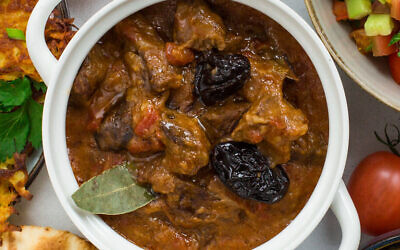
Normu / Gendumedush
(Serves 8)
With sweetness from plums and dates this is the ideal cholent for Rosh Hashanah and you can always add more for richer flavour.
Ingredients
3 tablespoons olive oil
425 g can white beans
425 g can chickpeas
100 g dried brown or green lentils
100 g barley
100 g wheat berries
1 large onion, cut into eighths
4 cloves garlic
3 medium potatoes, peeled and roughly chopped
2 medium zucchini, cut roughly into 5 cm chunks
1.15 kg beef, cubed
2 marrow bones
2 medium tomatoes, cut into chunks, or a 400 g can diced tomatoes
1 sprig rosemary
8 dried sour plums (see Notes for substitution option)
3 dates, pitted
8 eggs, still in their shells
1 teaspoon salt
½ teaspoon ground turmeric
½ teaspoon ground cumin
½ teaspoon ground black pepper
½ teaspoon sweet paprika
½ teaspoon hot paprika
Method
Pour olive oil into a large pot (or slow cooker). Scatter the white beans, chickpeas, lentils, barley, and wheat berries inside. On top of that, add the onion and garlic. Next, layer on the potatoes and zucchini.
Put the beef and marrow bones on top of everything, then cover with the tomatoes, rosemary, dried sour plums and dates. Gently insert the eggs into the other ingredients. Over everything, sprinkle the salt, turmeric, cumin, pepper, sweet paprika, and hot paprika. Add water to cover.
If using a slow cooker, put everything in and leave on High for about an hour, then switch to Low for overnight cooking. If using a regular pot (ideally a heavy one, such as a Dutch oven), place in an oven set to 210 °F / 100 °C for overnight cooking.
Note: If you can’t find dried sour plums you can substitute regular prunes, plus 1 tablespoon tamarind paste or pomegranate syrup stirred into a glass of water.
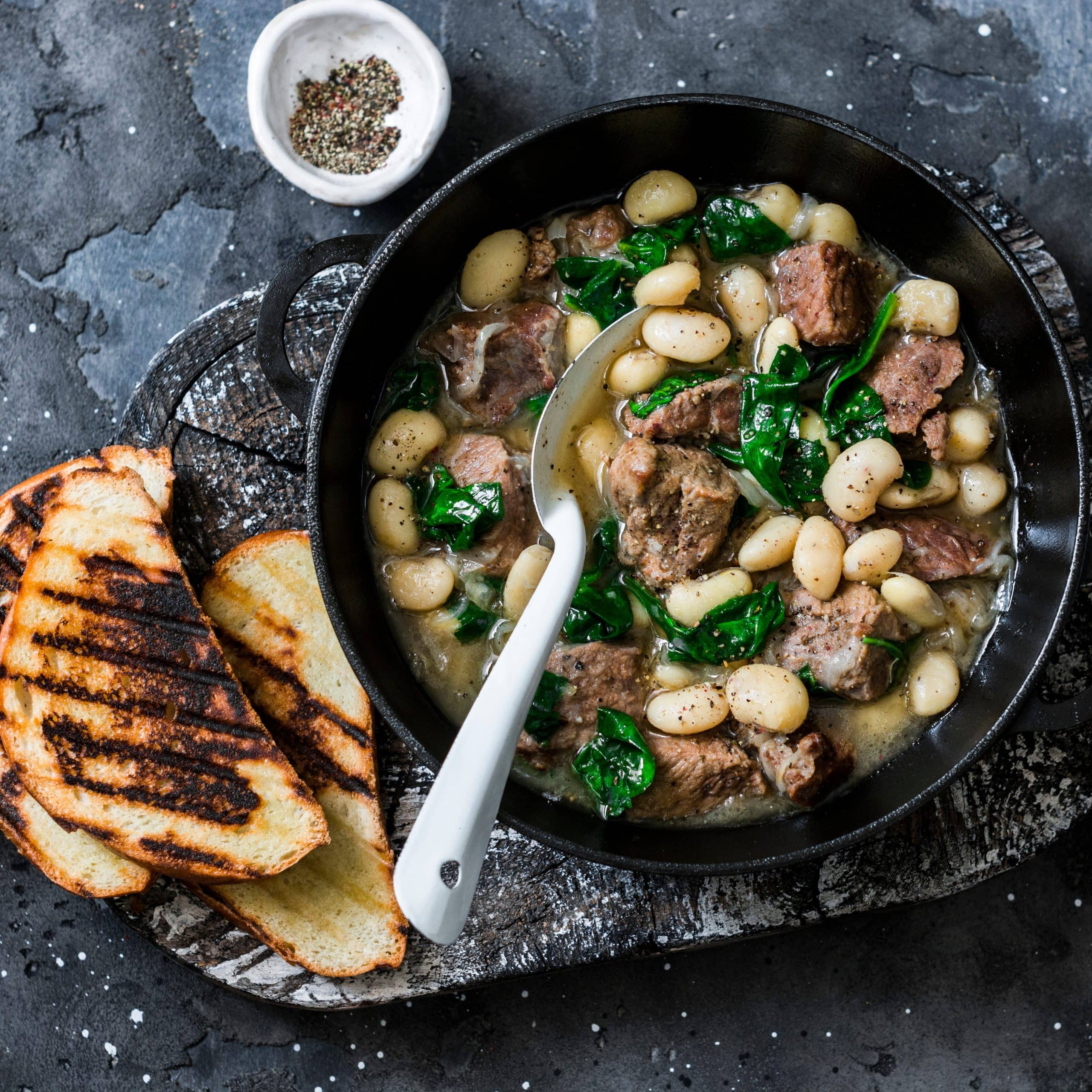
T’fina Pkaila
(Serves 8)
Many Tunisian Jews prepare this for Rosh Hashanah, with the pkaila serving as one of the holiday’s traditional symbolic foods.
Ingredients
For pkaila sauce:
900 g chard or spinach leaves
1 bunch fresh mint (or 1 teaspoon dry mint, saved for later)
120 ml olive oil
1 medium onion, diced (optional)
For t’fina:
900 g fatty stew beef, cut into chunks
2–3 teaspoons olive oil
2–4 marrow bones
425 g can white beans, or 165 g dried black-eyed peas
1 head of garlic, peeled and separated into individual cloves
1 teaspoon salt
1/2 teaspoon ground black pepper
Method
Prepare the pkaila: If using chard, remove and discard the hard stems. If using spinach, you can leave the stems attached. Chop the leaves into smaller pieces. If using fresh mint, pull the leaves off the stems.
Heat the olive oil over medium heat in a large pot. If using the onion, fry it first in the oil until it softens, approximately 5–7 minutes.
Add the chard / spinach, and mint (if using fresh leaves). After about 5 minutes, lower the heat to medium-low. Leave everything to cook down, stirring periodically to prevent sticking or burning. As the leaves give off their water, pour or ladle it off into a separate bowl and reserve. The leaves will continue cooking for around 45 minutes to an hour, shrinking in volume drastically, by 80–90 percent. They will also turn very dark, almost black. You will know they are done when you begin to hear some crackling coming from the leaves. As they near this point, be especially careful to avoid burning. If using dried mint, stir it in now.
Once the leaves are ready, remove them from the heat. If the pieces are still too large, you may blend them slightly using an immersion blender, though this is not completely necessary.
Make the t’fina: About 15 minutes before the pkaila is done, you can start the beef in another pot. Brown it in the olive oil over medium heat, turning it on all sides.
Add the marrow bones and white beans. Scatter the garlic throughout the pot. Sprinkle the salt and pepper over everything, and pour in the reserved liquid from the pkaila.
Finally, add the pkaila itself, and stir everything to mix. Add about 2 cups water.
If using a slow cooker, put everything in and leave on High for about an hour, then switch to Low for overnight cooking. If using a regular pot (ideally a heavy one, such as a Dutch oven), place in an oven set to 210 °F / 100 °C for overnight cooking.
Serve with couscous or rice.
Note: Spinach leaves may not give off as much liquid as chard so watch them more carefully. A dash or two of salt may help them soften and reduce.
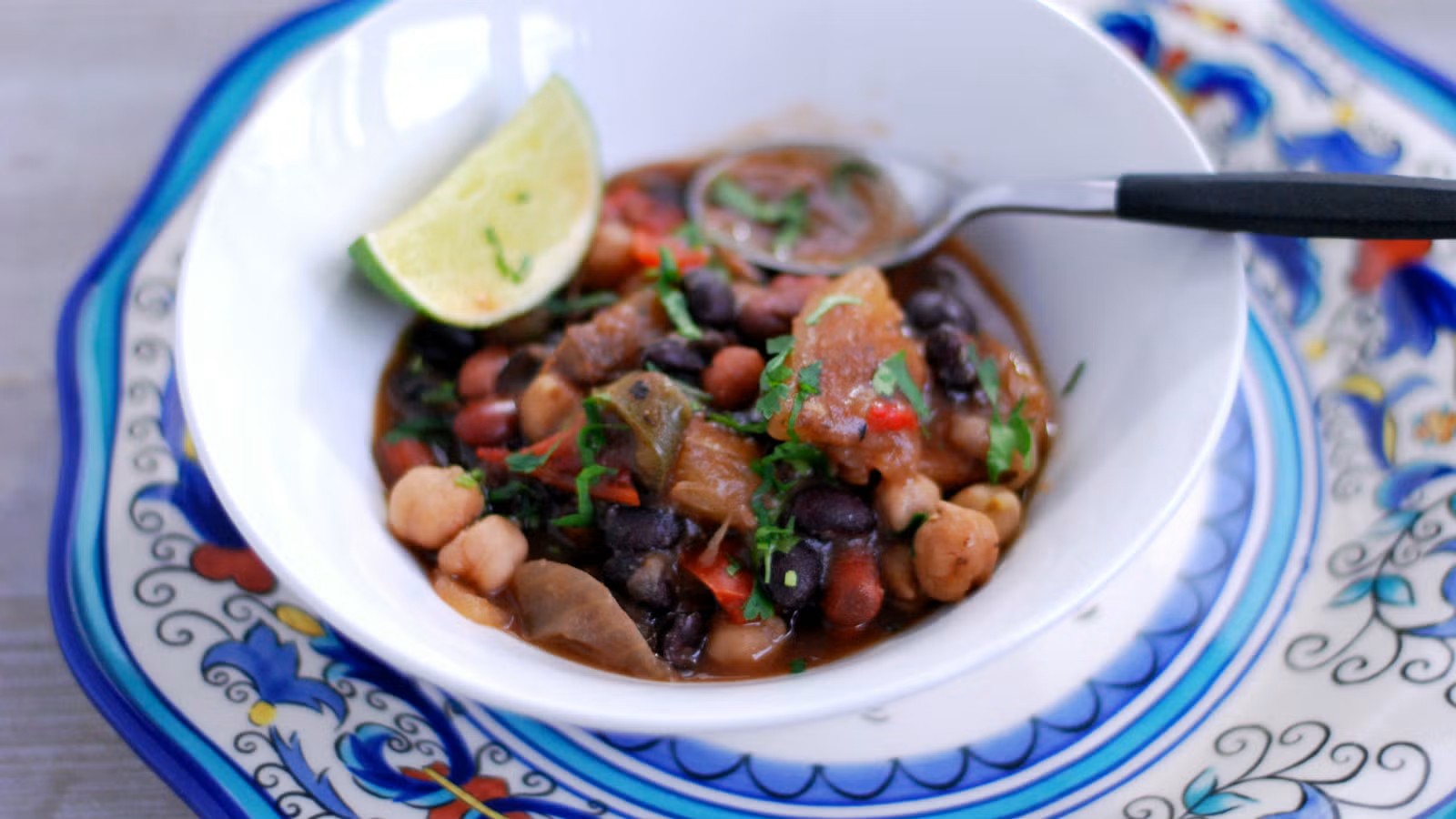
Vegetarian Hamin
(Serves 8)
Flavours from around the Sephardi diaspora combine here, while avoiding meat.
Ingredients
3 tablespoons olive oil
2–3 medium onions, chopped roughly
2–4 cloves of garlic, sliced
1 large or 2 small green chillies, seeds and membranes removed, diced
3 tablespoons tomato paste
1 tablespoon ground cumin
1 tablespoon ground turmeric
1 teaspoon ground cardamom
1 teaspoon salt
1 teaspoon ground black pepper
2 x 425 g cans mixed beans (red or white kidney, lima, chickpeas or other)
200 g green or brown lentils
300 g wheat berries
1 large handful dried mushrooms, rehydrated in hot water
4 medium potatoes, cut into chunks
1 large sweet potato, cut into chunks
8 eggs, still in their shells
Method
In a large pot, heat the olive oil over medium-high heat. Fry the onions until they start to soften and turn brown, but not until they turn dark brown or black, approximately 5–7 minutes. Add the garlic and chilies and continue frying for 1–2 minutes. If using a slow-cooker, transfer now.
Add the tomato paste, cumin, turmeric, cardamom, salt, and pepper. Mix well. Next, add the beans, lentils, wheat, and mushrooms (with the water they soaked in). Scatter the potatoes and sweet potato on top. Then add enough water to cover the contents by about 1.25 cm. Tuck the eggs gently around the top of the stew ingredients, making sure they are at least partially submerged.
If using a slow cooker, leave on High for about an hour, then switch to Low for overnight cooking. If using a regular pot (ideally a heavy one, such as a Dutch oven), place in an oven set to 210 °F / 100 °C for overnight cooking.
Options
Add one large carrot, or one large turnip, peeled and chopped.
Add seitan strips or vegetarian sausages.
In place of, or in addition to the dried mushrooms, use chopped fresh oyster or portobello mushrooms.
Swap in thoroughly-rinsed long grain white or brown rice, or pearl barley, instead of the wheat.
For a spicier flavour, leave in some of the chilli seeds and membranes, and / or add 1 teaspoon of cayenne.
For a different flavour profile, leave out the cumin, turmeric, and cardamom, replacing them with 1 teaspoon each of ground cinnamon, allspice, nutmeg, and cloves.
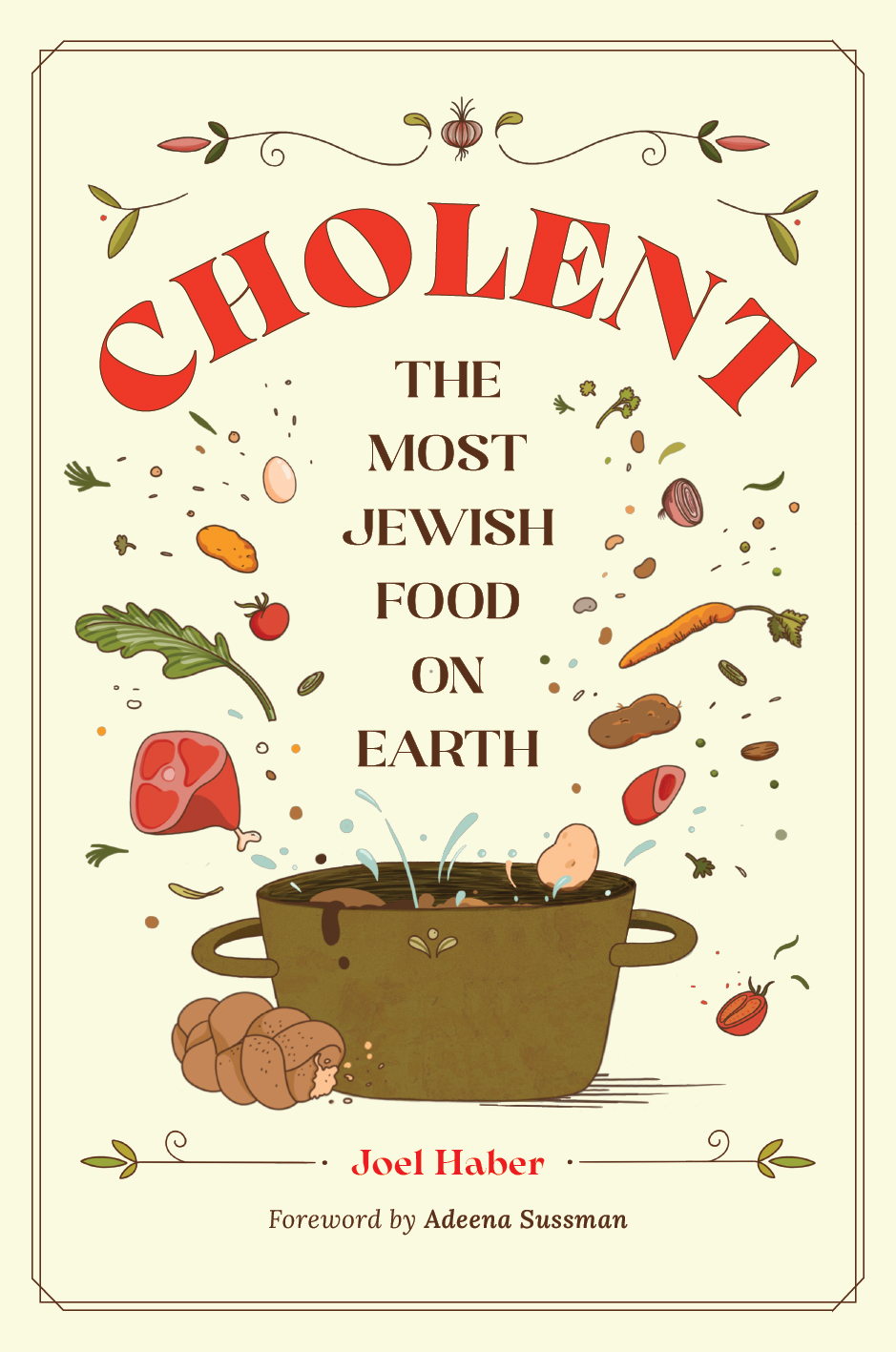
Cholent: The Most Jewish Food on Earth is available on Amazon, £24.99

Keep community journalism free.
Jewish News is free for everyone. No paywall. No barriers. Just trusted journalism for anyone who wants to stay connected to Jewish life in Britain.
If you value that, please support us.
From as little as £5 a month, you can help keep our journalism free and accessible to all.
Every day, we report on the issues that matter to our community. We celebrate achievements, support charities, challenge antisemitism and ensure Jewish voices are heard more widely.
From as little as £5 a month, you can help us continue to:
- Report on the stories shaping Jewish life in the UK and beyond
- Bring our community together through shared stories, events and campaigns
- Celebrate the people, culture and moments that define our community
- Support organisations doing vital work across Jewish Britain
You can make a one-off donation or become a regular supporter. Every contribution helps keep our journalism free, independent and accessible to all.
If everyone who values Jewish News gave a small amount, it would make a real difference to our future.