Prefer Jewish News on Google
Astrologer Ophira Edut addresses what rabbis have never agreed on
'My approach to astrology increases your free will and choice' says the AstroTwin
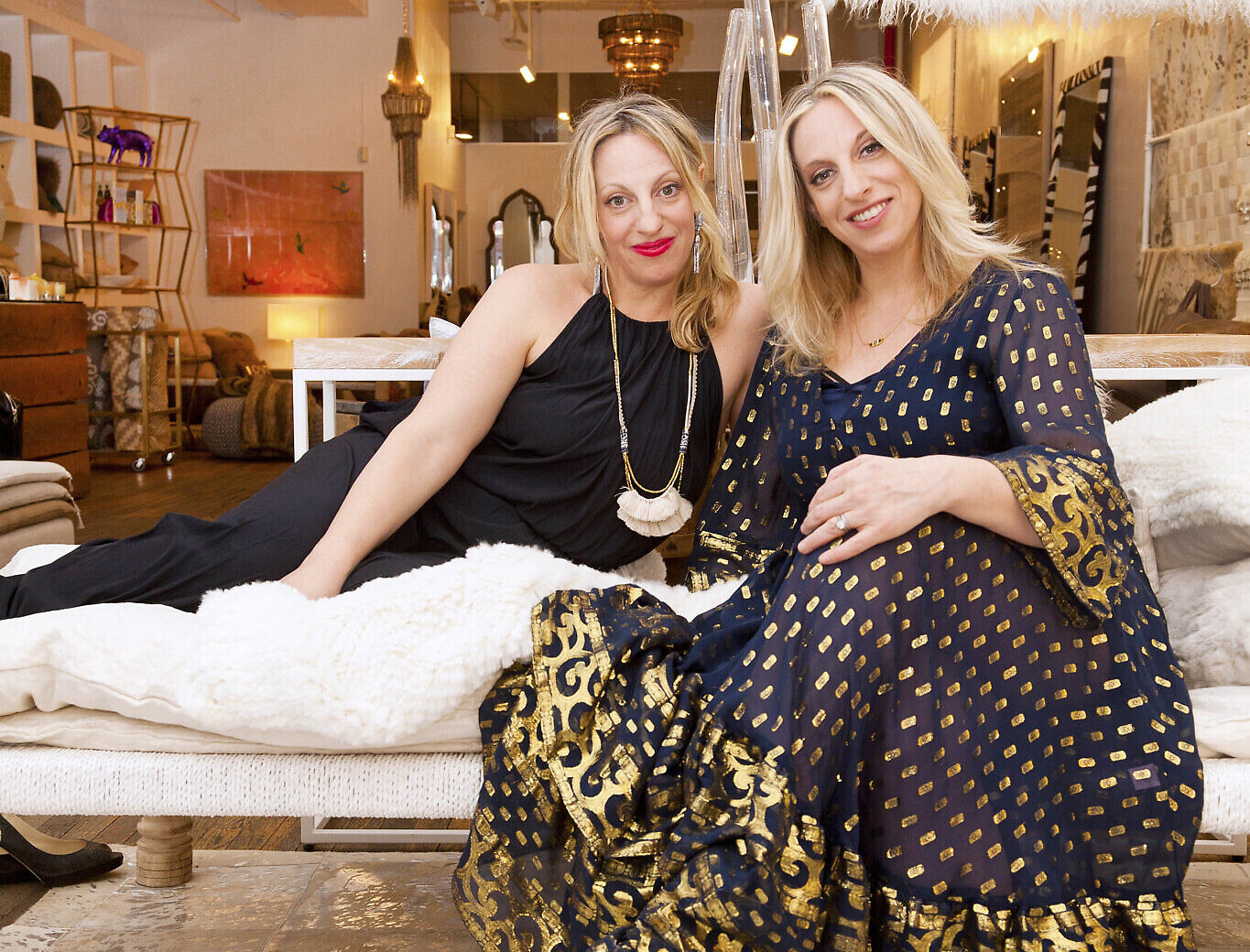
We’ve just done the whole “on Rosh Hashanah it is written and on Yom Kippur it is sealed” thing. Astrology makes a similar claim, that something is written in the stars and fixed before you arrive at it. The two phrases sound like they’re saying the same thing. However astrologer Ophira Edut suggests they aren’t.
On 12 December 1940, a ship called the Salvador, carrying Bulgarian Jews fleeing the Nazis, sank in the Sea of Marmara. One of her father’s older brothers drowned along with more than 200 other passengers. Her father wasn’t born yet; he arrived four years later, on 12 December 1944, the exact date of the wreck that had killed his brother.
Ophira doesn’t tell this story as a metaphor. She tells it as a fact that sits at the exact intersection of the question she’s built a career answering: do dates mean something, or are they only ever what we decide to make of them?
Ophira, who with her identical twin Tali makes up the AstroTwins, has written astrology columns for Elle since 2009 and published national bestsellers.
Born in Detroit in 1972 to a father freshly arrived from Israel and a mother who would later become a rabbi, she grew up, she says, with “a Jewish operating system, questioning everything, seeking curiosity, but the front end is astrological.”


Astrology, like the study of the Bible itself, was for most of its history a serious scholarly discipline, argued over by rabbis rather than dismissed by them. The instinct, when a Jewish astrologer comes up, is to reach for the line ein mazal l’Yisrael, there is no constellation for Israel, supposedly Judaism’s blanket rejection of the whole enterprise.
But the page it comes from, Shabbat 156a, is an argument, not a verdict. Rabbi Yohanan says there is no mazal for Israel. Rabbi Hanina ben Hama, on the same page, says the opposite: the stars make one wise, the stars make one rich, there are stars for Israel. Centuries later, the Ritva reread the line as meaning Jews could override a bad chart through good deeds, not that the stars had no pull on them at all.
Maimonides, characteristically, just rejected the whole premise.
Ophira’s own mother, Rabbi Dorit Edut, reads it differently again: not a rejection of astrology, but of the idea that one sign could speak for an entire people.
“There is not one sign for all the Jewish people,” she says, “and we are not to forget our relationship to the Creator and what is expected of us. Two thousand years of rabbis arguing, and no ruling.”
Nothing unusual in that, says Rabbi Dorit: Jewish tradition deliberately preserves minority opinions, on the belief that a rejected view might one day become the accepted one.
Ophira hears the same unresolved question she’s spent her career sitting inside. She rejects outright the idea that a chart is an excuse.
“I strongly believe in free will, and I think my approach to astrology actually increases your free will and choice, because it increases your consciousness,” she says. A client, in her account, can always act their way out of a difficult chart. It’s the same fault line the Ritva was navigating: mazal is real, but repentance and good deeds can override it.
This year, Rosh Hashanah fell at sundown on 11 September, and the timing was not incidental to how Ophira thinks about it. “Rosh Hashanah falls at a new moon, just like Rosh Hodesh,” she says. “It’s the new moon that’s also the new year, and always either in Virgo or Libra.”
That range isn’t coincidental. The rabbinic month-sign system shares its cardinal points with Western astrology, Nisan and Aries at the spring equinox, Tishrei and Libra at the autumn equinox, though the Hebrew calendar’s lunar months drift against that fixed solar frame year to year, even as the underlying logic, judgement in the seventh month, weighed on the scales, never moves at all.
For 5787, her reading is about contraction giving way to connection. “It’s going to be a year when people need to come together and share their resources, find community across the boundaries they’ve created, and prioritise personal connections over accumulating more stuff and seeking separateness,” she says.
The tool she’s using to track that shift is one Kabbalists also use, the north node, known in that tradition as the Tikkun.
She draws the line to teshuvah (returning to God) herself, unprompted. “I absolutely align with the concept of teshuvah and the idea that planetary moments give us opportunities to use our free will to shift the outcome of our lives,” she says.
It’s the same argument the Ritva was having a thousand years ago, translated: the year is written, not sealed.
Asked whether she limits that idea to one day in the calendar, Ophira says she personally doesn’t. “Every day and every moment is a ‘new year’ in the sense that there’s a chance to do better, be more virtuous and righteous, in every second of the day.”
Ophira Edut and her twin sister Tali are the authors of over 20 books. Readings and astrological tools are available at astrostyle.com.

Keep community journalism free.
Jewish News is free for everyone. No paywall. No barriers. Just trusted journalism for anyone who wants to stay connected to Jewish life in Britain.
If you value that, please support us.
From as little as £5 a month, you can help keep our journalism free and accessible to all.
Every day, we report on the issues that matter to our community. We celebrate achievements, support charities, challenge antisemitism and ensure Jewish voices are heard more widely.
From as little as £5 a month, you can help us continue to:
- Report on the stories shaping Jewish life in the UK and beyond
- Bring our community together through shared stories, events and campaigns
- Celebrate the people, culture and moments that define our community
- Support organisations doing vital work across Jewish Britain
You can make a one-off donation or become a regular supporter. Every contribution helps keep our journalism free, independent and accessible to all.
If everyone who values Jewish News gave a small amount, it would make a real difference to our future.