Prefer Jewish News on Google
BBC apologises to 7 October survivors after Jeremy Bowen reported from family’s destroyed home without consent
EXCLUSIVE: Corporation admits “mistake” and agrees to pay £28,000 compensation after filming inside house days after Hamas terror attack
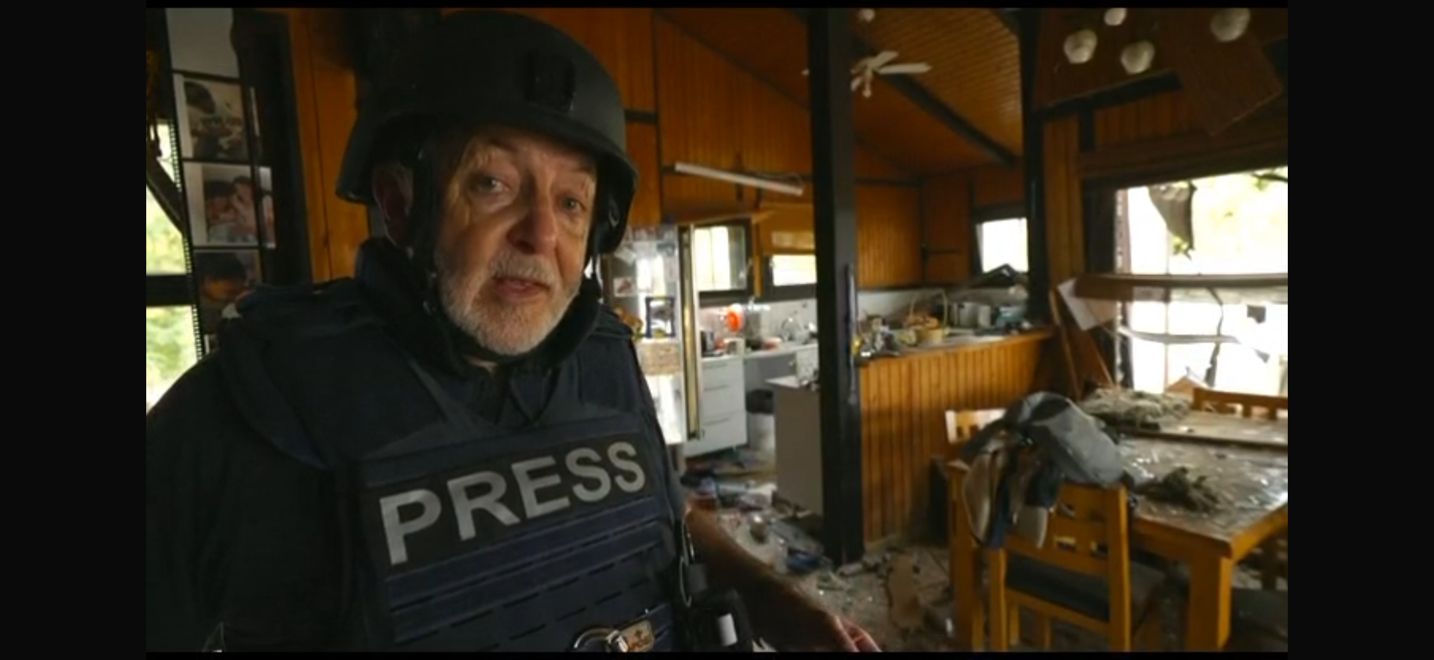
The BBC has apologised and compensated an Israeli family who survived the 7 October attack after a film crew entered their destroyed home without consent.
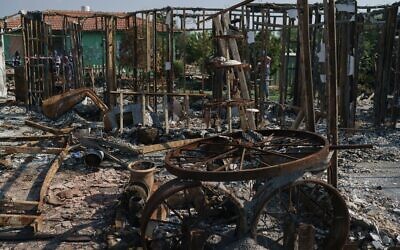
Days after the attack, a BBC crew led by senior correspondent Jeremy Bowen, arrived in Netiv HaAsara, a small village on the Gaza border where 17 residents were murdered. During the visit, the crew entered the home of the Horenstein family without their knowledge and filmed inside the property, including personal photographs of their children – at a time when many of the family’s friends and relatives still did not know whether they had survived.
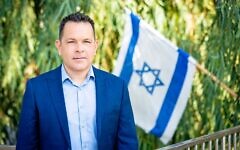
“Not only did terrorists break into our home and try to murder us, but then the BBC crew entered again, this time with a camera as a weapon, without permission or consent,” Tzeela Horenstein told Jewish News. “It was another intrusion into our lives. We felt that everything that was still under our control had been taken from us.”
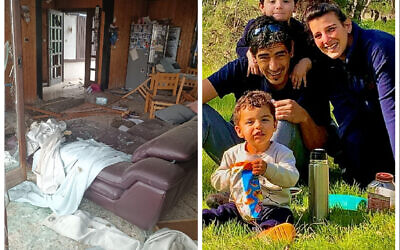
Horenstein described the horrors of the attack in detail. “On the morning of 7 October at 6:29, Hamas terrorists infiltrated Netiv HaAsara. After murdering our neighbours, they came for us. My husband, Simon, was outside the house at the time. A grenade was thrown at him, but he managed to escape and reach the shelter.
“For hours, the terrorists tried to capture us. We were physically struggling over the door handle while our two young children were hiding under the bed. They eventually attached an explosive device to the door and detonated it. The door twisted and jammed. That is what saved us.

“Our house became a battleground. The terrorists entered and exited it repeatedly and exchanged fire with the village’s emergency squad from inside. We survived only by making immediate decisions under extreme pressure. The house was destroyed and declared uninhabitable. We have no home. Only the shelter remained standing.”
Horenstein said the family eventually escaped by crawling out through a window and running barefoot to their car, which was itself hit by gunfire. For days afterward, they wandered across the country, unable to function.
“I discovered the BBC report by chance,” she said. “We were already heartbroken, and this was yet another intrusion into our lives. Even in times of war there are limits, and when a media outlet crosses them, it must be held responsible.”
Ori Eldar, the lawyer who represented the family, said the case should not be separated from broader criticism of the BBC in Israel. “It is impossible to ignore the resignation of senior BBC officials close to the verdict, or the widespread feeling in Israel that the network is biased and does not reflect the full picture,” he said. “The BBC is not just a media outlet – it is a British public institution. Its level of responsibility, in my opinion, is higher than that of any other media organisation.”
Following a settlement between the parties, Joaquin Floto, Middle East bureau chief for BBC News, issued a written apology to the family in Hebrew. It stated: “We wish to express our understanding of the distress you had following the filming of your home after the 7 October attack. We are of course sorry for this,” the statement read. “Our entry into your home resulted from a good-faith mistake, as we believed consent had been given… The BBC had no intention to harm you or cause you discomfort.”
As part of the settlement, the family also received compensation of NIS 120,000 (£28,000).
According to Eldar, the Horenstein family’s primary aim was recognition and an apology. He said the case might not have reached court had the BBC responded differently to their initial complaint and apologised.
He described the outcome as a legal precedent in Israel and expressed hope it would encourage others to seek justice. He noted that “the nature of legal proceedings, in which what you’ve been through is questioned, does not always suit for traumatised people.” Eldar added that he is aware of additional cases in which survivors had their privacy violated by international media teams, but they chose not to pursue legal action.
“The media does very important work, but it must also show sensitivity, especially in areas stricken by trauma. Freedom of the press is not unlimited.”
A BBC spokesperson said: “While we do not generally comment on specific legal issues, we are pleased to have reached an agreement in this case.”

Keep community journalism free.
Jewish News is free for everyone. No paywall. No barriers. Just trusted journalism for anyone who wants to stay connected to Jewish life in Britain.
If you value that, please support us.
From as little as £5 a month, you can help keep our journalism free and accessible to all.
Every day, we report on the issues that matter to our community. We celebrate achievements, support charities, challenge antisemitism and ensure Jewish voices are heard more widely.
From as little as £5 a month, you can help us continue to:
- Report on the stories shaping Jewish life in the UK and beyond
- Bring our community together through shared stories, events and campaigns
- Celebrate the people, culture and moments that define our community
- Support organisations doing vital work across Jewish Britain
You can make a one-off donation or become a regular supporter. Every contribution helps keep our journalism free, independent and accessible to all.
If everyone who values Jewish News gave a small amount, it would make a real difference to our future.