Prefer Jewish News on Google
Before the celebration of Yom Ha’atzmaut, the cost of Yom HaZikaron
The link between sacrifice and statehood is not historical, it is immediate, and it remains widely misunderstood
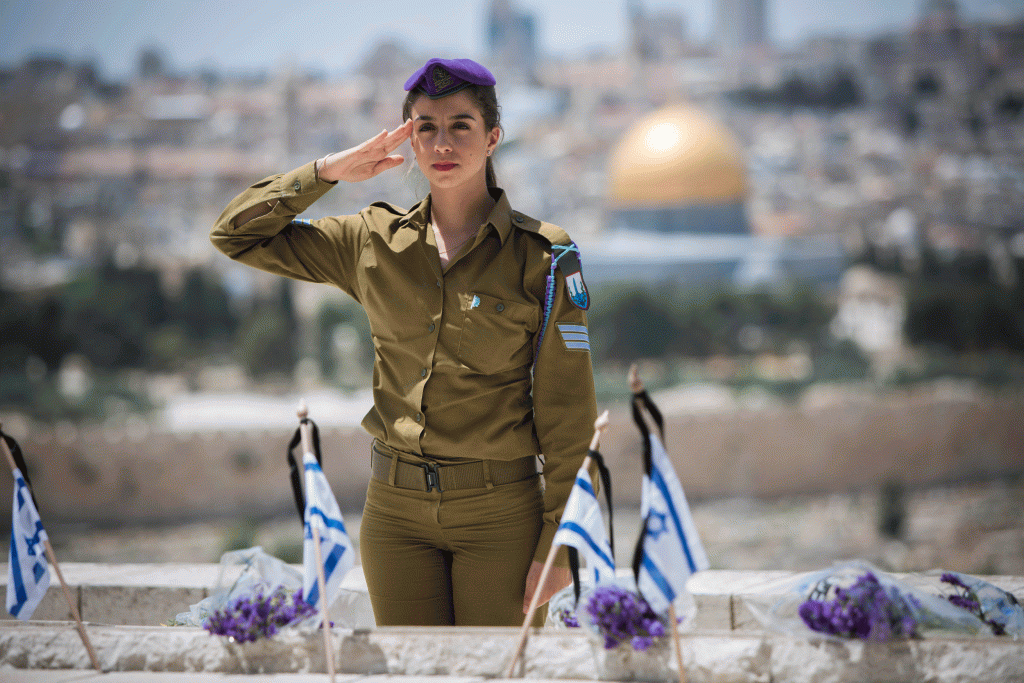
In 1963, the Knesset made a decision that, at first glance, feels almost counterintuitive. Why would a nation choose to place its day of mourning, Yom HaZikaron, immediately before its day of celebration, Yom Ha’atzmaut?
Why insist that grief sits at the very threshold of joy?
Surely, in a calendar already heavy with remembrance, Tisha B’Av, Yom HaShoah, the fast days that punctuate Jewish history, there were other places to honour loss without casting a shadow over independence itself.
But that, precisely, is the point.
Those other days remember tragedy in isolation. They mourn what was lost, without direct reference to what followed.
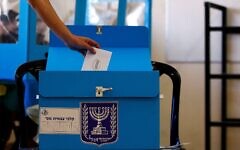
Yom HaZikaron is different. It is not a memory of loss alone, it is a memory of cost. It is the bridge between sacrifice and sovereignty.
In Israel, remembrance is not abstract. Military service is mandatory. Almost every family is tied, directly or indirectly, to those who stand guard over the nation. The names read on Yom HaZikaron are not distant figures, they are classmates, siblings, parents, friends.
But they are not only soldiers. Yom HaZikaron honours members of the IDF, yes, but also police officers, border guards, first responders, and civilians murdered in acts of terror and that word, terror, must be understood for what it has meant in Israel.
This is not a single moment, not a single atrocity. It is decades of buses blown apart during the Intifadas, restaurants turned into crime scenes, university campuses targeted, stabbings in the street, vehicles driven deliberately into bus stops. The purposeful, systematic murder of men, women, children, the elderly, killed not for what they did, but for who they were.
The events of 7 October, murder, torture, rape, and the kidnapping of over 1,400 innocent people, may have shocked the world, but they were not an anomaly, they are part of a pattern.
More than 5,500 Jews murdered, over 20,000 injured, across more than 1,600 separate terror attacks since the formation of the State in 1948. All for one reason, because they were Jewish.
To separate that from independence would be to misunderstand independence entirely. Because Israel does not celebrate freedom as an abstract principle. It celebrates a freedom that was fought for, paid for and defended, relentlessly.
That is why the transition between these two days is so deliberately jarring.
On the evening of Yom HaZikaron, the country stands still. Sirens sound, cars stop in the middle of highways, an entire nation freezes in collective memory. Then, almost impossibly, the shift begins.
Flags are raised, music returns, streets fill, barbecues are lit. The same people who stood in silence hours earlier now dance.
It is not a contradiction, it is a statement. That the joy of independence is not diminished by the memory of sacrifice, but defined by it.
There is a lesson here the world would do well to understand.
For the past thirty months and, in truth, for far longer, Israel has faced not only relentless physical attacks from actors like Hamas, Hezbollah, and the Houthis, backed by the regime in Iran, but also something more insidious.
A global campaign of distortion, dressed up as activism.
Marches in major cities where chants of “globalise the intifada” ring out without consequence. Slogans like “from the river to the sea” and “free, free Palestine” repeated by celebrities, influencers, and political movements, sometimes knowingly, sometimes blindly, but always with the same effect.
Because these are not neutral phrases, they are not calls for coexistence. They are the language, the messaging, the ideological framework of those who have spent decades carrying out the very acts of terror we claim to condemn.
To repeat them is to sanitise that history, to amplify them is to legitimise it and yet, the question that still goes largely unasked, at least honestly, is this:
What did they hope to achieve? What was the objective of 7 October? What has been the objective, repeatedly, across decades of rejection?
Because if the goal was a Palestinian state, history offers an uncomfortable truth.
There were opportunities, many of them. In 1947, with the UN Partition Plan. In 1948, by choosing coexistence over invasion. In 1967, following the Six Day War. At Camp David, at Taba, across countless proposals, papers, and negotiations.
Again and again, the possibility of statehood was placed on the table and again and again, it was rejected. Not because it was insufficient, but because it required accepting something more fundamental, the existence of Israel itself.
“From the river to the sea” is not a negotiating position, it is a negation. And when the part you are unwilling to accept matters more than the part you could have, the tragic consequence is this: in pursuing everything, you lose everything.
That is the tragedy.
Not only for Israelis, but for Palestinians themselves.
Yet, despite everything, Israel endures. Not by accident, but by design, by resilience, by sacrifice.
This is a country that has done more than reclaim land, it has rebuilt a people. It has gathered the scattered, revived an ancient language, absorbed exiles, from the Soviet Union, from Ethiopia, from across the world and forged them into a single, functioning society.
It has built one of the world’s most dynamic economies. It has sustained a democracy, imperfect, contested, but real, in a region where such a thing remains the exception, not the rule.
It has taken a people shattered by the Holocaust and enabled them to stand, never again to kneel. Proud, sovereign, unapologetic.
Which brings us back to that decision in 1963.
To place Yom HaZikaron before Yom Ha’atzmaut was not to dampen celebration, it was to anchor it. To ensure that independence is never taken for granted. To remind each generation that freedom is not inherited without responsibility, it is maintained through it.
Because there is another path and this is not just a message to Israel’s enemies, it is a message to the world that continues to indulge them.
A path that was offered before and could, in time, be offered again. A path that does not require the impossible ambition of erasing Israel, but the far more achievable one of building something alongside it.
A future where, instead of encouraging a war that cannot be won, the world demands the creation of something that can endure. Where there could be another independence day, another story of nationhood, another people choosing to stand not in opposition to history, but as part of it.
The tragedy is not that this future is out of reach. The tragedy is that it has been refused and too often, excused.
So as Israel moves from Yom HaZikaron to Yom Ha’atzmaut, from silence to song, from grief to celebration, it does so with absolute clarity.
Freedom is not free, it never was, it never will be. But once it is earned, truly earned, defended, and understood, it is impossible to take away.
For 78 years, the tactics deployed against Israel, terror, rejection, the refusal to accept reality, have led only to death and destruction on all sides. They have failed and they will continue to fail for the next 78.
So here is a simple suggestion: Accept that history has already shown you where this ends, then try something new.
Am Yisroel Chai

Keep community journalism free.
Jewish News is free for everyone. No paywall. No barriers. Just trusted journalism for anyone who wants to stay connected to Jewish life in Britain.
If you value that, please support us.
From as little as £5 a month, you can help keep our journalism free and accessible to all.
Every day, we report on the issues that matter to our community. We celebrate achievements, support charities, challenge antisemitism and ensure Jewish voices are heard more widely.
From as little as £5 a month, you can help us continue to:
- Report on the stories shaping Jewish life in the UK and beyond
- Bring our community together through shared stories, events and campaigns
- Celebrate the people, culture and moments that define our community
- Support organisations doing vital work across Jewish Britain
You can make a one-off donation or become a regular supporter. Every contribution helps keep our journalism free, independent and accessible to all.
If everyone who values Jewish News gave a small amount, it would make a real difference to our future.