Prefer Jewish News on Google
Is this the best almond macaroon recipe ever? (I think so)
Sophia Baruch has published her Iraqi mother's recipes in a stunning new cookbook to raise money for UJIA
Five days in, we are all perchance a little tired of matzah and those almond macaroons we baked with love and anticipation last week are slowly drying up (if indeed you have any left).
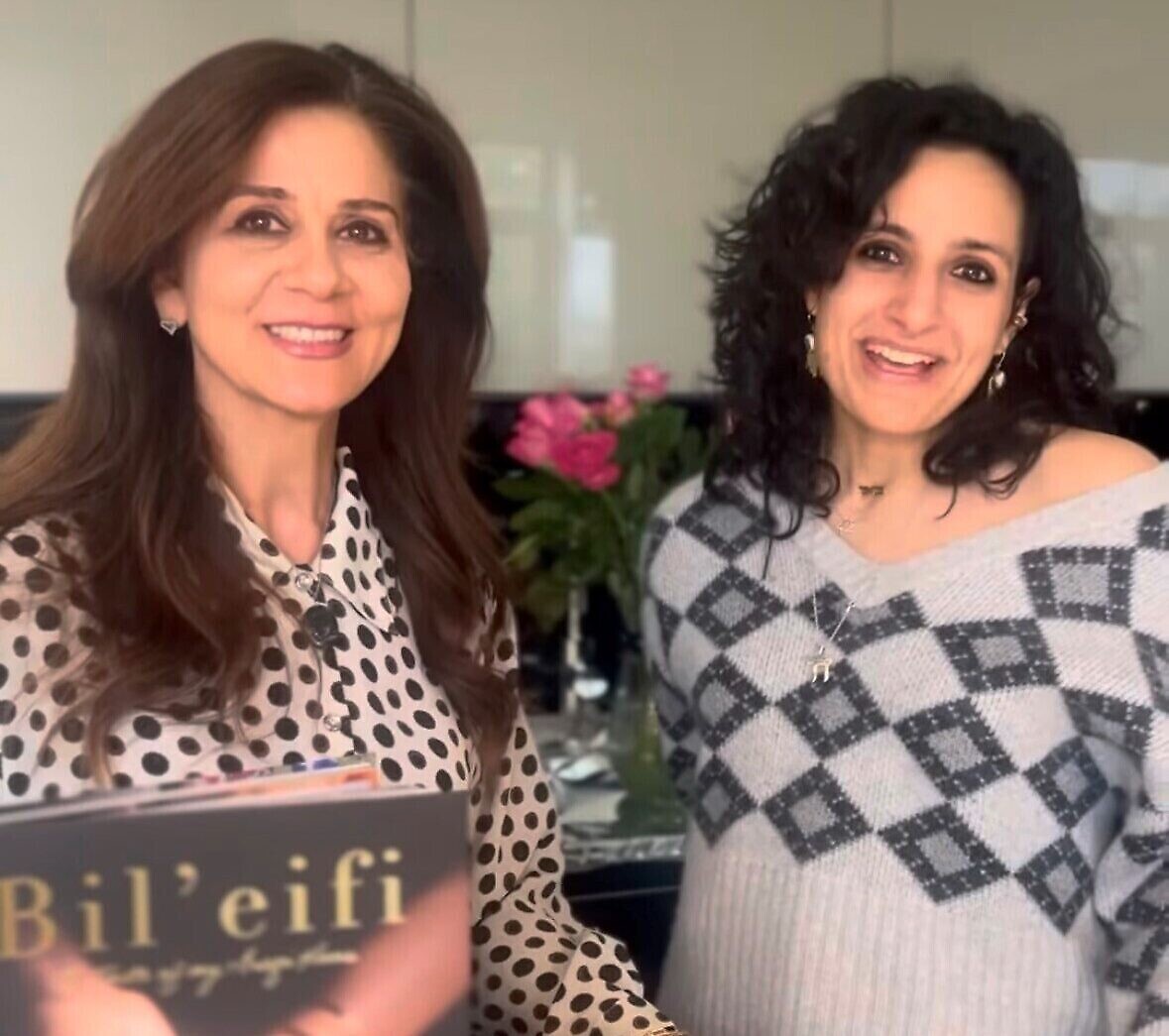
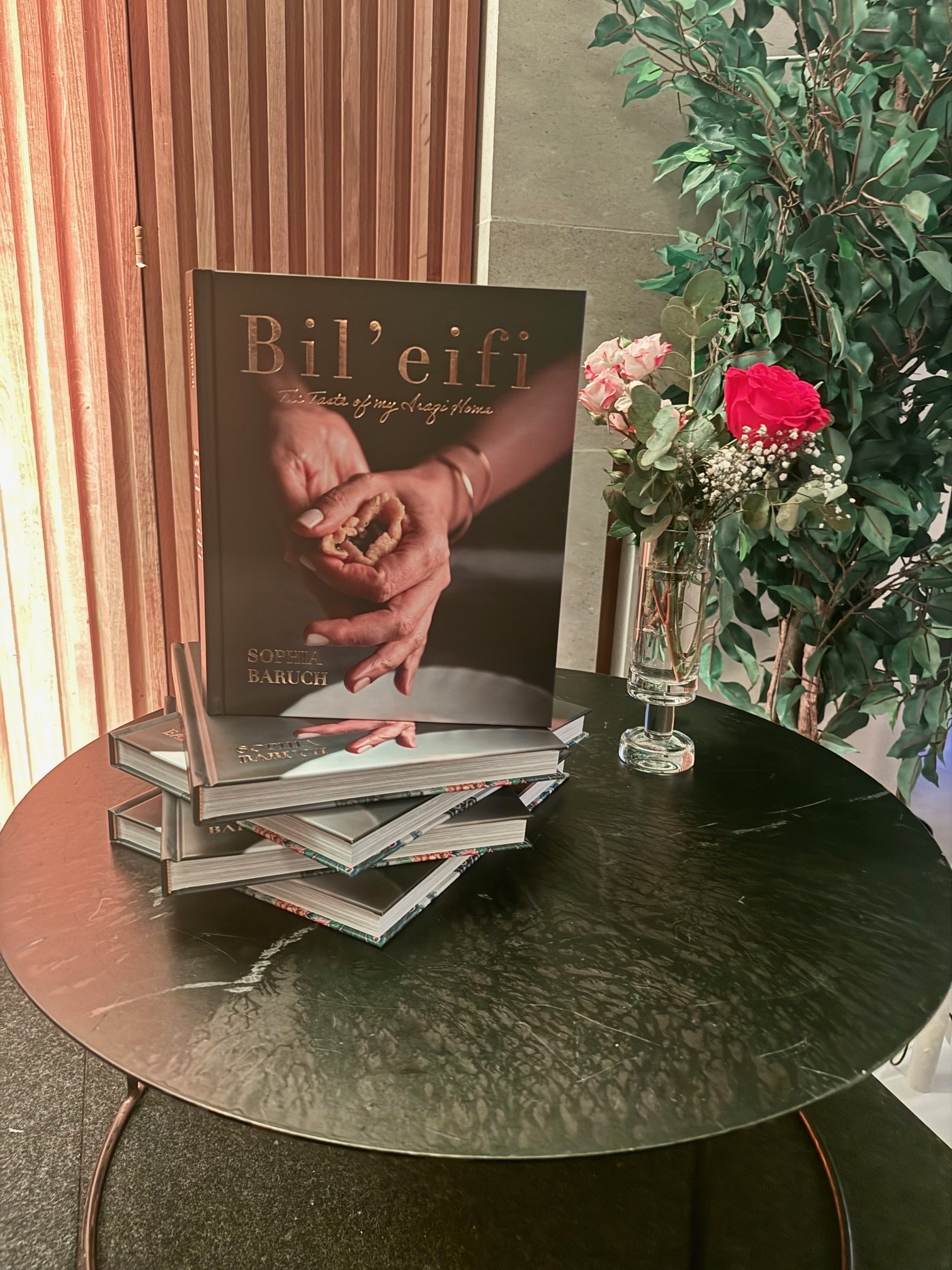
If you’ve time on your hands I highly recommend baking another batch, for this year I discovered a new – and most definitely the best I’ve ever tried – recipe (below) courtesy of Sophia Baruch, from her stunning new cookbook Bil’eifi (meaning in good health), which celebrates her mother’s Iraqi legacy and Jewish heritage through family recipes.
This special book – a symbol of history, resilience, and family tradition – will contribute to UJIA’s Regrow Israel initiative, which focuses on agricultural rehabilitation, and was launched with an event at South Hampstead Shul last month.
Sophia was born in Iraq and spent her childhood there before moving to Holland, then to London. When her mum, Mama Farida, came from Holland to visit, together they would host many get togethers, dinners and charity events. “Each time, she would wake up very early in the morning cooking up a storm in the kitchen for us and our guests,” says Sophia. “Several times our house alarm went off early in the morning. We would all wake up in a panic, thinking – God forbid – we had been broken into. We would rush downstairs to confront the burglar, only to find my mother in the kitchen preparing mahbub or sambusach and she had just forgotten to turn the alarm off.”
One day, Sophia’s husband said they should make a cookbook. “We all laughed and thought, who knows, maybe one day. I started writing down some of her recipes, but didn’t take it seriously, the same way any daughter would take notes from her mum.”

 The recipes were primarily from Farida’s time in Iraq, but also had influences from her time in Holland. “In Holland, we didn’t live with the Jewish community, and so she also learned from the different people around her. The recipes in this book are a reflection of her life, both from her time in Iraq, and after she left.”
When her mother passed away, Sophia thought that perhaps her children would like to know these recipes in the future, and it would be great for them to have something from their grandma. “I found my notes and started calling my sister and my aunties, jogging their memories to collect as many recipes as we could remember. The thought of writing a cookbook using these notes was lurking in my mind.”
A chance meeting with a friend’s daughter, Eliora Shahrabani , who had just finished culinary school and worked briefly in publishing, led to Sophia asking if she would be interested in making a cookbook with her. The result is a large, beautiful book with hundreds of easy-to-follow recipes bursting with flavour and illustrated with stunning photography. The type you want to display on your coffee table but also want to use.
‘I’d graduated from culinary school and quickly realised that I hated working in restaurants,” says Eliora. “When Sophia told me about her idea for an Iraqi cookbook project, I thought it sounded wonderful. I was given the opportunity to delve into my own background in a manner that I don’t believe I would have had it not been for our time going back and forth over the recipes, adjusting flavours, making comparisons between Sophia’s recipes and the ones I remembered from my own childhood.
“It is my belief that food is never just food. Food is never ‘just’ anything. Recipes like the ones found in this book contain our history, our values, our culture. This is the taste of the past brought to the present so that my generation and those after me can enjoy them. It as a diaspora.
“Our food links us to our history and to each other. We may not have made challah the same way in every country, but we all made it with the same prayers to usher in Shabbat. It proves our peoplehood over generations. To quote Anthony Bourdain, food is everything we are. It’s an extension of nationalist feeling, ethnic feeling, your personal history, your province, your region, your tribe, your grandma.”
So what makes Mama Farida’s haji bada (almond macaroons) so good? They are the perfect combination of crusty exterior and soft (but not too soft) and chewy interior with a hint of lemon cutting through the sweetness. I made really small ones and got about 25 out of the mixture. I flattened them slightly with a fork before baking. Recipe below.
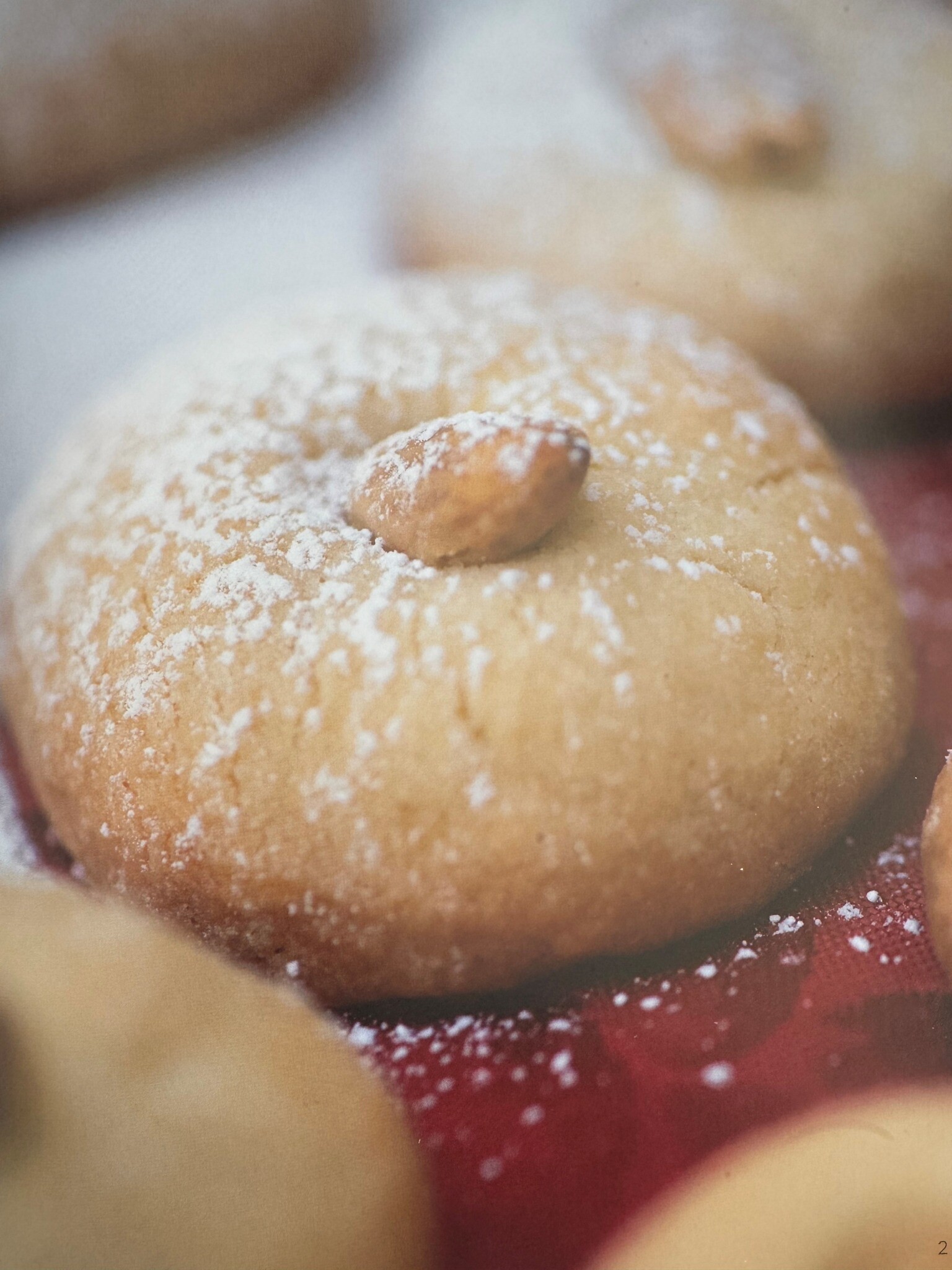
Haji bada (almond biscuits)
A naturally flourless biscuit, haji bada are very traditional for Pesach; they are light, sweet and soft. For a greater depth of flavour, the nut flour may be lightly toasted before use. Typically these are meant to be tiny round cookies, but Mama Farida always preferred a slightly larger size.
360g caster sugar
250 almond flour (substitue walnut or hazelnut, if desired)
10-16 blanched almonds (one per haji bada)
3 egg whites
2 tsp lemon juice
1 tsp vanilla extract (optional)
rosewater (optional – the amount depends on the strength – start slow if using)
icing sugar
In a bowl, mix the sugar with the almond flour, and add the egg whites individually, whisking to ensure each one is incorporated well.
Place the mixture in a pan on a very low heat and stir constantly while streaming in the lemon juice, mix until the sugar has completely dissolved.
Take off the heat, transfer to another bowl and keep stirring until cooled.
Pre-heat the oven to 150C, roll the mixture into balls, place a blanched almond in the middle of each, put the biscuits on a tray prepped with baking paper and bake for approximately 12-15 minutes depending on the size of the biscuit.
Dust icing sugar on top to serve.
Bil’eifi by Sophia Baruch is available on Amazon, £37

Keep community journalism free.
Jewish News is free for everyone. No paywall. No barriers. Just trusted journalism for anyone who wants to stay connected to Jewish life in Britain.
If you value that, please support us.
From as little as £5 a month, you can help keep our journalism free and accessible to all.
Every day, we report on the issues that matter to our community. We celebrate achievements, support charities, challenge antisemitism and ensure Jewish voices are heard more widely.
From as little as £5 a month, you can help us continue to:
- Report on the stories shaping Jewish life in the UK and beyond
- Bring our community together through shared stories, events and campaigns
- Celebrate the people, culture and moments that define our community
- Support organisations doing vital work across Jewish Britain
You can make a one-off donation or become a regular supporter. Every contribution helps keep our journalism free, independent and accessible to all.
If everyone who values Jewish News gave a small amount, it would make a real difference to our future.