Prefer Jewish News on Google
Buried for seventy years, archaeologists uncover bimah of Vilnius Great Synagogue
Mosaic flooring, plaque engraved with the Ten Commandments and parts of the main prayer hall reveal life of pre-war Lithuanian Jewish community
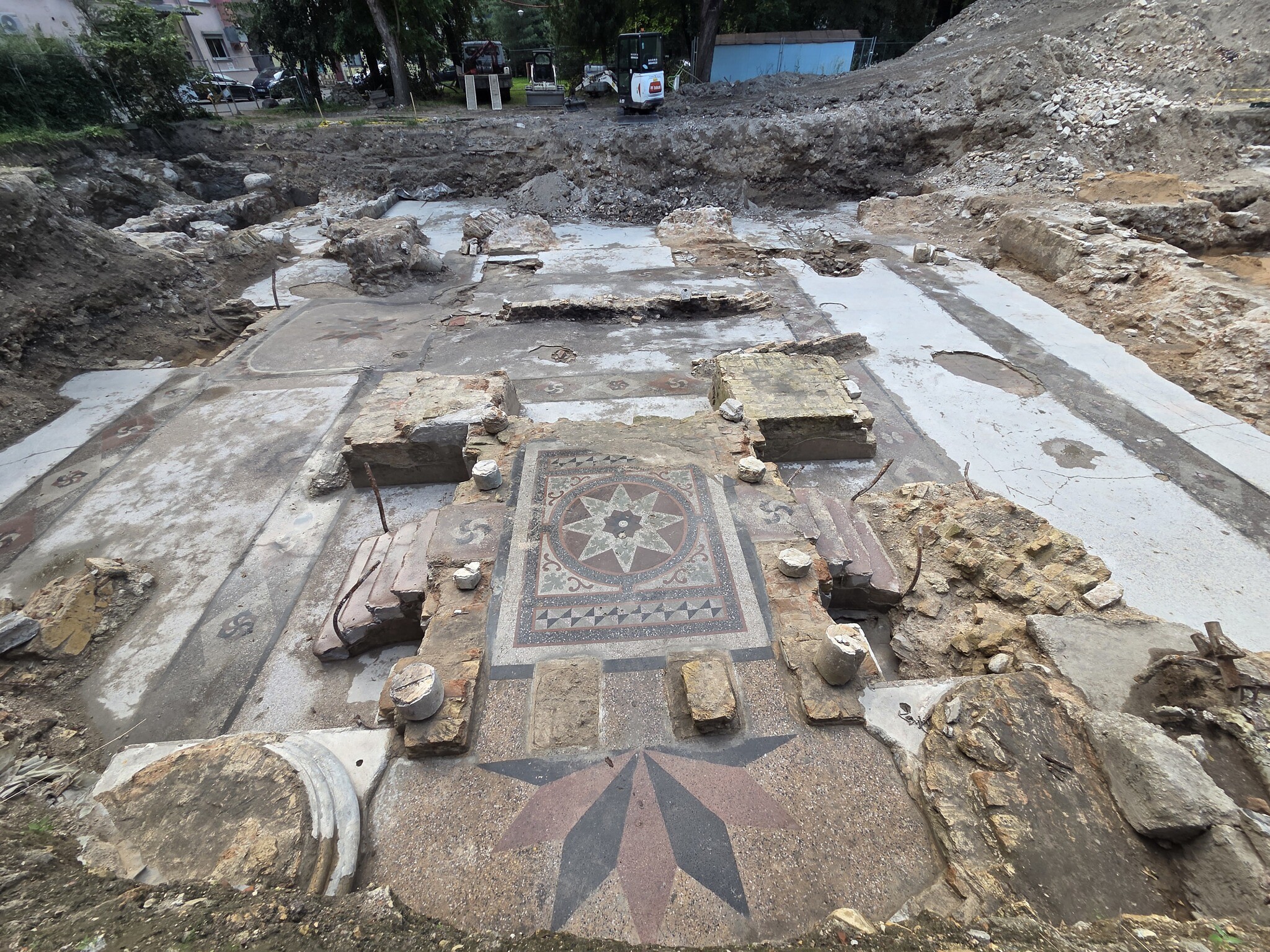
The bimah of the historic Great Synagogue of Vilna in Lithuania has been revealed after a month of painstaking archaeological excavations in Vilnius.
The synagogue served as the centre of the city’s pre-war 60,000-strong Jewish community before it was ransacked by the Nazis in 1941 and then destroyed under the Soviet regime in 1957, which later built a school on top of the ruins.
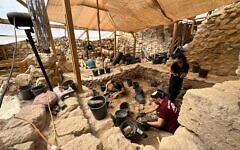
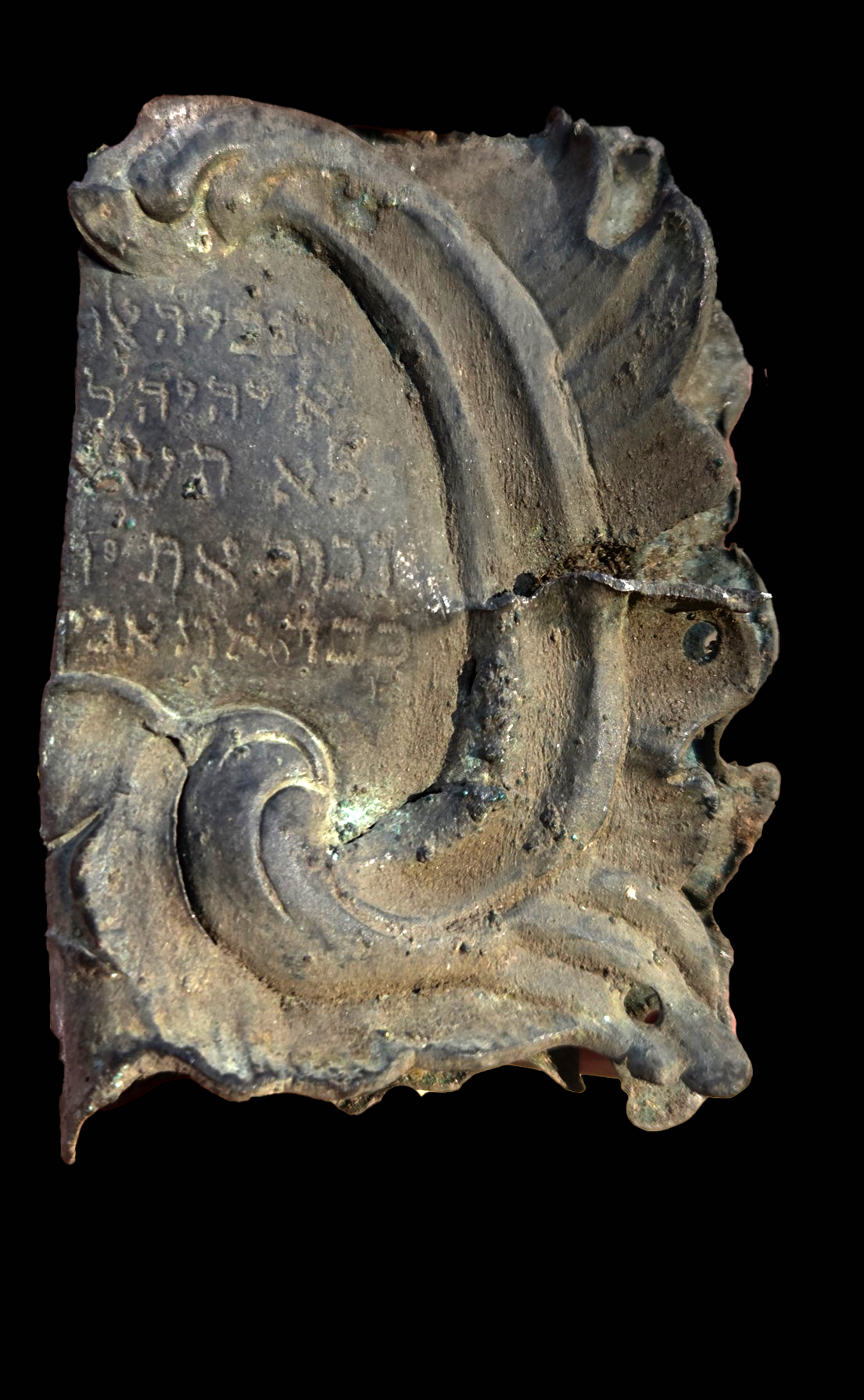
Around ten years ago the school was closed, with the site then demolished last year, making an excavation of the original site possible for the first time. The dig revealed sections of the main prayer hall and the women’s gallery, colourful floors, seating plaques bearing the names of worshippers, and a plaque engraved with the Ten Commandments.
Research and excavations at the synagogue and in the community compound that developed around it, known as the Shulhoyf, have been underway since 2011.
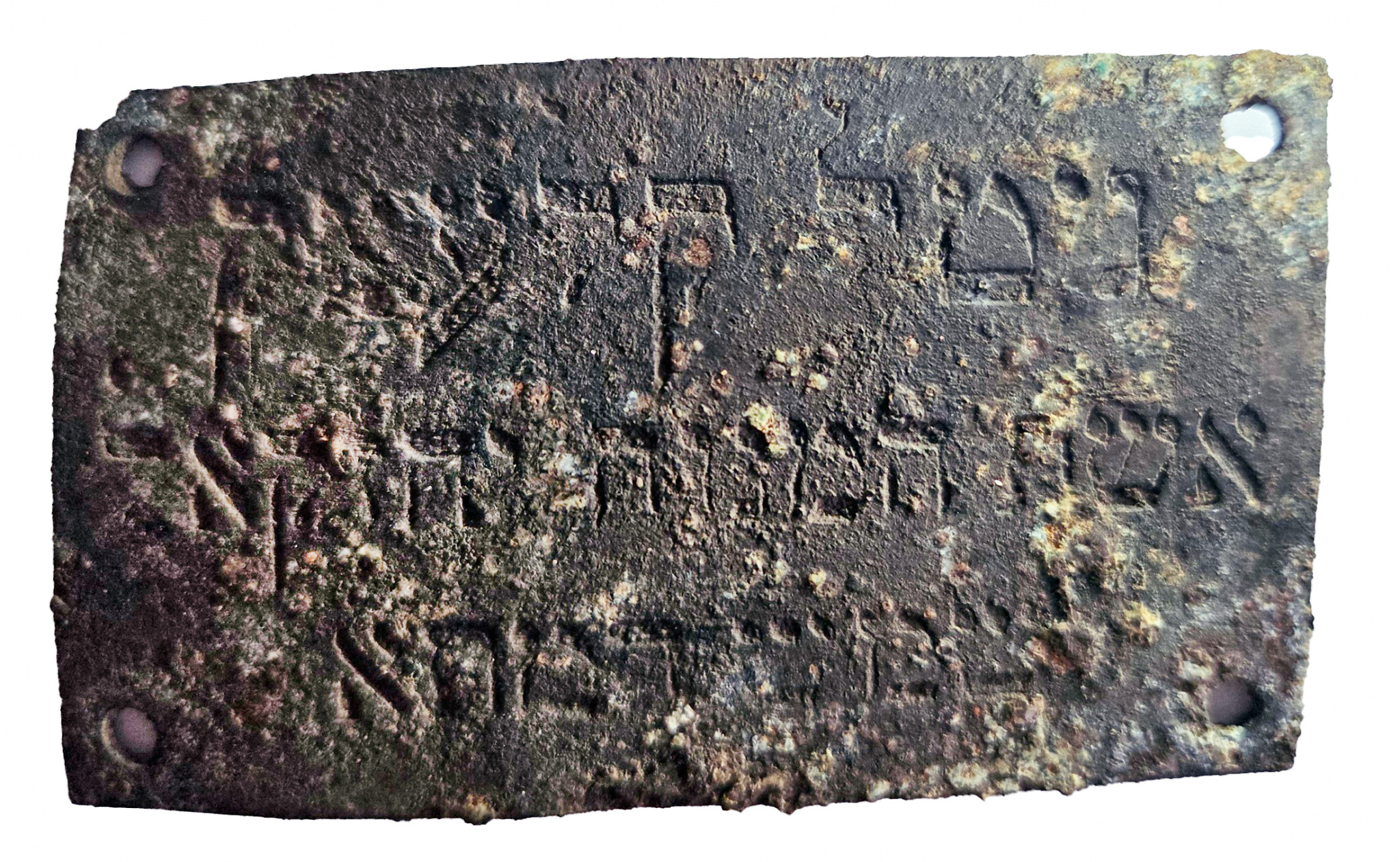
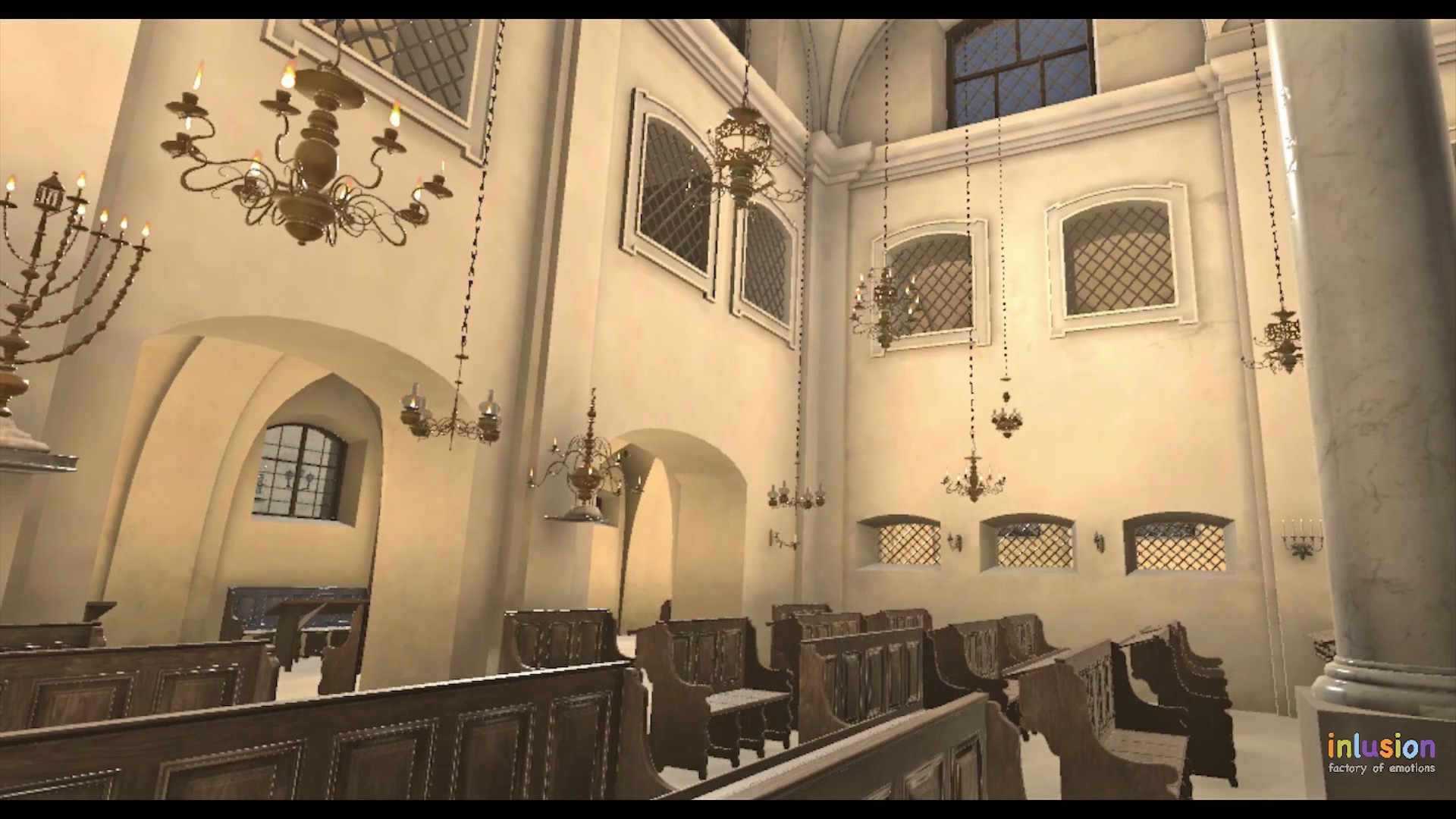
Excavation directors, Dr. Jon Seligman of the Israel Antiquities Authority and Justinas Račas of KPIP said: “The removal of the old school building that covered the historic synagogue enabled us, for the first time, to expose additional extensive and continuous sections at the heart of the building: the main prayer hall, paved with colourful terrazzo floors decorated with floral and geometric patterns”
The plaques bearing names “offer us a moving, almost personal encounter with the people who prayed here and with the community life that developed around the synagogue over the course of centuries.”
Speaking to Times of Israel, Seligman said: “This was the most important synagogue of Lithuanian Jewry for several centuries. It’s what represented them as a people and formed a part of their identity. At a time when Jews comprised 40 percent of the city, this was their cathedral.”
He added: “Jews first settled in Lithuania when they were invited by the Grand Duke in the 14th century, and they built a large wooden synagogue in Vilna, as the city was then known, that was destroyed in a riot at the end of the 16th century. Following that tragedy, the community received permission to build a large brick synagogue in Baroque style, which became the Great Synagogue.”
One of the prominent plaques marked a seat donated by “Gitel Klachek, wife of the late Yechezkel, Shamash d’Mata”, a Jewish community official, manager or “shamash” who served the city’s Jewish community.
The wealthy and influential Klachek family owned a number of businesses in the streets surrounding the Great Synagogue of Vilna.
“This is the place that half the population would have identified their city with,” Seligman told the Jewish Telegraphic Agency. “So this city at the moment is missing half its identity, and because it’s such a long time since it happened, they don’t even know they’re missing half their identity.”
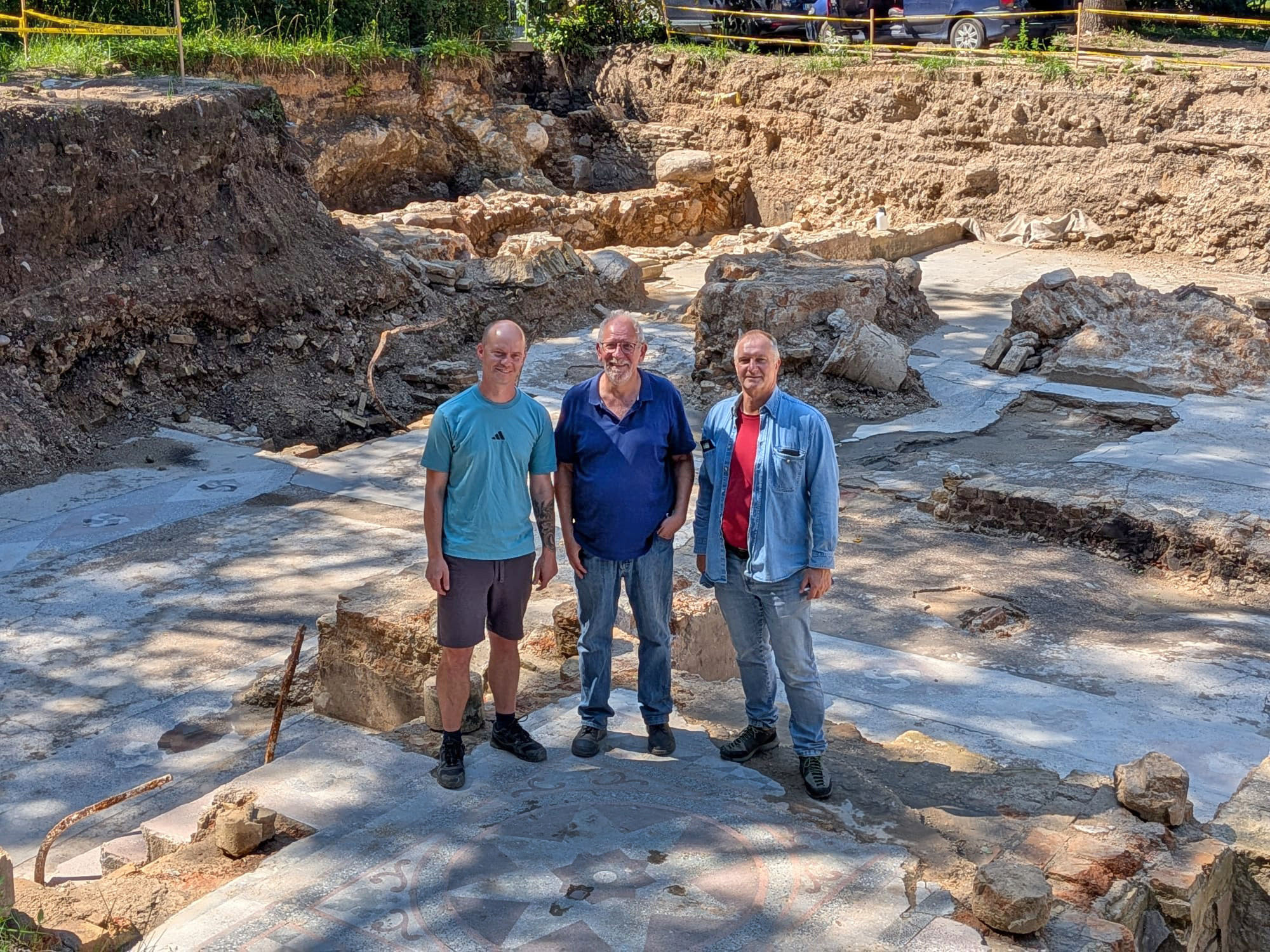
This is the sixth excavation season, conducted by the Israel Antiquities Authority and the Kultūros paveldo išsaugojimo pajėgos, (KPIP) or Cultural Heritage Preservation Forces, with funding from the Good Will Foundation and in cooperation with the Lithuanian Jewish (Litvak) community.
The archaeological teams want to preserve the remains of the synagogue and develop the site, both for the benefit of the estimated 3,000 Jews remaining in Lithuania and the wider public.

Keep community journalism free.
Jewish News is free for everyone. No paywall. No barriers. Just trusted journalism for anyone who wants to stay connected to Jewish life in Britain.
If you value that, please support us.
From as little as £5 a month, you can help keep our journalism free and accessible to all.
Every day, we report on the issues that matter to our community. We celebrate achievements, support charities, challenge antisemitism and ensure Jewish voices are heard more widely.
From as little as £5 a month, you can help us continue to:
- Report on the stories shaping Jewish life in the UK and beyond
- Bring our community together through shared stories, events and campaigns
- Celebrate the people, culture and moments that define our community
- Support organisations doing vital work across Jewish Britain
You can make a one-off donation or become a regular supporter. Every contribution helps keep our journalism free, independent and accessible to all.
If everyone who values Jewish News gave a small amount, it would make a real difference to our future.