Prefer Jewish News on Google

Cable Street taught us to confront hatred. René Cassin taught us to fight for justice
Ninety years on, two anniversaries remind us why Jewish safety and universal human rights must go hand in hand
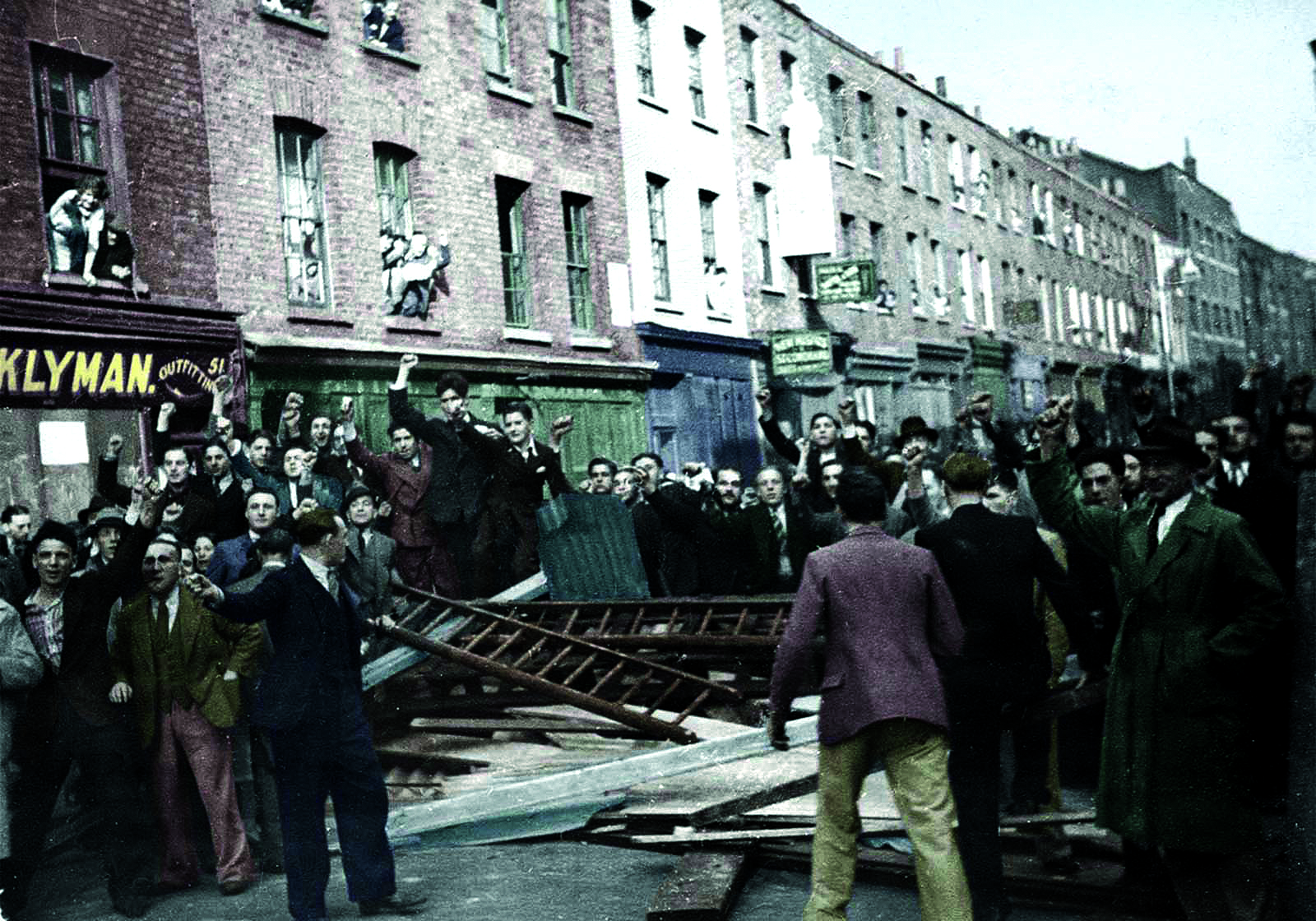
On 4 October 2026, Britain will mark the 90th anniversary of the Battle of Cable Street, when ordinary Londoners stood together to stop fascists marching through the East End and sent a powerful message: hatred would not go unchallenged. The following day marks the birth anniversary of Monsieur René Cassin, the French Jewish jurist who became one of the principal architects of the Universal Declaration of Human Rights, drafted in 1948 in response to the horrors of the Holocaust.
At first glance, these anniversaries may seem unrelated. If Cable Street represents the courage to confront injustice, Cassin’s legacy represents the determination to build something lasting in its place. Cable Street showed what happens when people refuse to be bystanders; René Cassin showed how those lessons can be turned into lasting protections for everyone.
Yet both respond to the same danger: the dehumanisation of minorities and the failure of societies to protect the dignity and rights of all. Cable Street reminds us that democracy is not self-sustaining. Cassin reminds us that courage in the moment must be matched by protections that endure.
Human rights begin when people refuse to be bystanders. In the Battle of Cable Street, people chose solidarity over fear, recognising that an attack on one community weakens the safety of everyone.
That lesson feels painfully current. Anti-Jewish hatred in the UK is not a relic of the 1930s. It adapts to new language and new platforms, appearing in conspiracy theories, abuse, intimidation and the casual normalisation of rhetoric that casts Jews as outsiders or threats. Following the sharp rise in antisemitic incidents reported since October 2023, many British Jews have felt a renewed sense of vulnerability and uncertainty. The challenge today is not identical to 1936, but the moral question is familiar: what do citizens do when hatred re-enters public life?


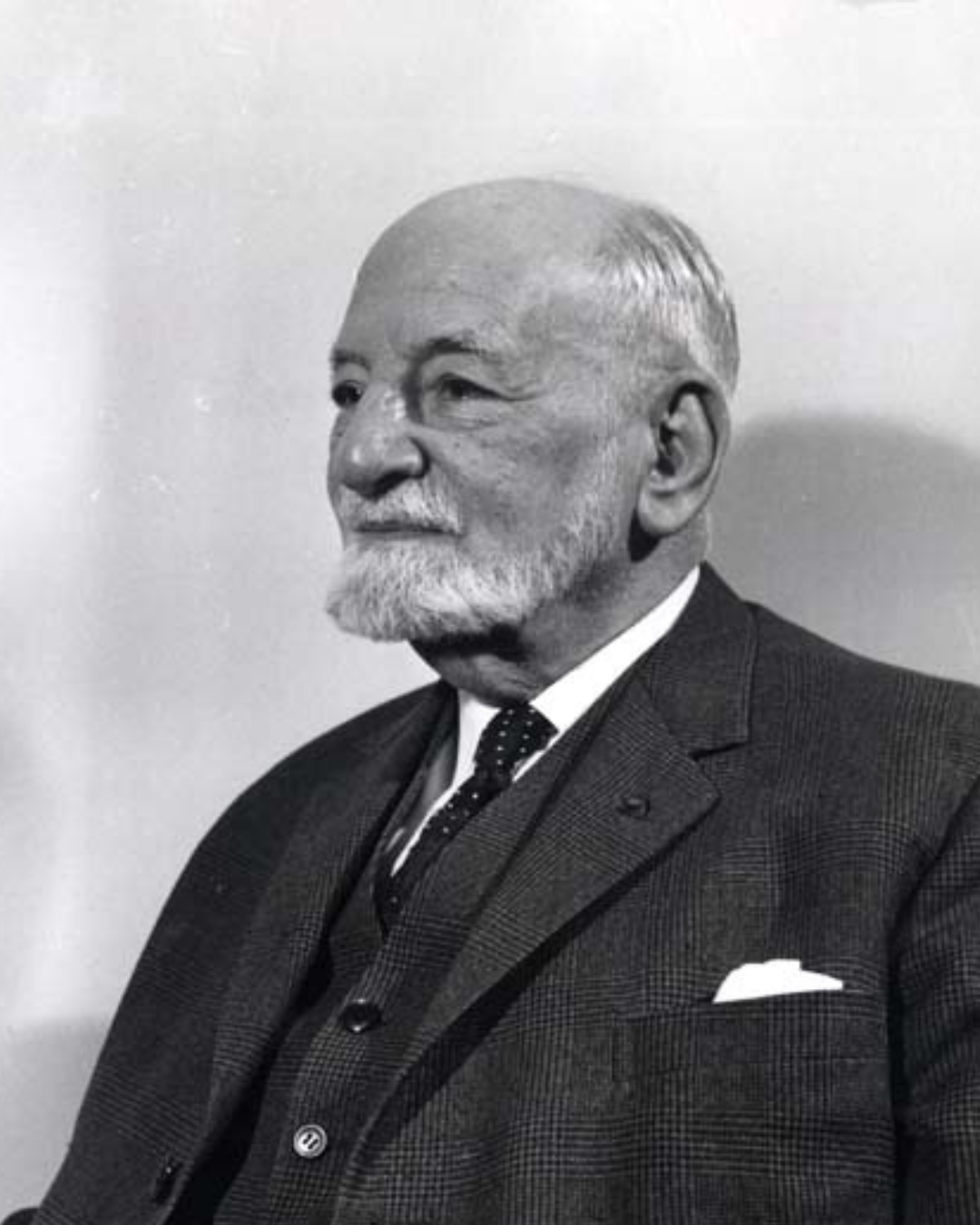
René Cassin’s legacy rests on the same moral insight, expressed through law rather than protest. As a French Jewish jurist shaped by war and persecution, he helped turn the promise of “never again” into a universal language of rights.
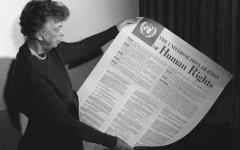
His work on the Universal Declaration of Human Rights insisted that dignity is not granted by governments but must be protected by them. It belongs to every human being and must be protected before prejudice becomes violence or policy.
Whilst Cable Street showed people resisting hatred in the street, Cassin sought to build protections strong enough to prevent hatred from becoming policy. Both were necessary. Courage without structure can be heroic but temporary; law without public commitment can become hollow.
Together, they show that Jewish history in the twentieth century produced not only grief and remembrance but also a deep commitment to justice, solidarity and universal human rights.
This matters because Jewish safety and universal human rights are sometimes presented as if they are in tension. They are not. Jewish safety cannot be guaranteed without human rights. Efforts to weaken human rights protections ultimately undermine the security of Jewish communities as well. The protections that safeguard minorities are interconnected. When rights frameworks are weakened, no community remains unaffected. A society that tolerates antisemitism, racism or the dehumanisation of any group erodes the foundations of safety and dignity for everyone.
This is also the principle that underpins René Cassin’s – the UK’s only Jewish human rights organisation – work today: making the case for human rights by and for the Jewish community. It means recognising that the Jewish experience carries both particular responsibilities and universal insight. The memory of persecution should strengthen, not narrow, our concern for our rights and the rights of others.
For the wider human rights movement, Monsieur Cassin’s anniversary comes at a time when rights-based frameworks are again under pressure. Public debate too often treats rights as a competition between groups, rather than as a shared framework that protects everyone precisely because it applies universally.
Ninety years on, the anniversary of Cable Street deserves to be celebrated. It reminds us that ordinary people can make an extraordinary difference when they refuse to be bystanders. But remembrance alone is not enough.
The challenge for our generation is the same as it was for those who stood on Cable Street and for Monsieur René Cassin in the years that followed: not only to confront hatred when it appears, but also to build and defend the institutions, laws and values that protect human dignity long after the immediate threat has passed.
Cable Street taught us that hatred must be confronted. René Cassin’s lesson was that justice must be built. Ninety years on, Britain and the Jewish community still need both.

Keep community journalism free.
Jewish News is free for everyone. No paywall. No barriers. Just trusted journalism for anyone who wants to stay connected to Jewish life in Britain.
If you value that, please support us.
From as little as £5 a month, you can help keep our journalism free and accessible to all.
Every day, we report on the issues that matter to our community. We celebrate achievements, support charities, challenge antisemitism and ensure Jewish voices are heard more widely.
From as little as £5 a month, you can help us continue to:
- Report on the stories shaping Jewish life in the UK and beyond
- Bring our community together through shared stories, events and campaigns
- Celebrate the people, culture and moments that define our community
- Support organisations doing vital work across Jewish Britain
You can make a one-off donation or become a regular supporter. Every contribution helps keep our journalism free, independent and accessible to all.
If everyone who values Jewish News gave a small amount, it would make a real difference to our future.