Prefer Jewish News on Google
INTERVIEW: Berlin tea party that betrayed a generation
Jonathan Freedland' latest book uncovers the story of German high-society resisters who opposed Hitler, only to be betrayed from within
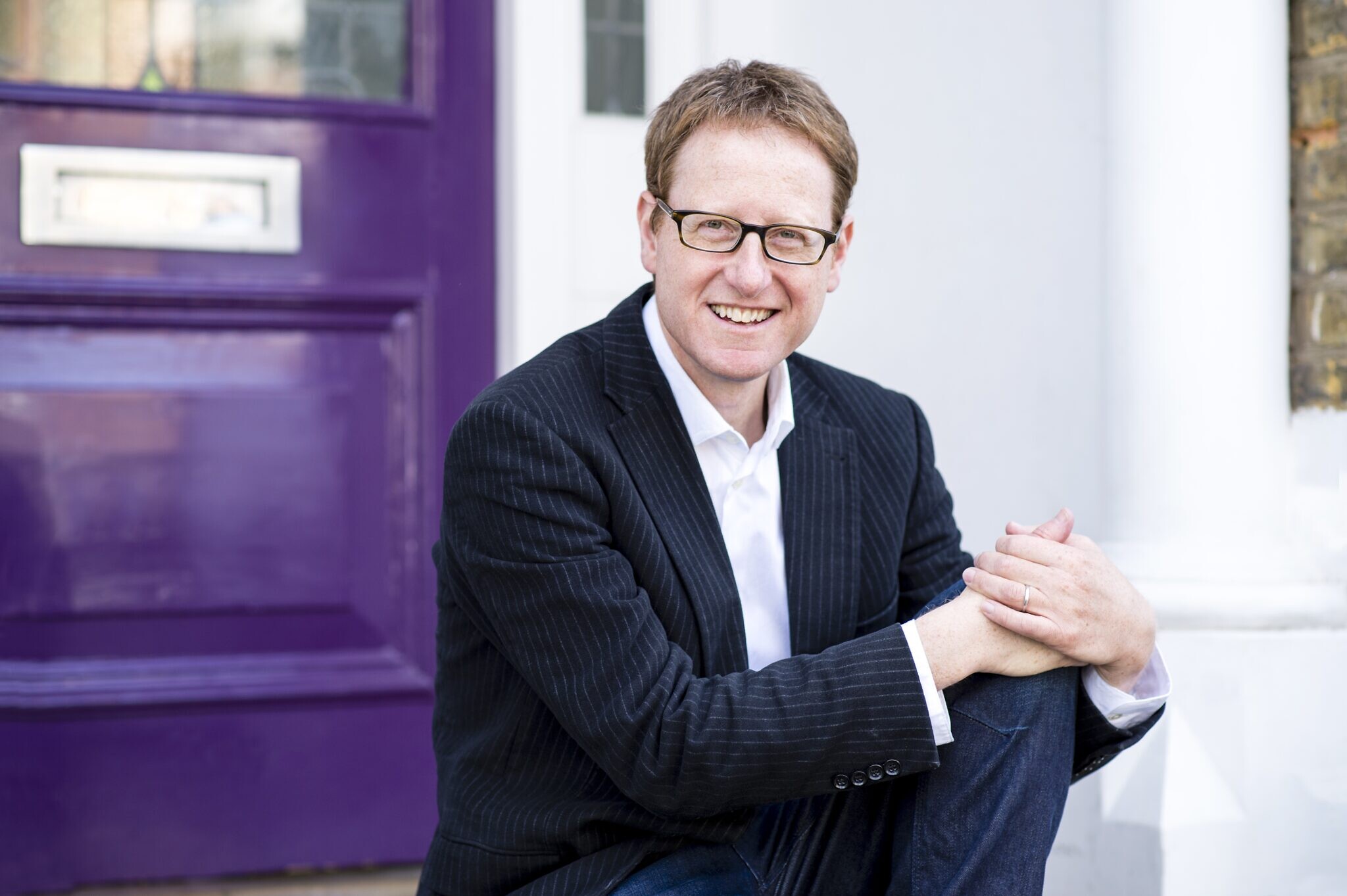
The writer and broadcaster Jonathan Freedland was, he says, “familiar with the world” of his previous best-selling non-fiction book, The Escape Artist. It’s the meticulously told story of Rudolf Vrba and his successful 1944 escape from Auschwitz, together with fellow inmate Fred Wetzler.
But The Escape Artist was published in 2022 and we are actually here to talk about Freedland’s newest offering, The Traitors Circle, a dense re-telling of a little-known aspect of the Second World War — resistance against the Nazis by a small group of non-Jewish members of German high society, and their ultimate betrayal.
Many people may be familiar with the dramatic — and failed — attempt to assassinate Hitler by high-ranking army members. But The Traitors Circle is not that book. Instead, Freedland stumbled over their story after the brutal, dark research for The Escape Artist.
It made him determined that his next book would be, if possible, some sort of “antidote” to the “abyss” of the Vrba book, in which he recreated the hell of Auschwitz. And he found a speech by Heinrich Himmler, one of the architects of the Holocaust, boasting about how the Gestapo had captured enemies of the Reich, and naming several of them — Otto Kiep, Arthur Zarden, Hanna Solf.
“I did that thing of clicking and clicking again — and suddenly there was this tea party”. It was a surreal moment in the course of the war, in which a number of people, all civilians, met for afternoon tea in Berlin. All were opposed to Hitler in various ways: some were unwise enough to express their opposition, vocally, at this tea party, while others were more guarded. And one person present at the event busily took note of what was said, and what was not said, and betrayed them to his Nazi “handler”.
Freedland was attracted to the story for several reasons, not least because the dramatis personae —two countesses, a diplomat, an ambassador’s widow, among others — struck him as having many of the elements of an Agatha Christie thriller. “All these elegant people… I thought initially, I could do this as a sort of drawing-room whodunnit.” In fact he re-read Christie’s classic And Then There Were None as part of his preparations.

Having once decided to bring back to life this group of largely unsung resisters, Freedland was astonished at how much material there was. Every line in the book, he says, is sourced from memoirs and biographies or diaries or archives — so though he brings a novelist’s skill to describing how the tea-party participants acted, he also displays a journalist’s commitment to providing chapter and verse to make his case.
The levels of resistance described in the book range from the small and defiant to the near-suicidal. There is Lagi Solf, who always made sure that she carried two bags of grocery shopping with her, so that she could not return a “Heil Hitler” salute —because her hands were full.
Or there was the previously mentioned Otto Kiep, who, before the war, was Germany’s consul-general in New York. In 1933, a full decade before the fateful tea party, Kiep had to decide whether or not to attend a fund-raising dinner. With hindsight, it is almost unimaginable to think of a German diplomat being not merely invited but warmly welcomed, at an event held in honour of Albert Einstein and jointly hosted by the American friends of the Hebrew University and the Jewish Telegraphic Agency (JTA). Not only that, but Kiep made a speech at the dinner. He knew, says Freedland, that his attendance would be the end of his diplomatic career, and so it proved.
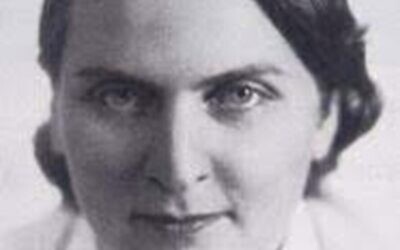
Or there were the heroic actions of Countess Maria von Maltzen, who was born into an aristocratic Prussian family and became a veterinarian after being rejected by her Nazi brother. She took part in an operation called the Black Swimmers, helping Jews to escape to Switzerland in dangerous ventures which took place at night. She also had a Jewish lover, Hans Hirschel, whom she successfully protected from the Gestapo on numerous occasions by hiding him inside a couch in her apartment.
After the war, the writer Leonard Gross interviewed the countess and Hirschel, and his children allowed Freedland to hear the cassettes of the interview in which they describe their experiences.
“I was drawn to to these gestures of defiance —from the small, to the huge risk of hiding a Jew in one’s flat.And I also liked the fact that these were real people, who were flawed and made compromises and were not consistent.” Several of the tea party participants were justifiably frightened about the probable impact of their resistance — but they went ahead anyway.
The tea party — naive in the extreme in hindsight — happened, thinks Freedland, because it was “therapeutic to be around like-minded people”.
Given the Freedland family ban on things German, he did not grow up with a knowledge of the language or its non-Holocaust-related culture. So I wonder if he had been daunted by how to tackle the immense research necessary for the book. He pays huge tribute to his primary researcher and translator, Jonathan Cummings, British-born, lives in Israel and who is fluent in English, German, Hebrew and French. But he also says that in the two years it took him to write the book, Artificial Intelligence (AI) has got better and better, ultimately enabling him to read essential documents in translation in a way he could never have done previously.
Of all the people who could have written such a book, Jonathan Freedland has a special resonance because of his repeated public denunciations of Israeli Prime Minister Benjamin Netanyahu and his current government and of America’s President Trump. He makes clear that he is not drawing any comparison between Netanyahu or Trump and Hitler’s Germany; but he tells the reader of The Traitors Circle right from the start that: “The questions confronting those people pressed with a particular intensity in the Germany of the 1930s and 1940s. But those questions are not only of that time or that place. Some of them echo down the decades. Some of them reverberate especially loudly at this moment”.
Though he rejects the idea of comparison, he does say that “it’s also clear that there are countries which are moving towards authoritarianism. It’s not the same, it’s not identical, but where you have leaders who are amassing power to themselves, and dismantling all checks and balances on their own power, and riding roughshod over the guardians of liberal democracy — some of those questions about ‘what do you do?’ arise”.
In America today, Freedland says: “I think people are having to ask themselves, do you just watch it unfold, or do you stand-up? We saw it play out with the universities, where Columbia and others tried to make their peace with Trump and do a deal, but he just came back for more…. the dilemma of what to do when you are faced with this kind of authoritarianism, some of those questions are back in our time.”
He is ready to apply such criticism to Israel, too: “I do think Netanyahu is engaged in amassing an accretion of power at the centre, but posing a real threat to Israeli liberal democracy, too.” He reminds people that Israel “has few constitutional restraints — it’s basically the attorney-general and the Supreme Court, that’s it.
“There isn’t a second chamber, and if you are constantly trying to fire the attorney-general and put in someone who works for you, and try to replace Supreme Court members with yes-men and yes-women, then what I call the ‘late Netanyahu’ is very comfortable with people like [Hungary’s leader] Viktor Orban and Donald Trump. I think he sees himself as being part of that club”.
I ask Freedland about his often-criticised role at The Guardian and whether he would apply such criteria to his work at the paper. Was he, too, “watching events unfold?”
He says: “Obviously I hear the criticisms of me all the time. I would ask the critics as follows: do you think it’s likely or unlikely that I challenge a lot of the coverage that you don’t see, and some of the coverage that you do see, internally? And do you think institutionally, that a place like Columbia University would be better or worse if Simon Schama was not there? Do we think it’s better that we as Jews vacate such institutions — or that our voices are still there, still heard?”
He acknowledges that “a lot of the Guardian reporting has been very uncomfortable for pro-Israel Jewish readers — but a lot of it has checked out, and it’s robust.” He adds: “At a time like this, when Israel is doing the things it’s doing, do we believe the problem is the reporting of those things, or the doing of those things?…I speak broken-heartedly about these things. That’s such a stain for the Jewish people, that for me it dwarfs questions about coverage.” He believes the Jewish community still has to get to grips with the enormity of what has happened and thinks it will radically alter the diaspora conversation with Israel for many years to come.
The Traitors Circle: The Rebels Against the Nazis and the Spy Who Betrayed Them by Jonathan Freedland is published on September 11 by John Murray, £22

Keep community journalism free.
Jewish News is free for everyone. No paywall. No barriers. Just trusted journalism for anyone who wants to stay connected to Jewish life in Britain.
If you value that, please support us.
From as little as £5 a month, you can help keep our journalism free and accessible to all.
Every day, we report on the issues that matter to our community. We celebrate achievements, support charities, challenge antisemitism and ensure Jewish voices are heard more widely.
From as little as £5 a month, you can help us continue to:
- Report on the stories shaping Jewish life in the UK and beyond
- Bring our community together through shared stories, events and campaigns
- Celebrate the people, culture and moments that define our community
- Support organisations doing vital work across Jewish Britain
You can make a one-off donation or become a regular supporter. Every contribution helps keep our journalism free, independent and accessible to all.
If everyone who values Jewish News gave a small amount, it would make a real difference to our future.