Prefer Jewish News on Google


Freedom to believe is not enough. We need freedom to practice
If MPs now want meat labelled by method of slaughter, let the shopper buying pork know that the pig was gassed or their cow had a metal captive bolt shot through its skull well before it was slaughtered
In a quarter of a century at Westminster I have argued about oil and gas licences, airport landing slots and, more often than either, surprisingly Jewish religious practices, from kosher meat to Shabbat observance.
Let’s take Shechita, say. I have yet to meet a parliamentarian who objects to my firm, faithful position that Jews should keep kosher. Whether we should be allowed to slaughter the animals whose meat we eat is quite another matter.
Britain has a proud tradition of religious liberty. The European Convention on Human Rights and the Universal Declaration of Human Rights both recognise the freedom to practise a religion. Yet much of our thinking about religious freedom owes more to the old disputes between Christian denominations. It centres precisely around that – thinking. For Jews, the question is often whether we can carry on doing something our parents and grandparents did before us. It is about practice, not about only about intellectually maintaining a particular belief.
Consider what amendment 222 to the Health Bill, currently in progress, would mean for a Jewish family. It would restrict neonatal circumcision to medical practitioners on registered medical premises. Parents who had hoped to hold their son’s brit milah at home or in shul, with their family gathered around them, would have to go elsewhere. The mohel they had chosen might be unable to perform it, however experienced he was. I wonder how many peers know that the Initiation Society, the oldest of such organisation in the world, trains, certifies and insures mohelim, all under government sanction.
When Parliament required animals to be mechanically stunned before slaughter, it expressly provided for Jews and Muslims to continue slaughtering for their communities, a derogation, in legal terminology. Anyone listening to some of the debates since could be forgiven for thinking we had found a loophole. Parliament knew what it was doing. If MPs now want meat labelled by method of slaughter, let the shopper buying pork know that the pig was gassed or their cow had a metal captive bolt shot through its skull well before it was slaughtered, just as they would have the shopper buying kosher beef know how the animal was killed.


A proposal to limit animal journeys to four hours sounds a long way removed from religious liberty. But much of our kosher poultry comes from a handful of farms in northern England and southern Scotland. Only the multi-million pound heavyweights of the food industry have abattoirs right on the premises of their factories and preparation depos. If the birds cannot reach London, the family paying for Friday night’s chicken will soon feel the difference. That is why we have raised the matter with the Government.
There is a similar difficulty with the proposal to give private landlords 24 hours to investigate an emergency hazard and make it safe. Suppose a tenant reports a dangerous leak just before Shabbat on a winter Friday. The tenant needs help straight away. To one potential solution that has been proposed is to let the tenant call an agreed contractor directly, at the landlord’s expense.
In 2010 we found ourselves on the same side as Scottish farmers over a proposal to put the clocks forward an extra hour throughout the year. They had quite enough dark mornings already. We had morning minyanim to consider and the prospect of waiting another hour for Shabbat to go out in July. I doubt either of us would have got as far arguing the case alone.
Most MPs who bring forward proposals like these have no idea they might affect a brit milah, a yeshiva or the price of a kosher chicken. How would they, unless somebody tells them? I want my grandchildren to be as free as I have been to live as Jews in Britain. That means being able to pass on the things we actually do, not just think. That’s certainly some food for thought, and it has kept us busy for decades.
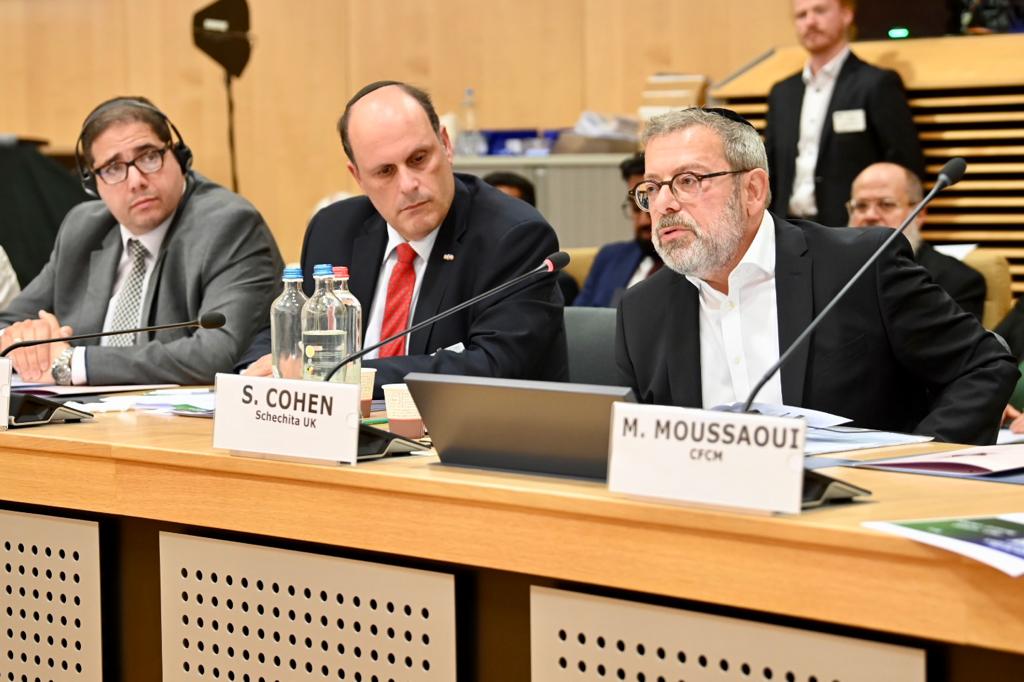
Shimon Cohen is campaign director of Shechita UK.

Keep community journalism free.
Jewish News is free for everyone. No paywall. No barriers. Just trusted journalism for anyone who wants to stay connected to Jewish life in Britain.
If you value that, please support us.
From as little as £5 a month, you can help keep our journalism free and accessible to all.
Every day, we report on the issues that matter to our community. We celebrate achievements, support charities, challenge antisemitism and ensure Jewish voices are heard more widely.
From as little as £5 a month, you can help us continue to:
- Report on the stories shaping Jewish life in the UK and beyond
- Bring our community together through shared stories, events and campaigns
- Celebrate the people, culture and moments that define our community
- Support organisations doing vital work across Jewish Britain
You can make a one-off donation or become a regular supporter. Every contribution helps keep our journalism free, independent and accessible to all.
If everyone who values Jewish News gave a small amount, it would make a real difference to our future.